Deodorizer
CN → US| HS Code | Tariff Rate | Origin | Destination | Doc |
|---|---|---|---|---|
| 3824999397 | 40.0% | CN | US | Official Doc |
| 3307410000 | 37.4% | CN | US | Official Doc |
| 3926909989 | 22.8% | CN | US | Official Doc |
| 3307490000 | 41.0% | CN | US | Official Doc |
| 3824992900 | 41.5% | CN | US | Official Doc |
| 4402900100 | 35.0% | CN | US | Official Doc |
Product Images
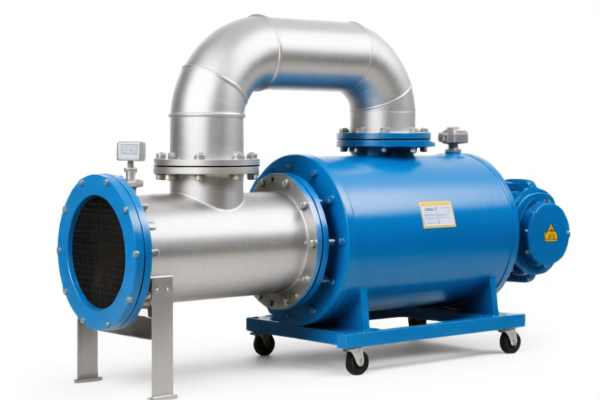
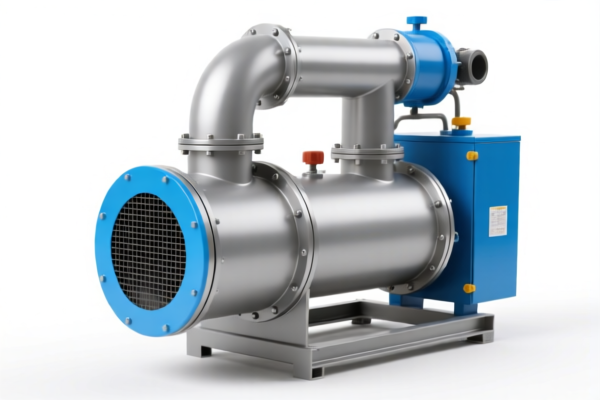
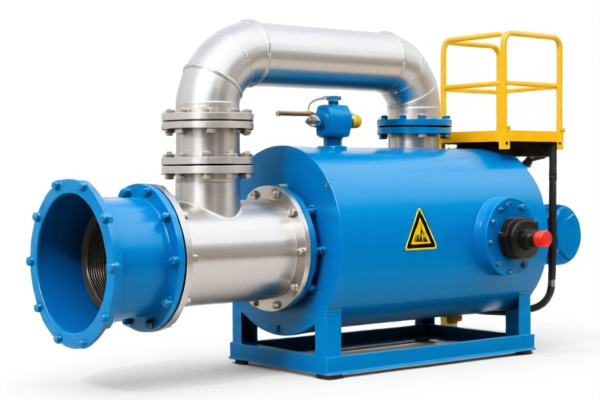
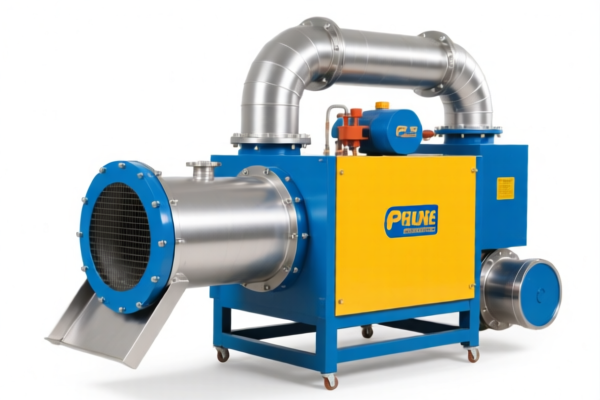
AI Analysis
🧴 Deodorizer (Odor Eliminator/Neutralizer)
🌐 HS Code Reference & Customs Clearance Guide | 2026 Latest Tariff Analysis | Strategic Classification for Chemical & Fragrance Products
📌 I. Product Definition & Classification: Do You Know the Exact Nature of Your "Deodorizer"?
Deodorizers are widely used in household, industrial, and automotive sectors to eliminate or mask unpleasant odors. However, in international trade, their classification depends entirely on their chemical composition, primary function, and packaging/material.
There is a critical distinction between: 1. Chemical Preparations: Synthetic compounds that neutralize odor molecules through chemical reaction (e.g., oxidizers, ammonia derivatives). 2. Fragrance/Perfume Preparations: Products that primarily mask odors using scents, often containing essential oils or synthetic aromas. 3. Plastic/Hardware Components: Devices (like air freshener holders) or packaging that constitute the main value or structure, rather than the substance itself.
⚠️ Key Distinction Point:
- If the product is a liquid/powder mixture designed to chemically break down odors → It is a Chemical Preparation (Chapter 38).
- If the product is scented to cover up smells (like candles, sprays with strong perfumes) → It is a Fragrance Preparation (Chapter 33).
- If the item is primarily a plastic holder or device containing a small refill → It may be classified as a Plastic Article (Chapter 39).
📦 II. HS Code Classification Details (2026 Latest Tariff Authority Comparison)
| HS Code | Product Description | Applicable Scenario | Primary Characteristic |
|---|---|---|---|
3824.99.93.97 |
Chemical preparations for deodorizing, not elsewhere specified | Industrial deodorizers, chemical odor neutralizers, cleaning agents with deodorizing function | ✅ Chemical Reaction (Neutralization) |
3307.41.00.00 |
Room odorizers, whether or not they disinfect or deodorize | Perfumed sprays, essential oil diffusers, scented candles intended to mask odors | ✅ Fragrance/Masking |
3926.90.99.89 |
Plastic articles of deodorizers (e.g., plastic casings, holders, diffuser devices) | Plastic air freshener clips, plastic diffuser bases (without significant chemical content) | ✅ Plastic Material Dominant |
3307.49.00.00 |
Other room odorizers | Miscellaneous scented products not specifically listed in 3307.41 | ✅ Fragrance/Masking |
3824.99.29.00 |
Other chemical products and preparations (mixed preparations) | Complex chemical mixtures for deodorizing that don't fit specific chemical categories | ✅ Mixed Chemical |
🔍 Critical Reminder:
- Do not confuse "Deodorizer" with "Perfume". If the primary purpose is to mask smell with fragrance, use 3307. If the primary purpose is to chemically neutralize odor, use 3824.
- If the product is sold as a device (e.g., a plastic clip) with a separate refil, the device itself may fall under 3926.
💰 III. 2026 Latest Tariff Rate Breakdown (Including Additional Duties & Policy Surcharges)
✅ Applicable Country: United States (US)
✅ Country of Origin: China (CN)
✅ Effective Date: From November 10, 2025 (for subsequent imports)
🎯 1. 3824.99.93.97 —— Chemical Preparations for Deodorizing
| Item | Content |
|---|---|
| Base Duty Rate | 5.0% |
| USITC Additional Duty (Section 301) | +25.0% |
| Section 122 Duty (IEEPA) | +10.0% |
| Total Duty Rate | 40.0% |
| Tax Calculation | CIF Value × 40% |
| De Minimis Exemption | ❌ Not Applicable (High duty rates exclude small shipments from low-value exemption in many cases) |
| Legal Basis Path | USITC:3824.99.93.97 → FOOTNOTE:301_China → IEEPA:Section_122 |
📌 Explanation:
- Chemical deodorizers are often viewed as industrial or specialized goods. The base duty is 5%.
- Subject to the full 25% Section 301 tariff due to Chinese origin.
- Subject to an additional 10% under Section 122 (related to specific trade enforcement actions).
- Total: 40%. This is a significant cost driver for chemical-based odor eliminators.
🎯 2. 3307.41.00.00 —— Room Odorizers (Fragrance-Based)
| Item | Content |
|---|---|
| Base Duty Rate | 2.4% |
| USITC Additional Duty (Section 301) | +25.0% |
| Section 122 Duty (IEEPA) | +10.0% |
| Total Duty Rate | 37.4% |
| Tax Calculation | CIF Value × 37.4% |
| De Minimis Exemption | ❌ Not Applicable |
| Legal Basis Path | USITC:3307.41.00.00 → FOOTNOTE:301_China → IEEPA:Section_122 |
📌 Note:
- This is the most common classification for consumer home fragrance deodorizers (sprays, gels).
- Lower base rate (2.4%) compared to chemical preparations, but still burdened by Section 301 and Section 122.
- Total: 37.4%. Slightly cheaper than chemical types, but still high.
🎯 3. 3926.90.99.89 —— Plastic Articles (Deodorizer Devices/Holders)
| Item | Content |
|---|---|
| Base Duty Rate | 5.3% |
| USITC Additional Duty (Section 301) | +7.5% |
| Section 122 Duty (IEEPA) | +10.0% |
| Total Duty Rate | 22.8% |
| Tax Calculation | CIF Value × 22.8% |
| De Minimis Exemption | ❌ Not Applicable |
| Legal Basis Path | USITC:3926.90.99.89 → FOOTNOTE:301_China (Reduced Rate Category) → IEEPA:Section_122 |
📌 Attention:
- This applies ONLY if the product is primarily a plastic device (e.g., a clip, a case, a diffuser machine) and not the chemical liquid itself.
- Crucial Advantage: The Section 301 duty is reduced to 7.5% (not 25%) for certain plastic articles, making this the lowest tax option among the listed codes.
- Total: 22.8%. Significant savings if the product can be legally classified as a plastic article rather than a chemical or fragrance.
🎯 4. 3307.49.00.00 —— Other Room Odorizers
| Item | Content |
|---|---|
| Base Duty Rate | 6.0% |
| USITC Additional Duty (Section 301) | +25.0% |
| Section 122 Duty (IEEPA) | +10.0% |
| Total Duty Rate | 41.0% |
| Tax Calculation | CIF Value × 41.0% |
| De Minimis Exemption | ❌ Not Applicable |
| Legal Basis Path | USITC:3307.49.00.00 → FOOTNOTE:301_China → IEEPA:Section_122 |
📌 Note:
- Used for fragrance products that do not fit neatly into 3307.41.
- Higher base rate (6.0%) than 3307.41.
- Total: 41.0%. This is the highest tax bracket for fragrance-based deodorizers. Avoid this if 3307.41 applies.
🎯 5. 3824.99.29.00 —— Other Chemical Products and Preparations
| Item | Content |
|---|---|
| Base Duty Rate | 6.5% |
| USITC Additional Duty (Section 301) | +25.0% |
| Section 122 Duty (IEEPA) | +10.0% |
| Total Duty Rate | 41.5% |
| Tax Calculation | CIF Value × 41.5% |
| De Minimis Exemption | ❌ Not Applicable |
| Legal Basis Path | USITC:3824.99.29.00 → FOOTNOTE:301_China → IEEPA:Section_122 |
📌 Note:
- A catch-all for mixed chemical preparations.
- Highest base rate among chemical codes.
- Total: 41.5%. This is the most expensive classification. Only use if no other specific chemical description fits.
🛠️ IV. Customs Clearance Practical Advice (Strategic Risk Avoidance)
✅ 1. Documentation Checklist (Essential for Smooth Clearance)
| Document | Required? | Explanation |
|---|---|---|
| ✅ Product Specification Sheet | ✔️ | Must clearly state chemical composition (e.g., % of active ingredients) to distinguish between Chemical (3824) and Fragrance (3307). |
| ✅ Ingredient List (MSDS/SDS) | ✔️ | Critical for determining if it's a hazardous chemical or a simple fragrance. |
| ✅ Product Photos (Including Label) | ✔️ | Show packaging, usage instructions, and any "Fragrant" vs "Chemical Neutralizer" claims. |
| ✅ Commercial Invoice | ✔️ | Must accurately describe the product. Avoid vague terms like "Deodorizer" without context. Use "Chemical Odor Neutralizer" or "Scented Room Freshener". |
| ✅ Certificate of Origin (CO) | ✔️ | Confirm Chinese origin to apply correct Section 301/122 duties. |
| ✅ Packaging List | ✔️ | Specify if items are liquid, solid, or devices. |
✅ 2. Declaration Tips (Key Mnemonics)
🔥 "Function Dictates Code: Neutralize=3824, Scent=3307, Plastic=3926!"
| Scenario | Correct HS Code | Wrong Approach | Consequence |
|---|---|---|---|
| Chemical Spray (Odor neutralizing) | 3824.99.93.97 (40%) |
Misclassify as 3307.41 (37.4%) |
Risk of penalty for misdeclaration; slight duty difference |
| Scented Gel/Spray (Masking odor) | 3307.41.00.00 (37.4%) |
Misclassify as 3824 (40%) |
Overpaying duty unnecessarily |
| Plastic Clip Holder (Device only) | 3926.90.99.89 (22.8%) |
Misclassify as chemical/fraction | Major Savings: Save ~17% in duties! |
| Complex Mix (Unsure) | 3824.99.29.00 (41.5%) |
Guessing | Highest Tax Risk: 41.5% is the worst-case scenario |
📌 Strategy:
- If your product is a device (like a battery-operated diffuser) that uses essential oil, classify the device as3926if the oil is sold separately or has negligible value.
- If it's a liquid spray, be honest. If it smells strongly,3307.41is safer and cheaper than3824.
- If it's a professional/industrial deodorizer (e.g., for sewage treatment),3824.99.93.97is likely correct.
✅ 3. Special Case Handling
| Scenario | Handling Advice |
|---|---|
| OEM Products | Provide brand authorization and design specs. Customs may scrutinize origin. |
| Mixed Packaging (Device + Liquid) | Do NOT split if sold as a kit. Usually, the principal function determines the code. If the device is the main value, try 3926. If the liquid is the main value, use 3307 or 3824. |
| "Natural" vs "Chemical" | Claims of "Natural" do not automatically classify as 3307. If it contains synthetic neutralizers, it may still be 3824. |
| Small Samples | Even small shipments are subject to duties if the HS code is high-risk. Do not assume de minimis applies. |
🌍 V. Global Market Comparison (2026 Latest)
| Country/Region | Recommended HS Code | Duty Rate | Certification | Note |
|---|---|---|---|---|
| 🇺🇸 USA | 3307.41.00.00 or 3824.99.93.97 |
37.4% - 40% | EPA (if pesticide claim), FCC (if electronic) | High tariffs due to Section 301 & 122. |
| 🇨🇳 China | 3307.41.00.00 |
~2.4% - 6% | CCC (if applicable) | Low base duty, no Section 301. |
| 🇪🇺 EU | 3307.41.00 |
0% - 2% | REACH, CLP | No additional tariffs for China. Easier entry. |
| 🇬🇧 UK | 3307.41.00 |
0% - 2% | UKCA, REACH | Post-Brexit, similar to EU. |
| 🇯🇵 Japan | 3307.41.00 |
0% - 5% | FSC (Cosmetic) | Low duties, strict safety standards. |
📌 Conclusion:
- USA is the most expensive market for deodorizers due to layered tariffs.
- Plastic devices (3926) offer the biggest savings in the US (22.8% vs 37%+).
- Consider assembling devices in non-China countries if possible to avoid Section 301 tariffs.
📌 VI. Common Mistakes & Pitfalls (Lessons Learned)
❌ Mistake 1: Classifying a chemical odor neutralizer as a fragrance to save 2.6%
👉 Consequence: Customs audit, fines, and retroactive duties + interest. The difference is small compared to compliance risk.
❌ Mistake 2: Classifying a liquid-filled device as a plastic article (3926) without justification
👉 Consequence: Misdeclaration. If the liquid value exceeds the plastic value, the entire kit is classified by the liquid.
❌ Mistake 3: Ignoring Section 122 (10%)
👉 Consequence: Unexpected 10% charge on every shipment. Always budget for it.
❌ Mistake 4: Using vague descriptions like "Air Freshener"
👉 Consequence: Customs may assign a higher duty code or delay clearance for detailed inspection.
✅ Correct Practice:
"Room Odorizer Spray, Fragrance-Based, 250ml, Model XYZ" →
3307.41.00.00
"Chemical Deodorizing Agent, Industrial Use, 5kg Bucket" →3824.99.93.97
"Plastic Car Air Freshener Clip, Empty" →3926.90.99.89
🎯 VII. Conclusion: Smart Classification Saves Money!
🎯 Key Takeaway:
🔹 "If it smells good, it's 3307. If it neutralizes, it's 3824. If it's plastic, it's 3926."
🔹 "Section 301 is 25%, Section 122 is 10%. Plan your budget accordingly."
🔹 "Plastic devices save you 17% in duties compared to liquids. Leverage this!"
📌 Pro Tip:
If you are exporting plastic deodorizer devices from China, always highlight the plastic material and device functionality in your invoice and description to push for 3926.90.99.89 (22.8% total).
For liquid products, ensure your MSDS clearly distinguishes between "Fragrance" and "Chemical Neutralizer" to choose between 3307 (37.4%) and 3824 (40%+).
📣 Immediate Action:
📞 Consult your customs broker with chemical composition data and product photos.
🚀 Optimize your HS Code to minimize duty costs and ensure smooth customs clearance.
✨ Professional clearance starts with accurate classification!
💼 Every percentage point counts in global trade!
Customer Reviews
About HS Code Classification
The Harmonized System (HS) is an internationally standardized nomenclature developed by the World Customs Organization (WCO) to classify traded products. Over 200 countries use the HS system as the basis for customs tariffs, trade statistics, and import/export regulations.
Each HS code follows a hierarchical structure:
- Chapter (2 digits) — Broad category of goods (e.g., Chapter 84: Machinery and Mechanical Appliances)
- Heading (4 digits) — More specific grouping within the chapter
- Subheading (6 digits) — Internationally standardized breakdown, used by all WCO member countries
- National subdivisions (8-10 digits) — Country-specific extensions for further classification, such as US HTSUS 10-digit codes
Correct HS code classification is essential for smooth customs clearance, accurate duty payment, and compliance with trade regulations. Misclassification can lead to customs delays, overpayment of duties, or penalties.
When importing from CN to US, the applicable tariff rates may include:
- Most-Favored-Nation (MFN) rate — The standard duty rate applied to WTO members
- General rate — Applied to countries without trade agreements
- Trade remedy duties — Additional tariffs such as Section 301 (anti-dumping), Section 232 (national security), or countervailing duties
The information provided on this page is for reference purposes only. For official classification, please consult with your local customs authority or a licensed customs broker.