Desk Calendar
CN → US| HS Code | Tariff Rate | Origin | Destination | Doc |
|---|---|---|---|---|
| 4911100080 | 17.5% | CN | US | Official Doc |
| 4820102060 | 35.0% | CN | US | Official Doc |
| 4911998000 | 17.5% | CN | US | Official Doc |
| 4820102010 | 35.0% | CN | US | Official Doc |
Product Images



AI Analysis
📅 Desk Calendar (台历)
🌐 HS Code Reference & Clearance Guide | 2026 Latest Tariff Analysis | Professional Entry Strategy
📌 Part I: Product Definition & Classification: Do You Really Understand "Desk Calendars"?
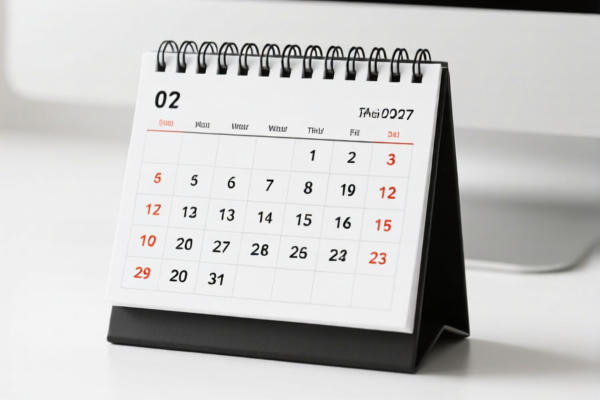
A desk calendar is a common office or home supply, typically consisting of a base and printed paper sheets. In international trade, its classification hinges on two key factors: Material (Paper) and Nature (Printed Product vs. Diary/Notebook). There are no material conflicts, but the functional definition determines whether it falls under "Other Printed Matter" or "Diaries/Notebooks."
⚠️ Key Distinction Point:
- If viewed primarily as a printed item for informational/display purposes →归类 to 4911 (Other Printed Matter).
- If viewed primarily as a functional book-like item for recording/planning →归类 to 4820 (Diaries, Notebooks, etc.).
📦 Part II: HS Code Classification Details (2026 Latest Tariff Authority Comparison)
Based on the provided data, there are two distinct classification paths with significantly different tax implications.
| HS Code | Product Description | Applicability Scenario | Tax Rate (China Origin to US) |
|---|---|---|---|
4911.99.80.00 |
Other printed matter (Paper form) | Desktop calendars viewed as printed media/display items. No material conflict. | 17.5% |
4820.10.20.10 |
Diaries, notebooks & similar articles | Desktop calendars viewed as diary/notebook derivatives. Form matches book-like structure. | 35.0% |
4911.10.00.80 |
Trade advertising material / Commercial catalogues | Calendars used for commercial promotion/advertising. Matches material/utility features. | 17.5% |
4820.10.20.60 |
Diaries & similar articles (Specific sub-category) | Calendars classified strictly as diary-like paper products. Consistent with diary usage. | 35.0% |
🔍 Key Reminder:
- The 17.5% rate applies when classified under Chapter 49 (Printed Matter) (4911).
- The 35.0% rate applies when classified under Chapter 48 (Paper Articles/Diaries) (4820).
- Do not mix classifications: Ensure your commercial invoice and description align with the chosen HS code to avoid customs disputes.
💰 Part III: 2026 Latest Tariff Rate Detailed Explanation (Including Surcharges)
✅ Applicable Country: United States (US)
✅ Country of Origin: China (CN)
✅ Effective Time: From November 10, 2025 (including subsequent imports)
🎯 1. HS Code 4911.99.80.00 & 4911.10.00.80 —— Other Printed Matter / Trade Advertising Material
| Item | Details |
|---|---|
| Basic Tariff | 0.0% (Ad Valorem) |
| Section 301 Surcharge | +7.5% (Based on USITC Footnotes for Chapter 49 items) |
| IEEPA Surcharge (Section 122) | +10.0% (Targeting Chinese/HK products, effective from Nov 10, 2025) |
| Total Tariff Rate | 17.5% |
| Tax Calculation | CIF Value × 17.5% |
| De Minimis Exemption | ❌ Not Applicable (deny_de_minimis) |
| Legal Basis Path | Base: 0% + Section 301: 7.5% + IEEPA 122: 10% → Total 17.5% |
📌 Explanation:
- "Basic Tariff 0%": Standard MFN rate for these printed goods is zero.
- "Section 301 7.5%": The standard additional tariff for many Chinese goods under Trade Act Section 301.
- "IEEPA 122 10%": A specific additional tariff targeting Chinese-origin items.
- Total 17.5% is a moderate-high tariff. Must be factored into cost pricing.
🎯 2. HS Code 4820.10.20.10 & 4820.10.20.60 —— Diaries & Notebooks
| Item | Details |
|---|---|
| Basic Tariff | 0.0% (Ad Valorem) |
| Section 301 Surcharge | +25.0% (Higher bracket for paper books/diaries) |
| IEEPA Surcharge (Section 122) | +10.0% (Targeting Chinese/HK products, effective from Nov 10, 2025) |
| Total Tariff Rate | 35.0% |
| Tax Calculation | CIF Value × 35.0% |
| De Minimis Exemption | ❌ Not Applicable (deny_de_minimis) |
| Legal Basis Path | Base: 0% + Section 301: 25% + IEEPA 122: 10% → Total 35.0% |
📌 Note:
- "Basic Tariff 0%": Standard rate for diaries is zero.
- "Section 301 25%": A higher additional tariff applies specifically to diaries/notebooks compared to general printed matter.
- "IEEPA 122 10%": Same as above.
- Total 35.0% is a VERY HIGH tariff. This is a critical cost driver.
🛠️ Part IV: Practical Clearance Advice (Battle-Tested Pitfall Guide)
✅ 1. Required Documentation Checklist (None Can Be Missed)
| Document | Mandatory? | Description |
|---|---|---|
| ✅ Product Spec Sheet | ✔️ | Material (Paper weight, type), dimensions, structure (base+cards). |
| ✅ Commercial Invoice | ✔️ | Must clearly state "Desk Calendar" or "Printed Paper Calendar". Avoid vague terms like "Gift". |
| ✅ Packing List | ✔️ | Detailed breakdown of contents. Ensure no mixed shipments of diaries and printed matter without clear separation. |
| ✅ Product Photos | ✔️ | Clear images showing the item as a calendar, not a bound notebook with blank pages. |
| ✅ Origin Certificate | ✔️ | If claiming preferential rates (not applicable here for CN origin to US), otherwise for proof of origin. |
| ✅ Declaration Statement | ✔️ | Explicitly confirm if the item is "Printed Matter" or "Diary". |
✅ 2. Declaration Strategies (Key Mantras)
🔥 "Printed is 17.5%, Diary is 35%. Choose Wisely!"
| Scenario | Recommended HS Code | Risk of Error |
|---|---|---|
| Promotional Desk Calendar (Brand logo, display purpose) | 4911.10.00.80 or 4911.99.80.00 |
✅ Safe. Lower tax. |
| Standard Desk Calendar (No functional blank pages for writing) | 4911.99.80.00 |
✅ Safe. Lower tax. |
| Diary-style Calendar (Designed for daily note-taking, bound like a book) | 4820.10.20.10 |
⚠️ High Tax. Justify as "Diary". |
| Mixed Shipment (Calendars + Notebooks) | Separate Declarations | ❌ Danger! Mixed classification leads to audits & penalties. |
✅ 3. Special Case Handling
| Situation | Handling Advice |
|---|---|
| OEM Calendar with Client Logo | Declare as 4911 (Trade Advertising Material). Provide client contract as proof of promotional nature. |
| Calendar with Blank Pages for Notes | If the primary function is writing, Customs may classify as 4820 (Diary). Be prepared to justify why it's "Printed Matter" (e.g., minimal blank space, mostly grid/dates). |
| Small Gift Sets | If included as a minor part of a gift set, ensure the main item's HS code doesn't override. Separate declaration is safer. |
| Paper Type Variations | Ensure all parts (base, cards) are paper. If base is plastic/wood, it may change classification. Data assumes Paper Base. |
🌍 Part V: Global Market Comparison (2026 Latest)
| Country/Region | Recommended HS Code | Tariff (China Origin) | Notes |
|---|---|---|---|
| 🇺🇸 United States | 4911.99.80.00 |
17.5% | Lower than 4820 (35%). Prefer 4911 for cost efficiency. |
| 🇪🇺 European Union | 4911.99.90 |
0% | Standard duty. No Section 301/IEEPA equivalents. |
| 🇨🇳 China (Import) | 4911.99.90 |
0% | No additional surcharges. |
| 🇬🇧 United Kingdom | 4911.99.90 |
0% | Post-Brexit rules align closely with EU for this item. |
📌 Conclusion:
- The US is the critical market due to the 17.5% vs 35% dichotomy.
- Strategic Recommendation: Wherever possible, classify Desk Calendars as4911(Printed Matter) to save 17.5% in tariffs.
- Ensure product design leans towards "display/printing" rather than "writing/notebook" to support4911classification.
📌 Part VI: Common Errors & Pitfall Guide (Lessons Learned)
❌ Error 1: Declaring a Desk Calendar as 4820.10.20.10 (Diary) unnecessarily.
👉 Consequence: Pay 35% instead of 17.5%. Overpayment by 17.5%!
❌ Error 2: Declaring a Diary as 4911 to avoid tax.
👉 Consequence: Customs audit. If proven to be a diary, back taxes + penalties.
❌ Error 3: Vague Description "Paper Item".
👉 Consequence: Customs assigns the highest possible rate or holds shipment for clarification.
❌ Error 4: Ignoring Section 122 Tariff.
👉 Consequence: Unexpected 10% charge at border. Always include in cost models.
✅ Correct Practice:
"Desk Calendar, Paper Base, Printed Cards, Promotional Use, Model XYZ"
→ Supports4911classification.
🎯 Part VII: Conclusion: Professional Declaration Saves Money!
🎯 Remember the Mantra:
🔹 "Printed 17.5%, Diary 35%. Choose
4911for Savings!"
🔹 "Tax Rate Difference 17.5%: One Wrong Code Costs a Fortune!"
📌 Pro Tip:
If your desk calendar is originating from Vietnam, Mexico, Thailand, or Malaysia, you may qualify for IEEPA Exemptions or lower Section 301 rates.
Consider Advance Ruling with US Customs for complex mixed-material calendars.
📣 Immediate Action:
📞 Contact a professional customs broker + Provide Product Images + Apply for HS Code Advance Ruling
🚀 Let your Desk Calendar Clear Smoothly, Efficiently, and Profitably!
✨ Professional Clearance Starts with Accurate Classification!
💼 Every Cent of Cost Deserves Precise Calculation!
Customer Reviews
About HS Code Classification
The Harmonized System (HS) is an internationally standardized nomenclature developed by the World Customs Organization (WCO) to classify traded products. Over 200 countries use the HS system as the basis for customs tariffs, trade statistics, and import/export regulations.
Each HS code follows a hierarchical structure:
- Chapter (2 digits) — Broad category of goods (e.g., Chapter 84: Machinery and Mechanical Appliances)
- Heading (4 digits) — More specific grouping within the chapter
- Subheading (6 digits) — Internationally standardized breakdown, used by all WCO member countries
- National subdivisions (8-10 digits) — Country-specific extensions for further classification, such as US HTSUS 10-digit codes
Correct HS code classification is essential for smooth customs clearance, accurate duty payment, and compliance with trade regulations. Misclassification can lead to customs delays, overpayment of duties, or penalties.
When importing from CN to US, the applicable tariff rates may include:
- Most-Favored-Nation (MFN) rate — The standard duty rate applied to WTO members
- General rate — Applied to countries without trade agreements
- Trade remedy duties — Additional tariffs such as Section 301 (anti-dumping), Section 232 (national security), or countervailing duties
The information provided on this page is for reference purposes only. For official classification, please consult with your local customs authority or a licensed customs broker.