Desktop Charger
CN → US| HS Code | Tariff Rate | Origin | Destination | Doc |
|---|---|---|---|---|
| 8504409540 | 35.0% | CN | US | Official Doc |
| 8504407018 | 35.0% | CN | US | Official Doc |
| 8543706000 | 35.0% | CN | US | Official Doc |
| 8543709860 | 37.6% | CN | US | Official Doc |
Product Images
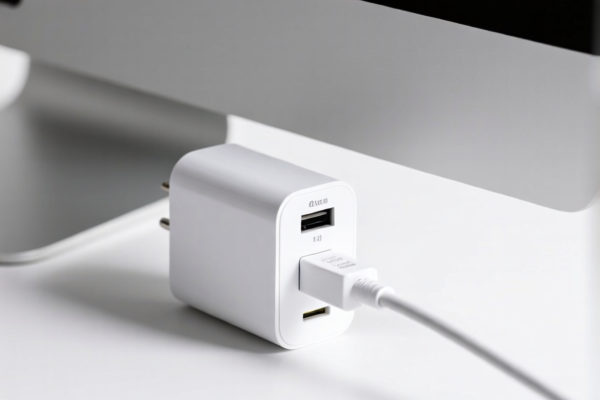
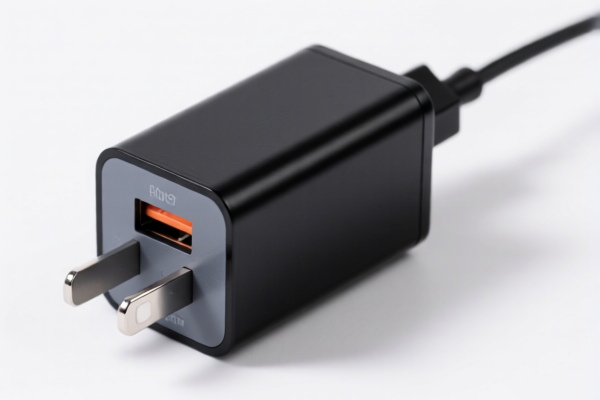
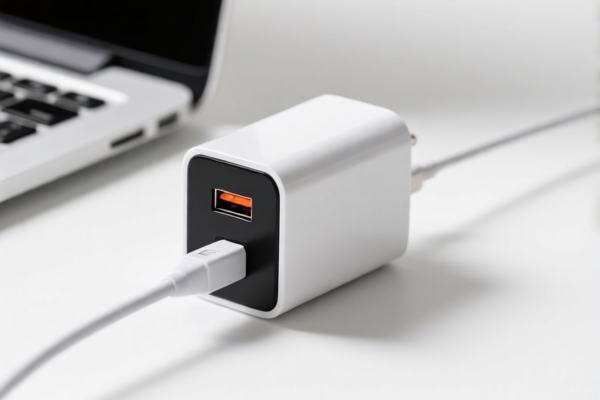
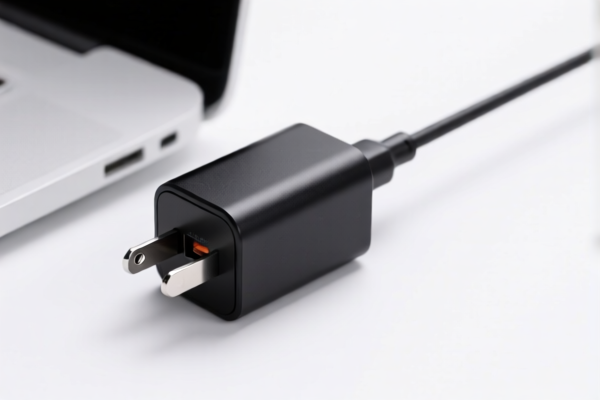
AI Analysis
🖥️ Desktop PD Charger (USB-C Power Adapter)
🌐 HS Code Reference & Customs Clearance Guide | 2026 Latest Tariff Analysis | Professional Clearance Strategy
📌 I. Product Definition & Classification: Do You Really Understand "Desktop PD Chargers"?
A Desktop PD (Power Delivery) Charger is a compact, wall-plug or desktop device designed to convert alternating current (AC) from the mains into direct current (DC) at specific voltages (e.g., 5V, 9V, 15V, 20V) for charging smartphones, laptops, tablets, and other USB-C devices. In international trade, classification depends on its electrical function (rectification/conversion) and intended use.
There is significant debate in customs classification regarding whether it is a power supply/rectifier (Headquarters: 8504) or an independent electrical apparatus (Headquarters: 8543).
⚠️ Key Classification Dilemma:
- View A (Power Conversion): Treated as a "Static Converter" or "Rectifier" because its core function is AC-DC conversion. → HS Code: 8504
- View B (Independent Apparatus): Treated as an "Independent Electrical Apparatus" with specific functions, often used as a "catch-all" for devices that don't fit neatly into other specific categories. → HS Code: 8543
📦 2. HS Code Classification Details (Based on Provided Data)
The following HS codes are derived from the analysis of the "Desktop PD Charger" category, focusing on its nature as a static converter or independent electrical device.
| HS Code | Product Description | Classification Logic |
|---|---|---|
8504.40.95.40 |
Rectifiers and Rectifying Equipment | Static Converter Category: Functionally aligned with power supplies. Classified under the "other" catch-all for static converters. |
8504.40.70.18 |
Static Converters | Static Converter Category: Output power does not fit specific narrow intervals; no material/form conflict. Fits the broad definition of static converters. |
8543.70.60.00 |
Electrical Apparatus with Individual Functions | Independent Apparatus Logic: Function aligns with the purpose of connecting to devices. Classified under the "other" catch-all principle for independent apparatus. |
8543.70.98.60 |
Other Electrical Apparatus | Independent Apparatus Logic: Inferred plastic/metal housing, fits the "other" catch-all definition for independent electrical apparatus. |
🔍 Critical Note:
- 8504 Codes: Focus on the electrical function (AC to DC conversion).
- 8543 Codes: Focus on the device nature (independent functional unit) when specific power categories are exhausted.
- Material Inference: The8543.70.98.60summary explicitly mentions inference of plastic/metal housing, which is typical for PD chargers.
💰 3. 2026 Latest Tariff Rate Breakdown (Including Surcharges)
✅ Applicable Country: United States (US)
✅ Origin: China (CN)
✅ Effective Date: Post-2025 (Includes Section 301 & IEEPA surcharges)
🎯 1. 8504.40.95.40 & 8504.40.70.18 —— Static Converters / Rectifiers
These two codes share the same tariff structure in the provided data.
| Item | Details |
|---|---|
| Basic Duty Rate | 0.0% |
| Section 301 Surcharge (USITC) | +25.0% |
| Section 122 / IEEPA Surcharge | +10.0% |
| Total Effective Tariff | 35.0% |
| Calculation Method | CIF Value × 35% |
| De Minimis Exemption | ❌ Not Applicable (High risk of audit) |
| Legal Basis Path | USITC:8504.40.95.40 / 8504.40.70.18 → Section 301: 25% → IEEPA/Section 122: 10% |
📌 Explanation:
- The 25% is the standard Section 301 tariff on Chinese electronics.
- The 10% is an additional surcharge (labeled as "122 Clause" in the source, often referencing specific IEEPA or emergency powers) applicable to Chinese imports.
- Total Cost Impact: For every $1,000 of charger value, you pay $350 in duties alone.
🎯 2. 8543.70.60.00 —— Independent Electrical Apparatus
| Item | Details |
|---|---|
| Basic Duty Rate | 0.0% |
| Section 301 Surcharge (USITC) | +25.0% |
| Section 122 / IEEPA Surcharge | +10.0% |
| Total Effective Tariff | 35.0% |
| Calculation Method | CIF Value × 35% |
| De Minimis Exemption | ❌ Not Applicable |
| Legal Basis Path | USITC:8543.70.60.00 → Section 301: 25% → IEEPA/Section 122: 10% |
📌 Note:
- Despite being in Chapter 8543, the surcharge structure remains identical to the 8504 codes in this specific dataset.
🎯 3. 8543.70.98.60 —— Other Independent Electrical Apparatus (Catch-All)
| Item | Details |
|---|---|
| Basic Duty Rate | 2.6% |
| Section 301 Surcharge (USITC) | +25.0% |
| Section 122 / IEEPA Surcharge | +10.0% |
| Total Effective Tariff | 37.6% |
| Calculation Method | CIF Value × 37.6% |
| De Minimis Exemption | ❌ Not Applicable |
| Legal Basis Path | USITC:8543.70.98.60 → Base Rate 2.6% → Section 301: 25% → IEEPA/Section 122: 10% |
📌 Warning:
- This code has a higher base duty (2.6%) compared to the others (0%).
- The total tax burden is 37.6%, making it the most expensive option among the provided codes.
- The summary mentions "inferred plastic/metal housing," which may trigger a more rigorous material inspection, leading to this specific classification.
🛠️ 4. Customs Clearance Practical Advice (Battle-Tested Pitfall Avoidance)
✅ 1. Required Documentation Checklist
| Document | Mandatory? | Purpose |
|---|---|---|
| Product Specification Sheet | ✔️ | Must list Input (AC 100-240V), Output (DC V/A), and Protocol (PD 3.0, QC 3.0, etc.). |
| Circuit Diagram / Schematic | ✔️ | Crucial for distinguishing between 8504 (pure conversion) and 8543 (intelligent/apparatus). |
| Product Photos (with Label) | ✔️ | Show model number, input/output ratings, and brand. |
| Safety Certifications | ✔️ | UL, FCC, CE, or RoHS reports. Essential for entry into the US/EU markets. |
| Commercial Invoice | ✔️ | Must accurately describe item as "Desktop Power Adapter" or "PD Charger." |
| Packing List | ✔️ | Detail contents to avoid "missing accessories" flags. |
✅ 2. Declaration Strategy (Key Mantra)
🔥 “Function First, Material Second, Surcharges Apply Everywhere!”
| Scenario | Recommended HS Code | Risk of Misclassification |
|---|---|---|
| Standard PD Charger (AC-DC) | 8504.40.95.40 or 8504.40.70.18 |
Low Risk. Best for pure power conversion. |
| Charger with Smart IC/Communication | 8543.70.60.00 |
Medium Risk. May be viewed as an "apparatus" due to intelligence. |
| Generic/Low-End Charger (Plastic Case) | 8543.70.98.60 |
High Risk. Highest tax (37.6%). Avoid unless necessary. |
| Charger + Cable + Adapter (Kit) | Declare as Main Item | Do not split. Total value declared under the primary HS code. |
✅ 3. Special Cases & Handling
| Situation | Handling Advice |
|---|---|
| OEM/White Label | Provide customer agreements. Ensure labels match specifications exactly to avoid "origin fraud" flags. |
| High-Wattage Chargers (>65W) | Ensure power output details are clear. If it exceeds specific intervals, it may still fall under 8504.40 but verify the "specific interval" exclusion. |
| Integrated Smart Hub (Charger + USB Hub) | May lean towards 8543 (8543.70.60.00) due to multiple functions. |
| Dropshipping/De Minimis | ❌ Do Not Use. All listed codes have 35%-37.6% duties. Section 321 (de minimis) is NOT applicable for high-value electronic imports from China under current scrutiny. |
🌍 5. Global Market Comparison (2026 Context)
| Market | Recommended HS Code | Est. Duty (China Origin) | Certification | Note |
|---|---|---|---|---|
| 🇺🇸 USA | 8504.40.95.40 |
35.0% | FCC + UL | High surcharges due to trade wars. |
| 🇺🇸 USA | 8543.70.98.60 |
37.6% | FCC + UL | Avoid if possible; higher base rate. |
| 🇨🇳 China | 8504.40.95.40 |
~7.5% (Import Duty) | CCC | Domestic market rules differ. |
| 🇪🇺 EU | 8504.40.95.40 |
0% (Most Favored Nation) | CE + RoHS | No Section 301/IEEPA surcharges. |
| 🇬🇧 UK | 8504.40.95.40 |
0% | UKCA | Post-Brexit standards. |
📌 Conclusion:
- The US market is the most expensive for these products due to the 35-37.6% effective tariff rate.
- EU/UK are significantly cheaper (0-3%), but require strict CE/UKCA compliance.
📌 6. Common Errors & Pitfalls (Lessons Learned)
❌ Error 1: Declaring PD Chargers as "Accessories" or "Cables" to avoid duty.
👉 Consequence: Customs will reclassify as 8504 or 8543 and charge 35%+ plus penalties.
❌ Error 2: Ignoring the "122 Clause" or "IEEPA" surcharge.
👉 Consequence: Under-declaration. You pay only 0% or 2.6%, but are caught during audit → Back taxes + 50-100% Penalty.
❌ Error 3: Confusing 8543.70.60.00 (0% base) with 8543.70.98.60 (2.6% base).
👉 Consequence: Unnecessary 2.6% cost increase on every unit. Ensure the product fits the "specific function" criteria for 60.00 rather than the "other" bucket for 98.60.
✅ Correct Practice:
"Desktop Power Adapter, PD 3.0, 65W, AC Input 100-240V, DC Output 5V/9V/12V/15V/20V, Model XYZ, FCC Certified"
🎯 7. Conclusion: Precision Classification Saves Money
🎯 Remember the Mantra:
🔹 “8504 is the Safe Haven, 8543 is the Risk, 35% is the Price of Origin.”
🔹 “Don’t let 2.6% base rate creep into your 8543.98 code!”
📌 Pro Tip:
If your chargers are assembled in Vietnam, Malaysia, or Mexico, you may qualify for preferential tariffs (0-3%) and avoid the 25%+10% surcharges.
Recommendation: Conduct a Section 301 Exclusion Application if you believe the product does not compete with US-made goods, though success rates are low.
📣 Immediate Action:
📞 Engage a Licensed Customs Broker + Provide Circuit Diagrams + Apply for Pre-Classification (Ruling)
🚀 Protect Your Margins with Accurate HS Codes!
✨ Professional Clearance, Starts with Correct Classification!
💼 Every Percent of Duty Counts!
Customer Reviews
About HS Code Classification
The Harmonized System (HS) is an internationally standardized nomenclature developed by the World Customs Organization (WCO) to classify traded products. Over 200 countries use the HS system as the basis for customs tariffs, trade statistics, and import/export regulations.
Each HS code follows a hierarchical structure:
- Chapter (2 digits) — Broad category of goods (e.g., Chapter 84: Machinery and Mechanical Appliances)
- Heading (4 digits) — More specific grouping within the chapter
- Subheading (6 digits) — Internationally standardized breakdown, used by all WCO member countries
- National subdivisions (8-10 digits) — Country-specific extensions for further classification, such as US HTSUS 10-digit codes
Correct HS code classification is essential for smooth customs clearance, accurate duty payment, and compliance with trade regulations. Misclassification can lead to customs delays, overpayment of duties, or penalties.
When importing from CN to US, the applicable tariff rates may include:
- Most-Favored-Nation (MFN) rate — The standard duty rate applied to WTO members
- General rate — Applied to countries without trade agreements
- Trade remedy duties — Additional tariffs such as Section 301 (anti-dumping), Section 232 (national security), or countervailing duties
The information provided on this page is for reference purposes only. For official classification, please consult with your local customs authority or a licensed customs broker.