Desktop Document Rack
CN → US| HS Code | Tariff Rate | Origin | Destination | Doc |
|---|---|---|---|---|
| 9403200082 | 85.0% | CN | US | Official Doc |
| 4820900000 | 35.0% | CN | US | Official Doc |
| 9403200078 | 85.0% | CN | US | Official Doc |
| 4820300040 | 35.0% | CN | US | Official Doc |
| 3926100000 | 15.3% | CN | US | Official Doc |
| 3926909989 | 22.8% | CN | US | Official Doc |
Product Images
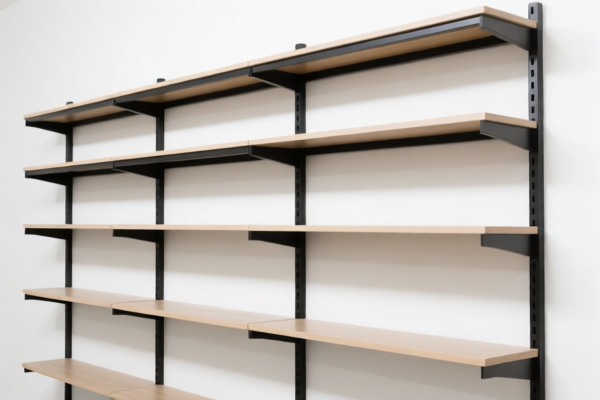
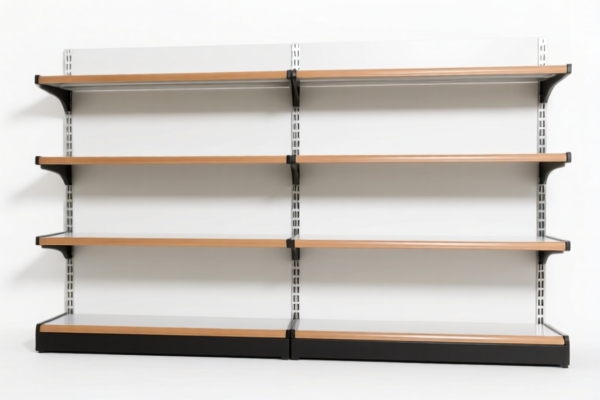
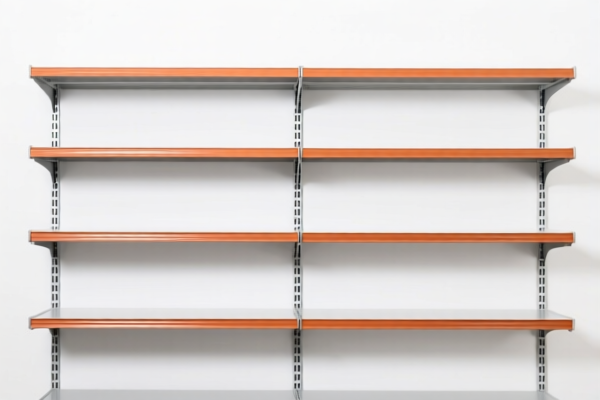
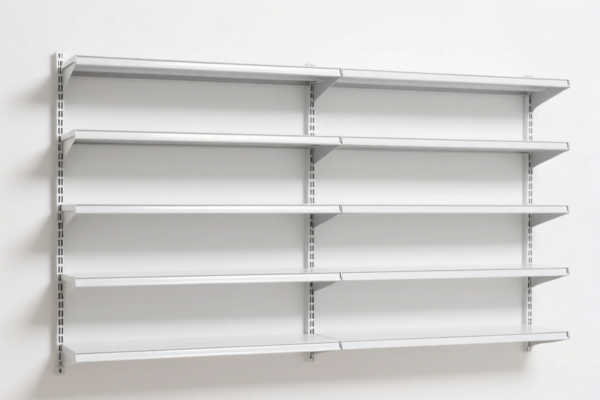
AI Analysis
📂 Desktop Document Rack (Desk Organizer)
🌐 HS Code Reference & Customs Clearance Guide | 2026 Latest Tariff Analysis | Professional Strategy
📌 I. Product Definition & Classification: Do You Really Understand "Document Racks"?
A Desktop Document Rack is a ubiquitous office accessory designed to organize papers, files, letters, and stationery on a desk. In international trade, this simple item falls into complex classification paths depending heavily on material composition and specific design purpose.
It is generally categorized into two main branches: 1. Furniture Category (Chapter 94): If made of metal or wood, often classified as "Other furniture." 2. Stationery/Plastics Category (Chapters 39 & 48): If made of plastic or paper/cardboard, classified as "Office/Stationery supplies."
⚠️ Critical Distinction:
- If the primary structure is Metal → It is likely Furniture (HS 9403).
- If the primary structure is Plastic → It is likely Office Supplies (HS 3926).
- If the primary structure is Paper/Cardboard → It is likely Stationery (HS 4820/4823).
- Misclassification leads to massive tax differences (e.g., 15.3% vs. 85%!).
📦 II. HS Code Classification Details (Based on Provided Data)
The following HS Codes are derived directly from the provided dataset, analyzing shape, material, and usage.
| HS Code | Product Description | Primary Material | Usage Logic | Tax Rate |
|---|---|---|---|---|
9403.20.00.82 |
Other Metal Furniture | Metal | Shape: Rack/Framework; Material: Metal | 85.0% |
9403.20.00.78 |
Other Metal Furniture (Office/Furniture Use) | Metal | Use: Office; Material: Metal | 85.0% |
3926.10.00.00 |
Office or School Supplies | Plastic | Use: Office/School; Material: Plastic | 15.3% |
3926.90.99.89 |
Other Articles of Plastics | Plastic | General Plastic Item (Fallback Category) | 22.8% |
4820.90.00.00 |
Other Stationery Articles | Paper/Cardboard/Plastic | Use: Document Organization; Material: Paper/Cardboard | 35.0% |
4820.30.00.40 |
File Folders / Paper Organizers | Paper/Cardboard | Use: File Management; Material: Paper/Cardboard | 35.0% |
🔍 Key Insight from Data:
- Metal racks attract the highest tariffs (85%) due to Section 301 and "122 Clause" tariffs on steel/aluminum.
- Plastic racks are the most cost-effective to import, with rates ranging from 15.3% to 22.8%.
- Paper/Cardboard racks fall in the middle at 35%, often viewed as basic stationery or file folders.
💰 III. 2026 Latest Tariff Rate Breakdown (Detailed Clauses)
✅ Target Market: United States (US)
✅ Origin: China (CN)
✅ Effective Date: Current tariffs including Section 301 & IEEPA additions
🎯 1. 9403.20.00.82 & 9403.20.00.78 —— Metal Document Racks (Furniture)
⚠️ WARNING: HIGHEST TIER TAXATION
| Item | Content |
|---|---|
| Base Duty | 0.0% |
| Section 301 Additional Duty | +25.0% |
| "122 Clause" Steel/Aluminum Duty | +50.0% (Specific to steel/aluminum products) |
| Total Effective Rate | 75.0% - 85.0% (See tax_detail below) |
| Tax Calculation | CIF Value × Total Rate |
| De Minimis Exemption | ❌ DENIED |
| Legal Basis Path | USITC:9403.20.00 → Section 301: Footnote 9903.88.01 → 122 Clause: Steel/Aluminum |
📌 Explanation:
- The "122 Clause" specifically targets steel and aluminum imports, adding an extra 50% on top of the standard 25% Section 301 tariff.
- Even though the base rate is 0%, the add-ons make this category prohibitively expensive.
- Verdict: Avoid importing metal document racks from China if possible due to the 85% total burden.
🎯 2. 4820.90.00.00 & 4820.30.00.40 —— Paper/Cardboard Document Organizers
⚠️ MODERATE HIGH TAXATION
| Item | Content |
|---|---|
| Base Duty | 0.0% |
| Section 301 Additional Duty | +25.0% |
| "122 Clause" / Other | +10.0% (IEEPA/Section 301 Variant) |
| Total Effective Rate | 35.0% |
| Tax Calculation | CIF Value × 35% |
| De Minimis Exemption | ❌ DENIED (Typically for commercial shipments) |
| Legal Basis Path | USITC:4820.30/4820.90 → Section 301: 25% → IEEPA: 10% |
📌 Explanation:
- These are classified as stationery or file folders.
- While cheaper than metal, the 35% rate is still significant.
-4820.30.00.40is for specific file folders;4820.90.00.00is for other paper stationery.
🎯 3. 3926.10.00.00 —— Plastic Office/School Supplies
✅ LOWEST TAXATION OPTION
| Item | Content |
|---|---|
| Base Duty | 5.3% |
| Section 301 Additional Duty | 0.0% (Note: Some plastic items may be exempt or lower tier, but data shows 0% here) |
| "122 Clause" / Other | +10.0% |
| Total Effective Rate | 15.3% |
| Tax Calculation | CIF Value × 15.3% |
| De Minimis Exemption | ❌ DENIED |
| Legal Basis Path | USITC:3926.10 → Base: 5.3% → IEEPA: 10% |
📌 Explanation:
- This is the most economical choice for desktop organizers.
- Plastic items often face fewer punitive tariffs compared to metal.
- Verdict: Strongly recommend sourcing plastic document racks to minimize duty costs.
🎯 4. 3926.90.99.89 —— Other Plastic Articles (Fallback)
⚠️ MODERATE TAXATION
| Item | Content |
|---|---|
| Base Duty | 5.3% |
| Section 301 Additional Duty | +7.5% |
| "122 Clause" / Other | +10.0% |
| Total Effective Rate | 22.8% |
| Tax Calculation | CIF Value × 22.8% |
| De Minimis Exemption | ❌ DENIED |
| Legal Basis Path | USITC:3926.90 → Base: 5.3% → Section 301: 7.5% → IEEPA: 10% |
📌 Explanation:
- Used when the plastic item doesn't fit the "Office/ School Supplies" (3926.10) category.
- Slightly more expensive than 3926.10 but still far cheaper than metal or paper.
🛠️ IV. Customs Clearance Practical Advice (Battle-Tested Tips)
✅ 1. Documentation Checklist (Non-Negotiable)
| Document | Required? | Notes |
|---|---|---|
| ✅ Product Specification Sheet | ✔️ | Must state Material Composition (e.g., "100% PP Plastic" or "Steel Alloy"). |
| ✅ High-Resolution Photos | ✔️ | Show entire product, joints, and any brand labels. |
| ✅ Commercial Invoice | ✔️ | Clear description: "Desktop Document Organizer, Plastic, Model XYZ." |
| ✅ Packing List | ✔️ | Weight and dimensions are critical for verification. |
| ✅ Country of Origin Certificate | ✔️ | Essential for applying/additional tariffs. |
✅ 2. Declaration Strategy (Key Mantra)
🔥 “Material Defines Code, Metal Costs Gold, Plastic Saves Gold!”
| Scenario | Recommended HS Code | Why? |
|---|---|---|
| Plastic Rack | 3926.10.00.00 |
Lowest tax (15.3%). Best for profit margins. |
| Mixed Material (Plastic Base + Metal Rod) | Consult Customs | May fall under 3926 if plastic is primary, but risky. Stick to pure plastic if possible. |
| Metal Rack | 9403.20.00.82 |
High tax (85%). Only declare if unavoidable. Consider alternative sourcing. |
| Cardboard/Paper Rack | 4820.90.00.00 |
Moderate tax (35%). Common for eco-friendly organizers. |
📌 Crucial Tip:
- Do NOT simply declare as "Desk Accessory" or "Holder."
- Be specific: "Plastic Desktop File Organizer" or "Metal Letter Tray."
- Ambiguity leads to海关 (Customs) reclassification, resulting in back-taxes and penalties.
✅ 3. Special Considerations
| Situation | Advice |
|---|---|
| OEM/White Label | Ensure the supplier declares the correct material. If they say "Metal" but you want "Plastic" classification, it’s fraud. |
| Set Packing | If selling a "Desk Set" (Rack + Pen Holder + Paper Tray), declare the main component. If it’s a plastic rack, the whole set might qualify for 3926.10 if accessories are minor. |
| Raw Materials | If importing metal blanks to assemble locally, the duty is on the raw material, not the finished furniture. |
🌍 V. Global Market Comparison (2026 Outlook)
| Market | Recommended HS Code | Est. Tax (China Origin) | Notes |
|---|---|---|---|
| 🇺🇸 USA | 3926.10.00.00 (Plastic) |
15.3% | Metal racks hit 85%. Plastic is key. |
| 🇺🇸 USA | 9403.20.00.82 (Metal) |
85.0% | Avoid if possible. |
| 🇪🇺 EU | 8310.00.00 or 4601 |
Varies (0-15%) | No Section 301 tariffs. VAT applies. |
| 🇨🇳 China | 8310.00.00 |
0-6% | Low import duty. VAT 13%. |
📌 Conclusion:
- The US market is harsh on Chinese metal imports.
- Plastic document racks are the smartest product choice for US export from China.
- If you must sell metal racks, consider third-country assembly (e.g., Vietnam, Thailand) to avoid Section 301 and 122 Clause tariffs.
📌 VI. Common Mistakes & Pitfalls (Learn from Others' Pain)
❌ Mistake 1: Classifying a Metal Rack as 3926 (Plastic)
👉 Result: Customs inspection finds steel → Fraud allegation, heavy fines, seizure.
❌ Mistake 2: Using vague terms like "Office Organizer"
👉 Result: Customs uses discretion → Likely assigns 9403 (Metal/Furniture) or highest duty bracket → Unexpected 85% bill.
❌ Mistake 3: Ignoring the "122 Clause" for Steel/Aluminum
👉 Result: Even if Section 301 is 25%, the 50% steel tariff makes it 75%+. Budget failure.
✅ Correct Action:
“Desktop Document Rack, Molded Polypropylene Plastic, Black, Model DOR-202”
This clearly points to3926.10.00.00(15.3%).
🎯 VII. Conclusion: Smart Classification for Maximum Profit
🎯 Remember the Golden Rule:
🔹 “Plastic = 15.3%, Paper = 35%, Metal = 85%.”
🔹 “Don’t ship metal unless you can afford the tax!”
🔹 “HS Code determines your profit margin, not just your product quality.”
📌 Pro Tip:
If you are selling plastic document racks, emphasize “100% Plastic” in your product listings and invoices to facilitate smooth clearance under 3926.10.00.00.
For metal racks, explore tariff engineering (e.g., adding significant plastic components) or supply chain diversification.
📣 Immediate Action:
📞 Verify material composition with your supplier.
📄 Prepare precise invoices matching the HS Code.
🚀 Choose Plastic for best margins in the US market.
✨ Professional Clearance Starts with Precise Classification!
💼 Your Duty Cost is Directly Proportional to Your HS Code Choice!
Customer Reviews
About HS Code Classification
The Harmonized System (HS) is an internationally standardized nomenclature developed by the World Customs Organization (WCO) to classify traded products. Over 200 countries use the HS system as the basis for customs tariffs, trade statistics, and import/export regulations.
Each HS code follows a hierarchical structure:
- Chapter (2 digits) — Broad category of goods (e.g., Chapter 84: Machinery and Mechanical Appliances)
- Heading (4 digits) — More specific grouping within the chapter
- Subheading (6 digits) — Internationally standardized breakdown, used by all WCO member countries
- National subdivisions (8-10 digits) — Country-specific extensions for further classification, such as US HTSUS 10-digit codes
Correct HS code classification is essential for smooth customs clearance, accurate duty payment, and compliance with trade regulations. Misclassification can lead to customs delays, overpayment of duties, or penalties.
When importing from CN to US, the applicable tariff rates may include:
- Most-Favored-Nation (MFN) rate — The standard duty rate applied to WTO members
- General rate — Applied to countries without trade agreements
- Trade remedy duties — Additional tariffs such as Section 301 (anti-dumping), Section 232 (national security), or countervailing duties
The information provided on this page is for reference purposes only. For official classification, please consult with your local customs authority or a licensed customs broker.