Desktop Organizer Box
CN → US| HS Code | Tariff Rate | Origin | Destination | Doc |
|---|---|---|---|---|
| 4202999000 | 55.0% | CN | US | Official Doc |
| 3923102000 | 35.0% | CN | US | Official Doc |
| 3923109000 | 38.0% | CN | US | Official Doc |
| 3926901000 | 20.9% | CN | US | Official Doc |
| 4202929315 | 52.6% | CN | US | Official Doc |
| 3926909989 | 22.8% | CN | US | Official Doc |
Product Images
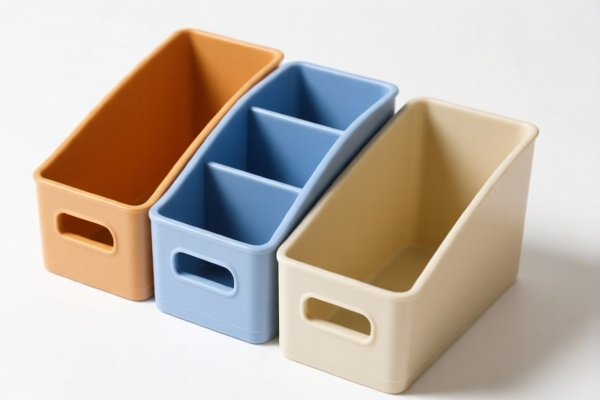
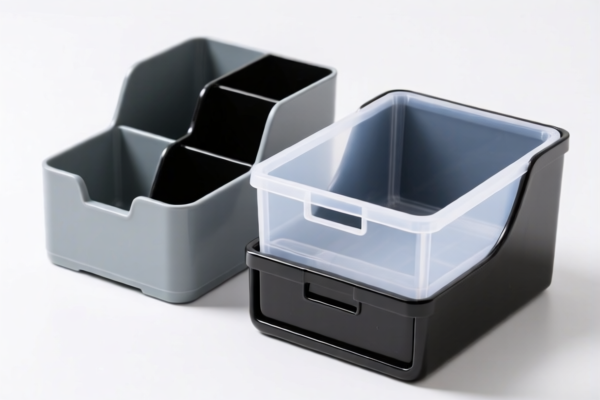
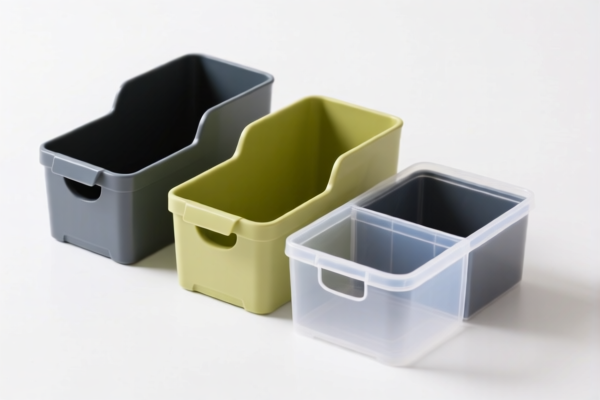
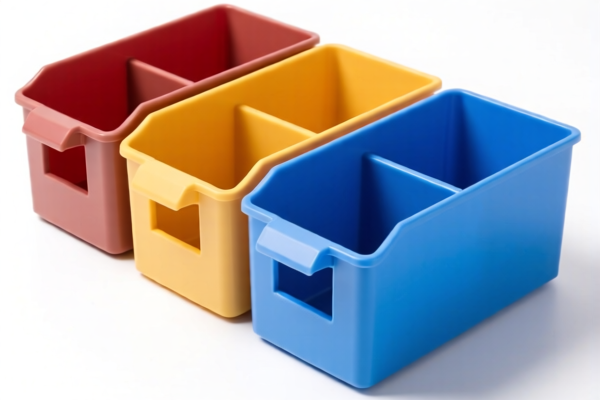
AI Analysis
📦 Desktop Organizer Box (Storage Containers)
🌐 HS Code Reference & Clearance Guide | 2026 Latest Tariff Analysis | Strategic Customs Entry
📌 I. Product Definition & Classification: What is a "Desktop Organizer"?
A Desktop Organizer Box is a general term for storage vessels used to arrange small items (pens, stationery, cosmetics, tools) on a desk or shelf. In international trade, its classification depends heavily on material composition and primary function (pure storage vs. personal carry/bag).
⚠️ Key Distinction Point:
- If made primarily of plastic and used for household/office storage → Typically falls under Chapter 39 (Plastics).
- If it resembles a bag, pouch, or case with handles/straps, or uses textiles/paper as the main structure → Typically falls under Chapter 42 (Articles of leather; articles of travel goods, handbags) or Chapter 49 (Paper) depending on specific structure.
- Crucial: The material dictates the HS Code, which drastically changes the tax liability.
📊 II. HS Code Classification Details (2026 Latest Tariff Authority)
| HS Code | Product Description | Applicable Scenario | Material |
|---|---|---|---|
3923.10.20.00 |
Plastic articles for conveyance or packaging of goods (Plastic Storage Boxes) | Rigid plastic boxes, drawer organizers, modular plastic bins | ✅ Plastic |
3923.10.90.00 |
Other plastic articles for conveyance or packaging (Plastic Boxes/Trays) | Plastic containers, trays, pallets, or similar items not specifically listed elsewhere | ✅ Plastic |
3926.90.10.00 |
Other articles of plastic (Plastic Containers resembling buckets/drums) | Plastic containers where form/function aligns more with "other plastic articles" like buckets/drums | ✅ Plastic |
4202.99.90.00 |
Articles of travel goods, suitcases, vanity cases, etc. (Other) | Bags, cases, or containers where material may be plastic, textile, or paper, but structure is "bag-like" | ⚠️ Mixed (Plastic/Textile/Paper) |
4202.92.93.15 |
Other articles with outer surface of textile materials (Textile/Plastic Composite) | Containers where the outer surface involves textile materials, often soft-sided or mixed material | ⚠️ Textile/Plastic Mix |
🔍 Key Reminder:
- Rigid Plastic Boxes generally go to 3923 (Packaging/Storage).
- Bag-like/Portable Containers go to 4202.
- Misclassification between "Packaging" (3923) and "Bag/Case" (4202) can lead to significant tax differences due to different base tariffs.
💰 III. 2026 Latest Tariff Rate Breakdown (Including Surcharges)
✅ Applicable Country: United States (US)
✅ Origin: China (CN)
✅ Effective Date: Current US Import Rules (Section 301 & IEEPA Surcharges Applied)
🎯 1. 3923.10.20.00 — Plastic Storage Boxes (Primary Plastic Storage)
| Item | Content |
|---|---|
| Base Tariff | 0.0% |
| Section 301 Surcharge | +25.0% |
| IEEPA Surcharge | +10.0% (Section 122/Other relevant provisions) |
| Total Tax Rate | 35.0% |
| Tax Calculation | CIF Value × 35% |
| De Minimis Exemption | ❌ Not Eligible (Due to high tariff rates) |
| Legal Basis Path | USITC:3923.10.20.00 → USITC:Footnote 301 → IEEPA:Surcharge |
📌 Explanation:
- This is the most common code for rigid plastic desk organizers.
- The 0% base rate is offset by heavy US surcharges.
- 35% total is the standard burden for plastic packaging/storage items from China.
🎯 2. 3923.10.90.00 — Other Plastic Packaging/Storage Items
| Item | Content |
|---|---|
| Base Tariff | 3.0% |
| Section 301 Surcharge | +25.0% |
| IEEPA Surcharge | +10.0% |
| Total Tax Rate | 38.0% |
| Tax Calculation | CIF Value × 38% |
| De Minimis Exemption | ❌ Not Eligible |
| Legal Basis Path | USITC:3923.10.90.00 → USITC:Footnote 301 → IEEPA:Surcharge |
📌 Note:
- Slightly higher than3923.10.20.00due to the 3% base tariff.
- Used for plastic boxes that don't fit the "20" subcategory (e.g., specific trays or non-standard shapes).
🎯 3. 3926.90.10.00 — Other Plastic Articles (Container-like)
| Item | Content |
|---|---|
| Base Tariff | 3.4% |
| Section 301 Surcharge | +7.5% (Note: Lower surcharge applies here) |
| IEEPA Surcharge | +10.0% |
| Total Tax Rate | 20.9% |
| Tax Calculation | CIF Value × 20.9% |
| De Minimis Exemption | ❌ Not Eligible |
| Legal Basis Path | USITC:3926.90.10.00 → USITC:Footnote 301 (Partial) → IEEPA:Surcharge |
📌 Explanation:
- Lowest Tax Option! If your plastic organizer can be argued as "Other Plastic Articles" (e.g., resembling a bucket/drum rather than packaging), the surcharge is only 7.5%.
- Risk: Customs may reclassify as3923if it's clearly for "packaging/storage." Requires strong justification.
🎯 4. 4202.99.90.00 — Bag/Case Type Organizers (Mixed Material)
| Item | Content |
|---|---|
| Base Tariff | 20.0% |
| Section 301 Surcharge | +25.0% |
| IEEPA Surcharge | +10.0% |
| Total Tax Rate | 55.0% |
| Tax Calculation | CIF Value × 55% |
| De Minimis Exemption | ❌ Not Eligible |
| Legal Basis Path | USITC:4202.99.90.00 → USITC:Footnote 301 → IEEPA:Surcharge |
📌 Note:
- High tax due to high base tariff (20%) + full surcharges.
- Applies if the organizer is considered a "bag" or "case" (e.g., fabric-covered plastic core).
🎯 5. 4202.92.93.15 — Textile-Outer Surface Organizers
| Item | Content |
|---|---|
| Base Tariff | 17.6% |
| Section 301 Surcharge | +25.0% |
| IEEPA Surcharge | +10.0% |
| Total Tax Rate | 52.6% |
| Tax Calculation | CIF Value × 52.6% |
| De Minimis Exemption | ❌ Not Eligible |
| Legal Basis Path | USITC:4202.92.93.15 → USITC:Footnote 301 → IEEPA:Surcharge |
📌 Note:
- Also high tax (52.6%).
- Applies if the outer surface is textile (e.g., canvas organizer with plastic dividers).
🛠️ IV. Customs Clearance Practical Advice (Pitfall Avoidance Guide)
✅ 1. Preparation Checklist (Must-Have Documents)
| Document | Required | Description |
|---|---|---|
| ✅ Product Specifications | ✔️ | Material composition (% plastic, % textile, etc.), dimensions, weight |
| ✅ Material Declaration | ✔️ | Explicitly state if "100% Plastic" or "Plastic + Textile Cover" |
| ✅ Product Photos | ✔️ | Clear images showing structure, handles, and material texture |
| ✅ Commercial Invoice | ✔️ | Description must match HS Code logic (e.g., "Plastic Storage Box" vs. "Fabric Organizer Case") |
| ✅ Packing List | ✔️ | Itemize contents if multiple materials are included |
✅ 2. Declaration Strategy (Key Tips)
🔥 "Material Dictates Code, Function Follows Form!"
| Scenario | Recommended HS Code | Why? |
|---|---|---|
| Rigid Plastic Box (e.g., IKEA-style drawer) | 3923.10.20.00 |
Clearly for storage/packaging, plastic material |
| Plastic Tray/Caddy (No handles, rigid) | 3923.10.90.00 |
Plastic article, not strictly "box" but storage |
| "Bucket-like" Plastic Container | 3926.90.10.00 |
If it resembles a bucket/drum more than a box |
| Fabric-Covered Organizer | 4202.99.90.00 |
Looks like a bag/case, textile is key feature |
| Canvas/Textile Organizer | 4202.92.93.15 |
Outer surface is textile, even if plastic inside |
📌 Critical Warning:
- Do NOT declare a plastic box as4202to avoid tariffs. Customs will inspect material.
- Do NOT declare a fabric organizer as3923just because it has plastic dividers. The outer surface defines Chapter 42.
✅ 3. Special Cases & Handling
| Case | Handling Suggestion |
|---|---|
| Mixed Material Organizer (e.g., Plastic Base + Fabric Lid) | Declare based on essential character. If fabric lid is prominent, consider 4202. If plastic body is dominant, consider 3923. Consult a broker. |
| Bamboo/Wood Organizer | Not listed in <DATA>. Likely Chapter 44 (Wood) or 46 (Basketry). Tax rates differ. |
| Metal Organizer | Likely Chapter 73 (Iron/Steel) or 76 (Aluminum). Not in <DATA>. |
| Set of Organizers (Box + Tray + Dividers) | Declare as a set under the essential character item. Usually the main box dictates the code. |
🌍 V. Global Market Comparison (2026 Latest)
| Country/Region | Recommended HS Code (Plastic) | Tariff (China Origin) | Notes |
|---|---|---|---|
| 🇺🇸 USA | 3923.10.20.00 |
35% | High surcharges (301+IEEPA) |
| 🇨🇳 China | 3923.10.20.00 |
Varies | Import duty ~5-10%, no 301/IEEPA |
| 🇪🇺 EU | 3923.10.20.00 |
~4-6% | No Section 301, standard MFN rates |
| 🇬🇧 UK | 3923.10.20.00 |
~4-6% | Post-Brexit, similar to EU |
| 🇯🇵 Japan | 3923.10.20.00 |
~3-8% | No surcharges, standard rates |
📌 Conclusion:
- USA is the most expensive market for plastic organizers from China due to 301 & IEEPA surcharges.
- If targeting the US, cost planning must include ~35% tax.
- Consider sourcing from Vietnam/Mexico for potential tariff exemptions (subject to rules of origin).
📌 VI. Common Errors & Pitfalls (Lessons Learned)
❌ Error 1: Declaring a Plastic Box as 4202 to "look like a bag"
👉 Consequence: Customs inspection reveals plastic material → Reclassification + Penalties.
❌ Error 2: Declaring a Fabric Organizer as 3923 (Plastic) because it has plastic parts
👉 Consequence: Customs identifies textile outer surface → Reclassification + Penalties.
❌ Error 3: Ignoring IEEPA 10% Surcharge
👉 Consequence: Underpayment of duties → Seizure or Debt Collection.
✅ Correct Practice:
"Plastic Desktop Organizer, Rigid, Multiple Compartments, Model XYZ, 100% Polypropylene"
→ Use3923.10.20.00"Fabric-Covered Desktop Storage Case, Canvas Exterior, Plastic Interior Dividers"
→ Use4202.99.90.00or4202.92.93.15
🎯 VII. Conclusion: Precise Classification Saves Money!
🎯 Remember the Mantra:
🔹 "Plastic Box = 3923 (35%)", "Fabric Case = 4202 (55%)",
🔹 "Bucket Shape = 3926 (20.9%)", "Check Material First!"
📌 Pro Tip:
If your product is borderline (e.g., plastic with a textile cover), consider applying for an Advance Ruling from US Customs to avoid post-import audits.
📣 Immediate Action:
📞 Verify material composition
📄 Prepare detailed product specs
🚀 Declare accurately to ensure smooth clearance!
✨ Professional Customs Clearance Starts with Accurate Classification!
💼 Every Percent of Tax Saved is Pure Profit!
Customer Reviews
About HS Code Classification
The Harmonized System (HS) is an internationally standardized nomenclature developed by the World Customs Organization (WCO) to classify traded products. Over 200 countries use the HS system as the basis for customs tariffs, trade statistics, and import/export regulations.
Each HS code follows a hierarchical structure:
- Chapter (2 digits) — Broad category of goods (e.g., Chapter 84: Machinery and Mechanical Appliances)
- Heading (4 digits) — More specific grouping within the chapter
- Subheading (6 digits) — Internationally standardized breakdown, used by all WCO member countries
- National subdivisions (8-10 digits) — Country-specific extensions for further classification, such as US HTSUS 10-digit codes
Correct HS code classification is essential for smooth customs clearance, accurate duty payment, and compliance with trade regulations. Misclassification can lead to customs delays, overpayment of duties, or penalties.
When importing from CN to US, the applicable tariff rates may include:
- Most-Favored-Nation (MFN) rate — The standard duty rate applied to WTO members
- General rate — Applied to countries without trade agreements
- Trade remedy duties — Additional tariffs such as Section 301 (anti-dumping), Section 232 (national security), or countervailing duties
The information provided on this page is for reference purposes only. For official classification, please consult with your local customs authority or a licensed customs broker.