Desktop Stapler
CN → US| HS Code | Tariff Rate | Origin | Destination | Doc |
|---|---|---|---|---|
| 8472909080 | 35.0% | CN | US | Official Doc |
| 8205517500 | 38.7% | CN | US | Official Doc |
| 8472300000 | 36.8% | CN | US | Official Doc |
Product Images
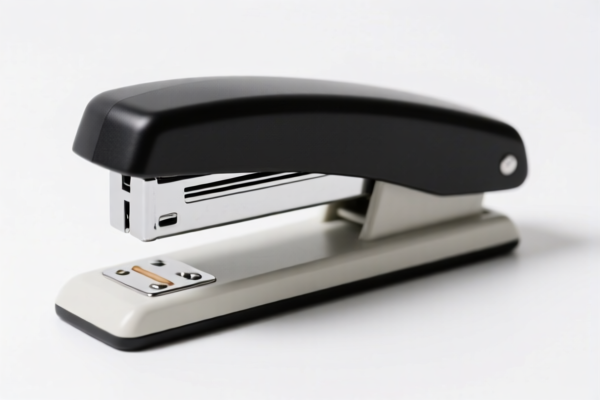
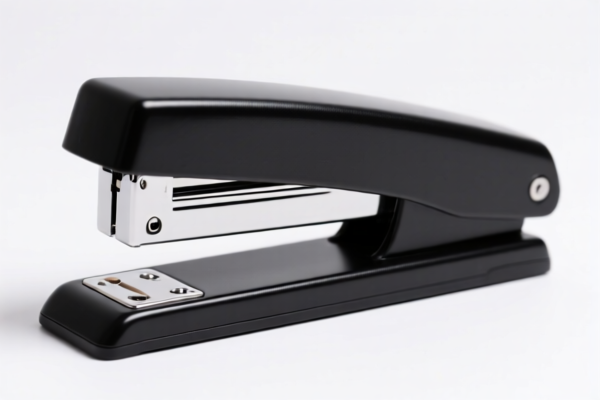
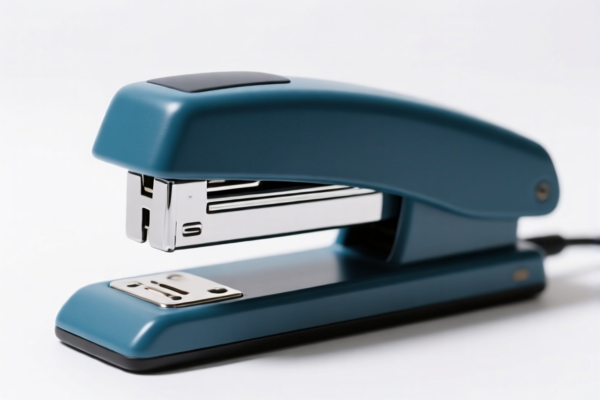

AI Analysis
📚 Desktop Stapler (Stationery & Office Equipment)
🌐 HS Code Reference & Clearance Guide | 2026 Latest Tariff Analysis | Professional Customs Strategy
📌 I. Product Definition & Classification: Do You Really Understand "Desktop Staplers"?
A desktop stapler is a mechanical office tool used for fastening sheets of paper together. In international trade, its classification depends on its primary function (office machinery vs. hand tool) and material composition. There is no material conflict for the codes below; the distinction lies in the administrative vs. physical categorization.
⚠️ Key Distinction Points:
- If viewed as an Office Machine/Device (even manual ones with complex mechanisms) → Chapter 84 (8472).
- If viewed as a Hand Tool/Household Item (simple leverage-based tool) → Chapter 82 (8205).
- No Material Conflict: Both classifications allow for metal, plastic, or mixed materials as long as the primary function defines the category.
📦 II. HS Code Classification Details (2026 Latest Tariff Authority Mapping)
Based on the provided data, here are the three potential classifications for Desktop Staplers, ranging from pure office machinery to household tools.
| HS Code | Product Description | Functional Scope | Tax Implication |
|---|---|---|---|
8472.90.90.80 |
Staplers/Punchers (Office Machines Category) | Explicitly listed as "Staplers or hole punchers" under office machines. | 35.0% Total |
8205.51.75.00 |
Other Household Tools (Hand Tool Category) | Classified as "Other household tools and parts," fitting the physical nature of the tool. | 38.7% Total |
8472.30.00.00 |
Other Office Machines (Stapler Sets) | Covers stapler sets/stationery kits, logically consistent with "Other office machines." | 36.8% Total |
🔍 Strategic Insight:
- 8472.90.90.80 is the most precise fit for standalone staplers explicitly named in the tariff heading.
- 8205.51.75.00 applies if the importer prefers to classify it under "tools" rather than "machines," but carries the highest tax burden.
- 8472.30.00.00 is relevant for sets (e.g., stapler + staples + punch in one box), treating it as office equipment.
💰 III. 2026 Latest Tariff Rate Breakdown (Including Surcharges & Policy Add-ons)
✅ Applicable Country: United States (US)
✅ Country of Origin: China (CN)
✅ Effective Time: Current 2026 Tariff Structure (Including Section 301 & IEEPA Add-ons)
🎯 1. 8472.90.90.80 —— Staplers (Office Machine Category)
Best Choice for Standard Desktop Staplers
| Item | Content |
|---|---|
| Base Tariff Rate | 0.0% (Ad Valorem) |
| Section 301 Surcharge | +25.0% (From USITC Footnote 9903.88.01 / Section 301 List) |
| IEEPA Surcharge | +10.0% (Section 122 Tariff, targeting China/HK products) |
| Total Effective Rate | 35.0% |
| Tax Calculation | CIF Value × 35.0% |
| De Minimis Exemption | ❌ Not Applicable (deny_de_minimis applies to high-tariff Chinese goods) |
| Legal Basis Path | IEEPA:9903.01.24 → USITC:8472.90.90.80 → SECTION_301:9903.88.01 |
📌 Explanation:
- Although the base rate is 0%, the 25% Section 301 and 10% IEEPA (122 Clause) surcharges make the total 35%.
- This is often the lowest total rate among the three options for standard staplers.
🎯 2. 8205.51.75.00 —— Other Household Tools (Hand Tool Category)
Highest Tax Burden
| Item | Content |
|---|---|
| Base Tariff Rate | 3.7% (Ad Valorem) |
| Section 301 Surcharge | +25.0% |
| IEEPA Surcharge | +10.0% (Section 122 Tariff) |
| Total Effective Rate | 38.7% |
| Tax Calculation | CIF Value × 38.7% |
| De Minimis Exemption | ❌ Not Applicable |
| Legal Basis Path | IEEPA:9903.01.24 → USITC:8205.51.75.00 → SECTION_301:9903.88.01 |
📌 Note:
- The 3.7% base rate is higher than 8472, leading to a 38.7% total.
- Use this only if customs specifically requires "Tool" classification over "Machine," but expect higher costs.
🎯 3. 8472.30.00.00 —— Other Office Machines (Stapler Sets)
Intermediate Option for Sets
| Item | Content |
|---|---|
| Base Tariff Rate | 1.8% (Ad Valorem) |
| Section 301 Surcharge | +25.0% |
| IEEPA Surcharge | +10.0% (Section 122 Tariff) |
| Total Effective Rate | 36.8% |
| Tax Calculation | CIF Value × 36.8% |
| De Minimis Exemption | ❌ Not Applicable |
| Legal Basis Path | IEEPA:9903.01.24 → USITC:8472.30.00.00 → SECTION_301:9903.88.01 |
📌 Note:
- Applies primarily to Stapler Sets (e.g., stapler + accessories sold together).
- If you import only the stapler,8472.90.90.80is better (35.0% vs 36.8%).
🛠️ IV. Clearance Practical Advice (Real-World Pitfall Guide)
✅ 1. Required Documentation Checklist (Non-Negotiable)
| Document | Must Provide | Description |
|---|---|---|
| ✅ Product Specification Sheet | ✔️ | Dimensions, material (plastic/metal), stapling capacity (e.g., 20 sheets) |
| ✅ Product Photos (With Label) | ✔️ | Clear view of model number, brand, and any "China Origin" markings |
| ✅ Commercial Invoice | ✔️ | Clearly state: "Desktop Stapler, Manual, Office Use" (Avoid vague terms like "Office Accessory") |
| ✅ Packing List | ✔️ | Detail contents; if selling a set, list each item separately |
| ✅ Origin Certificate (CO) | ✔️ | Crucial for proving China origin to apply correct surcharges |
| ✅ FCC/CE Certification | ❌ (If applicable) | Staplers are non-electric, so no FCC/CE needed unless it’s an electric stapler |
✅ 2. Declaration Strategy (Key Mantra)
🔥 “Classify as Machine, Not Tool; Be Specific, Avoid Penalties!”
| Scenario | Correct Declaration | Wrong Practice |
|---|---|---|
| Standard Desktop Stapler | 8472.90.90.80 (Office Machine) |
Misclassify as 8205 (Tool) → 38.7% Tax |
| Electric/Industrial Stapler | 8472.90.90.80 or 8508 |
If electric, must declare voltage/amperage |
| Stapler Set (with staples/punch) | 8472.30.00.00 (Office Set) |
Split declaration → Risk of audit |
| Cheap Plastic Stapler | 8472.90.90.80 |
Do NOT classify as "Plastic Toy" (Wrong Chapter) |
✅ 3. Special Handling Cases
| Situation | Handling Advice |
|---|---|
| OEM Custom Staplers | Provide client order + design specs. Do not claim "Gift" to avoid misclassification. |
| Electric Staplers | Ensure voltage (110V/220V) is declared. May require UL/FCC certification. |
| Bulk Import (B2B) | Use 8472.90.90.80. It is the most defensible "Office Machine" code. |
| Retail Package | If sold as a "Stationery Set," consider 8472.30.00.00, but verify if items are distinct. |
🌍 V. Global Market Comparison (2026 Latest)
| Country/Region | Recommended HS Code | Base Tariff | Total Tax (China Origin) | Notes |
|---|---|---|---|---|
| 🇺🇸 USA | 8472.90.90.80 |
0% | 35.0% | High due to 25% + 10% surcharges |
| 🇨🇳 China | 8472.90.90.80 |
5% | 5% | No surcharges on imports from other countries |
| 🇪🇺 EU | 8205.51.75.00 |
4.5% | 4.5% | No Section 301/IEEPA equivalents |
| 🇬🇧 UK | 8205.51.75.00 |
4.0% | 4.0% | Post-Brexit independent tariff |
| 🇦🇺 Australia | 8472.90.90.80 |
5.0% | 5.0% | GSP/FTA benefits may apply for non-CN origin |
📌 Conclusion:
- The US is the most expensive market for Chinese-origin staplers due to 35% total tax.
- EU/UK/Australia are significantly cheaper (4-5%), with no political surcharges.
- Strategy: If shipping to the US, ensure accurate classification to avoid penalties, as the base tax is 0% but surcharges are unavoidable.
📌 VI. Common Errors & Pitfall Guide (Lessons from the Field)
❌ Error 1: Classifying Staplers under Chapter 39 (Plastics)
👉 Consequence: Misclassification. Staplers are defined by function, not material.
👉 Result: Penalty + Back Taxes.
❌ Error 2: Using "Stationery" as a vague HS Code (e.g., 9608)
👉 Consequence: 9608 is for pens/pencils. Staplers have a specific heading in 8472.
👉 Result: Customs rejection or reclassification to 8205 (higher tax).
❌ Error 3: Ignoring the 122 Clause (IEEPA)
👉 Consequence: Thinking 25% (Section 301) is the final tax.
👉 Result: Underpaying tax by 10%, leading to audits and fines.
❌ Error 4: Declaring "Office Supplies" generally
👉 Consequence: Lack of specificity.
👉 Result: CBP may seize or delay shipment for further examination.
✅ Correct Declaration Example:
"Desktop Stapler, Manual, Steel/Plastic Construction, Model XYZ, 20-Sheet Capacity, For Office Use, Made in China"
HS Code:8472.90.90.80
🎯 VII. Conclusion: Precision Saves Money!
🎯 Remember the Mantra:
🔹 “Staplers are Machines, Not Toys. 0% Base, 35% Total. Don’t Call it a Tool!”
🔹 “HS Code8472.90.90.80is your best friend.8205is your wallet’s enemy.”
📌 Pro Tip:
- If you are importing electric staplers, ensure you have UL/FCC certification.
- For US Imports, the 10% IEEPA (Section 122) is a mandatory add-on for Chinese goods. Factor this into your pricing.
- Always request a Pre-Ruling from US Customs if the volume is high, to lock in the 8472.90.90.80 classification.
📣 Take Action:
📞 Contact your customs broker today.
📄 Provide clear product images and functional descriptions.
🚀 Avoid the 38.7% trap. Aim for 35.0%.
✨ Professional Customs Clearance Starts with Accurate Classification!
💼 Every percentage point counts in your profit margin.
Customer Reviews
About HS Code Classification
The Harmonized System (HS) is an internationally standardized nomenclature developed by the World Customs Organization (WCO) to classify traded products. Over 200 countries use the HS system as the basis for customs tariffs, trade statistics, and import/export regulations.
Each HS code follows a hierarchical structure:
- Chapter (2 digits) — Broad category of goods (e.g., Chapter 84: Machinery and Mechanical Appliances)
- Heading (4 digits) — More specific grouping within the chapter
- Subheading (6 digits) — Internationally standardized breakdown, used by all WCO member countries
- National subdivisions (8-10 digits) — Country-specific extensions for further classification, such as US HTSUS 10-digit codes
Correct HS code classification is essential for smooth customs clearance, accurate duty payment, and compliance with trade regulations. Misclassification can lead to customs delays, overpayment of duties, or penalties.
When importing from CN to US, the applicable tariff rates may include:
- Most-Favored-Nation (MFN) rate — The standard duty rate applied to WTO members
- General rate — Applied to countries without trade agreements
- Trade remedy duties — Additional tariffs such as Section 301 (anti-dumping), Section 232 (national security), or countervailing duties
The information provided on this page is for reference purposes only. For official classification, please consult with your local customs authority or a licensed customs broker.