Desktop Wax Melting Lamp with Adjustable Height Champagne Round
CN → US| HS Code | Tariff Rate | Origin | Destination | Doc |
|---|---|---|---|---|
| 9405216020 | 41.0% | CN | US | Official Doc |
| 9405218020 | 38.9% | CN | US | Official Doc |
Product Images
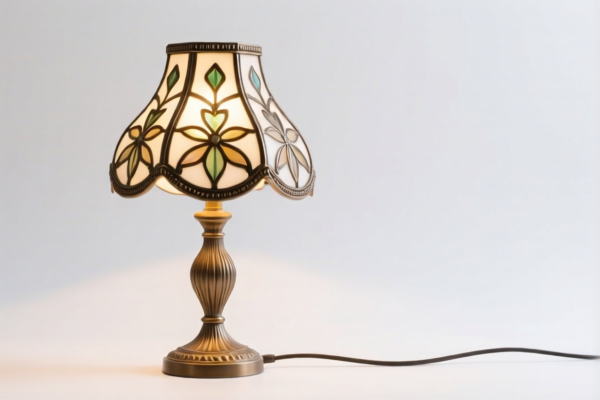
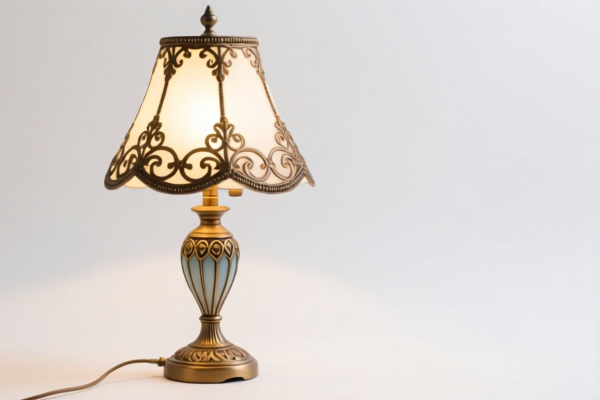
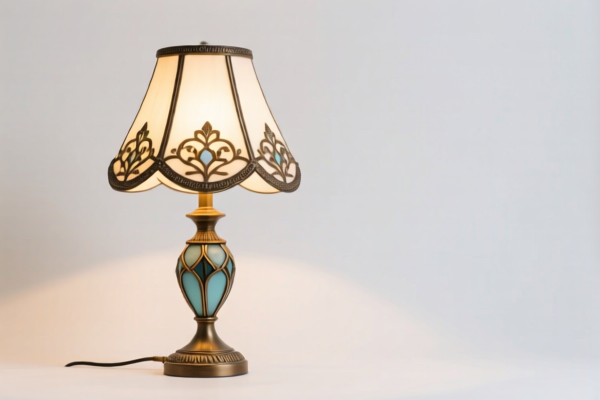
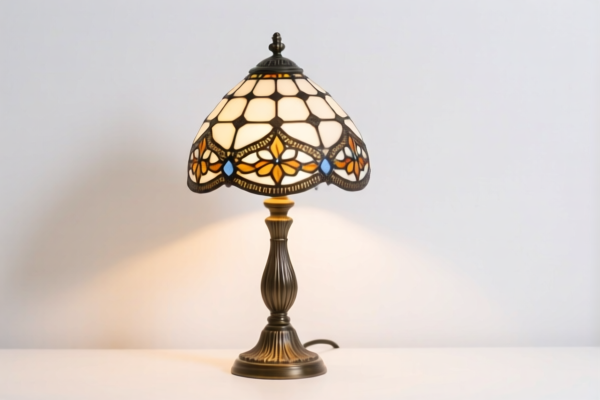
AI Analysis
🕯️ Desktop Wax Melting Lamp with Adjustable Height Champagne Round
🌐 HS Code Reference & Clearance Guide | 2026 Latest Tariff Analysis | Professional Customs Strategy
📌 I. Product Definition and Classification: Do You Really Understand "Wax Warmers"?
A Desktop Wax Melting Lamp (often called a wax melt warmer or candle lamp) is a decorative lighting fixture used primarily in home decor, spas, or retail environments to melt scented wax melts or candle bases using heat, not flame.
In international trade, these products are classified under Chapter 94 (Furniture; bedding, mattresses, mattress supports, cushions and similar stuffed furnishings; lamps and lighting fittings...). Specifically, they are considered Luminaires/Lighting Fittings because their primary function is to emit light (often LED-based for heat/effect) or house a light source that generates heat.
⚠️ Key Distinction:
- If the product is designed for use solely with Light-Emitting Diode (LED) light sources, it falls under 9405.21.
- If the product uses incandescent bulbs or other heat sources, it may fall under different subheadings (e.g., 9405.29).
- Base Material Matters: If the base/frame is made of base metal (e.g., aluminum, steel, zinc alloy) and finished in "Champagne" plating/coating, it impacts the specific 8-digit or 10-digit HS code.
📦 II. HS Code Classification Details (2026 Latest Tariff Authority对照)
Based on the provided <DATA>, here are the applicable HS Codes for Electric table, desk, bedside or floor-standing luminaires designed for use solely with LED light sources, of base metal.
| HS Code | Product Description | Applicable Scenario | Material & Design |
|---|---|---|---|
9405.21.60.20 |
Electric table/desk/bedside/floor-standing luminaires: Of base metal: Other | Base metal frame (e.g., stainless steel, aluminum) with LED-only design; "Champagne" finish implies metal construction. | ✅ Base Metal |
9405.21.80.20 |
Electric table/desk/bedside/floor-standing luminaires: Other (Not base metal or unspecified) | If the base is wood, ceramic, glass, or plastic, or if the material is not clearly "base metal." | ❌ Non-Base Metal / Other |
🔍 Critical Judgment Point:
- "Champagne Round" usually implies a metallic finish (plated metal). If the structural base is metal (e.g., stainless steel 304/201), use9405.21.60.20.
- If the base is wood, ceramic, or plastic with a metallic paint/coating, it may fall under9405.21.80.20.
- Default Recommendation: For "Champagne" finished metal lamps,9405.21.60.20is the most accurate classification for base metal items.
💰 III. 2026 Latest Tariff Rate Breakdown (Detailed Tax Clauses)
✅ Applicable Market: United States (US)
✅ Origin: China (CN) (Implied by the context of high additional tariffs and typical trade patterns for this item)
✅ Effective Time: Current rates (2025-2026)
🎯 1. 9405.21.60.20 —— LED Table/Desk Lamp, Base Metal
| Item | Detail |
|---|---|
| Base Tariff | 6.0% (Ad Valorem) |
| Section 301 Additional Tariff | +25.0% |
| Total Tariff Rate | 31.0% |
| Tax Calculation | CIF Value × 31.0% |
| De Minimis Eligibility | ❌ Not Eligible (Deny De Minimis) |
| Legal Basis Path | HTSUS:9405.21.60.20 → USITC Footnote: Section 301 List 4 |
📌 Explanation:
- The 6.0% is the standard US Most Favored Nation (MFN) duty rate for LED luminaires of base metal.
- The +25.0% is the Section 301 Tariff imposed on Chinese goods, specifically targeting lighting fixtures and parts.
- Total Cost Impact: For a $1,000 shipment, you pay $310 in duties.
- No De Minimis: This product cannot use the $800 de minimis exemption (Section 321) if it falls under Section 301 listed items. It must be formally entered with duties paid.
🎯 2. 9405.21.80.20 —— LED Table/Desk Lamp, Other Materials
| Item | Detail |
|---|---|
| Base Tariff | 3.9% (Ad Valorem) |
| Section 301 Additional Tariff | +25.0% |
| Total Tariff Rate | 28.9% |
| Tax Calculation | CIF Value × 28.9% |
| De Minimis Eligibility | ❌ Not Eligible (Deny De Minimis) |
| Legal Basis Path | HTSUS:9405.21.80.20 → USITC Footnote: Section 301 List 4 |
📌 Explanation:
- The 3.9% is the lower base rate for non-base-metal luminaires.
- The +25.0% Section 301 tariff still applies fully.
- Total Cost Impact: For a $1,000 shipment, you pay $289 in duties.
- Savings: Choosing the correct non-metal classification can save 2.1% on the CIF value, but the product must genuinely not be made of base metal.
🛠️ IV. Customs Clearance Practical Advice (Battle-Tested Pitfall Avoidance)
✅ 1. Preparation Checklist (Non-Negotiable)
| Document | Required? | Purpose |
|---|---|---|
| ✅ Product Photos | ✔️ | Show the entire lamp, base material, LED source, and packaging. |
| ✅ Bill of Materials (BOM) | ✔️ | To prove if the base is Base Metal (e.g., Steel, Aluminum) or not. This determines 60.20 vs 80.20. |
| ✅ Technical Spec Sheet | ✔️ | Must state "Designed for use solely with LED light sources". If it accepts bulbs, it may be misclassified. |
| ✅ Commercial Invoice | ✔️ | Must clearly state: "LED Table Lamp, Champagne Finish, Base Metal". Avoid vague terms like "Decorative Light." |
| ✅ Certificate of Origin | ✔️ | To confirm Chinese origin for Section 301 application. |
| ✅ UL/ETL Report (if applicable) | ✔️ | While not always mandatory for duty, it helps clear customs inspections if safety is questioned. |
✅ 2. Declaration Tips (Key Mnemonics)
🔥 "Metal Base? 6% + 25%! Plastic/Wood? 3.9% + 25%! Always Full Entry!"
| Scenario | Correct Declaration | Wrong Declaration |
|---|---|---|
| Base is Metal (Steel/Aluminum) | 9405.21.60.20 |
9405.21.80.20 → Underpayment Risk + Penalty |
| Base is Wood/Ceramic | 9405.21.80.20 |
9405.21.60.20 → Overpayment (Minor) or Re-classification Delay |
| Uses Incandescent Bulb | 9405.29.xxxx |
9405.21.xxxx → Major Misclassification Risk |
| Shipment < $800 | Still Declare Duties | "De Minimis" → Seizure Risk (Section 301 items are excluded) |
✅ 3. Special Case Handling
| Case | Handling Advice |
|---|---|
| "Champagne" Finish | This is a color/finish, not a material. If the underlying material is metal, it’s 60.20. Do not try to claim it’s "plastic" if it’s plated metal. |
| Adjustable Height | This is a feature, not a classification driver. It remains a "Table/Desk/Lamp" under 9405.21. |
| Combo Pack (Lamp + Wax Melts) | Separate Items! The lamp is 9405.21.xxxx. The wax melts are 3807.00.xxxx (Perfume Preparations). Do not mix them in one HS code. |
| OEM/Private Label | Provide the brand name and model number on the invoice. Avoid "Generic" if possible to speed up review. |
🌍 V. Global Market Comparison (2026 Latest)
| Country/Region | Recommended HS Code | Base Duty | Additional Tariff | Total Rate | Notes |
|---|---|---|---|---|---|
| 🇺🇸 USA | 9405.21.60.20 |
6.0% | +25.0% (Sec 301) | 31.0% | Strict Section 301 enforcement. |
| 🇺🇸 USA | 9405.21.80.20 |
3.9% | +25.0% (Sec 301) | 28.9% | Only if non-metal base. |
| 🇪🇺 EU | 9405.21 |
0% - 4% | None | 0% - 4% | No Section 301 equivalent. |
| 🇨🇳 China | 9405.21 |
8.0% - 10% | None | 8.0% - 10% | Import duty only. |
| 🇬🇧 UK | 9405.21 |
0% | None | 0% | Post-Brexit trade deals may apply. |
📌 Conclusion:
- USA is the highest-cost market due to the 25% Section 301 tariff.
- Accuracy in "Base Metal" vs "Other" is critical to save 2.1% on the CIF value.
- Do NOT use De Minimis for this item entering the US.
📌 VI. Common Errors & Pitfall Guide (Blood & Tears)
❌ Error 1: Classifying as 9405.40 (Other Lighting)
👉 Consequence: Wrong subheading; if it’s LED-only, it must be 9405.21. Misclassification leads to audits.
❌ Error 2: Claiming "De Minimis" for shipments under $800
👉 Consequence: Seizure! Section 301 listed items (including HS 9405.21) are excluded from de minimis treatment.
❌ Error 3: Ignoring the "Base Material"
👉 Consequence: If declared as 80.20 (Other) but customs finds it’s metal (60.20), they will backdate duties + penalties.
❌ Error 4: Vague Description "Decorative Light"
👉 Consequence: CBP may assign a higher, unspecified rate or hold the shipment for further investigation.
✅ Correct Declaration Example:
"Table Lamp, LED Only, Adjustable Height, Champagne Gold Base (Stainless Steel), Model XYZ, FCC Certified"
🎯 VII. Conclusion: Professional Declaration, Cost Control, Efficient Clearance!
🎯 Remember the Motto:
🔹 "Metal Base = 31% Total; Non-Metal = 28.9% Total; No De Minimis!"
🔹 "BOM is King: Prove the Material to Prove the Tax!"
📌 Pro Tip:
If your supplier can use non-metal bases (e.g., high-quality wood, ceramic, or glass) without compromising the "Champagne" aesthetic, consider re-engineering to use 9405.21.80.20 to save 2.1% on every shipment. However, ensure the structural base is genuinely not metal.
📣 Immediate Action:
📞 Contact your Customs Broker with the BOM (Bill of Materials) and Photos.
📝 File an Advance Ruling if shipping large volumes to lock in the HS Code classification.
🚀 Avoid De Minimis for this item – budget for the full 31% (or 28.9%) duty in your P&L.
✨ Professional clearance starts with precise classification!
💼 Every percentage point matters in margin optimization!
Customer Reviews
About HS Code Classification
The Harmonized System (HS) is an internationally standardized nomenclature developed by the World Customs Organization (WCO) to classify traded products. Over 200 countries use the HS system as the basis for customs tariffs, trade statistics, and import/export regulations.
Each HS code follows a hierarchical structure:
- Chapter (2 digits) — Broad category of goods (e.g., Chapter 84: Machinery and Mechanical Appliances)
- Heading (4 digits) — More specific grouping within the chapter
- Subheading (6 digits) — Internationally standardized breakdown, used by all WCO member countries
- National subdivisions (8-10 digits) — Country-specific extensions for further classification, such as US HTSUS 10-digit codes
Correct HS code classification is essential for smooth customs clearance, accurate duty payment, and compliance with trade regulations. Misclassification can lead to customs delays, overpayment of duties, or penalties.
When importing from CN to US, the applicable tariff rates may include:
- Most-Favored-Nation (MFN) rate — The standard duty rate applied to WTO members
- General rate — Applied to countries without trade agreements
- Trade remedy duties — Additional tariffs such as Section 301 (anti-dumping), Section 232 (national security), or countervailing duties
The information provided on this page is for reference purposes only. For official classification, please consult with your local customs authority or a licensed customs broker.