Desulfurization Composite Agent
CN → US| HS Code | Tariff Rate | Origin | Destination | Doc |
|---|---|---|---|---|
| 3824999397 | 40.0% | CN | US | Official Doc |
| 3824999386 | 40.0% | CN | US | Official Doc |
| 3810100000 | 40.0% | CN | US | Official Doc |
| 3824999386 | 40.0% | CN | US | Official Doc |
| 3824999397 | 40.0% | CN | US | Official Doc |
Product Images
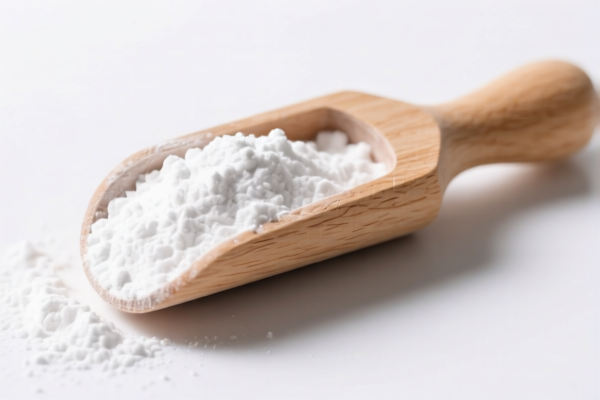
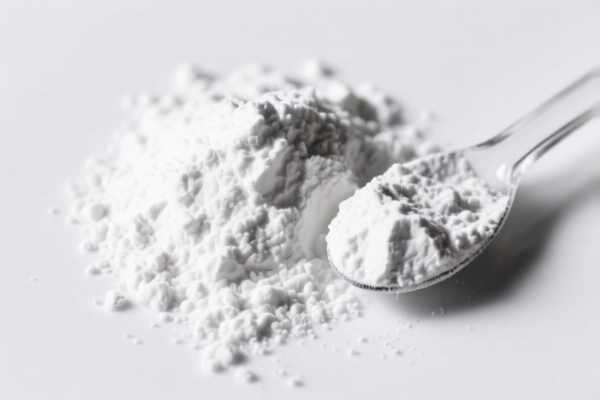
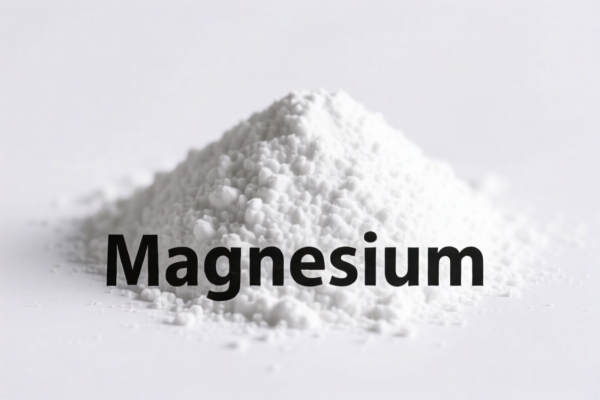

AI Analysis
🧪 Desulfurization Composite Agent (脱硫剂复合剂)
🌐 HS Code Reference & Customs Clearance Guide | 2026 Latest Tariff Analysis | Professional Clearance Strategy
📌 I. Product Definition & Classification: What is a "Desulfurization Composite Agent"?
In international trade, Desulfurization Composite Agents are chemical mixtures used primarily in plastic manufacturing and metal casting/foundry processes to remove sulfur impurities. The classification hinges on the application scenario and the chemical nature of the agent.
There are two distinct categories based on usage: 1. For Plastics (Plastic Desulfurization Agent): Chemical additives/mixtures used in polymer processing. 2. For Casting/Metals (Foundry Desulfurization Agent): Magnesium-based or calcium-based mixtures used to desulfurize molten iron/steel.
⚠️ Key Distinction Point:
- If the product is explicitly stated as "For Plastic" or used in polymer stabilization → It falls under Chapter 38 (Chemical Products), specifically 3824.99.93 (Other chemical products/mixtures).
- If the product is "For Casting/Metals" (e.g., Magnesium-based), it may also fall under 3810.10 (Surface treatment chemicals) or 3824.99.93 depending on the specific composition and manufacturer's declaration.
- Crucial Note: All entries in the provided data carry a 40% Total Tax Rate due to current US trade policies.
📦 II. HS Code Classification Details (2026 Latest Tariff Authority Comparison)
| HS Code | Product Description | Application Scenario | Classification Logic |
|---|---|---|---|
3824.99.93.97 |
Plastic Desulfurization Composite Agent | Chemical additives for polymer processing | "Other chemical products & preparations," fitting the "catch-all" chemical mixture category. |
3824.99.93.86 |
Plastic Desulfurization Composite Agent | Chemical preparation/mixture for desulfurization | Fits the logic of chemical preparations/mixtures under 3824. |
3810.10.00.00 |
Foundry (Casting) Desulfurization Agent | Metal surface acid cleaning & related chemical preparations | Falls under metal surface treatment chemicals. |
3824.99.93.86 |
Foundry (Casting) Desulfurization Agent | Magnesium-containing desulfurization mixture | Fits the chemical preparation classification under 3824. |
3824.99.93.97 |
Foundry (Casting) Desulfurization Agent | Chemical product for foundry use | Fits the "catch-all" category for chemical products not specifically listed elsewhere. |
🔍 Important Reminder:
- Despite different HS codes, all listed codes share the same total tax rate of 40% under current US tariffs for Chinese origin goods.
- The distinction between3824.99.93.86and.97is often subtle and depends on the exact chemical composition and primary function declared by the manufacturer.
- Do not confuse with industrial sulfuric acid (HS 2807) or pure magnesium (HS 8107). These are composite mixtures/preparations.
💰 III. 2026 Latest Tariff Rate Breakdown (Including Surcharges & Policy Add-ons)
✅ Applicable Country: United States (US)
✅ Country of Origin: China (CN)
✅ Effective Date: 2025+ (Current Policy)
🎯 1. General Tariff Structure for Desulfurization Agents
| Item | Content |
|---|---|
| Base Tariff Rate | 5.0% (Standard MFN Rate for Chapter 38) |
| Additional Tariff (Section 301) | 25.0% (USITC Footnote for Chinese Chemicals) |
| 122 Clause Tariff | 10.0% (Specific surcharge under current trade provisions) |
| Total Tariff Rate | 40.0% |
| Tax Calculation | CIF Value × 40% |
| De Minimis Eligibility | ❌ Not Eligible (Most chemical imports >$800 are subject to full duty assessment if not properly declared) |
| Legal Basis Path | USITC:3824.99.93.86/.97 → Section 301: +25% → 122 Clause: +10% |
📌 Explanation:
- The 5% Base Tariff is the standard duty for "Other chemical products."
- The 25% Surcharge applies to nearly all Chinese-origin chemical products under Section 301.
- The 10% Surcharge is a specific additional levy (often referred to as the "122 Clause" in current trade discussions) applicable to certain chemical preparations.
- Total 40% is a high barrier, significantly impacting profit margins. This rate applies uniformly across all HS codes listed in the data for this product type.
🛠️ IV. Customs Clearance Practical Advice (Combat Pitfall Guide)
✅ 1. Required Documentation Checklist (Mandatory)
| Document | Required | Description |
|---|---|---|
| ✅ Technical Data Sheet (TDS) | ✔️ | Must detail chemical composition, primary function (plastic vs. foundry), and desulfurization mechanism. |
| ✅ Formula Composition | ✔️ | Percentage breakdown of ingredients (e.g., Magnesium content, additives). Crucial for distinguishing between 3810 and 3824. |
| ✅ Product Photos (Label & Container) | ✔️ | Clear view of safety warnings, usage instructions, and "For Plastic/Casting" labeling. |
| ✅ Safety Data Sheet (SDS) | ✔️ | ISO/OSHA compliant, indicating hazard classification and transport requirements. |
| ✅ Commercial Invoice | ✔️ | Must clearly state: "Desulfurization Composite Agent for [Plastic/Finding Use]." |
| ✅ Certificate of Origin (CO) | ✔️ | Required to confirm China origin and apply correct tariff rates. |
| ✅ Packing List | ✔️ | Net/Gross weight, packaging material (drums, bags). |
✅ 2. Declaration Tips (Key Mnemonics)
🔥 “Function Defines Code, Composition Defines Tax, Don’t Split the Mix!”
| Scenario | Correct Declaration | Incorrect Practice |
|---|---|---|
| Plastic Additive | HS 3824.99.93.86 or .97 |
Declare as "Plasticizer" → Different HS, wrong tax! |
| Foundry Agent (Mg-based) | HS 3824.99.93.86 or .97 |
Declare as "Pure Magnesium" (HS 8107) → 100%+ Tax! |
| Foundry Agent (Surface Prep) | HS 3810.10.00.00 |
Declare as "Cleaning Solvent" → Wrong HS, audit risk. |
| Mixed Shipment | Separate HS Codes | Combine all under one code → Customs seizure. |
✅ 3. Special Cases Handling
| Situation | Handling Advice |
|---|---|
| OEM Branded Agents | Provide customer authorization + formula. Avoid "generic" descriptions that may trigger broader scrutiny. |
| High-Purity Magnesium Mixtures | Ensure declaration emphasizes "Composite Mixture for Desulfurization" to avoid classification as raw metal (HS 8107). |
| Non-Chemical Additives | If the product contains >50% inert fillers, still declare as chemical preparation if functional for desulfurization. |
| Hazardous Chemicals | If classified as hazardous, provide UN Number, DG Declaration, and ensure proper packaging. |
🌍 V. Global Market Clearance Comparison (2026 Latest)
| Country/Region | Recommended HS Code | Tariff (China Origin) | Certification | Notes |
|---|---|---|---|---|
| 🇺🇸 USA | 3824.99.93.86/.97 |
40% (5% Base + 25% Sec 301 + 10% 122) | SDS, TDS | High tariff burden. Pre-ruling recommended. |
| 🇨🇳 China | 3824.99.93 |
5% | GB Standards | Domestic export control applies if hazardous. |
| 🇪🇺 EU | 3824.99.93 |
~6.5% | REACH Registration | Requires EINECS/ELINCS numbers for chemicals. |
| 🇮🇳 India | 3824.99.93 |
~10-15% | BIS Standard | Check specific anti-dumping duties. |
📌 Conclusion:
- USA is the most challenging market due to the cumulative 40% tariff.
- EU requires REACH compliance, which is a significant administrative hurdle for chemical exporters.
- China Domestic Export is straightforward but subject to environmental and safety regulations.
📌 VI. Common Errors & Pitfall Guide (Lessons Learned)
❌ Error 1: Declaring "Desulfurization Agent" without specifying Plastic or Foundry use.
👉 Consequence: Customs may assign the highest duty rate or demand detailed chemical analysis, causing 30+ day delays.
❌ Error 2: Misclassifying Magnesium-based casting agents as "Raw Metals" (HS 8107).
👉 Consequence: HS 8107 has different duties and export controls. Misclassification leads to penalties and seizure.
❌ Error 3: Ignoring the 122 Clause in tariff calculation.
👉 Consequence: Underpayment of duties → Post-clearance audit + Interest + Penalties.
❌ Error 4: Using vague terms like "Chemical Mix" without functional description.
👉 Consequence: Risk of being classified under 9903 (Prohibitions/Restrictions) if not properly justified.
✅ Correct Practice:
“Desulfurization Composite Agent, Plastic Grade, Contains Magnesium Oxide & Carbonates, For Polymer Processing, SDS Available, HS 3824.99.93.86”
🎯 VII. Conclusion: Professional Declaration Saves Money!
🎯 Remember the Mantra:
🔹 “Function First, Code Second, 40% Tax is Real, Don’t Skip the SDS!”
🔹 “HS Code Determines Tax, 40% is the Floor, Clearance Takes Time, Be Precise!”
📌 Pro Tip:
If your desulfurization agent is originating from Vietnam, Malaysia, or Thailand, you may be eligible for lower tariffs under US FTAs (if applicable) or avoided Section 301 duties.
Recommendation: Apply for a Pre-Ruling (Advance Ruling) from US Customs (CBP) to confirm the correct HS Code and tariff rate before shipment.
📣 Immediate Action:
📞 Contact a licensed customs broker + Provide TDS/SDS + Apply for CBP Pre-Ruling
🚀 Ensure your Desulfurization Agents clear customs smoothly, compliantly, and profitably!
✨ Professional Customs Clearance Starts with Accurate Classification!
💼 Every Percent of Tax Counts in Your Bottom Line!
Customer Reviews
About HS Code Classification
The Harmonized System (HS) is an internationally standardized nomenclature developed by the World Customs Organization (WCO) to classify traded products. Over 200 countries use the HS system as the basis for customs tariffs, trade statistics, and import/export regulations.
Each HS code follows a hierarchical structure:
- Chapter (2 digits) — Broad category of goods (e.g., Chapter 84: Machinery and Mechanical Appliances)
- Heading (4 digits) — More specific grouping within the chapter
- Subheading (6 digits) — Internationally standardized breakdown, used by all WCO member countries
- National subdivisions (8-10 digits) — Country-specific extensions for further classification, such as US HTSUS 10-digit codes
Correct HS code classification is essential for smooth customs clearance, accurate duty payment, and compliance with trade regulations. Misclassification can lead to customs delays, overpayment of duties, or penalties.
When importing from CN to US, the applicable tariff rates may include:
- Most-Favored-Nation (MFN) rate — The standard duty rate applied to WTO members
- General rate — Applied to countries without trade agreements
- Trade remedy duties — Additional tariffs such as Section 301 (anti-dumping), Section 232 (national security), or countervailing duties
The information provided on this page is for reference purposes only. For official classification, please consult with your local customs authority or a licensed customs broker.