Desulfurization Dispersant for Casting
CN → US| HS Code | Tariff Rate | Origin | Destination | Doc |
|---|---|---|---|---|
| 3810100000 | 40.0% | CN | US | Official Doc |
| 3824999386 | 40.0% | CN | US | Official Doc |
| 3810905000 | 40.0% | CN | US | Official Doc |
| 3824999397 | 40.0% | CN | US | Official Doc |
| 3824100000 | 41.0% | CN | US | Official Doc |
Product Images
AI Analysis
🏭 Casting Desulfurization Dispersant (Foundry Chemical Agents)
🌐 HS Code Reference & Customs Clearance Guide | 2026 Latest Tariff Analysis | Professional Entry Strategy
📌 I. Product Definition & Classification: Do You Really Understand "Foundry Desulfurization Agents"?
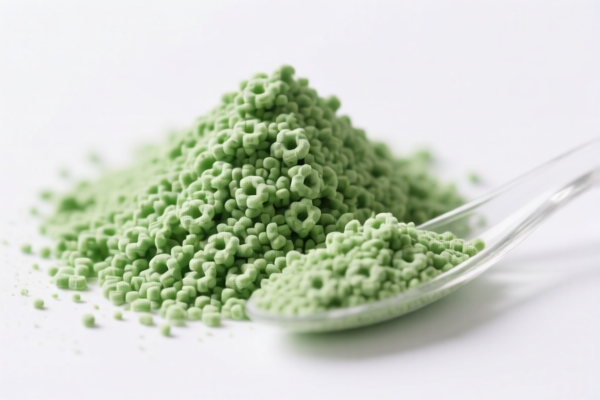
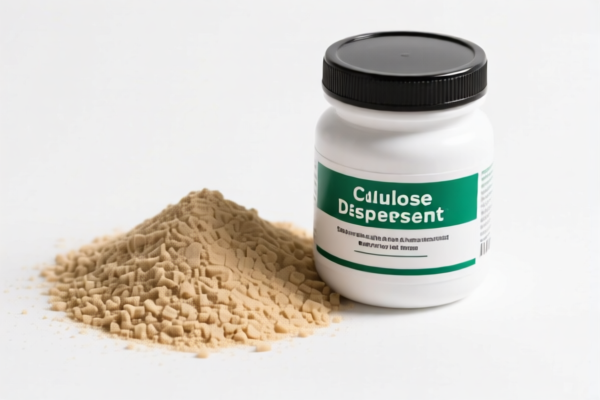
Casting desulfurization dispersants are specialized chemical agents used in the metallurgical and foundry industries. Their primary function is to remove sulfur impurities from molten metals (such as iron, steel, or non-ferrous alloys) and disperse these impurities to prevent defects in the final cast product.
In international trade, these products are generally classified under Chapter 38: Miscellaneous Chemical Products. The classification depends on the specific chemical composition and whether the product is primarily a "preparation" for metal surface treatment, a "mixture" containing magnesium, or a general "chemical aid."
⚠️ Key Distinction Point:
- If the product is a preparation for cleaning or treating metal surfaces, it may fall under 3810.
- If the product is a mixture/powder containing magnesium for chemical reactions, it typically falls under 3824.
- Material Conflict: Ensure no conflicting material descriptions exist in customs declarations; these are purely chemical/auxiliary preparations.
📦 II. HS Code Classification Details (2026 Latest Tariff Authority Mapping)
Based on the provided data, there are 5 potential HS Codes depending on the exact formulation and primary function. All are subject to high additional tariffs for goods originating from China.
| HS Code | Product Description | Applicable Scenario | Material/Function Logic |
|---|---|---|---|
3810.10.00.00 |
Desulfurizing preparations for metal | Metal/casting treatment; similar to pickling agents | ✅ Chemical preparation for metal surface/cast treatment |
3824.99.93.86 |
Desulfurization agent (Magnesium-based mixture) | Foundry use; magnesium-based desulfurization mixtures | ✅ No material conflict; chemical mixture logic |
3810.90.50.00 |
Desulfurizing preparations for metal (Other) | Metal auxiliary preparation; general metal treatment | ✅ Auxiliary preparation attribute matches |
3824.99.93.97 |
Desulfurization agent (Other chemical products) | General chemical product category; "Other"兜底 (Catch-all) | ✅ No material conflict with "Other" category |
3824.10.00.00 |
Casting Dispersant / Molding Core Binder Aid | Foundry aid; matches "molding/core binder" logic | ✅ Chemical aid function aligns with casting aids |
🔍 Key Reminder:
- All the above HS Codes are for Chemical Preparations/Auxiliaries.
- Do not misclassify as raw materials (Chapter 28) or simple inorganic salts (Chapter 25) unless the chemical structure specifically defines it as such.
- The distinction between3810(Preparations for metal treatment) and3824(Miscellaneous chemical products) often lies in the primary declared function: is it for "surface cleaning/treatment" (3810) or "chemical reaction/mixture" (3824)?
💰 III. 2026 Latest Tariff Rate Detailed Breakdown (Including Surtaxes & Policy Add-ons)
✅ Applicable Country: United States (US)
✅ Country of Origin: China (CN)
✅ Effective Time: Rates apply to imports from China.
All listed HS Codes are subject to identical tariff structures in the provided data, reflecting a heavy penalty on Chinese-origin chemical goods in this category.
🎯 1. 3810.10.00.00 & 3810.90.50.00 (Chapter 38 Preparations)
| Item | Content |
|---|---|
| Base Tariff | 5.0% (ad valorem) |
| USITC Surtax (Section 301) | +25.0% |
| IEEPA Surtax (Section 122) | +10.0% |
| Total Tariff Rate | 40.0% |
| Tax Calculation | CIF Value × 40% |
| De Minimis Exemption | ❌ Not Available (High risk of seizure if shipped via small parcels without proper declaration) |
| Legal Basis Path | USITC:3810.x.x.x → FOOTNOTE:301 → IEEPA:122 |
📌 Explanation:
- The 5% is the standard Most Favored Nation (MFN) base rate.
- The 25% is the Section 301 tariff on Chinese goods.
- The 10% is the additional tariff (often associated with Section 122 or specific executive orders).
- Total 40% is extremely high. This significantly impacts profit margins.
🎯 2. 3824.99.93.86 & 3824.99.93.97 (Chapter 324 Miscellaneous)
| Item | Content |
|---|---|
| Base Tariff | 5.0% (ad valorem) |
| USITC Surtax (Section 301) | +25.0% |
| IEEPA Surtax (Section 122) | +10.0% |
| Total Tariff Rate | 40.0% |
| Tax Calculation | CIF Value × 40% |
| De Minimis Exemption | ❌ Not Available |
| Legal Basis Path | USITC:3824.x.x.x → FOOTNOTE:301 → IEEPA:122 |
📌 Explanation:
- Same tariff structure as3810.
-3824.99.93.86is specific for Magnesium-based mixtures.
-3824.99.93.97is a general "Other" category.
- Ensure the MSDS (Material Safety Data Sheet) clearly states the composition to support the classification.
🎯 3. 3824.10.00.00 (Casting Dispersant/Binder Aid)
| Item | Content |
|---|---|
| Base Tariff | 6.0% (ad valorem) |
| USITC Surtax (Section 301) | +25.0% |
| IEEPA Surtax (Section 122) | +10.0% |
| Total Tariff Rate | 41.0% |
| Tax Calculation | CIF Value × 41% |
| De Minimis Exemption | ❌ Not Available |
| Legal Basis Path | USITC:3824.10 → FOOTNOTE:301 → IEEPA:122 |
📌 Explanation:
- This code has a slightly higher base rate (6%) compared to others (5%).
- This is often used for molding sand aids or dispersants specifically for casting cores/molds.
- Total 41% is the highest among the options. Be cautious if this classification applies.
🛠️ IV. Customs Clearance Operational Advice (Practical Pitfall Avoidance)
✅ 1. Document Checklist (All Required)
| Document | Required | Description |
|---|---|---|
| ✅ MSDS (Material Safety Data Sheet) | ✔️ | Critical. Must list chemical composition, hazard class, and confirm it is a chemical preparation. |
| ✅ Product Specification Sheet | ✔️ | Must detail: Function (Desulfurization/Dispersant), Form (Powder/Liquid), Usage (Foundry/Molten Metal). |
| ✅ Commercial Invoice | ✔️ | Must clearly state: "Casting Desulfurization Agent," HS Code, and CIF value. |
| ✅ Packing List | ✔️ | Detail net/gross weight, package type (e.g., 25kg bags). |
| ✅ Certificate of Origin | ✔️ | If applicable for any potential exemptions (though unlikely for CN origin in this category). |
| ✅ Labeling | ✔️ | Ensure foreign labels include hazardous material warnings if applicable. |
✅ 2. Declaration Tips (Key Mantra)
🔥 "Function Clear, Composition Precise, Chapter 38, Avoid 89.5%!"
| Scenario | Correct Declaration | Wrong Practice |
|---|---|---|
| Magnesium-based powder | 3824.99.93.86 "Mg-based desulfurization mixture" |
Misdeclare as "Fertilizer" → 89.5% |
| Liquid chemical aid | 3810.10.00.00 "Preparation for metal treatment" |
Misdeclare as "Cleaning agent" → Risk of 89.5% |
| General casting aid | 3824.99.93.97 or 3824.10.00.00 |
Misdeclare as "Metal part" → Wrong chapter |
| Small sample shipment | Declare fully, do not use De Minimis | Use De Minimis → Seizure/Refusal |
⚠️ Warning: Misclassifying chemical agents can lead to penalties, seizure, and back taxes. Always provide a clearly written chemical description.
✅ 3. Special Situations
| Situation | Handling Advice |
|---|---|
| Mixture vs. Pure Chemical | If it's a mixture, use 3824. If it's a formulated preparation for a specific industrial process (like desulfurization), 3810 may be more appropriate. |
| Hazardous Material | If the MSDS classifies it as hazardous, ensure proper IMDG/IATA labeling for transport. |
| Origin Marking | Ensure products are marked "Made in China" to avoid origin fraud issues. |
| Pre-Ruling | Given the high tariff (40-41%), consider applying for a Pre-Commercial Ruling to confirm HS Code and avoid disputes. |
🌍 V. Global Market Comparison (2026 Latest)
| Country/Region | Recommended HS Code | Tariff (CN Origin) | Certification | Notes |
|---|---|---|---|---|
| 🇺🇸 USA | 3810.x.x.x or 3824.x.x.x |
40% - 41% | No special cert, but MSDS required | Highest penalty due to Section 301 + 122 |
| 🇨🇳 China | 3810.10.00.00 |
5% (Import) | None | Domestic consumption |
| 🇪🇺 EU | 3824.99.93 |
6.5% (Standard) | REACH Registration | REACH compliance is mandatory |
| 🇦🇺 Australia | 3824.99.93 |
5% | None | Standard MFN rate |
| 🇯🇵 Japan | 3824.99.93 |
6.0% | None | Standard rate |
📌 Conclusion:
- The USA imposes a punitive 40-41% tariff on these chemical goods from China.
- EU, Australia, and Japan have standard rates (5-6.5%) but require chemical safety compliance (e.g., REACH in EU).
- Profit Margin Alert: US importers must factor in a ~40% cost increase. Consider supply chain diversification if volume is high.
📌 VI. Common Errors & Pitfalls (Lessons Learned)
❌ Error 1: Declaring as "Iron Part" or "Raw Material"
👉 Consequence: Misclassification → 89.5% tariff + Penalty!
❌ Error 2: Ignoring the "122 Clause" Tariff
👉 Consequence: Underpayment → Back taxes + Interest upon audit.
❌ Error 3: Vague Description ("Chemical for Casting")
👉 Consequence: Customs delay → Request for clarification → Shipment hold.
❌ Error 4: Using De Minimis for Chemicals
👉 Consequence: Seizure because chemical imports are excluded from de minimis exemptions.
✅ Correct Practice:
"Casting Desulfurization Agent, Mg-based Powder, for Molten Metal Treatment, HS Code 3824.99.93.86, CIF Value $XXX, Made in China"
🎯 VII. Conclusion: Precision in Classification Saves Money!
🎯 Remember the Mantra:
🔹 "Chemical Aid, Chapter 38, 40% Tax for USA, No De Minimis!"
🔹 "MSDS is Key, Description is King, Avoid 89.5% Trap!"
📌 Pro Tip:
If your casting desulfurizer is manufactured in Vietnam, Mexico, or India, you may avoid the Section 301/122 surcharges, paying only the base rate (5-6%).
Recommend supply chain relocation or foreign processing if US market penetration is critical.
📣 Immediate Action:
📞 Consult a licensed customs broker + Provide MSDS + Apply for Pre-Ruling
🚀 Ensure smooth customs clearance, compliance, and cost control!
✨ Professional customs clearance starts with accurate classification!
💼 Every percentage point of tariff matters to your bottom line!
Customer Reviews
About HS Code Classification
The Harmonized System (HS) is an internationally standardized nomenclature developed by the World Customs Organization (WCO) to classify traded products. Over 200 countries use the HS system as the basis for customs tariffs, trade statistics, and import/export regulations.
Each HS code follows a hierarchical structure:
- Chapter (2 digits) — Broad category of goods (e.g., Chapter 84: Machinery and Mechanical Appliances)
- Heading (4 digits) — More specific grouping within the chapter
- Subheading (6 digits) — Internationally standardized breakdown, used by all WCO member countries
- National subdivisions (8-10 digits) — Country-specific extensions for further classification, such as US HTSUS 10-digit codes
Correct HS code classification is essential for smooth customs clearance, accurate duty payment, and compliance with trade regulations. Misclassification can lead to customs delays, overpayment of duties, or penalties.
When importing from CN to US, the applicable tariff rates may include:
- Most-Favored-Nation (MFN) rate — The standard duty rate applied to WTO members
- General rate — Applied to countries without trade agreements
- Trade remedy duties — Additional tariffs such as Section 301 (anti-dumping), Section 232 (national security), or countervailing duties
The information provided on this page is for reference purposes only. For official classification, please consult with your local customs authority or a licensed customs broker.