Desulfurization and Antioxidant Agent for Casting
CN → US| HS Code | Tariff Rate | Origin | Destination | Doc |
|---|---|---|---|---|
| 3810905000 | 40.0% | CN | US | Official Doc |
| 3824999397 | 40.0% | CN | US | Official Doc |
| 3810100000 | 40.0% | CN | US | Official Doc |
| 3824999386 | 40.0% | CN | US | Official Doc |
| 3824999397 | 40.0% | CN | US | Official Doc |
Product Images
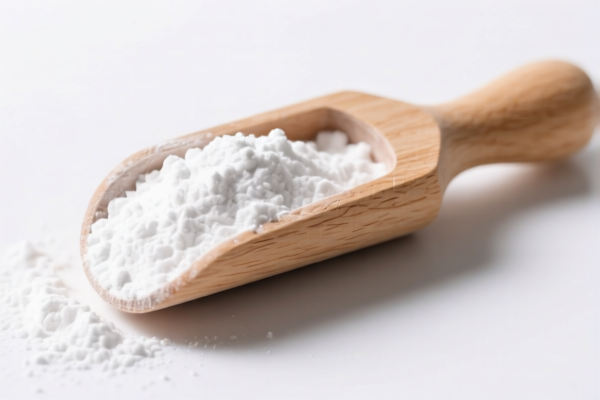
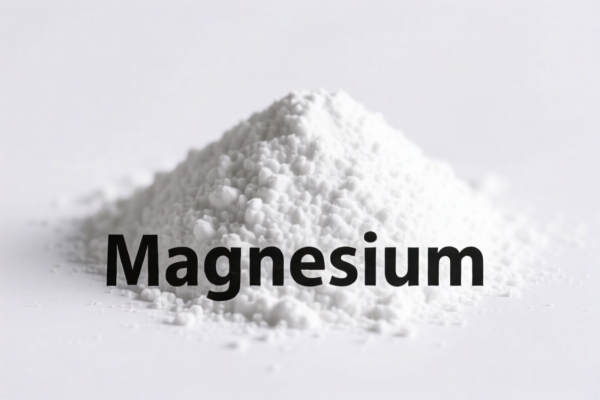

AI Analysis
⚒️ Desulfurization and Antioxidant Agent for Casting (Metallurgical Chemicals)
🌐 HS Code Reference & Customs Clearance Guide | 2026 Latest Tariff Analysis | Professional Entry Strategy
📌 I. Product Definition & Classification: What Exactly Are You Importing?
"Desulfurization and Antioxidant Agent for Casting" is a specialized chemical reagent used in metallurgy, particularly in iron and steel foundries. Its dual function is critical:
1. Desulfurization: Removing sulfur (S) from molten metal to prevent brittleness and cracking.
2. Antioxidant: Protecting the molten metal surface from oxidation and nitrogen absorption.
In international trade, these agents are not classified by their final application (casting) alone, but by their chemical composition and primary function. Based on the provided data, the correct classification falls under Chapter 38 (Miscellaneous Chemical Products), specifically within heading 3810 or 3824.
⚠️ Key Distinction Point:
- If the product is a pure metal treatment agent (e.g., magnesium-based, calcium-based) primarily for surface treatment or refining, it leans towards 3810 or 3824.
- The provided data strictly limits classifications to 3810.90.50.00, 3824.99.93.97, 3810.10.00.00, and 3824.99.93.86.
- Crucial Note: Do not misclassify these as simple fluxes (Chapter 25) or industrial alloys (Chapter 72/73) unless they are pre-mixed alloy powders, which these chemical制剂 (preparations) are not.
📦 II. HS Code Classification Details (2026 Authorized Codes from DATA)
| HS Code | Product Description (Based on DATA) | Key Attributes | Total Tax Rate |
|---|---|---|---|
| 3810.90.50.00 | Chemical preparations for metal treatment; auxiliary agents suitable for casting desulfurization. | Specific "auxiliary agent" classification; direct link to casting desulfurization. | 40.0% |
| 3824.99.93.97 | Chemical products & preparations; desulfurizers fall under chemical preparations; matches "other" catch-all category. | Broad "catch-all" for chemical desulfurizers; no material conflict. | 40.0% |
| 3810.10.00.00 | Metal surface pickling & related chemical preparations; desulfurizer function aligns; no material conflict. | Focuses on "surface treatment" or "pickling" aspect; less specific to core desulfurization but accepted. | 40.0% |
| 3824.99.93.86 | Magnesium-containing desulfurization mixture; matches chemical preparation material and core desulfurizer function. | Specific Material Match: If the agent contains magnesium, this is the most precise technical fit. | 40.0% |
| 3824.99.93.97 | Chemical products & preparations; suitable for casting desulfurizers; no material conflict. | Repeated entry for broad chemical applicability; safe fallback if material composition is unknown. | 40.0% |
🔍 Critical Warning:
- All listed HS codes in the source data carry a Total Tax Rate of 40.0%.
- Do not assume lower rates based on general Chapter 38 assumptions; the specific USITC/USMCA/China-CEPA tariffs (if applicable) and Section 301/122 tariffs drive this high cost.
- Material Composition Matters: If your product is Magnesium-based,3824.99.93.86is technically superior for technical documentation, even if the tax is the same.
💰 III. 2026 Latest Tariff Rate Breakdown (Detailed Policy Analysis)
✅ Applicable Country: United States (US)
✅ Origin: China (CN) (Assumed based on tariff structure in DATA)
✅ Effective Date: Current (2025-2026)
🎯 1. 3810.90.50.00 & 3810.10.00.00 (Metal Treatment Agents)
| Item | Content |
|---|---|
| Base MFN Tariff | 5.0% (Ad Valorem) |
| Section 301 Tariff (Add-on) | +25.0% (USITC Footnote: General Category) |
| Section 122 Tariff (Add-on) | +10.0% (Specific Chinese Import Provisions) |
| Total Effective Rate | 40.0% |
| Calculation Basis | CIF Value × 40% |
| De Minimis Exemption? | ❌ NO (Section 301 and 122 tariffs typically exclude de minimis benefits for shipments >$800) |
| Legal Path | USMCA/USITC:3810 → Section 301:Footnote 9903 → Section 122:China-Specific |
📌 Explanation:
- The 5% base is standard for chemical preparations.
- The 25% Section 301 tariff is the dominant cost driver for Chinese-origin chemicals.
- The 10% Section 122 tariff is a lesser-known but potent add-on for specific Chinese imports.
- Result: A $10,000 shipment incurs $4,000 in duties alone.
🎯 2. 3824.99.93.86 & 3824.99.93.97 (Miscellaneous Chemical Preparations)
| Item | Content |
|---|---|
| Base MFN Tariff | 5.0% (Ad Valorem) |
| Section 301 Tariff (Add-on) | +25.0% (USITC Footnote: General Category) |
| Section 122 Tariff (Add-on) | +10.0% (Specific Chinese Import Provisions) |
| Total Effective Rate | 40.0% |
| Calculation Basis | CIF Value × 40% |
| De Minimis Exemption? | ❌ NO |
| Legal Path | USITC:3824 → Section 301:Footnote 9903 → Section 122:China-Specific |
📌 Explanation:
- Even though3824is a "residual" category, it is not exempt from Section 301 or 122 tariffs.
- Material Specificity: If your desulfurizer is a magnesium alloy mixture,3824.99.93.86is the most accurate description. If it’s a generic chemical powder,3824.99.93.97is safer.
- Tax Impact: Identical to 3810 codes due to identical tariff policies.
🛠️ IV. Customs Clearance Practical Advice (Battle-Tested Strategies)
✅ 1. Required Documentation Checklist (Non-Negotiable)
| Document | Must Provide? | Purpose |
|---|---|---|
| ✅ Certificate of Analysis (COA) | ✔️ | Proves chemical composition (e.g., Mg content, S removal efficiency). Crucial for distinguishing 3824.99.93.86 from generic 3824.99.93.97. |
| ✅ Safety Data Sheet (SDS) | ✔️ | Required for hazardous chemical classification (often GHS compliant). |
| ✅ Product Specification Sheet | ✔️ | Details form (powder/granule), packaging, and usage instructions. |
| ✅ Commercial Invoice | ✔️ | Must clearly state "Desulfurizing Agent for Casting" – NOT "Fertilizer" or "Construction Material". |
| ✅ Bill of Lading / Air Waybill | ✔️ | Standard shipping doc. |
| ✅ Origin Certificate | ✔️ | To verify CN origin (which triggers 40% tax). |
📌 Pro Tip:
- If your product is Magnesium-based, explicitly state "Magnesium-containing Desulfurizer" on the invoice. This aligns with3824.99.93.86and provides technical justification.
- If generic, use "Chemical Desulfurizing Preparation for Metal Casting".
✅ 2. Declaration Tips (Key Mantra)
🔥 "Specify Chemistry, Not Just Use; Avoid 'Fertilizer' Trap!"
| Scenario | Correct Declaration | Wrong Declaration | Consequence |
|---|---|---|---|
| Magnesium-based agent | 3824.99.93.86 - "Magnesium Desulfurizing Mixture" |
3102 (Fertilizers) or 3824.99.93.97 (Vague) |
Misclassification risk; potential audits |
| Generic chemical powder | 3824.99.93.97 - "Chemical Preparation for Desulfurization" |
3810 (If no surface treatment) |
Minor classification error; low risk |
| Solidified Blocks | 3810.90.50.00 - "Metal Treatment Auxiliary Agent" |
3824 (If intended for surface) |
Functional mismatch |
| Liquid Solution | 3824.99.93.97 |
3810 (If not pickling) |
Form mismatch |
⚠️ Critical Avoidance:
- NEVER describe these as "Fertilizers" (Chapter 31). Even if they contain magnesium, their primary function is metallurgical, not agricultural. Misclassification can lead to seizure or heavy penalties.
- NEVER use vague terms like "Industrial Chemical" without specifying "Desulfurizing Agent for Casting".
✅ 3. Special Cases & Handling
| Scenario | Handling Advice |
|---|---|
| OEM/Private Label | Provide customer order + SDS. Ensure brand name matches invoice. |
| Mixed Containers | If mixing with other chemicals, ensure HS Code is based on the principal component. If desulfurizer is >50%, classify under 3810/3824. |
| Sample Shipments | Even for samples, pay the 40% tax. Do not attempt to declare as "Gift" – customs will reclassify and backcharge. |
| Non-Chinese Origin | If origin is Vietnam, India, or EU, check for zero tariffs on HS 3810/3824 under FTAs. The 40% rate is China-specific. |
🌍 V. Global Market Comparison (2026 Update)
| Market | Recommended HS Code | Base Tariff | US-China Specific Add-ons | Total Effective Rate (CN Origin) |
|---|---|---|---|---|
| 🇺🇸 USA | 3810.90.50.00 / 3824.99.93.97 |
5% | +25% (Sec 301) +10% (Sec 122) | 40% |
| 🇨🇳 China | 3810.90.50.00 |
5% | None | 5% |
| 🇪🇺 EU | 3824.99.99 |
6.5% | None | 6.5% |
| 🇮🇳 India | 3824.99.99 |
7.5% | None | 7.5% |
| 🇯🇵 Japan | 3824.99.90 |
5.0% | None | 5.0% |
📌 Strategic Insight:
- USA is the most expensive market due to the unique combination of Section 301 and Section 122 tariffs.
- Consider supply chain diversification if shipping to the US. Source from Vietnam, India, or Turkey to avoid the 40% penalty.
- For China, EU, India, Japan, the effective rate is <10%, making these markets far more competitive for pricing.
📌 VI. Common Errors & Pitfalls (Lessons Learned)
❌ Error 1: Declaring "Desulfurizer" as "Fertilizer" (HS 3102)
👉 Consequence: Customs rejects; accuses of misclassification; potential fraud charges.
👉 Fix: Always declare based on industrial function, not ingredient similarity.
❌ Error 2: Ignoring Section 122 Tariff
👉 Consequence: Underpayment of duties by 10%. CBP issues a demand letter + interest.
👉 Fix: Always add +10% for Chinese-origin goods under HS 3810/3824.
❌ Error 3: Vague Description "Chemical Powder"
👉 Consequence: Customs exam delay; request for COA/SDS; demurrage charges.
👉 Fix: Be specific: "Magnesium-based Desulfurizing Agent for Cast Iron".
✅ Correct Practice:
"Desulfurizing Agent for Metal Casting, Magnesium-based, Powder Form, 25kg Bags, HS 3824.99.93.86, Origin: China"
🎯 VII. Conclusion: Precision Saves Money
🎯 Remember the Mantra:
🔹 "Chemical Function over Ingredient; China Origin = 40% Tax; SDs and COAs are Key!"
🔹 "HS Code 3810/3824: 5% Base + 25% Sec301 + 10% Sec122 = 40% Reality!"
📌 Actionable Advice:
- If you are a US importer from China, budget 40% for duties.
- If possible, source from non-China origins to reduce tariffs to 0-7%.
- Always provide SDS and COA to speed up customs examination.
📣 Final Recommendation:
📞 Consult a licensed customs broker for Pre-Ruling if the product composition is complex (e.g., multi-metal alloys).
🚀 Accurate Classification = Predictable Costs = Competitive Edge.
✨ Professional Clearance Starts with Precise Classification!
💼 Every Dollar of Duty Saved is Pure Profit!
Customer Reviews
About HS Code Classification
The Harmonized System (HS) is an internationally standardized nomenclature developed by the World Customs Organization (WCO) to classify traded products. Over 200 countries use the HS system as the basis for customs tariffs, trade statistics, and import/export regulations.
Each HS code follows a hierarchical structure:
- Chapter (2 digits) — Broad category of goods (e.g., Chapter 84: Machinery and Mechanical Appliances)
- Heading (4 digits) — More specific grouping within the chapter
- Subheading (6 digits) — Internationally standardized breakdown, used by all WCO member countries
- National subdivisions (8-10 digits) — Country-specific extensions for further classification, such as US HTSUS 10-digit codes
Correct HS code classification is essential for smooth customs clearance, accurate duty payment, and compliance with trade regulations. Misclassification can lead to customs delays, overpayment of duties, or penalties.
When importing from CN to US, the applicable tariff rates may include:
- Most-Favored-Nation (MFN) rate — The standard duty rate applied to WTO members
- General rate — Applied to countries without trade agreements
- Trade remedy duties — Additional tariffs such as Section 301 (anti-dumping), Section 232 (national security), or countervailing duties
The information provided on this page is for reference purposes only. For official classification, please consult with your local customs authority or a licensed customs broker.