Detachable Child Safety Gate
CN → US| HS Code | Tariff Rate | Origin | Destination | Doc |
|---|---|---|---|---|
| 3925200010 | 22.8% | CN | US | Official Doc |
| 3925900000 | 40.3% | CN | US | Official Doc |
| 8302416080 | 88.9% | CN | US | Official Doc |
| 8302416045 | 88.9% | CN | US | Official Doc |
| 7326908676 | 87.9% | CN | US | Official Doc |
Product Images
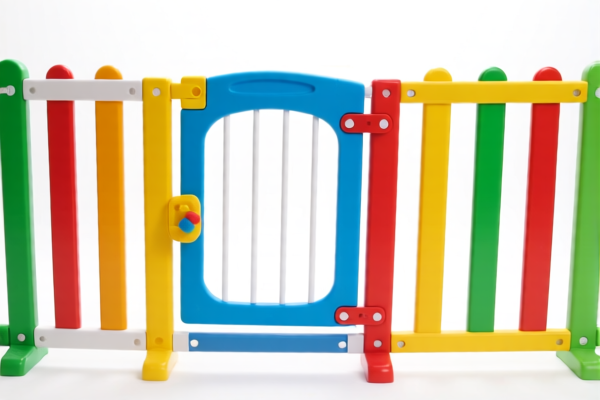
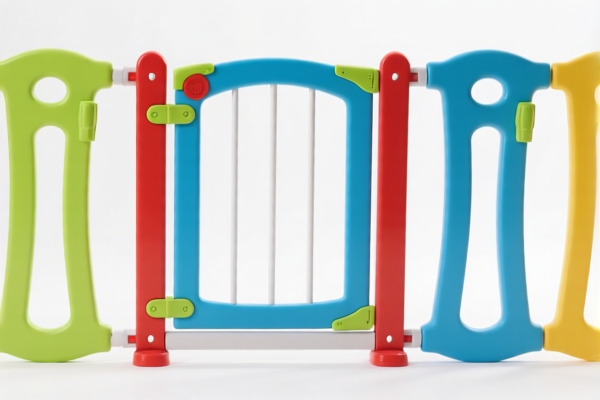
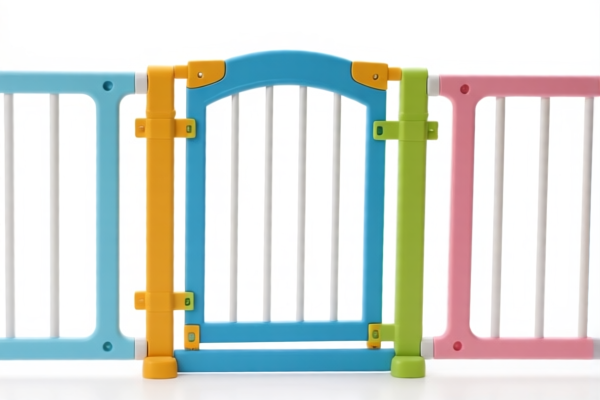
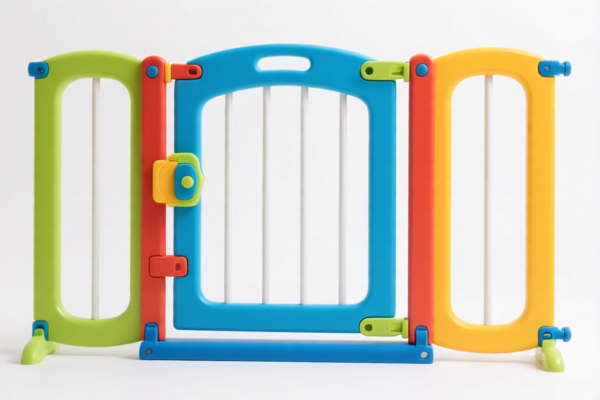
AI Analysis
🚪 Detachable Child Safety Gate: HS Code Classification & Customs Clearance Guide (2026)
🌐 HS Code Reference & Customs Clearance Guide | Latest Tariff Analysis | Professional Strategy
📌 I. Product Definition & Classification: Do You Really Know the "Child Safety Gate"?
A Detachable Child Safety Gate is a critical safety accessory for households with young children, designed to restrict access to dangerous areas (stairs, kitchens, etc.). In international trade, its classification is highly complex because it sits at the intersection of building materials, metal accessories, and consumer goods.
The correct HS Code depends entirely on the primary material and functional nature: 1. Plastic/Composite Structure: Often classified as building ware or plastic parts. 2. Metal Frame/Hardware: Often classified as base metal accessories or iron/steel articles.
⚠️ Key Distinction Point:
- If the product is primarily viewed as a plastic architectural component (e.g., plastic door panels, mounts) → Chapter 39.
- If the product is primarily viewed as metal hardware/accessories for doors (e.g., metal brackets, latches, frames) → Chapter 83 or 73.
- Note: The "Detachable" feature does not automatically change the classification but affects the description of "installation accessories."
📦 II. HS Code Classification Details (Based on Provided Data)
| HS Code | Product Description | Logic Basis | Total Tax Rate |
|---|---|---|---|
| 3925.20.00.10 | Plastic Building Ware (Doors/Gates) | Inferred as plastic/building material based on "Safety Gate" common use; aligns with "Builders' ware." | 22.8% |
| 3925.90.00.00 | Other Plastic Building Materials | Classified as general plastic building components; no conflict with "other plastic building components." | 40.3% |
| 8302.41.60.80 | Other Base Metal Mounting Fittings | Inferred as metal (base metal); classified as mounting device/fitting; "Other" category fallback for door safety accessories. | 88.9% |
| 8302.41.60.45 | Base Metal Mounting Fittings for Doors | Specifically for "Child Safety Gate" as a door accessory; inferred to contain metal fasteners/brackets for buildings. | 88.9% |
| 7326.90.86.76 | Other Articles of Iron/Steel | Fallback rule for unspecified material; inferred as metal/iron/steel based on common safety gate materials; finished product/part. | 87.9% |
🔍 Key Insight:
- Plastic Options (39xx): Lower tax burden (22.8% - 40.3%). Suitable if the gate is predominantly plastic or has minimal metal structural components.
- Metal Options (83xx/73xx): High tax burden (87.9% - 88.9%). Applies if the gate is primarily metal or classified as hardware/accessories.
- Why such a huge difference? The US imposes significant additional tariffs (Section 301/122) on Chinese-origin metal goods compared to some plastic goods.
💰 III. 2026 Latest Tariff Rate Breakdown (Including Surcharges & Policy Add-ons)
✅ Applicable Country: United States (US)
✅ Origin: China (CN)
✅ Effective Date: 2025年11月10日起 (Including subsequent imports)
🎯 1. 3925.20.00.10 – Plastic Building Ware (Doors)
| Item | Content |
|---|---|
| Base Tariff | 5.3% (Ad Valorem) |
| Additional Tariff (Section 301) | 7.5% |
| Section 122 Tariff | 10% |
| Total Rate | 22.8% |
| Tax Calculation | CIF Value × 22.8% |
| De Minimis Eligibility | ❌ Not Eligible (High-risk category for low-value shipments) |
| Legal Basis Path | HTSUS 3925.20.00.10 → Section 301 Footnote → Section 122 Authority |
📌 Explanation:
- This is the most cost-effective classification if the product qualifies as "plastic building ware."
- The "Section 122 Tariff" is a specific surcharge often applied to certain goods from China, adding 10% on top of base + Section 301.
🎯 2. 3925.90.00.00 – Other Plastic Building Materials
| Item | Content |
|---|---|
| Base Tariff | 5.3% |
| Additional Tariff (Section 301) | 25.0% |
| Section 122 Tariff | 10% |
| Total Rate | 40.3% |
| Tax Calculation | CIF Value × 40.3% |
| De Minimis Eligibility | ❌ Not Eligible |
| Legal Basis Path | HTSUS 3925.90.00.00 → Section 301 Footnote 9903.88.01 → Section 122 |
📌 Note:
- While still plastic, this code falls under "Other," triggering the higher 25% Section 301 tariff instead of the lower 7.5%.
- Use this only if3925.20.00.10is not applicable (e.g., non-door specific plastic parts).
🎯 3. 8302.41.60.80 & 8302.41.60.45 – Base Metal Mounting Fittings
| Item | Content |
|---|---|
| Base Tariff | 3.9% |
| Additional Tariff (Section 301) | 25.0% |
| Section 122 Tariff | 10% |
| Steel/Aluminum/Copper Surcharge | 50% (Specific to certain metal products) |
| Total Rate | 88.9% |
| Tax Calculation | CIF Value × 88.9% |
| De Minimis Eligibility | ❌ Not Eligible |
| Legal Basis Path | HTSUS 8302.41.60.xx → Section 301 → Section 122 → Metal Surcharge |
📌 Critical Warning:
- DO NOT USE unless absolutely necessary.
- The 88.9% rate is prohibitively expensive.
- This classification assumes the gate is primarily "metal hardware" or "mounting fittings," which attracts the highest tier of punitive tariffs.
🎯 4. 7326.90.86.76 – Other Articles of Iron/Steel
| Item | Content |
|---|---|
| Base Tariff | 2.9% |
| Additional Tariff (Section 301) | 25.0% |
| Section 122 Tariff | 10% |
| Steel/Aluminum/Copper Surcharge | 50% |
| Total Rate | 87.9% |
| Tax Calculation | CIF Value × 87.9% |
| De Minimis Eligibility | ❌ Not Eligible |
| Legal Basis Path | HTSUS 7326.90.86.76 → Section 301 → Section 122 → Metal Surcharge |
📌 Note:
- Similar to8302, this is a fallback for iron/steel products.
- The 50% surcharge on steel/aluminum products is the main driver of the high cost.
🛠️ IV. Customs Clearance Practical Advice (Avoiding Pitfalls)
✅ 1. Material Declaration Strategy
| Strategy | Action | Risk |
|---|---|---|
| Opt for Plastic Classification | Emphasize plastic materials in description: "Plastic Child Safety Gate, Detachable, Mounting Hardware Included" | Low risk if >50% plastic by value/weight. Target rate: 22.8% |
| Avoid Metal Hardware Focus | Do NOT describe as "Metal Door Hardware" or "Steel Gate Frame" | High risk of classification as 8302 or 7326. Rate: 88.9% |
| Mixed Material Handling | If mixed, declare the primary material. If metal is structural, expect high taxes. | Consult a broker to see if plastic coating or non-structural metal can justify Chapter 39. |
✅ 2. Documentation Checklist
| Document | Required? | Details |
|---|---|---|
| Product Specifications | ✔️ | Must clearly state materials (e.g., "PP Plastic Main Body, Zinc Alloy Hinges") |
| Product Photos | ✔️ | Show the gate, mounting brackets, and packaging. Highlight plastic texture. |
| Bill of Lading | ✔️ | Ensure consignee/consignor info matches commercial invoice. |
| Commercial Invoice | ✔️ | Description: "Detachable Child Safety Gate, Plastic Construction, Model XYZ" |
| FCC Certification | ✔️ | If the gate has any electronic components (e.g., alarm), FCC is mandatory. |
✅ 3. Common Mistakes & How to Avoid Them
❌ Mistake 1: Describing the product as "Steel Safety Gate" or "Metal Door Guard."
👉 Consequence: Customs will classify under 8302 or 7326, applying an 88.9% tariff.
✅ Fix: Use terms like "Safety Barrier," "Gate Panel," and emphasize "Plastic Construction" if applicable.
❌ Mistake 2: Splitting the shipment into "Gate" and "Mounting Brackets."
👉 Consequence: The brackets may be classified as 8302.41.60.45 (88.9%), while the gate might be 3925.20.00.10 (22.8%). Complex auditing.
✅ Fix: Ship as a complete set. Declare as one item: "Detachable Child Safety Gate with Mounting Kit."
❌ Mistake 3: Ignoring Section 122 Tariffs.
👉 Consequence: Underpayment of duties.
✅ Fix: Ensure all HS Codes are checked against current Section 122 exclusions. Currently, no exclusion is listed for these codes in the provided data.
🌍 V. Global Market Comparison (2026)
| Country/Region | Recommended HS Code | Tariff Rate (China Origin) | Notes |
|---|---|---|---|
| 🇺🇸 USA | 3925.20.00.10 |
22.8% | Best option. Avoid metal codes (88.9%). |
| 🇨🇳 China | 3925.20.00.10 |
~5-10% | Lower base tariff, no Section 301/122. |
| 🇪🇺 EU | 3925.20.00.10 |
~5% | CE Marking required. No punitive tariffs. |
| 🇬🇧 UK | 3925.20.00.10 |
~5% | Post-Brexit rules apply. |
📌 Conclusion:
- The USA is the most challenging market due to high additional tariffs.
- Plastic classification (3925.20.00.10) is the only viable option for cost-effective import into the US.
- Metal classification (8302/7326) is economically unviable due to 88.9% tariffs.
📌 VI. Final Recommendation: Clearing the Customs Hurdle
🎯 Golden Rule:
"Plastic Body, Low Tax! Metal Hardware, High Tax!"
✅ Action Steps:
- Material Audit: Confirm if the main structural component is plastic. If yes, insist on HS Code
3925.20.00.10. - Product Description: Use "Detachable Child Safety Gate, Plastic Construction" in all documents. Avoid "Metal Gate" or "Steel Barrier."
- Pre-Ruling: If the product has significant metal parts, consider applying for a Binding Ruling from US Customs to confirm if it can still be classified under
3925(e.g., if metal parts are minor/fasteners). - Cost Calculation:
- Scenario A (Plastic): CIF $1,000 → Duty $228.
- Scenario B (Metal): CIF $1,000 → Duty $889.
- Difference: $661 per $1,000 of goods.
📣 Immediate Action:
📞 Contact your freight forwarder to confirm the material breakdown.
📝 Update your commercial invoice to reflect the plastic-heavy description.
🚀 Avoid the 88.9% pitfall by choosing the right HS Code!
✨ Professional Classification, Maximum Savings!
💼 Every dollar saved in tariffs is pure profit!
Customer Reviews
About HS Code Classification
The Harmonized System (HS) is an internationally standardized nomenclature developed by the World Customs Organization (WCO) to classify traded products. Over 200 countries use the HS system as the basis for customs tariffs, trade statistics, and import/export regulations.
Each HS code follows a hierarchical structure:
- Chapter (2 digits) — Broad category of goods (e.g., Chapter 84: Machinery and Mechanical Appliances)
- Heading (4 digits) — More specific grouping within the chapter
- Subheading (6 digits) — Internationally standardized breakdown, used by all WCO member countries
- National subdivisions (8-10 digits) — Country-specific extensions for further classification, such as US HTSUS 10-digit codes
Correct HS code classification is essential for smooth customs clearance, accurate duty payment, and compliance with trade regulations. Misclassification can lead to customs delays, overpayment of duties, or penalties.
When importing from CN to US, the applicable tariff rates may include:
- Most-Favored-Nation (MFN) rate — The standard duty rate applied to WTO members
- General rate — Applied to countries without trade agreements
- Trade remedy duties — Additional tariffs such as Section 301 (anti-dumping), Section 232 (national security), or countervailing duties
The information provided on this page is for reference purposes only. For official classification, please consult with your local customs authority or a licensed customs broker.