Diagnostic Extension Cable
CN → US| HS Code | Tariff Rate | Origin | Destination | Doc |
|---|---|---|---|---|
| 8547900010 | 89.6% | CN | US | Official Doc |
| 9018199560 | 35.0% | CN | US | Official Doc |
| 9018197500 | 35.0% | CN | US | Official Doc |
| 8544429010 | 87.6% | CN | US | Official Doc |
| 8547200000 | 35.0% | CN | US | Official Doc |
Product Images
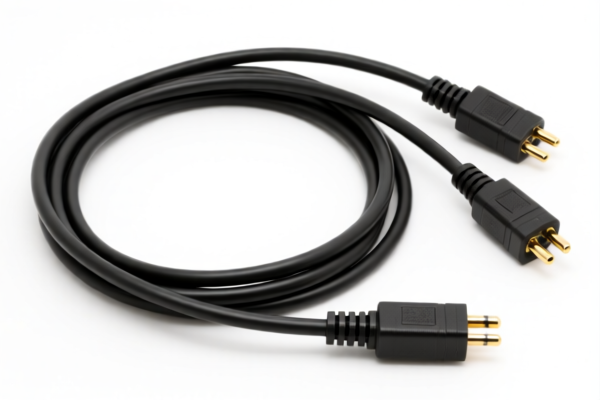
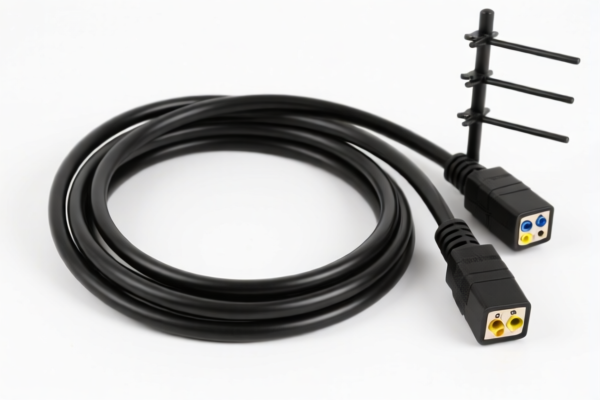
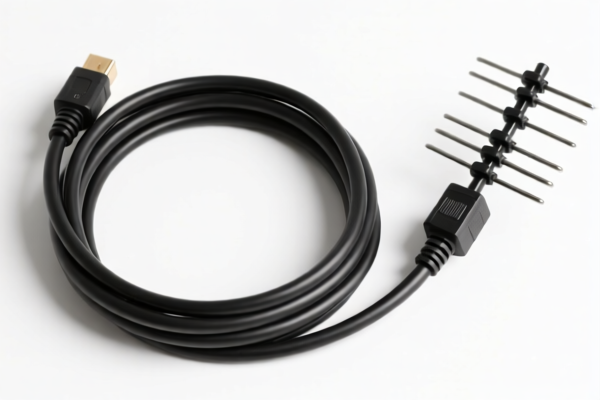
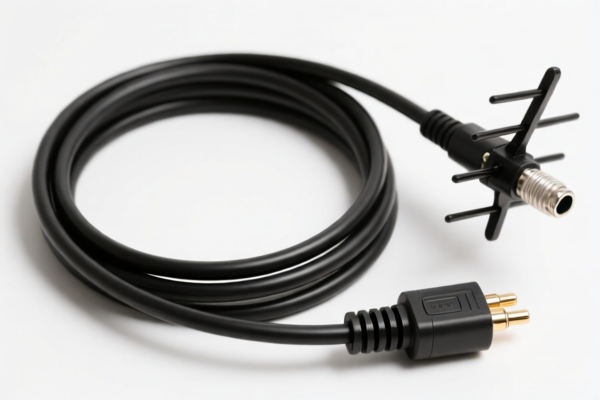
AI Analysis
🔌 Diagnostic Extension Cable (Medical Electrical Connection)
🌐 HS Code Reference & Customs Clearance Guide | 2026 Latest Tariff Analysis | Professional Clearance Strategy
📌 I. Product Definition & Classification: Do You Really Understand the "Diagnostic Extension Cable"?
The Diagnostic Extension Cable is a critical connectivity accessory used in medical imaging, monitoring, or electrical diagnostic equipment. In international trade, its classification depends heavily on its material composition, insulation type, and specific function as part of a medical device system.
It generally falls into two main categories: 1. Electrical Insulating Accessories: If the primary characteristic is the insulating material (plastic/rubber) covering electrical conductors, it may be classified under Chapter 85 (Electrical machinery and equipment). 2. Medical Instrument Parts/Accessories: If it is specifically designed as a dedicated connector/extension for a particular medical diagnostic device, it may be classified under Chapter 90 (Optical, photographic, medical instruments).
⚠️ Key Distinction Point:
- If classified as a general insulating electrical fitting → Go to 8547 or 8544.
- If classified as a part/accessory of a medical diagnostic instrument → Go to 9018.19.
📦 II. HS Code Classification Details (2026 Latest Tariff Authority Comparison)
Based on the provided data, here are the five potential HS Codes, their summaries, and why they apply:
| HS Code | Product Description | Summary Logic | Tax Rate |
|---|---|---|---|
8547.90.00.10 |
Other Insulating Fittings | Classified as an insulating attachment for medical/electrical equipment. Material is inferred to be insulating material, fitting the "Other Insulating Fittings" category. | 89.6% |
9018.19.95.60 |
Parts and Accessories of Medical Instruments | Classified as a connector attachment for electro-diagnostic equipment. Material is cable/wire type. Fits "Parts and Accessories" of medical instruments. | 35.0% |
9018.19.75.00 |
Parts and Accessories of Medical Instruments (Parameter Collection) | Used for medical electro-diagnostic equipment as a supporting accessory for parameter collection modules. Fits the scope of parts/accessories. | 35.0% |
8544.42.90.10 |
Electric Conductors with Connections | Classified based on morphology as an extension cable, fitting the "Electric Conductors" category. Follows the "catch-all" matching logic for conductive applications. | 87.6% |
8547.20.00.00 |
Insulating Fittings (Plastic/Rubber) | Classified as an electrical equipment attachment. Insulation part inferred to be plastic or rubber material, fitting "Plastic Insulating Fittings". | 35.0% |
🔍 Key Reminder:
- High Tariff Risk (8547.90.00.10 & 8544.42.90.10): These codes carry ~88-90% total tariffs due to heavy section 301/IEEPA/122 clause additions. They classify the cable primarily as a generic electrical component rather than a specialized medical part.
- Lower Tariff Opportunity (9018.19.xx.xx & 8547.20.00.00): These codes carry 35% total tariffs. They leverage the "Medical Instrument" or specific "Plastic Insulating Fitting" definitions to avoid the heaviest electrical component penalties.
💰 III. 2026 Latest Tariff Rate Breakdown (Including Additional Duties & Policy Add-ons)
✅ Applicable Country: United States (US)
✅ Origin: China (CN)
✅ Effective Time: 2025/2026 (Current Trade Environment)
🎯 1. 8547.90.00.10 & 8544.42.90.10 —— High-Risk Electrical/Insulating Classifications
Total Tax: 87.6% - 89.6%
| Item | Content |
|---|---|
| Base Tariff | 2.6% - 4.6% (Ad valorem) |
| Section 301 Additional Tariff | +25.0% (Standard USITC surcharge on Chinese electrical goods) |
| IEEPA Additional Tariff | +10.0% (Specific surcharge for Chinese/Hong Kong products) |
| Section 122 Clause Tariff | +50.0% (Steel, Aluminum, Copper articles surcharge) |
| Total Effective Rate | 87.6% - 89.6% |
| Calculation Basis | CIF Value × Total Rate |
| De Minimis Exemption | ❌ Denied (High risk of seizure or heavy duty assessment) |
📌 Explanation:
- The 50% Section 122 surcharge is the critical driver for the ~89% rate. This clause targets steel, aluminum, and copper products. If the cable's conductive core or shielding is heavily metallic, this applies.
- Section 301 (25%) and IEEPA (10%) are stacked on top.
- Warning: This classification treats the product as a generic electrical component with no medical purpose recognition, leading to the highest possible duty.
🎯 2. 9018.19.95.60 & 9018.19.75.00 —— Medical Instrument Parts Classifications
Total Tax: 35.0%
| Item | Content |
|---|---|
| Base Tariff | 0.0% (Ad valorem) |
| Section 301 Additional Tariff | +25.0% |
| IEEPA Additional Tariff | +10.0% |
| Total Effective Rate | 35.0% |
| Calculation Basis | CIF Value × 35% |
| De Minimis Exemption | ❌ Denied (Must declare properly) |
📌 Explanation:
- Base Tariff is 0% because parts/accessories of medical instruments (Ch 90) often have low or zero base duties.
- No Section 122 Surcharge: This classification avoids the 50% steel/copper penalty because the product is deemed a "medical part" rather than a raw electrical conductor or metallic fitting.
- Key Advantage: Significant savings compared to the 89% rate.
🎯 3. 8547.20.00.00 —— Plastic Insulating Fittings
Total Tax: 35.0%
| Item | Content |
|---|---|
| Base Tariff | 0.0% |
| Section 301 Additional Tariff | +25.0% |
| IEEPA Additional Tariff | +10.0% |
| Total Effective Rate | 35.0% |
| Calculation Basis | CIF Value × 35% |
📌 Explanation:
- Similar to the medical classification, this avoids the Section 122 steel/copper penalty by emphasizing the plastic/rubber insulation aspect.
- Requires strong justification that the product is primarily an insulating fitting, not a general wire.
🛠️ IV. Customs Clearance Practical Advice (Real-World Pitfall Guide)
✅ 1. Preparation Checklist (缺一不可)
| Document | Required | Description |
|---|---|---|
| ✅ Product Specifications | ✔️ | Must explicitly state "For use with [Specific Medical Diagnostic Device]". |
| ✅ Technical Diagrams | ✔️ | Show connection to medical equipment, not just generic electrical circuits. |
| ✅ Product Photos | ✔️ | Clear images of connectors, labels, and any medical certification marks. |
| ✅ Material Declaration | ✔️ | Specify insulation material (e.g., PVC, Rubber) and conductor type (Copper). |
| ✅ Commercial Invoice | ✔️ | Description: "Diagnostic Extension Cable for Medical Electro-Diagnostic Equipment, Model XYZ". |
| ✅ Certificate of Origin | ✔️ | Standard CO for China origin. |
✅ 2. Declaration Strategy (Key Mantra)
🔥 "Medical Purpose First, Insulation Second, Avoid Metal Penalty!"
| Scenario | Recommended HS Code | Wrong Approach | Consequence |
|---|---|---|---|
| Dedicated Medical Cable | 9018.19.95.60 or 9018.19.75.00 |
Classify as 8544.42.90.10 |
Tax jumps from 35% to 87.6% + Audit risk |
| General Cable for Medical Use | 8547.20.00.00 |
Classify as generic 8547.90.00.10 |
Unnecessary 50% Section 122 surcharge |
| Cable with Metal Shielding | 9018.19.xx.xx (if medical) |
8544.42.90.10 |
Triggers 50% steel/copper penalty |
✅ 3. Special Handling Tips
| Situation | Handling Advice |
|---|---|
| OEM Medical Cables | Provide the End-User Medical Device Model Number. Link the cable explicitly to that device. |
| Multi-Use Cables | If the cable is generic and not exclusive to one device, 8547.20.00.00 (35%) is safer than 8547.90.00.10 (89.6%). |
| High-Value Medical Systems | If the cable is sold as part of a kit, ensure the main device is declared correctly, and the cable is listed as an accessory. |
| Section 122 Risk | Avoid descriptions like "Copper Cable" or "Steel-Reinforced" in isolation. Emphasize "Medical Insulated Accessory". |
🌍 V. Global Market Clearance Comparison (2026 Latest)
| Country/Region | Recommended HS Code | Tariff Rate (China Origin) | Key Certifications | Note |
|---|---|---|---|---|
| 🇺🇸 USA | 9018.19.95.60 / 9018.19.75.00 |
35% (Total) | FDA (if applicable), UL, ISO 13485 | Avoid 8547.90.00.10 (89.6%) |
| 🇨🇳 China | 9018.19.95.60 |
Low/Zero (Import Duty) | NMPA, CCC | No Section 301/IEEPA |
| 🇪🇺 EU | 9018.90.90 |
~0-4% (if medical) | CE, MDR/IVDR | No high additional duties |
| 🇬🇧 UK | 9018.90.90 |
~0-4% | UKCA, MDRA | Similar to EU post-Brexit |
📌 Conclusion:
- USA is the critical market for this analysis. The difference between 35% and 89.6% is massive.
- Strategy: Always argue for the Medical Instrument Accessory (Ch 90) or Plastic Insulating Fitting (Ch 85, specific subheading) to avoid the Section 122 (50%) steel/copper penalty.
📌 VI. Common Mistakes & Pitfall Guide (Lessons Learned)
❌ Mistake 1: Declaring as "Electrical Extension Cord"
👉 Consequence: Falls under 8544.42.90.10 → 87.6% tariff + Audit.
✅ Fix: Declare as "Accessory for Medical Diagnostic Equipment".
❌ Mistake 2: Ignoring Section 122 (Steel/Copper)
👉 Consequence: If classified as a generic wire with copper core, the 50% surcharge applies.
✅ Fix: Emphasize the insulating and medical nature to shift to 9018.19 or 8547.20.
❌ Mistake 3: Providing vague descriptions like "Cable"
👉 Consequence: Customs assigns the highest default rate.
✅ Fix: Use precise terms: "Diagnostic Extension Cable, Insulated, for Medical Electro-Diagnostic Device".
🎯 VII. Conclusion: Professional Declaration, Cost Savings!
🎯 Remember the Mantra:
🔹 "Medical Accessory (35%) > Plastic Fitting (35%) >> Generic Wire (89.6%)"
🔹 "Avoid Section 122! Don't let the copper core cost you half the value!"
📌 Pro Tip:
- If possible, obtain an Advance Ruling (Pre-Classification) from US Customs (CBP) to lock in the 35% rate for 9018.19.xx.xx or 8547.20.00.00.
- Ensure your FDA registration (if required) and Device Labeling support the medical classification.
✨ Professional Clearance Starts with Accurate Classification!
💼 Every 1% of tariff saved is pure profit!
Customer Reviews
About HS Code Classification
The Harmonized System (HS) is an internationally standardized nomenclature developed by the World Customs Organization (WCO) to classify traded products. Over 200 countries use the HS system as the basis for customs tariffs, trade statistics, and import/export regulations.
Each HS code follows a hierarchical structure:
- Chapter (2 digits) — Broad category of goods (e.g., Chapter 84: Machinery and Mechanical Appliances)
- Heading (4 digits) — More specific grouping within the chapter
- Subheading (6 digits) — Internationally standardized breakdown, used by all WCO member countries
- National subdivisions (8-10 digits) — Country-specific extensions for further classification, such as US HTSUS 10-digit codes
Correct HS code classification is essential for smooth customs clearance, accurate duty payment, and compliance with trade regulations. Misclassification can lead to customs delays, overpayment of duties, or penalties.
When importing from CN to US, the applicable tariff rates may include:
- Most-Favored-Nation (MFN) rate — The standard duty rate applied to WTO members
- General rate — Applied to countries without trade agreements
- Trade remedy duties — Additional tariffs such as Section 301 (anti-dumping), Section 232 (national security), or countervailing duties
The information provided on this page is for reference purposes only. For official classification, please consult with your local customs authority or a licensed customs broker.