Diagnostic Reagents
CN → US| HS Code | Tariff Rate | Origin | Destination | Doc |
|---|---|---|---|---|
| 3822190080 | 10.0% | CN | US | Official Doc |
| 3822190030 | 10.0% | CN | US | Official Doc |
| 3002140090 | 10.0% | CN | US | Official Doc |
| 3006305000 | 10.0% | CN | US | Official Doc |
| 3006301000 | 10.0% | CN | US | Official Doc |
Product Images
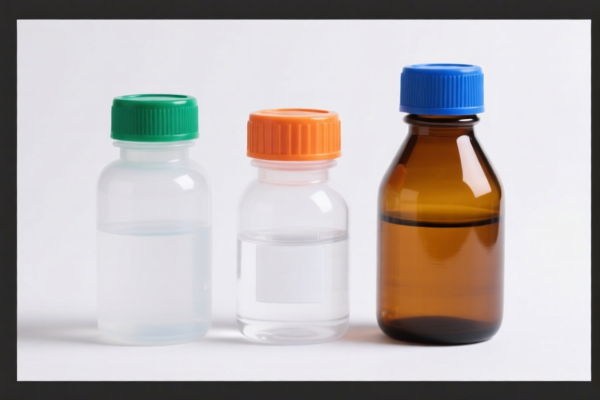
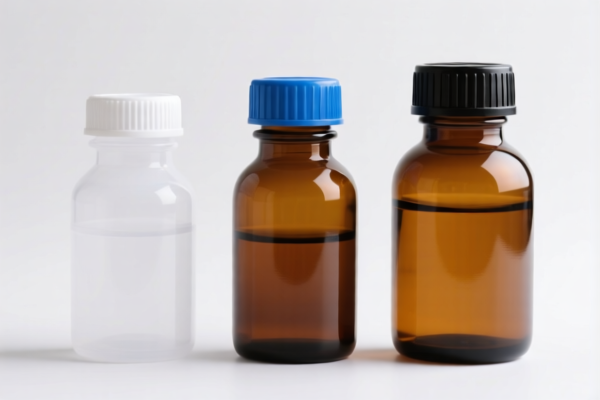
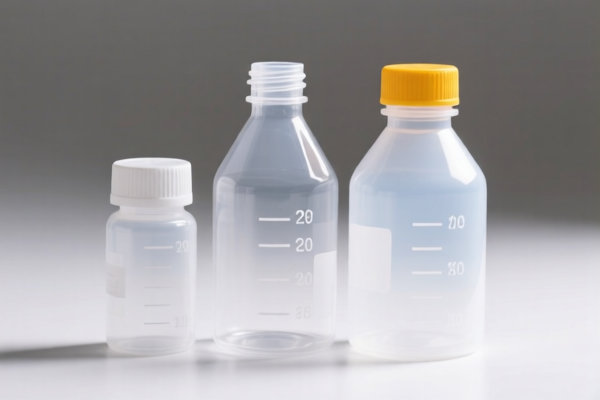
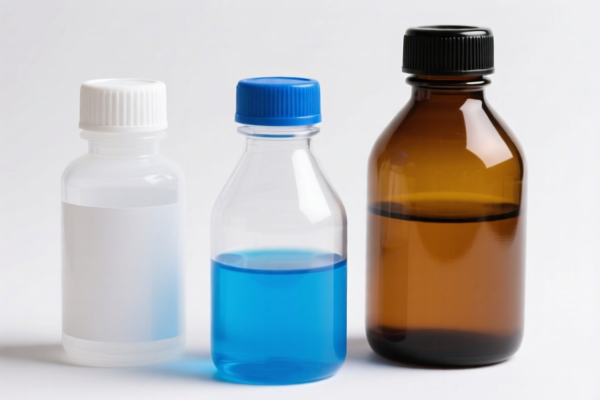
AI Analysis
🧪 Diagnostic Reagents (Laboratory & Clinical Testing Kits)
🌐 HS Code Reference & Customs Clearance Guide | 2026 Latest Tariff Analysis | Professional Compliance Strategy
📌 1. Product Definition: What Exactly Are "Diagnostic Reagents"?
Diagnostic reagents are substances or mixtures used in medical, immunological, or laboratory testing to detect, monitor, or treat diseases. In international trade, they are generally classified under Chapter 30 (Pharmaceutical Products) or Chapter 38 (Miscellaneous Chemical Products), depending on their composition, intended use, and regulatory status.
⚠️ Key Classification Logic:
- If the reagent is primarily a biological product (e.g., antibodies, vaccines, blood components) → Often falls under Chapter 30 (3002/3006).
- If the reagent is primarily a chemical or mixed chemical reagent for diagnostic/lab use (not exclusively biological) → Often falls under Chapter 38 (3822).
- "Diagnostic" vs. "Laboratory": The Customs classification often hinges on whether the primary purpose is clinical diagnosis (patient use) or general laboratory analysis.
📦 2. HS Code Classification Details (2026 Latest Tariff Authority Reference)
| HS Code | Product Description | Application Scenario | Key Classification Basis |
|---|---|---|---|
3822.19.00.80 |
Diagnostic/Experimental Reagents, Other (Mixed Chemicals) | General lab diagnostic kits, chemical-based test strips, non-biological reagents | Purpose Match: Explicitly defined as "diagnostic or laboratory reagents." No material conflict with chemical nature. |
3822.19.00.30 |
Diagnostic/Experimental Reagents, Other (General Fallback) | Reagents not specified elsewhere; fallback "Other" category for diagnostic/ Lab use | Fallback Principle: Used when no specific biological classification applies. "Diagnostic" purpose matches perfectly. |
3002.14.00.90 |
Blood Fractions; Modified Immunological Products (Non-Monoclonal) | Immunological reagents, serum-based diagnostics, biochemical reagents derived from blood/immunology | Inferred Use: Clinical diagnostic use implies biological origin (immune/biochemical). No conflict with non-monoclonal antibody category. |
3006.30.50.00 |
Diagnostic Preparations (Other, for Patient Use) | Reagents explicitly intended for direct patient diagnosis (e.g., pregnancy tests, glucose strips) | Direct Patient Use: Matches "diagnostic preparations for patient use." Fallback "Other" category with no material conflict. |
3006.30.10.00 |
Diagnostic Preparations (Other) | General diagnostic preparations not specified elsewhere | Description Gap: Lacks specific material details but clearly labeled "Diagnostic." Priority given to purpose-based classification. |
🔍 Critical Reminder:
- Biological vs. Chemical: If the reagent contains live cells, antibodies, or blood derivatives, it likely falls under 3002/3006. If it is purely synthetic/chemical, it falls under 3822.
- "Diagnostic" Intent: Customs authorities may require documentation proving the product is intended for diagnostic purposes (e.g., FDA/CE certification as a medical device).
💰 3. 2026 Latest Tariff Rate Details (Including Surcharges & Policy Add-ons)
✅ Applicable Country: United States (US)
✅ Origin: China (CN)
✅ Effective Date: 2025 November 10 onwards (including subsequent imports)
🎯 1. 3822.19.00.80 & 3822.19.00.30 —— Diagnostic/Experimental Reagents (Chemical/Mixed)
| Item | Content |
|---|---|
| Base Tariff Rate | 0% (ad valorem) |
| USITC Surcharge | 0% (No specific 301 Section surcharge for these subheadings) |
| Section 122 Surcharge | +10% (Specific to Chinese imports under IEEPA/Section 122 provisions) |
| Total Tariff Rate | 10% |
| Tax Calculation | CIF Value × 10% |
| De Minimis Eligibility | ❌ Not Applicable (Diagnostic reagents are often regulated; de minimis may be restricted by FDA/Customs) |
| Legal Basis Path | Section 122: 10% → HS: 3822.19.00.80/30 |
📌 Explanation:
- The 10% rate is driven by Section 122 (or related IEEPA orders targeting specific Chinese chemical/medical imports), not the standard 301 Section tariffs which are often 25% for electronics/machinery.
- Base rate is 0%, meaning the only additional cost is the 10% surcharge.
- Crucial: Ensure the product is classified under 3822, not 3002/3006, to avoid different surcharge rules. Some biological reagents (3002/3006) may face different treatment.
🎯 2. 3002.14.00.90 —— Biological/Immunological Diagnostic Reagents
| Item | Content |
|---|---|
| Base Tariff Rate | 0% |
| USITC Surcharge | 0% |
| Section 122 Surcharge | +10% |
| Total Tariff Rate | 10% |
| Tax Calculation | CIF Value × 10% |
| De Minimis Eligibility | ❌ Not Applicable (Biological products are strictly regulated) |
| Legal Basis Path | Section 122: 10% → HS: 3002.14.00.90 |
📌 Explanation:
- Similar to 3822, this biological category also faces the 10% Section 122 surcharge.
- Base rate is 0%.
- Regulatory Note: These items require strict FDA pre-market notification (510(k) or PMA) before customs clearance.
🎯 3. 3006.30.50.00 & 3006.30.10.00 —— Diagnostic Preparations for Patient Use
| Item | Content |
|---|---|
| Base Tariff Rate | 0% |
| USITC Surcharge | 0% |
| Section 122 Surcharge | +10% |
| Total Tariff Rate | 10% |
| Tax Calculation | CIF Value × 10% |
| De Minimis Eligibility | ❌ Not Applicable |
| Legal Basis Path | Section 122: 10% → HS: 3006.30.50/10 |
📌 Explanation:
- Base rate is 0%.
- Surcharge is 10% due to Section 122.
- Key Distinction: These are specifically for patient use (e.g., home pregnancy tests, rapid antigen tests). Documentation must clearly state "For Patient Use."
🛠️ 4. Customs Clearance Practical Advice (Pitfall Avoidance Guide)
✅ 1. Required Documentation Checklist (Non-negotiable)
| Document | Must Provide | Explanation |
|---|---|---|
| ✅ Product Specification Sheet | ✔️ | Detail composition (chemical vs. biological), intended use (clinical vs. lab), and method of action. |
| ✅ FDA/CE Certification | ✔️ | Proof of regulatory approval as a medical device or diagnostic kit. Without this, Customs may hold or reject the shipment. |
| ✅ Labeling & Packaging Photos | ✔️ | Must clearly state "Diagnostic Reagent," "For In Vitro Diagnostic Use," and lot numbers/expiry dates. |
| ✅ Letter of Intent/Use | ✔️ | Explicitly state if for patient use (3006) or laboratory use (3822/3002). This affects HS Code choice. |
| ✅ Commercial Invoice | ✔️ | Must accurately describe the product. Avoid vague terms like "Chemical Sample." Use "Diagnostic Reagent for [Specific Test]." |
| ✅ Origin Certificate (CO) | ✔️ | Required to verify Chinese origin for Section 122 surcharge application. |
✅ 2. Declaration Strategy (Key Mantras)
🔥 "Biological goes to 30, Chemical goes to 38. Patient use is 3006. Lab use is 3822."
| Scenario | Correct HS Code | Incorrect Approach |
|---|---|---|
| Antibody-based test kit (e.g., ELISA) | 3002.14.00.90 |
Declaring as 3822 → Risk of reclassification + penalty |
| Chemical-based test strip (e.g., pH, glucose) | 3822.19.00.80 |
Declaring as 3002 → Risk of over-regulation |
| Home Pregnancy Test | 3006.30.50.00 |
Declaring as 3822 → May be accepted, but 3006 is more precise for patient use |
| Research Lab Reagent (No patient use) | 3822.19.00.30 |
Declaring as 3006 → Incorrect, as 3006 is for patient use |
📌 Critical Note:
- Do not split shipments to avoid surcharges. Customs will view it as evasion.
- Ensure consistent terminology: If your invoice says "Diagnostic Reagent" but your CO says "Chemical," Customs will question the classification.
✅ 3. Special Circumstances Handling
| Situation | Handling Advice |
|---|---|
| OEM/Private Label | Provide brand authorization letters. Ensure the label matches the declared product name exactly. |
| Expiring Products | Provide batch numbers and expiry dates. Customs may inspect older batches more closely. |
| Temperature-Sensitive Goods | Provide cold chain logistics documentation. Improper transport may lead to rejection. |
| High-Value Shipments | Consider Advance Ruling (Pre-Ruling) from CBP to confirm HS Code and tariff rate. This prevents post-clearance audits. |
🌍 5. Global Market Customs Comparison (2026 Latest)
| Country/Region | Recommended HS Code | Tariff Rate (China Origin) | Certification Requirements | Notes |
|---|---|---|---|---|
| 🇺🇸 USA | 3822.19.00.80 / 3002.14.00.90 |
10% (Section 122) | FDA 510(k)/PMA, CE (if applicable) | Base rate 0%, but 10% surcharge applies. |
| 🇨🇳 China | 3822.19.00.80 / 3002.14.00.90 |
0% - 5% (varies by type) | NMPA (China Medical Device Reg) | Import duties may be lower than US. |
| 🇪🇺 EU | 3822.00.00 / 3002.14 |
0% (Most Favored Nation) | CE Marking, IVDR Regulation | IVDR compliance is strict for diagnostic kits. |
| 🇯🇵 Japan | 3822.00.00 / 3002.14 |
0% - 5% | PMDA Approval | Requires Japanese language labeling. |
📌 Conclusion:
- USA is the highest-cost market due to the 10% Section 122 surcharge.
- Base tariffs are 0% globally, so the surcharge is the main cost driver.
- Regulatory compliance (FDA/CE/IVDR) is more critical than tariff rates. Non-compliance leads to detention/destruction.
📌 6. Common Mistakes & Pitfall Guide (Lessons from Experience)
❌ Mistake 1: Classifying all diagnostic reagents under 3822 regardless of biological content.
👉 Consequence: If biological, Customs may reclassify to 3002, potentially triggering different regulatory reviews or delays.
❌ Mistake 2: Using vague descriptions like "Chemical Solution" on the invoice.
👉 Consequence: Customs cannot determine the "Diagnostic" purpose → Delayed clearance, potential penalty.
❌ Mistake 3: Ignoring the Section 122 10% surcharge.
👉 Consequence: Unexpected cost increase. Budget for 10% total tax, not just base rate.
❌ Mistake 4: Failing to provide FDA/CE certificates.
👉 Consequence: Shipment held by FDA/Customs until documentation is provided. May result in destruction if not resolved.
✅ Correct Practice:
"In Vitro Diagnostic Reagent, [Specific Test Name], for Laboratory/Patient Use, Certified by FDA/CE, Batch No. XYZ, Expiry: YYYY-MM"
🎯 7. Conclusion: Precision Classification Saves Money and Time!
🎯 Remember the Mantra:
🔹 "Biological = 3002, Chemical = 3822. Patient = 3006. Lab = 3822. 10% Surcharge Always Applies."
🔹 "Base Rate is 0%, but Surcharge is 10%. Don't Forget Section 122!"
🔹 "Regulatory Docs > Tariff Docs. No FDA/CE, No Clearance."
📌 Pro Tip:
If your product is originating from Vietnam, Mexico, or Thailand, the 10% Section 122 surcharge may not apply (subject to specific trade rules). However, for China-origin products, the 10% is mandatory.
Always apply for an Advance Ruling from CBP to confirm the HS Code and tariff rate before shipping.
📣 Immediate Action:
📞 Contact a Licensed Customs Broker + Provide Product Specs + Submit for FDA/CE Validation
🚀 Ensure Your Diagnostic Reagents Clear Customs Smoothly, Avoid Delays, and Maximize Profit Margins!
✨ Professional Clearance Starts with Accurate Classification!
💼 Every Cent in Tax is Worth Calculating Precisely!
Customer Reviews
About HS Code Classification
The Harmonized System (HS) is an internationally standardized nomenclature developed by the World Customs Organization (WCO) to classify traded products. Over 200 countries use the HS system as the basis for customs tariffs, trade statistics, and import/export regulations.
Each HS code follows a hierarchical structure:
- Chapter (2 digits) — Broad category of goods (e.g., Chapter 84: Machinery and Mechanical Appliances)
- Heading (4 digits) — More specific grouping within the chapter
- Subheading (6 digits) — Internationally standardized breakdown, used by all WCO member countries
- National subdivisions (8-10 digits) — Country-specific extensions for further classification, such as US HTSUS 10-digit codes
Correct HS code classification is essential for smooth customs clearance, accurate duty payment, and compliance with trade regulations. Misclassification can lead to customs delays, overpayment of duties, or penalties.
When importing from CN to US, the applicable tariff rates may include:
- Most-Favored-Nation (MFN) rate — The standard duty rate applied to WTO members
- General rate — Applied to countries without trade agreements
- Trade remedy duties — Additional tariffs such as Section 301 (anti-dumping), Section 232 (national security), or countervailing duties
The information provided on this page is for reference purposes only. For official classification, please consult with your local customs authority or a licensed customs broker.