Diamond Tile Trimming Disc
CN → US| HS Code | Tariff Rate | Origin | Destination | Doc |
|---|---|---|---|---|
| 6804210010 | 35.0% | CN | US | Official Doc |
| 6804210030 | 35.0% | CN | US | Official Doc |
Product Images
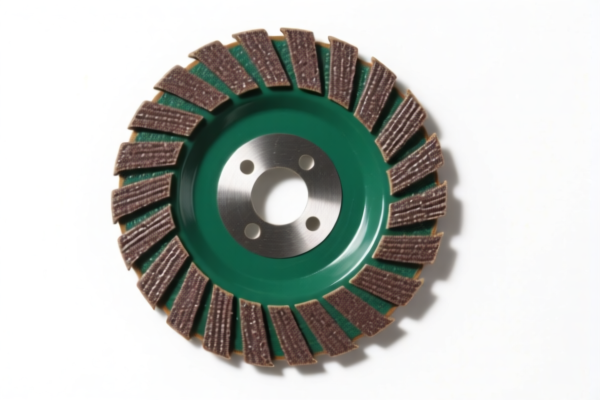
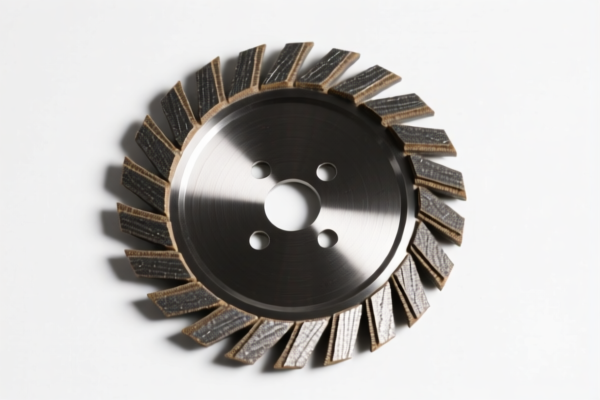
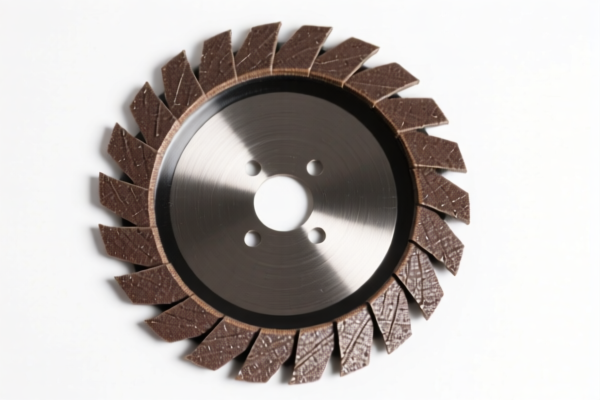
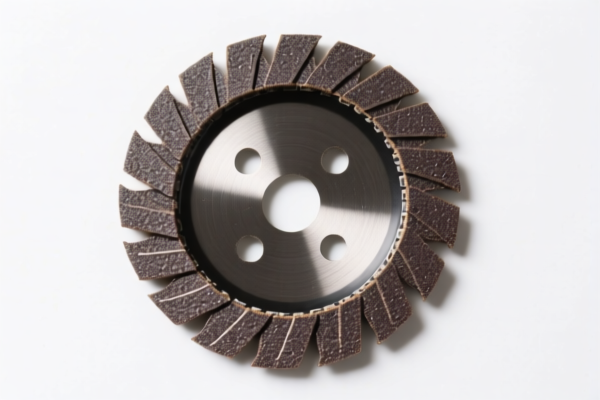
AI Analysis
🛠️ Diamond Tile Trimming Disc (Segments/Wheels)
🌐 HS Code Reference & Customs Clearance Guide | 2026 Latest Tariff Analysis | Professional Level Strategy
📌 I. Product Definition and Classification: What Exactly is a "Tile Trimming Disc"?
Diamond Tile Trimming Discs, often referred to as Segmented Diamond Wheels or Diamond Segments, are essential tools used in construction and stone processing for cutting, grinding, and trimming ceramic, porcelain, and stone tiles. In international trade, these products are classified under Chapter 68 (Articles of Stone or Similar Materials).
The critical distinction lies in the structure and mounting of the diamond segments:
Type A: Loose Segments
Small blocks of diamond-agglomerated material not attached to a backing plate. These are often sold in bulk for users to weld/bond them onto steel rims themselves.
Type B: Pre-Assembled Segments on Steel Plates (Pre-pressed Segments)
Diamond segments that are already attached to circular steel plates (cores) but do not have separate cutting teeth or blades attached. This is the most common form for industrial tile trimming tools where the user bonds the pre-segmented plate to a diamond blade core.
⚠️ Key Distinction Point:
- If the product consists of multiple segments of diamond agglomerated with metal, attached to circular plates of steel, and is without separate cutting parts (whether or not attached to non-steel plates) → It falls under 6804.21.00.30.
- If the product is a single segment or a different configuration not meeting the "multiple segments on steel plate" criteria → It may fall under 6804.21.00.10 (Other millstones/grinding wheels).
📦 II. HS Code Classification Details (2026 Latest Tariff Authoritative Comparison)
| HS Code | Product Description | Applicable Scenario | Key Features |
|---|---|---|---|
6804.21.00.10 |
Other millstones, grindstones, grinding wheels and the like; Of agglomerated synthetic or natural diamond | General diamond grinding wheels, loose diamond segments, or tools that do not fit the specific "pre-pressed segment on steel plate" description. | ✅ Agglomerated Diamond |
6804.21.00.30 |
Articles consisting of multiple segments of diamond agglomerated with metal, attached to circular plates of steel, without cutting parts | Tile Trimming Discs that are pre-assembled segments on a steel core, ready for bonding to a blade. | ✅ Pre-pressed Segments on Steel Core |
🔍 Focus Alert:
- 6804.21.00.30 is the specific classification for pre-assembled diamond segments on steel plates used for trimming/cutting tools. This is the most accurate code for "Diamond Tile Trimming Discs" that come as a complete unit (segments + steel back) but without the final blade teeth.
- If the "trimming disc" is a simple grinding wheel (not segmented segments on steel), it may default to 6804.21.00.10.
- Always verify if the product is sold as a "segment kit" or a "pre-pressed segment plate."
💰 III. 2026 Latest Tariff Rate Details (Including Additional Duties, Policy Add-ons)
✅ Applicable Country: United States (US)
✅ Country of Origin: China (CN)
✅ Effective Date: From November 10, 2025 (and subsequent imports)
🎯 1. 6804.21.00.10 – Other Millstones, Grindstones, Grinding Wheels (Diamond)
| Item | Detail |
|---|---|
| Base Tariff Rate | 0.0% (ad valorem) |
| Section 301 Additional Duty | +25.0% |
| Total Tax Rate | 25.0% |
| Tax Calculation | CIF Value × 25% |
| De Minimis Eligibility | ❌ No (Subject to Section 301 duties) |
| Legal Basis Path | USITC:6804.21.00.10 → Footnote 9903.88.01 (Section 301) |
📌 Explanation:
- Base Rate: 0% because millstones and grinding wheels of natural/agglomerated stone or ceramics generally have a low base duty.
- Additional Duty: The 25% is imposed under Section 301 of the Trade Act of 1974, targeting specific Chinese goods, including abrasive articles.
- Total Cost: Importers must budget for a 25% tax burden on the CIF value.
🎯 2. 6804.21.00.30 – Diamond Segments on Steel Plates (Pre-pressed)
| Item | Detail |
|---|---|
| Base Tariff Rate | 0.0% (ad valorem) |
| Section 301 Additional Duty | +25.0% |
| Total Tax Rate | 25.0% |
| Tax Calculation | CIF Value × 25% |
| De Minimis Eligibility | ❌ No (Subject to Section 301 duties) |
| Legal Basis Path | USITC:6804.21.00.30 → Footnote 9903.88.01 (Section 301) |
📌 Explanation:
- This code specifically covers the pre-assembled segments.
- Despite being a more specialized product, it inherits the same 25% additional duty as other diamond abrasives under Section 301.
- Total Cost: Also 25% on CIF value.
🛠️ IV. Customs Clearance Practical Advice (Real-World Pitfall Avoidance Guide)
✅ 1. Required Documentation Checklist (All are mandatory)
| Document | Must Provide | Description |
|---|---|---|
| ✅ Product Specification Sheet | ✔️ | Must detail: Segment count, diamond concentration, grit size, bond type (metal/resin), steel plate diameter/thickness. |
| ✅ Product Photos | ✔️ | Clear images showing the steel core and multiple segments attached. Essential to prove it fits HS 6804.21.00.30. |
| ✅ Commercial Invoice | ✔️ | Clearly state "Diamond Segments for Tile Trimming Tools" or "Pre-pressed Diamond Segments." Avoid vague terms like "Tools." |
| ✅ Packing List | ✔️ | Detail packaging to ensure segments are not damaged. |
| ✅ Origin Certificate | ✔️ | Confirm origin is China to apply correct Section 301 duties. |
| ✅ Declaration of Non-Cutting Parts | ✔️ | Explicitly state that the product does not include cutting teeth/blades if claiming HS 6804.21.00.30. |
✅ 2. Declaration Tips (Key Mnemonic)
🔥 "Steel Plate Attached, Multiple Segments, No Teeth = 6804.21.00.30"
| Scenario | Correct Declaration | Wrong Approach |
|---|---|---|
| Pre-pressed segments on steel core (No teeth) | 6804.21.00.30 |
Misdeclare as "Blades" → Higher scrutiny/penalties |
| Loose diamond blocks (Not attached) | 6804.21.00.10 |
Claim as pre-assembled → Rejection/Devaluation |
| Diamond Blade with Teeth | Not in this dataset (Usually 8208 or 8209) | Misdeclare as "Grinding Wheel" → Wrong HS Code |
| Ceramic Grinding Wheel (No diamond) | 6804.21.00 (Different sub-code) |
Claim as "Diamond" → Fraud Risk |
✅ 3. Special Handling
| Situation | Handling Advice |
|---|---|
| Mixed Shipment | If shipping both pre-pressed segments (6804.21.00.30) and loose segments (6804.21.00.10), declare separately. Mixing may lead to misclassification. |
| OEM Custom Sizes | Provide custom dimensions in the invoice. Ensure photos match the declared specifications exactly. |
| Diamond Content | Clearly state "Agglomerated Diamond" in the description. Do not just say "Abrasives" to avoid ambiguity. |
| Steel Core Material | Confirm the core is steel. If it's plastic or aluminum, it may still fall under 6804.21.00.30 if it meets the "attached to circular plates" criteria, but documentation must reflect this. |
🌍 V. Global Major Market Clearance Comparison (2026 Latest)
| Country/Region | Recommended HS Code | Tariff Rate | Certification Requirements | Notes |
|---|---|---|---|---|
| 🇺🇸 United States | 6804.21.00.30 |
25% (Section 301) | No specific cert needed for tool parts | High duty due to China origin |
| 🇨🇳 China | 6804.21.00 |
~5-10% (Export Duty may apply) | None | Check export regulations |
| 🇪🇺 European Union | 6804.21 |
0-2% (General) | CE (if marketed as tool safety) | No Section 301 equivalent |
| 🇦🇺 Australia | 6804.21.00 |
5% | RCM (if electrical, but these are passive) | Low duty |
| 🇯🇵 Japan | 6804.21 |
5-15% | PSE (not required for passive) | Varies by exact material |
📌 Conclusion:
- The US is the most expensive market due to the 25% Section 301 duty.
- Other markets (EU, Japan, Australia) have significantly lower or zero base tariffs.
- For US imports, cost optimization is critical. Consider supply chain adjustments if margins are tight.
📌 VI. Common Errors & Pitfalls Guide (Lessons Learned)
❌ Error 1: Declaring "Diamond Blades" instead of "Segments"
👉 Consequence: If the product has no cutting teeth, declaring it as a blade is incorrect. If it has teeth, it’s not a segment. Misclassification leads to seizure or fines.
❌ Error 2: Ignoring the "Steel Plate" aspect
👉 Consequence: Failing to prove the segments are attached to a steel core may force customs to classify under 6804.21.00.10 or even 8208/8209, leading to delays and re-evaluation.
❌ Error 3: Omitting "Diamond" in the description
👉 Consequence: Customs may classify under general abrasives (e.g., ceramic grinding wheels), leading to wrong duty assessment and potential penalties for inaccurate declaration.
❌ Error 4: Assuming "De Minimis" exemption applies
👉 Consequence: Section 301 duties do not apply to de minimis shipments (under $800) in the same way. However, Section 301 items are often excluded from de minimis relief depending on current enforcement. Check current CBP enforcement: As of 2025/2026, many Section 301 goods are not eligible for de minimis. Do not assume exemption!
✅ Correct Practice:
"Pre-pressed Diamond Segments on Steel Core, for Tile Trimming Tools, Agglomerated Synthetic Diamond, No Cutting Teeth"
🎯 VII. Conclusion: Professional Declaration, Save Time, Reduce Costs!
🎯 Remember the Mnemonic:
🔹 "Steel Plate + Multiple Segments = 6804.21.00.30"
🔹 "No Teeth = Segments, Not Blades"
🔹 "China Origin = 25% Duty in US"
📌 Pro Tip:
If your diamond segments are originating from Vietnam, Thailand, or Malaysia, you may be eligible for lower or zero Section 301 duties due to free trade agreements or different origin rules.
Recommend applying for an Advance Ruling from CBP if your shipment volume is large, to confirm HS classification and duty liability before shipping.
📣 Immediate Action:
📞 Contact a licensed customs broker + Provide product photos + Request HS Code Advance Ruling
🚀 Ensure your diamond tiles are smoothly cleared, efficiently exported, and profit maximized!
✨ Professional Clearance Starts with Accurate Classification!
💼 Every dollar of duty matters!
Customer Reviews
About HS Code Classification
The Harmonized System (HS) is an internationally standardized nomenclature developed by the World Customs Organization (WCO) to classify traded products. Over 200 countries use the HS system as the basis for customs tariffs, trade statistics, and import/export regulations.
Each HS code follows a hierarchical structure:
- Chapter (2 digits) — Broad category of goods (e.g., Chapter 84: Machinery and Mechanical Appliances)
- Heading (4 digits) — More specific grouping within the chapter
- Subheading (6 digits) — Internationally standardized breakdown, used by all WCO member countries
- National subdivisions (8-10 digits) — Country-specific extensions for further classification, such as US HTSUS 10-digit codes
Correct HS code classification is essential for smooth customs clearance, accurate duty payment, and compliance with trade regulations. Misclassification can lead to customs delays, overpayment of duties, or penalties.
When importing from CN to US, the applicable tariff rates may include:
- Most-Favored-Nation (MFN) rate — The standard duty rate applied to WTO members
- General rate — Applied to countries without trade agreements
- Trade remedy duties — Additional tariffs such as Section 301 (anti-dumping), Section 232 (national security), or countervailing duties
The information provided on this page is for reference purposes only. For official classification, please consult with your local customs authority or a licensed customs broker.