Diaper Rash Shorts
CN → US| HS Code | Tariff Rate | Origin | Destination | Doc |
|---|---|---|---|---|
| 6111206010 | 25.6% | CN | US | Official Doc |
| 6111205000 | 32.4% | CN | US | Official Doc |
Product Images
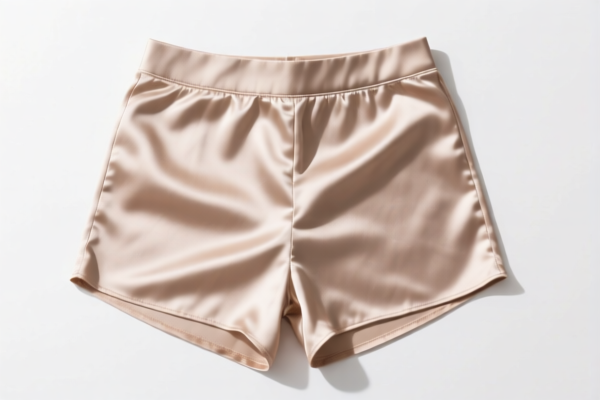
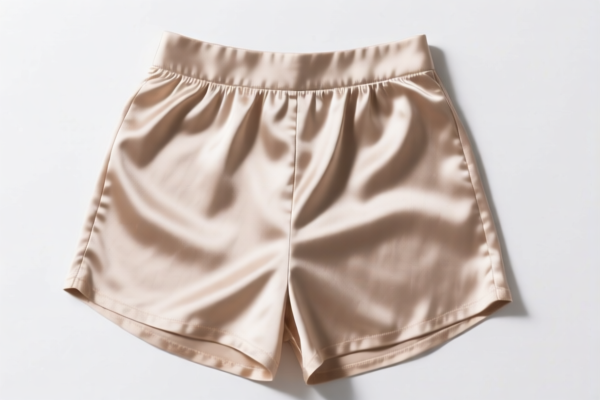
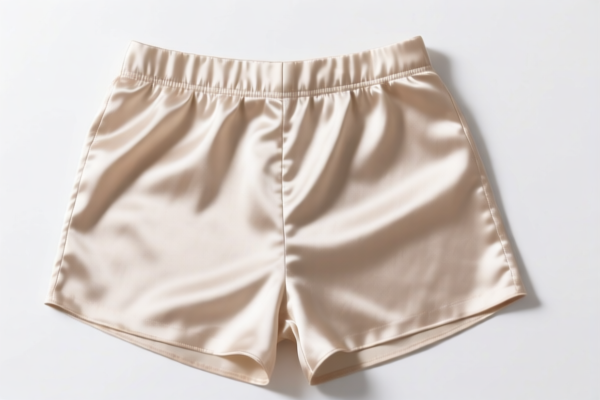
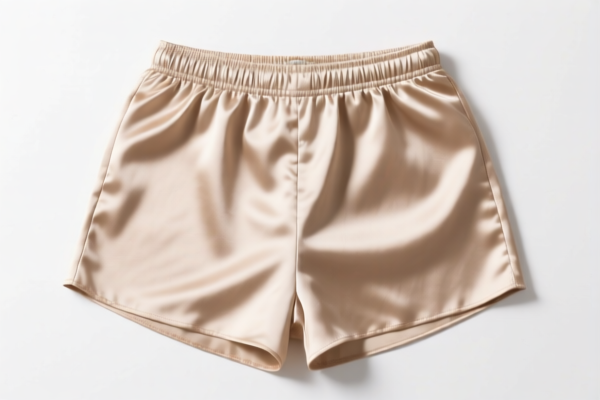
AI Analysis
🍼 Diaper Rash Shorts (Babies' Garments)
🌐 HS Code Reference & Customs Clearance Guide | 2026 Latest Tariff Analysis | Professional Clearance Strategy
📌 I. Product Definition & Classification: What Are "Diaper Rash Shorts"?
"Diaper Rash Shorts" (often referred to in trade as Sunsuits, Washsuits, or Similar Apparel) are specialized garments for infants, typically made of soft cotton or blends. They are designed to be worn over diapers, often featuring snaps or zippers for easy diaper changes, and sometimes include protective layers to prevent chafing or rash.
In international trade, these items fall under Chapter 61 (Articles of Apparel and Clothing Accessories, Knitted or Crocheted) because they are typically knitted or crocheted fabrics.
⚠️ Key Distinction:
- If the item is a complete garment (top and bottom or one-piece) designed for babies, it falls under 6111.20 (Of Cotton).
- If the item is merely an accessory (e.g., a simple diaper cover without a top), it might be classified differently, but most "rash shorts" are considered "similar apparel."
- Critical Note: Items imported as parts of a set (e.g., a matching shirt and shorts sold together) may have different subheadings, but individual "shorts" or "sunsuits" are classified separately.
📦 II. HS Code Classification Details (2026 Latest Tariff Authority Comparison)
Based on the provided data, here are the two relevant HS Codes for "Diaper Rash Shorts" when they are not imported as parts of a set:
| HS Code | Product Description | Application Scenario | Key Feature |
|---|---|---|---|
6111.20.60.10 |
Sunsuits, washsuits, and similar apparel | All-in-one onesies, romper-style shorts, or protective covers designed for sun/wash protection | ✅ Similar Apparel (Complete garment/cover) |
6111.20.50.00 |
Trousers, breeches, and shorts (except parts of sets) | Basic infant shorts, diaper covers that resemble shorts, standalone bottom garments | ✅ Bottoms Only (Not a set) |
🔍 Important Reminder:
- Both HS Codes are for Knitted or Crocheted items made of Cotton.
- If your product is not knitted/crocheted (e.g., woven fabric), it would fall under Chapter 62, which is not covered in the current data.
- If the product is imported as a set (e.g., "2-pack short + matching shirt"), it may still fall under6111.20.50.00if the shorts are the principal item, but you must verify if it’s considered a "set" under US CBP rules. For simplicity, if they are sold individually or as "shorts only," use6111.20.50.00.
💰 III. 2026 Latest Tariff Rate Breakdown (Detailed Tax Clauses)
✅ Applicable Country: United States (US)
✅ Origin: China (CN)
✅ Effective Time: 2025 onwards (Subject to current trade policies)
🎯 1. 6111.20.60.10 – Sunsuits, Washsuits, and Similar Apparel
| Item | Content |
|---|---|
| Base Tariff Rate | 0.0% (ad valorem) |
| Additional Tariff (Section 301) | 0.0% |
| Total Tariff Rate | 0.0% |
| Tax Calculation | CIF Value × 0.0% = $0 |
| De Minimis Exemption | ✅ Yes (Under $800 per shipment for informal entries) |
| Legal Basis Path | HTSUS:6111.20.60.10 → Section 301 Footnote: Not listed |
📌 Explanation:
- Base Tariff: The US imposes a 0% base duty on baby cotton garments (6111.20).
- Section 301 Tariff: Unlike many electronics or steel products, baby clothing is NOT subject to the 25% Section 301 additional tariff imposed on Chinese goods.
- Result: This is a zero-tariff category, making it highly favorable for importers.
🎯 2. 6111.20.50.00 – Trousers, Breeches, and Shorts (Not Parts of Sets)
| Item | Content |
|---|---|
| Base Tariff Rate | 0.0% (ad valorem) |
| Additional Tariff (Section 301) | 0.0% |
| Total Tariff Rate | 0.0% |
| Tax Calculation | CIF Value × 0.0% = $0 |
| De Minimis Exemption | ✅ Yes (Under $800 per shipment) |
| Legal Basis Path | HTSUS:6111.20.50.00 → Section 301 Footnote: Not listed |
📌 Explanation:
- Base Tariff: Like above, 0% base duty for cotton baby garments.
- Section 301 Tariff: Also exempt from additional duties.
- Result: Zero tariff cost for importers, provided the goods are correctly classified as "baby garments" and not general adult/child shorts.
🛠️ IV. Customs Clearance Practical Advice (Real-World Pitfall Guide)
✅ 1. Required Documentation Checklist (Must-Haves)
| Document | Required? | Notes |
|---|---|---|
| ✅ Commercial Invoice | ✔️ | Must clearly state: "Baby Cotton Knitted Shorts" or "Infant Sunsuit" |
| ✅ Packing List | ✔️ | Include quantity, weight, and material composition (e.g., "100% Cotton, Knitted") |
| ✅ Product Photos | ✔️ | Show the garment clearly, including labels indicating "Baby" or "Infant" |
| ✅ Material Composition Declaration | ✔️ | Must confirm: Knitted/Crocheted + Cotton |
| ✅ CBP Entry Summary | ✔️ | Filed by customs broker |
📌 Critical Tip:
- Clearly label the product as "Baby/Infant" on the invoice and packaging.
- If you label it simply as "Shorts," customs may misclassify it as 6404.11 (Footwear) or 6119.90 (Other trousers) for older children, which could incur higher tariffs (e.g., 16%–20%).
- Age Range: Specify "For infants under 2 years" to support classification under 6111 (Babies' Garments).
✅ 2. Classification Strategy (Key Mnemonic)
🔥 "Baby + Cotton + Knitted = 6111.20 + 0% Duty!"
| Scenario | Correct HS Code | Risk if Wrong |
|---|---|---|
| Baby cotton knitted shorts (individual) | 6111.20.50.00 |
Misclassified as adult shorts → 16% duty + penalties |
| Baby cotton knitted one-piece suit | 6111.20.60.10 |
Misclassified as general apparel → 10%–16% duty |
| Non-cotton (e.g., polyester) baby shorts | Not Covered | Would fall under 6111.30 or 6111.90, which may have different tariffs |
| Woven (not knitted) baby shorts | Not Covered | Would fall under Chapter 62, with potentially higher tariffs |
✅ 3. Special Cases & Handling
| Situation | Handling Advice |
|---|---|
| Mixed Materials | If the garment contains >50% cotton, it’s still classified as "Of Cotton." If less, it falls under "Of Other Textile Materials," which may have different tariffs. |
| With Plastic Snap Fasteners | Does not change classification. Still classified as textile apparel. |
| With Elastic Waistbands | Still classified as shorts/trousers. No change. |
| Imported as "Diaper Covers" Only | If it’s a simple cover without top, it may still be 6111.20.50.00 if it resembles shorts. If it’s just a fabric wrap, it might be 6111.20.80.00 (Other). |
🌍 V. Global Market Comparison (2026 Latest)
| Country/Region | Recommended HS Code | Tariff | Notes |
|---|---|---|---|
| 🇺🇸 USA | 6111.20.50.00 / 6111.20.60.10 |
0% | Zero duty for cotton baby garments from China |
| 🇨🇳 China | 6111.20.50.00 / 6111.20.60.10 |
~8%–10% | Import duty into China for baby cotton garments |
| 🇪🇺 EU | 6111.20.50.00 / 6111.20.60.10 |
~0%–12% | Varies by country; many have 0% for baby clothes |
| 🇬🇧 UK | 6111.20.50.00 / 6111.20.60.10 |
~0%–12% | Post-Brexit, some preferences apply |
| 🇦🇺 Australia | 6111.20.50.00 / 6111.20.60.10 |
~5% | Generally low tariffs for textiles |
📌 Conclusion:
- USA offers the best tariff advantage for Chinese-made baby cotton garments, with 0% duty.
- Always ensure the product is knitted and made of cotton to qualify for 0%.
- Misclassification can lead to back taxes + interest.
📌 VI. Common Errors & Pitfalls (Lessons Learned)
❌ Error 1: Labeling "Diaper Rash Shorts" as "Adult Shorts"
👉 Consequence: Classification under 6119.90 or 6111.90 for older children → 16%–20% duty + penalties.
❌ Error 2: Not specifying "Knitted" on the invoice
👉 Consequence: Customs may assume "Woven" → Classification under Chapter 62 → Higher tariffs (up to 16%).
❌ Error 3: Including non-cotton materials (e.g., elastane >50%)
👉 Consequence: Falls under "Of Other Textile Materials" → Different HS Code → Potential 10%–16% duty.
❌ Error 4: Importing as "Parts of a Set" without proper documentation
👉 Consequence: Customs may still classify as 6111.20.50.00, but if the set is not properly declared, it may be held for inspection.
✅ Correct Practice:
"Baby Cotton Knitted Sunsuit, 100% Cotton, Knitted Fabric, Size 0-6M, For Infant Use Only"
🎯 VII. Conclusion: Professional Classification Saves Money!
🎯 Remember the Mnemonic:
🔹 "Baby + Cotton + Knitted = 0% Duty!"
🔹 "No Set? Use .50.00. Set? Use .60.10."
🔹 "Wrong Material? Wrong Chapter! Wrong Tariff!"
📌 Pro Tip:
If your product is not made of cotton (e.g., polyester, bamboo), or not knitted (e.g., woven), it will NOT qualify for 0% duty. In such cases, consult a customs broker to determine the correct HS Code, which may incur 10%–16% tariffs.
📣 Immediate Action:
📞 Work with a licensed customs broker to verify the HS Code.
🚀 Ensure all documents clearly state "Baby," "Cotton," and "Knitted."
💼 Avoid misclassification to save thousands in tariffs!
✨ Accurate Classification from Day One!
💼 Every Dollar Counts in Global Trade!
Customer Reviews
About HS Code Classification
The Harmonized System (HS) is an internationally standardized nomenclature developed by the World Customs Organization (WCO) to classify traded products. Over 200 countries use the HS system as the basis for customs tariffs, trade statistics, and import/export regulations.
Each HS code follows a hierarchical structure:
- Chapter (2 digits) — Broad category of goods (e.g., Chapter 84: Machinery and Mechanical Appliances)
- Heading (4 digits) — More specific grouping within the chapter
- Subheading (6 digits) — Internationally standardized breakdown, used by all WCO member countries
- National subdivisions (8-10 digits) — Country-specific extensions for further classification, such as US HTSUS 10-digit codes
Correct HS code classification is essential for smooth customs clearance, accurate duty payment, and compliance with trade regulations. Misclassification can lead to customs delays, overpayment of duties, or penalties.
When importing from CN to US, the applicable tariff rates may include:
- Most-Favored-Nation (MFN) rate — The standard duty rate applied to WTO members
- General rate — Applied to countries without trade agreements
- Trade remedy duties — Additional tariffs such as Section 301 (anti-dumping), Section 232 (national security), or countervailing duties
The information provided on this page is for reference purposes only. For official classification, please consult with your local customs authority or a licensed customs broker.