Difenoconazole Granules
CN → US| HS Code | Tariff Rate | Origin | Destination | Doc |
|---|---|---|---|---|
| 3808921500 | 41.5% | CN | US | Official Doc |
| 3808922400 | 35.0% | CN | US | Official Doc |
Product Images
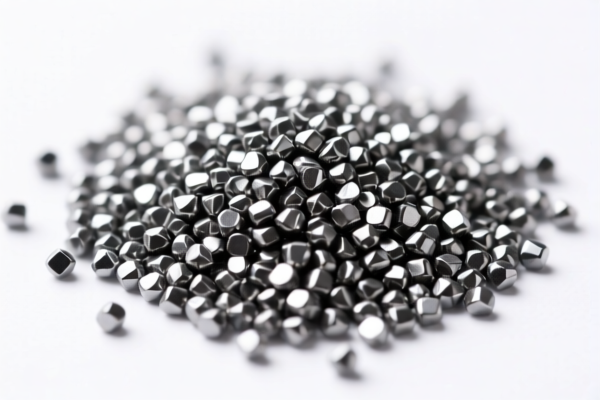
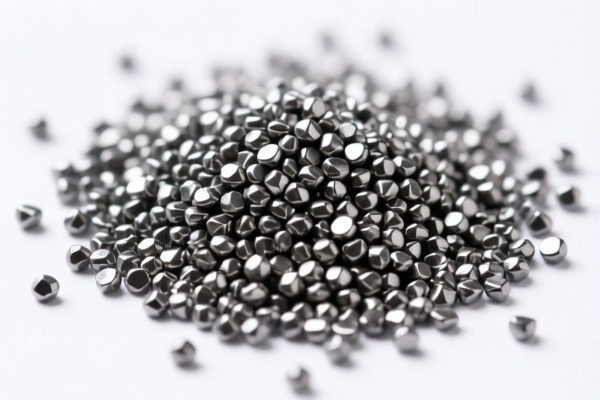
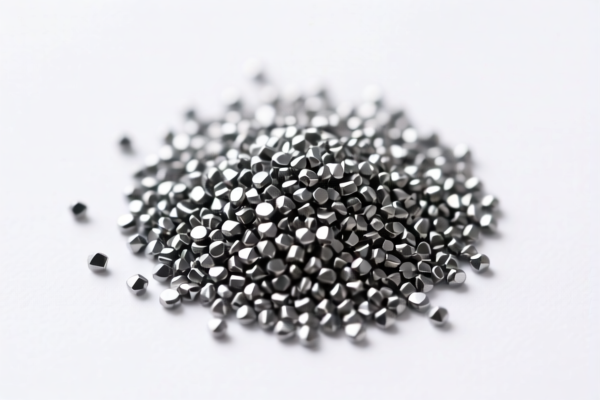
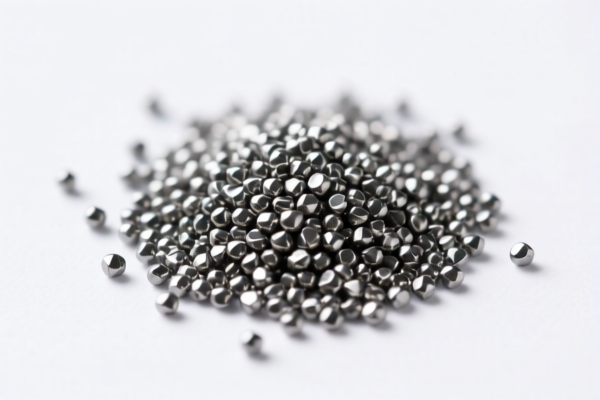
AI Analysis
🌿 Difenoconazole Granules (Difenoconazole Fungicide)
🌐 HS Code Reference & Clearance Guide | 2026 Latest Tariff Analysis | Professional Customs Strategy 📌 I. Product Definition & Classification: What is "Difenoconazole"?
Difenoconazole is a systemic triazole fungicide widely used in agriculture to control fungal diseases on cereals, fruits, vegetables, and ornamentals. It works by inhibiting ergosterol biosynthesis in fungi.
In international trade, it falls under Chapter 38: Miscellaneous chemical products, specifically under heading 3808 (Insecticides, rodenticides, fungicides, herbicides...).
⚠️ Critical Classification Distinction: The key to accurate classification lies in the specific chemical nature and packing format. - General Aromatic Fungicides: Often fall under 3808.92.15.00 if they contain "any aromatic or modified aromatic fungicide" and don't match specific thioamide/dithiocarbamate lists. - Specific Exclusions: If the product contained Maneb, Zineb, etc., it would go to 3808.92.24.00. Difenoconazole is NOT in this excluded list. - Packing Form: The product must be "put up in forms or packings for retail sale" or as preparations/articles to qualify for HS 3808. If it is a raw technical powder (technical grade) not in retail packaging, it may fall under 2933.99 (Heterocyclic compounds). The data provided assumes retail/preparation form.
📦 II. HS Code Classification Details (2026 Latest Tariff Authority)
Based on the provided <DATA>, here are the two potential HS Codes. Difenoconazole Granules typically fall under 3808.92.15.00 unless specifically formulated with excluded chemicals (which it is not).
| HS Code | Product Description | Applicability to Difenoconazole | Tax Rate (CN-US) |
|---|---|---|---|
| 3808.92.15.00 | Other Fungicides: Containing any aromatic or modified aromatic fungicide: Other | ✅ Primary Fit. Difenoconazole is an aromatic triazole fungicide. It is not one of the specific thioamide/dithiocarbamate exceptions listed in 3808.92.24. | 0.0% Total Tax |
| 3808.92.24.00 | Other Fungicides: Containing any fungicide which is a thioamide, thiocarbamate, dithiocarbamate, thiuram or isothiocyanate: Maneb; Zineb; Mancozeb; Metiram | ❌ Not Applicable. Difenoconazole is NOT a thioamide, dithiocarbamate, or one of the listed exceptions (Maneb, Zineb, etc.). | 25.0% Total Tax (25% Additional) |
🔍 Key Insight: - Difenoconazole is an aromatic compound (contains benzene rings in its chemical structure). - It is NOT a dithiocarbamate derivative. - Therefore, it DOES NOT qualify for the 3808.92.24.00 subheading, which carries a heavy 25% additional tariff. - It DOES fit under 3808.92.15.00 ("Other" aromatic fungicides).
💰 III. 2026 Tariff Rate Breakdown (Including Additional Duties)
✅ Applicable Country: United States (US)
✅ Origin: China (CN)
✅ Effective Date: Current tariffs apply
🎯 1. 3808.92.15.00 —— Difenoconazole Granules (Correct Classification)
| Item | Content |
|---|---|
| Base Tariff | 0.0% |
| USITC Additional Tariff (Section 301) | 0.0% |
| IEEPA Additional Tariff | 0.0% |
| Total Tax Rate | 0.0% |
| Calculation Basis | CIF Value × 0% = $0 |
| De Minimis Exemption | ✅ Yes (likely, if under $800 per shipment, though fungicides may face EPA scrutiny) |
| Legal Basis | HTSUS 3808.92.15.00; No Section 301 additional duty listed for this specific subheading in provided data. |
📌 Explanation: - This classification benefits from zero total tariff. - However, be aware of non-tariff barriers: EPA registration, TSCA compliance, and possible anti-dumping duties (if applicable, though not listed in
<DATA>).
🎯 2. 3808.92.24.00 —— Incorrect Classification (For Comparison)
| Item | Content |
|---|---|
| Base Tariff | 0.0% |
| USITC Additional Tariff | +25.0% |
| Total Tax Rate | 25.0% |
| Risk | High Risk of Misclassification Penalty |
| Legal Basis | HTSUS 3808.92.24.00 |
📌 Warning: - Classifying Difenoconazole under 3808.92.24.00 would incur a 25% penalty because it is not a dithiocarbamate. - Customs authorities will easily reject this due to the chemical composition mismatch.
🛠️ IV. Clearance Practical Advice (Battle-Tested Pitfall Avoidance)
✅ 1. Documentation Checklist (Non-Negotiable)
| Document | Must Provide | Explanation |
|---|---|---|
| ✅ Safety Data Sheet (SDS) | ✔️ | Must clearly state active ingredient: Difenoconazole. Must confirm it is NOT a dithiocarbamate. |
| ✅ EPA Registration Number | ✔️ | CRITICAL. In the US, unregistered pesticides cannot be cleared. Include EPA Reg. No. on invoice. |
| ✅ Certificate of Analysis (COA) | ✔️ | Confirms purity, formulation type (granules), and active ingredient percentage. |
| ✅ Technical Data Sheet | ✔️ | Chemical structure proof (showing aromatic triazole structure) to support HS 3808.92.15.00. |
| ✅ Commercial Invoice | ✔️ | Clearly describe as: "Difenoconazole Fungicide Granules, for Retail Sale, Active Ingredient: Difenoconazole (XX%)" |
| ✅ Packing List | ✔️ | Show net weight, gross weight, and unit of measure. |
✅ 2. Declaration Tips (Key Mnemonic)
🔥 “Aromatic Fungicide, Not Dithio, 3808.15 is the Key! Check EPA, Avoid Penalty!”
| Scenario | Correct Declaration | Wrong Declaration |
|---|---|---|
| Difenoconazole Granules | 3808.92.15.00 - "Aromatic Fungicide" |
3808.92.24.00 - "Dithiocarbamate" → 25% Penalty |
| Raw Technical Powder (No Retail Pack) | 2933.99.80.00 (Not in <DATA>) |
3808.92.15.00 → Misclassification (Chapter 38 requires retail/prep form) |
| Mixed Fungicide (Difenoconazole + Zineb) | 3808.92.24.00 |
3808.92.15.00 → 25% Penalty (If Zineb is present, the product falls under the specific exception) |
📌 Note: If the granule formulation contains any dithiocarbamate (e.g., Mancozeb) as a co-formulant, it MUST be classified under 3808.92.24.00 (25% tariff), regardless of Difenoconazole content.
✅ 3. Special Situations & Handling
| Situation | Handling Advice |
|---|---|
| OEM/Repackaged Granules | Ensure the repackaging is done in the country of origin. If repackaged in the US, it may be considered a "new" product subject to different rules. |
| EPA Compliance | No EPA Registration = No Clearance. Even with 0% tariff, Customs will block entry without EPA Reg. No. and proper labeling. |
| TSCA (Toxic Substances Control Act) | Confirm if the difenoconazole active ingredient is listed on the TSCA inventory. If not, a TSCA Section 12(b) Export Certification or import notification may be required. |
| Anti-Dumping/Countervailing Duties (AD/CVD) | Check if there are separate AD/CVD cases for fungicides in the US/EU. (Not in <DATA>, but common in reality). |
🌍 V. Global Market Comparison (2026 Latest)
| Country/Region | Recommended HS Code | Tariff | Key Requirement | Note |
|---|---|---|---|---|
| 🇺🇸 USA | 3808.92.15.00 |
0.0% | EPA Reg. No. + TSCA | 0% Tariff is key advantage. |
| 🇨🇳 China | 3808.92.15.00 |
Varies | Chinese Pesticide Registration | Check local Ministry of Agriculture rules. |
| 🇪🇺 EU | 3808.92 |
Varies (0-6.5%) | EFSA Approval + CLP Labeling | High regulatory barrier, not just tariff. |
| 🇦🇺 Australia | 3808.92 |
0-5% | APVMA Registration | Strict biosecurity controls. |
📌 Conclusion: - USA offers the best tariff rate (0%) for Difenoconazole granules IF correctly classified under 3808.92.15.00. - Regulatory compliance (EPA) is more critical than tariff cost in the US market.
📌 VI. Common Mistakes & Pitfalls (Blood Lessons)
❌ Mistake 1: Classifying Difenoconazole under 3808.92.24.00 👉 Consequence: Pay 25% additional tariff unnecessarily. Difenoconazole is NOT a dithiocarbamate.
❌ Mistake 2: Ignoring EPA Registration 👉 Consequence: Cargo held/seized by CBP and EPA. Even with 0% tariff, entry is denied.
❌ Mistake 3: Declaring as "Raw Chemical" when it's "Retail Granules" 👉 Consequence: Misclassification. Chapter 29 (2933) requires technical grade. Chapter 38 (3808) requires retail/prep form. Wrong HS leads to wrong duty and regulatory mismatch.
❌ Mistake 4: Failing to disclose Co-formulants 👉 Consequence: If the granule contains Zineb or Mancozeb, it falls under 3808.92.24.00 (25% tariff). Hidden co-formulants lead to penalties and back-taxes.
✅ Correct Declaration:
"Difenoconazole Fungicide Granules, 50% WP, EPA Reg. No. XXXX-XX, Aromatic Triazole Fungicide, Put up in 1kg Bags for Retail Sale"
🎯 VII. Conclusion: Precise Classification, Zero Tariff, Smooth Clearance
🎯 Remember the Mantra:
🔹 “Aromatic Fungicide, Not Dithio, 3808.15 is the Key! 0% Duty, But EPA is King!”
🔹 “Check Co-formulants! If Zineb is there, 25% Tax appears!”
📌 Pro Tip: - Always request the SDS from your supplier to confirm the exact chemical class. - Verify EPA Registration before shipment. - Consider Advance Ruling from US CBP if the formulation is complex (e.g., mixed fungicides).
📣 Immediate Action:
📞 Contact Customs Broker + Provide SDS & EPA No. + Confirm HS 3808.92.15.00
🚀 Enjoy 0% Tariff, Stay Compliant, and Maximize Profit!
✨ Professional Clearance Starts with Accurate Classification!
💼 Your Cost Savings Are Precise, Your Compliance is Solid!
Customer Reviews
About HS Code Classification
The Harmonized System (HS) is an internationally standardized nomenclature developed by the World Customs Organization (WCO) to classify traded products. Over 200 countries use the HS system as the basis for customs tariffs, trade statistics, and import/export regulations.
Each HS code follows a hierarchical structure:
- Chapter (2 digits) — Broad category of goods (e.g., Chapter 84: Machinery and Mechanical Appliances)
- Heading (4 digits) — More specific grouping within the chapter
- Subheading (6 digits) — Internationally standardized breakdown, used by all WCO member countries
- National subdivisions (8-10 digits) — Country-specific extensions for further classification, such as US HTSUS 10-digit codes
Correct HS code classification is essential for smooth customs clearance, accurate duty payment, and compliance with trade regulations. Misclassification can lead to customs delays, overpayment of duties, or penalties.
When importing from CN to US, the applicable tariff rates may include:
- Most-Favored-Nation (MFN) rate — The standard duty rate applied to WTO members
- General rate — Applied to countries without trade agreements
- Trade remedy duties — Additional tariffs such as Section 301 (anti-dumping), Section 232 (national security), or countervailing duties
The information provided on this page is for reference purposes only. For official classification, please consult with your local customs authority or a licensed customs broker.