Digital Display Electric Meter
CN → US| HS Code | Tariff Rate | Origin | Destination | Doc |
|---|---|---|---|---|
| 9028200000 | 0.0% | CN | US | Official Doc |
| 9028300000 | 35.0% | CN | US | Official Doc |
| 8481809025 | 37.0% | CN | US | Official Doc |
| 8481809050 | 37.0% | CN | US | Official Doc |
Product Images
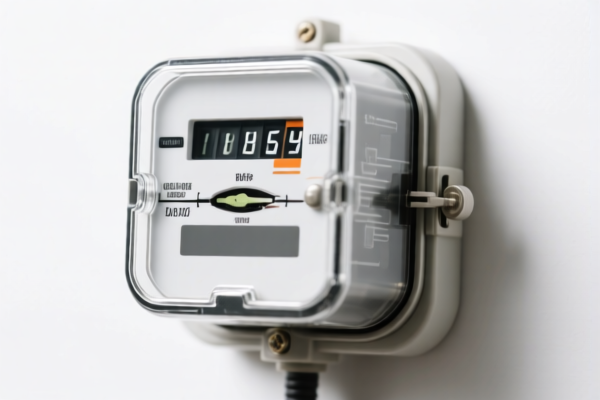
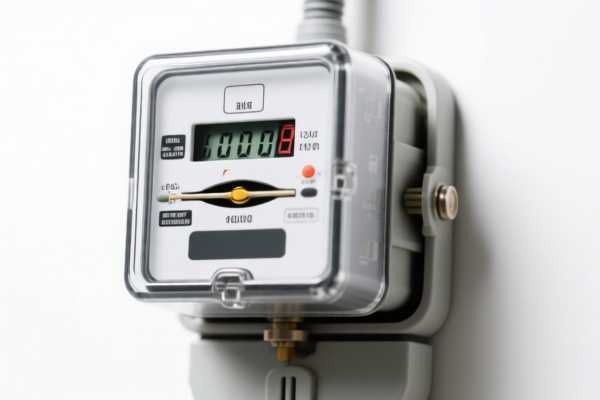
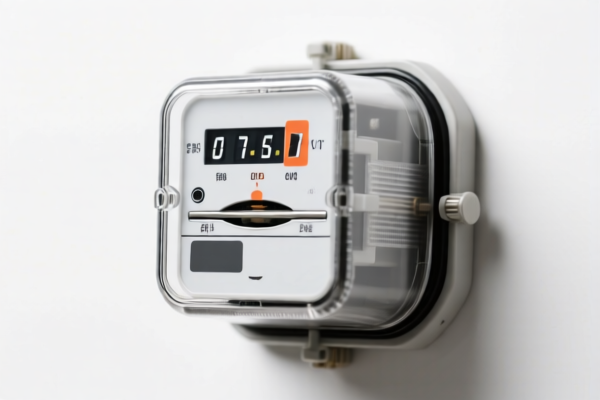
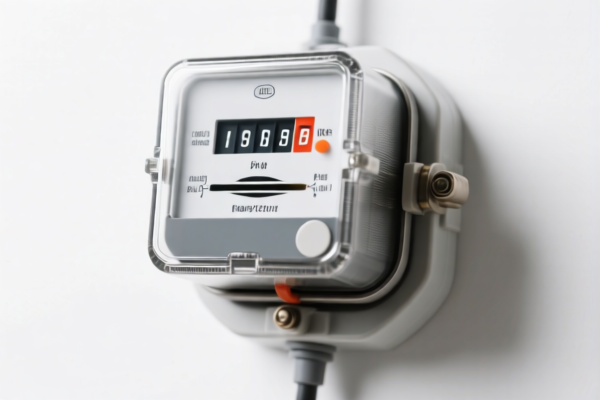
AI Analysis
🔌 Digital Display Electric Meter (Smart Electricity Meters)
🌐 HS Code Reference & Customs Clearance Guide | 2026 Latest Tariff Analysis | Professional Clearance Strategy
📌 I. Product Definition & Classification: Do You Truly Understand "Electric Meters"?
A Digital Display Electric Meter is a precision instrument used to measure electrical energy consumption in residential, commercial, and industrial settings. In international trade, it is primarily categorized under Chapter 90 (Optical, photographic, cinematographic, measuring, checking, precision, medical or surgical instruments and apparatus).
The core classification logic depends on the meter's primary function (measuring electrical energy) vs. its form factor (valve-like appearance or flow-control components).
⚠️ Key Classification Distinction:
- If the primary function is measuring electrical energy, it falls under HS 9028 (Meters for gas, liquid, or electric supply).
- If the device is primarily a valve, regulator, or flow control device with metering capabilities, it might be misclassified under HS 8481 (Valves, taps, cocks, and similar appliances), but this is generally incorrect for pure electricity meters unless they are integrated into a complex pneumatic/hydraulic system (which electricity is not).
- Note: The provided data includes some potentially aggressive or alternative classifications under HS 8481 for "Digital Water Meters" (which share similar mechanical/electronic designs). For Electric Meters, the standard and most accurate classification is HS 9028.30.00.00.
📦 II. HS Code Classification Details (Based on Provided Data)
| HS Code | Product Description | Summary from Data | Total Tax Rate |
|---|---|---|---|
9028.30.00.00 |
Electricity Meters / Smart Meters | "Digital electric meters as electrical energy measuring equipment, classified under meters for gas, liquid, or electric supply." | 35.0% |
9028.20.00.00 |
Digital Water Meters (Reference for Comparison) | "Digital water meters belong to liquid meters, fully matching liquid flow meters in classification explanation." | 16¢ each + 37.5% (Base 16¢ + 2.5% + 25% + 10%) |
8481.80.90.25 |
Valve-like Flow Controllers (Alternative/Risky) | "Digital water meters belong to flow measurement or control devices, conforming to the category of valves and similar devices." | 37.0% |
8481.80.90.50 |
Pipe Control Appliances (Alternative/Risky) | "Digital water meters belong to pipeline metering and control appliances, functionally consistent with valves." | 37.0% |
🔍 Critical Insight:
- For Electric Meters, the only correct and safe HS Code from the data is9028.30.00.00.
- Do NOT classify an electric meter under8481(Valves) or9028.20(Liquid/Gas meters) unless specifically designed for fluid handling. Misclassification can lead to severe penalties, delays, or incorrect duty assessments.
- The9028.30.00.00code captures the essence of "Electrical Energy Supply Meters," which includes both analog and digital/smart meters.
💰 III. 2026 Latest Tariff Rate Details (Including Additional Taxes & Policy Surcharges)
✅ Applicable Country: United States (US)
✅ Country of Origin: China (CN)
✅ Effective Date: Post-2025 Policies (Including Section 301 & IEEPA Surcharges)
🎯 1. 9028.30.00.00 —— Electricity Meters (Digital & Analog)
| Item | Content |
|---|---|
| Base Tariff Rate | 0.0% (Ad Valorem) |
| Section 301 Additional Tariff | +25.0% |
| IEEPA Section 122 Tariff | +10.0% |
| Total Effective Tariff | 35.0% |
| Tax Calculation | CIF Value × 35.0% |
| De Minimis Eligibility | ❌ No (Value > $800 threshold for most commercial imports; strict scrutiny on metering devices) |
| Legal Basis Path | IEEPA:9903.01.25 → USITC:9028.30.00.00 → FOOTNOTE:301.9903.88.01 |
📌 Explanation:
- Base Rate (0%): Under normal MFN (Most Favored Nation) terms, electricity meters often have low or zero base duties.
- Section 301 (25%): This is the standard additional tariff on Chinese goods under the US Trade Act of 1974, Section 301.
- IEEPA (10%): This is the additional tariff imposed under the International Emergency Economic Powers Act for specific categories of Chinese products.
- Total (35%): This is a high-risk, high-cost tariff bracket. Importers must accurately declare the product as "Electric Meter" and not "Valve" or "Water Meter" to avoid disputes.
🛠️ IV. Customs Clearance Practical Advice (Avoiding Pitfalls)
✅ 1. Documentation Checklist (Non-Negotiable)
| Document | Required | Notes |
|---|---|---|
| ✅ Product Specification Sheet | ✔️ | Must clearly state "Electrical Energy Meter," voltage, current type (AC/DC), accuracy class. |
| ✅ Technical Drawing / Circuit Diagram | ✔️ | To prove it is an electrical measuring device, NOT a fluid valve or controller. |
| ✅ Product Photos (Label & Interior) | ✔️ | Show the brand, model, and any certification marks (UL, CE, etc.). |
| ✅ Commercial Invoice | ✔️ | Must explicitly use the description: "Digital Electricity Meter for Energy Measurement." Avoid vague terms like "Control Unit." |
| ✅ Certificate of Origin (CO) | ✔️ | Mandatory for proving Chinese origin and applying the 35% tariff correctly (or seeking exemptions if eligible). |
| ✅ Testing Reports | ✔️ | FCC ID, CE, UL, or ANSI/IEEE standards compliance reports. |
✅ 2. Declaration Tips (Key Mnemonics)
🔥 "Function is King, Name is Clear, Docs are Strong!"
| Scenario | Correct Declaration | Wrong Practice |
|---|---|---|
| Smart Electricity Meter | 9028.30.00.00 - "Digital Electricity Meter" |
Mislabeling as "Sensor" or "Controller" → Risk of reclassification & penalties |
| Water Meter (for comparison) | 9028.20.00.00 - "Digital Water Meter" |
Using HS 9028.30 for water meters → Incorrect classification |
| Valve with Flow Meter | 8481.80.90.xx - "Flow Control Valve" |
Applying HS 9028 to a mechanical valve → Wrong tax rate (35% vs 37%) |
| Bundle Sale (Meter + Wiring) | Single HS Code (9028.30.00.00) | Splitting into "Wire" and "Meter" → Complex auditing, potential higher rates |
✅ 3. Special Handling Cases
| Case | Handling Advice |
|---|---|
| OEM/White Label Meters | Provide manufacturer authorization and original design documents to prove origin and function. |
| Smart Meters with IoT Features | Ensure FCC compliance is highlighted. The "Digital" aspect does not change the core function from metering to "computing." |
| Meters for Grid-Scale vs. Residential | Both fall under 9028.30.00.00 unless specifically designed for non-electrical applications. |
| Origin Diversification | If the meter is assembled in Vietnam, Mexico, or Malaysia, verify if it qualifies for USMCA or other FTAs to potentially reduce or eliminate the 35% tariff. |
🌍 V. Global Market Clearance Comparison (2026 Latest)
| Country/Region | Recommended HS Code | Tariff (China Origin) | Certification | Remarks |
|---|---|---|---|---|
| 🇺🇸 USA | 9028.30.00.00 |
35.0% | FCC, UL | High tariff burden; strict origin enforcement. |
| 🇨🇳 China | 9028.30.00.00 |
0% (Import Duty) | CCC, RoHS | No additional tariffs for import into China. |
| 🇪🇺 EU | 9028.30.00.00 |
0% | CE, MID (Measuring Instruments Directive) | No additional tariffs; MID compliance is critical. |
| 🇬🇧 UK | 9028.30.00.00 |
0% | UKCA, MID | Post-Brexit regulations align closely with EU MID. |
| 🇦🇺 Australia | 9028.30.00.00 |
5% | RCM, RCM | No additional tariffs; moderate duty. |
📌 Conclusion:
- The US market is the most challenging due to the 35% combined tariff (Section 301 + IEEPA).
- EU and UK require MID (Measuring Instruments Directive) certification, which is technically rigorous but tariff-free.
- China exports face no import duty on meters, making it a low-cost manufacturing hub.
📌 VI. Common Errors & Pitfalls (Lessons from Experience)
❌ Error 1: Declaring an Electric Meter as a "Controller" or "Sensor"
👉 Consequence: Customs may reclassify it under HS 8537 or 9031, leading to different tariff rates and potential fines for misdeclaration.
❌ Error 2: Confusing Water Meters (9028.20) with Electric Meters (9028.30)
👉 Consequence: Wrong tax rate application. Water meters have a different duty structure (16¢ + 2.5% + 25% + 10% ≈ 37.5%+). Mixing them up causes discrepancies in duty payment.
❌ Error 3: Omitting Section 301 in the declaration
👉 Consequence: If the goods are Chinese origin, failure to declare Section 301 eligibility can lead to penalties for underpayment or seizure of goods.
❌ Error 4: Using Valve HS Codes (8481) for Electric Meters
👉 Consequence: Electric meters are not valves. This is a fundamental classification error. Even if they look similar, the function (electricity vs. fluid) dictates the HS Code.
✅ Correct Practice:
"Smart Digital Electricity Meter, AC Single Phase, 220V, 50/60Hz, Class 1 Accuracy, FCC ID: XXXXX, Model: XYZ, For Residential Use"
🎯 VII. Conclusion: Professional Declaration, Cost Control, Compliance!
🎯 Remember the Rules:
🔹 "Function Defines Function, Origin Defines Tariff."
🔹 "Electric Meters = 9028.30, Water Meters = 9028.20, Valves = 8481."
🔹 "US Tariff = 35%, EU Tariff = 0% (with MID), China Import = 0%."
📌 Pro Tip:
If your electric meters are manufactured or significantly processed in Vietnam, Mexico, or Malaysia, you may be eligible for zero or reduced tariffs under USMCA or other FTAs. Always apply for a Pre-Ruling (Advance Ruling) from CBP to confirm the HS Code and tariff applicability before shipment.
📣 Immediate Action:
📞 Contact a licensed customs broker.
📄 Provide product specs, circuit diagrams, and origin certificates.
🚀 Ensure smooth clearance, avoid costly delays, and maximize your profit margins!
✨ Professional Customs Clearance Starts with Accurate Classification!
💼 Every cent counts in international trade!
Customer Reviews
About HS Code Classification
The Harmonized System (HS) is an internationally standardized nomenclature developed by the World Customs Organization (WCO) to classify traded products. Over 200 countries use the HS system as the basis for customs tariffs, trade statistics, and import/export regulations.
Each HS code follows a hierarchical structure:
- Chapter (2 digits) — Broad category of goods (e.g., Chapter 84: Machinery and Mechanical Appliances)
- Heading (4 digits) — More specific grouping within the chapter
- Subheading (6 digits) — Internationally standardized breakdown, used by all WCO member countries
- National subdivisions (8-10 digits) — Country-specific extensions for further classification, such as US HTSUS 10-digit codes
Correct HS code classification is essential for smooth customs clearance, accurate duty payment, and compliance with trade regulations. Misclassification can lead to customs delays, overpayment of duties, or penalties.
When importing from CN to US, the applicable tariff rates may include:
- Most-Favored-Nation (MFN) rate — The standard duty rate applied to WTO members
- General rate — Applied to countries without trade agreements
- Trade remedy duties — Additional tariffs such as Section 301 (anti-dumping), Section 232 (national security), or countervailing duties
The information provided on this page is for reference purposes only. For official classification, please consult with your local customs authority or a licensed customs broker.