Digital Display Meter
CN → US| HS Code | Tariff Rate | Origin | Destination | Doc |
|---|---|---|---|---|
| 9032896075 | 36.7% | CN | US | Official Doc |
| 9032896015 | 36.7% | CN | US | Official Doc |
| 9027504060 | 35.0% | CN | US | Official Doc |
| 9027894560 | 35.0% | CN | US | Official Doc |
Product Images
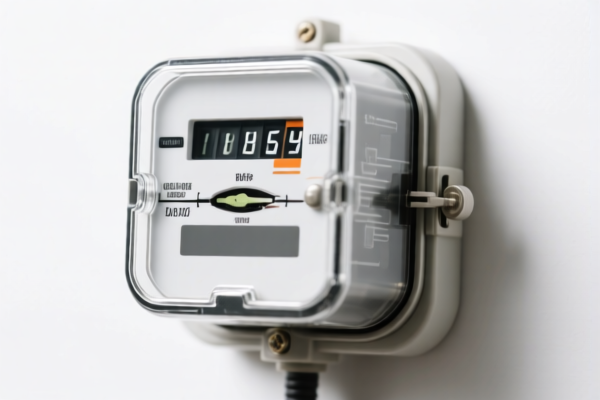
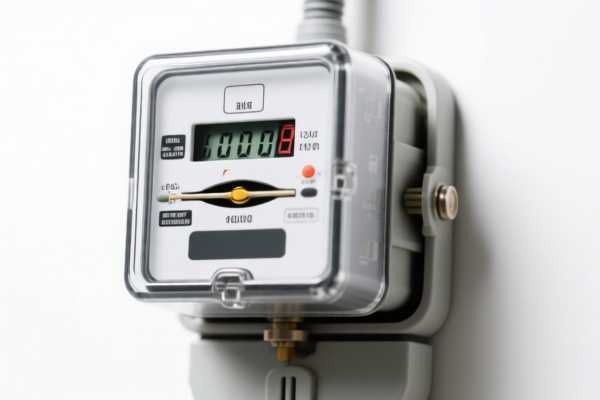
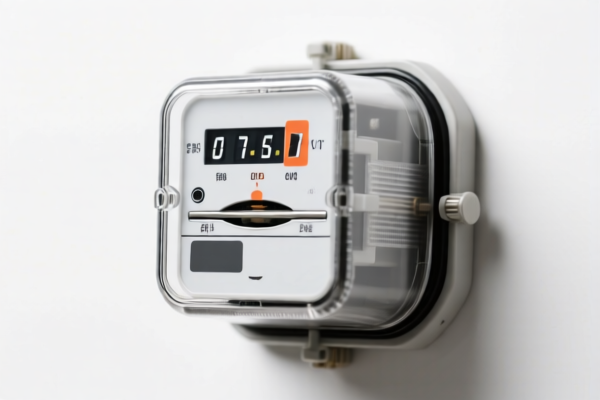
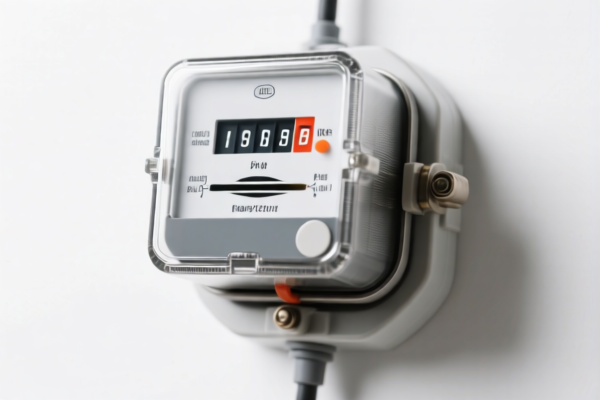
AI Analysis
📟 Digital Display Meter: The "Brain" Behind Control & Analysis
🌐 HS Code Reference & Customs Clearance Guide | 2026 Latest Tariff Analysis | Professional Clearance Strategy
📌 I. Product Definition & Classification: Do You Really Know "Digital Display Meter"?
A Digital Display Meter is not a single product but a broad category that spans across process control, HVAC systems, and physical/chemical analysis. In international trade, the critical distinction lies in its primary function and application scenario. Misclassification here can lead to massive tax discrepancies (from 0% to 25%) and customs delays.
The items in <DATA> fall into two distinct regulatory buckets:
1. Process Control & HVAC Instruments (HS Code 9032): Used for automating or regulating environments (temperature, pressure, flow).
2. Analytical Instruments (HS Code 9027): Used for measuring and analyzing physical/chemical properties (viscosity, light, gas composition).
⚠️ Key Distinction Point:
- If the device controls a system (e.g., turns on AC when temp hits 25°C) → HS 9032 (0% Tax).
- If the device analyzes a substance (e.g., measures pH, light spectrum, gas concentration) → HS 9027 (25% Tax!).
- Note: A simple "digital thermometer" used for monitoring (not controlling) may still be classified under 9027 if it uses optical/chemical sensors, whereas one connected to a heater/controller falls under 9032.
📦 II. HS Code Classification Details (2026 Latest Tariff Authority Comparison)
Based on the provided <DATA>, here is the precise breakdown of how different "Digital Display Meters" are classified.
| HS Code | Product Description (Simplified) | Application Scenario | Key Feature | Tax Rate |
|---|---|---|---|---|
9032.89.60.75 |
Process Control Instruments (Other) | Industrial automation, factory floor control | Regulates variables like flow, pressure, level. Not HVAC. | 0.0% |
9032.89.60.15 |
HVAC Control Systems (Complete) | Air conditioning, heating, refrigeration systems | Integrated control systems for climate control. | 0.0% |
9027.50.40.60 |
Optical Analysis Instruments | Spectrometers, UV/IR sensors, light meters | Uses optical radiation (UV, visible, IR) for analysis. | 25.0% |
9027.89.45.60 |
Physical Analysis Instruments (Electrical) | Viscosity, porosity, heat, sound, or light measuring devices | General electrical analysis equipment not covered elsewhere. | 25.0% |
🔍 Crucial Insight:
- HS 9032 items are considered "Control" instruments and enjoy 0% duty.
- HS 9027 items are considered "Analysis" instruments and are subject to a 25% surtax.
- The difference often lies in whether the device is part of a closed-loop control system (9032) or a standalone measurement/analysis tool (9027).
💰 III. 2026 Latest Tariff Rate Detail (Including Surtax & Policy Notes)
✅ Applicable Country: United States (US)
✅ Origin: China (CN) [Note: Based on the 25% surtax present in the data, this reflects current US-China trade terms]
✅ Effective Time: Current (Post-2024 Trade Actions)
🎯 1. 9032.89.60.75 & 9032.89.60.15 —— Process & HVAC Control Instruments
| Item | Content |
|---|---|
| Basic Tariff | 0% (ad valorem) |
| USITC Surtax | 0% |
| IEEPA Surtax | 0% |
| Total Tax Rate | 0.0% |
| Tax Calculation | CIF Value × 0% = $0 |
| De Minimis Eligibility | ❌ Not applicable (Value-based exemption does not apply to duty-free items in this context, but effectively you pay nothing). |
| Legal Basis | HTSUS Chapter 90, Heading 9032 |
📌 Explanation:
- These instruments are classified as "Automatic Regulating or Controlling Instruments."
- HS 9032.89.60.15 is specifically for HVAC Complete Systems (e.g., smart thermostats integrated with control boards).
- HS 9032.89.60.75 covers Other Process Control Instruments (e.g., industrial pressure controllers, flow regulators).
- Strategy: If your device regulates a process, always strive for this classification to achieve 0% duty.
🎯 2. 9027.50.40.60 & 9027.89.45.60 —— Analytical & Physical Instruments
| Item | Content |
|---|---|
| Basic Tariff | 0% |
| USITC Surtax | +25% (List 4A/301 Tariffs) |
| IEEPA Surtax | 0% (Already included in the 25% total) |
| Total Tax Rate | 25.0% |
| Tax Calculation | CIF Value × 25% |
| De Minimis Eligibility | ❌ No (Section 321 de minimis is excluded for goods subject to Section 301 tariffs from China). |
| Legal Basis | HTSUS Chapter 90, Heading 9027; USITC Footnotes 9903.88.01 |
📌 Explanation:
- HS 9027.50.40.60 applies if the meter uses Optical Radiation (e.g., a spectrometer, UV sensor, or light meter).
- HS 9027.89.45.60 applies to other Electrical Physical Analysis instruments (e.g., viscosity meters, porosity testers, general sensors measuring heat/sound/light).
- Strategy: These are high-cost classifications. Ensure your product description clearly indicates "Analysis" or "Measurement" rather than "Control" if it fits this category.
🛠️ IV. Customs Clearance Practical Advice (Battle-Tested Pitfall Guide)
✅ 1. Documentation Checklist (Non-Negotiable)
| Document | Required? | Why? |
|---|---|---|
| ✅ Product Datasheet | ✔️ | Must specify: Function (Control vs. Analyze), Input/Output, Sensors Used. |
| ✅ Block Diagram/Circuit Logic | ✔️ | Critical to prove if the device controls a process (9032) or just monitors (9027). |
| ✅ User Manual | ✔️ | Shows if the device is part of a "Complete System" (HVAC) or standalone. |
| ✅ Commercial Invoice | ✔️ | Must match HS Code description exactly (e.g., "Process Controller" vs. "Spectrometer"). |
| ✅ Origin Certificate | ✔️ | To verify China origin for surtax application. |
| ✅ Photos (Front/Rear/Interior) | ✔️ | To show interface buttons, ports, and internal components. |
✅ 2. Declaration Tips (Critical Keywords)
🔥 “Control = 0%, Analyze = 25%! Describe the Function, Not Just the Display.”
| Scenario | Correct Declaration | Wrong Declaration | Consequence |
|---|---|---|---|
| Device regulates AC temp | "HVAC Control System, Model XYZ, Complete System" | "Digital Thermometer" | Risk of reclassification to 9027 → 25% Tax |
| Device controls industrial flow | "Process Control Instrument, Flow Regulator" | "Digital Flow Meter" | Risk of reclassification to 9027 → 25% Tax |
| Device measures gas concentration | "Gas Analysis Instrument, Optical Sensor, Model ABC" | "Gas Detector" | May be accepted at 25%, but must include "Analysis" |
| Device measures light intensity | "Optical Radiation Measurement Device" | "Lux Meter" | Likely 9027.50 → 25% Tax |
💡 Pro Tip:
- If your device displays data but does NOT control another machine, it is likely 9027.
- If your device displays data AND sends a signal to turn on/off a heater/valve/pump, it is likely 9032.
✅ 3. Special Cases Handling
| Situation | Handling Advice |
|---|---|
| Smart Thermostat for Home | Likely 9032.89.60.15 (HVAC Complete System) → 0%. Ensure it controls heating/cooling. |
| Industrial Pressure Gauge with Digital Readout | If it controls pressure via a valve → 9032 (0%). If it only displays pressure → 9027 (25%). |
| Spectrometer for Lab | Always 9027.50.40.60 → 25%. No way around it. |
| Viscosity Sensor for Manufacturing | If it controls the mixing speed → 9032 (0%). If it reports viscosity → 9027.89.45.60 (25%). |
🌍 V. Global Market Clearance Comparison (2026)
| Country/Region | Recommended HS Code | Tariff | Certification | Notes |
|---|---|---|---|---|
| 🇺🇸 USA | 9032.89.60.xx |
0% | N/A | Best for Control Instruments |
| 🇺🇸 USA | 9027.89.45.xx |
25% | N/A | High tax for Analysis Instruments |
| 🇨🇳 China | 9032.89.60.xx |
0% | CCC (if applicable) | Zero duty for control devices |
| 🇪🇺 EU | 9032.89.60.xx |
0% | CE + RoHS | Generally lower duties for instruments |
| 🇦🇺 Australia | 9032.89.60.xx |
0% | RCM | Low duties for control gear |
📌 Conclusion:
- USA is the only major market with the 25% surtax on analytical instruments (9027) from China.
- Control instruments (9032) are tax-free in the USA, making them highly competitive.
- Optimize your product design: If possible, integrate control logic to shift from 9027 to 9032, saving 25% in duties.
📌 VI. Common Mistakes & Pitfalls (Lessons Learned)
❌ Mistake 1: Calling a "Temperature Sensor" a "Thermostat"
👉 Result: If it doesn't control heating, customs may classify it as 9027 → 25% Tax.
👉 Fix: Clearly state "Control" function in specs.
❌ Mistake 2: Using "Meter" in the title for a Control Device
👉 Result: Customs may assume it's only for measurement (9027).
👉 Fix: Use terms like "Controller," "Regulator," or "System" in the commercial invoice.
❌ Mistake 3: Ignoring the "Optical" component
👉 Result: If your meter uses UV/IR light to analyze, it falls under 9027.50 → 25%.
👉 Fix: Disclose sensor type. If it's optical analysis, budget for 25%.
✅ Correct Approach:
"Digital Process Controller, Model XYZ, Controls Industrial Flow, Input 4-20mA, Output Relay, Part of Automated System"
→ Likely HS 9032.89.60.75 → 0% Tax
🎯 VII. Conclusion: Precision Classification Saves Millions!
🎯 Remember the Golden Rule:
🔹 "Control = 0%, Analyze = 25%. Function Dictates Fate!"
🔹 "HVAC & Process Control are Free; Optical & Physical Analysis are Costly."
📌 Tips:
- If your device is a standalone sensor with no control output, expect 25% tax in the US.
- If it is part of a larger control system, emphasize the control aspect in documentation.
- Pre-clearance Ruling: Strongly recommend applying for an Advance Ruling (177.11) with CBP to confirm HS Code before shipment.
📣 Immediate Action:
📞 Consult your freight forwarder + Provide Control Logic Diagram + Apply for HS Code Pre-ruling
🚀 Ensure your "Digital Display Meter" passes through customs smoothly, legally, and profitably!
✨ Professional Clearance Starts with Accurate Classification!
💼 Every 1% of tax saved is pure profit kept!
Customer Reviews
About HS Code Classification
The Harmonized System (HS) is an internationally standardized nomenclature developed by the World Customs Organization (WCO) to classify traded products. Over 200 countries use the HS system as the basis for customs tariffs, trade statistics, and import/export regulations.
Each HS code follows a hierarchical structure:
- Chapter (2 digits) — Broad category of goods (e.g., Chapter 84: Machinery and Mechanical Appliances)
- Heading (4 digits) — More specific grouping within the chapter
- Subheading (6 digits) — Internationally standardized breakdown, used by all WCO member countries
- National subdivisions (8-10 digits) — Country-specific extensions for further classification, such as US HTSUS 10-digit codes
Correct HS code classification is essential for smooth customs clearance, accurate duty payment, and compliance with trade regulations. Misclassification can lead to customs delays, overpayment of duties, or penalties.
When importing from CN to US, the applicable tariff rates may include:
- Most-Favored-Nation (MFN) rate — The standard duty rate applied to WTO members
- General rate — Applied to countries without trade agreements
- Trade remedy duties — Additional tariffs such as Section 301 (anti-dumping), Section 232 (national security), or countervailing duties
The information provided on this page is for reference purposes only. For official classification, please consult with your local customs authority or a licensed customs broker.