Digital Rhinestone
CN → US| HS Code | Tariff Rate | Origin | Destination | Doc |
|---|---|---|---|---|
| 7117199000 | 28.5% | CN | US | Official Doc |
| 7117196000 | 17.5% | CN | US | Official Doc |
Product Images
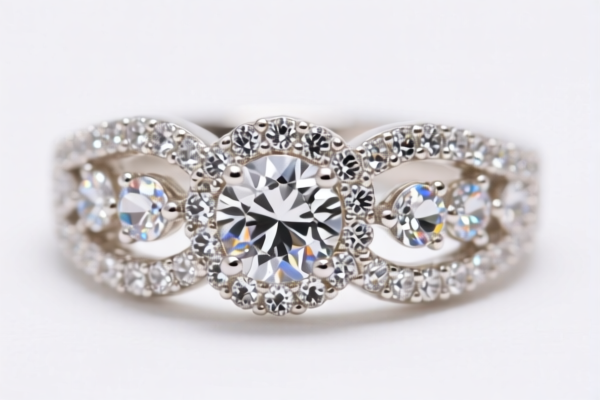


AI Analysis
💎 Digital Rhinestone & Imitation Jewelry (Imitation Jewelry: Of Base Metal)
🌐 HS Code Reference & Customs Clearance Guide | 2026 Latest Tariff Analysis | Strategic Clearance Strategy
📌 I. Product Definition & Classification: Do You Really Know What "Digital Rhinestone" Is?
Digital Rhinestones typically refer to rhinestones produced or applied via digital printing/embroidery machines, or fashion accessories where rhinestones are attached to base metal settings. In international trade, these items are generally classified under Imitation Jewelry. Specifically, they are categorized as base metal jewelry, regardless of whether they are plated with precious metals (like gold or silver plating).
The classification depends heavily on the value and nature of the item: * General Imitation Jewelry: Standard fashion jewelry, costume pieces, or digitally printed/adorned items not meeting the "toy" criteria. * Toy Jewelry: Low-cost items, often sold in bulk, with a value $\le$ 8 cents per piece.
⚠️ Key Distinction Point:
- If the item is a standard fashion accessory (necklace, bracelet, ring, etc.) made of base metal with rhinestones/crystals → HS Code 7117.19.90.00
- If the item is explicitly marketed as "Toy Jewelry" and valued at 8 cents or less per piece → HS Code 7117.19.60.00
📦 II. HS Code Classification Details (2026 Latest Tariff Authority Comparison)
| HS Code | Product Description | Application Scenario | Value/Type |
|---|---|---|---|
7117.19.90.00 |
Imitation jewelry: Of base metal, whether or not plated with precious metal: Other: Other: Other | Standard fashion jewelry, digital rhinestone transfers, costume accessories, plated base metal items | General Fashion |
7117.19.60.00 |
Imitation jewelry: Of base metal, whether or not plated with precious metal: Other: Other: Toy jewelry valued not over 8 cents per piece | Bulk toy sets, cheap kids' costume jewelry, promotional items sold individually at very low cost | Toy (<$0.08/pc) |
🔍 Critical Reminder:
- "Digital Rhinestone" as a material (like hot-fix stones) used for ironing onto fabric might fall under textiles or adhesives depending on configuration, but if sold as finished jewelry items (e.g., pre-set rhinestone charms, plated necklaces), it falls under Chapter 71. - The distinction between 7117.19.90.00 and 7117.19.60.00 is strictly based on price per piece and intent (toy vs. fashion).
💰 III. 2026 Latest Tariff Rate Details (Including Surtax & Policy Surcharges)
✅ Applicable Country: United States (US)
✅ Origin: China (CN) (Assumed based on typical "Digital Rhinestone" manufacturing hubs, adjust if origin differs)
✅ Effective Time: Current rates apply as per 2024-2026 trade policies.
🎯 1. 7117.19.90.00 —— General Imitation Jewelry (Base Metal, Plated or Not)
| Item | Content |
|---|---|
| Base Tariff | 0.0% (ad valorem) |
| Section 301 / Retaliatory Surtax | 0.0% |
| Total Tariff | 0.0% |
| Tax Calculation | CIF Value × 0% = $0 |
| De Minimis Eligibility | ✅ Yes (if value <$800, shipped via 86/87/321 sections) |
| Legal Basis Path | HTSUS:7117.19.90.00 |
📌 Explanation:
- This is the standard classification for most imitation jewelry items. - Despite being from China, imitation jewelry (base metal) often falls under exemptions or 0% rates for Section 301 tariffs, BUT this must be verified annually. - Current Data Confirmation: Per the provided data, the total tax is 0.0%. This is a highly competitive advantage for exporters.
🎯 2. 7117.19.60.00 —— Toy Jewelry (Value $\le$ 8 cents/piece)
| Item | Content |
|---|---|
| Base Tariff | 0.0% (ad valorem) |
| Section 301 / Retaliatory Surtax | +7.5% |
| Total Tariff | 7.5% |
| Tax Calculation | CIF Value × 7.5% |
| De Minimis Eligibility | ✅ Yes (if value <$800) |
| Legal Basis Path | HTSUS:7117.19.60.00 |
📌 Explanation:
- Items classified as "Toy Jewelry" incur an additional 7.5% surtax. - This is significantly higher than general imitation jewelry. - Why? The US imposes specific surcharges on low-value toy items to protect domestic manufacturing or due to safety/regulatory concerns. - Critical Strategy: If your digital rhinestone items can be classified as general jewelry (7117.19.90.00), the tax is 0%. Do not let customs classify them as "toys" unless they are explicitly low-cost (<$0.08) and packaged/marketed as toys.
🛠️ IV. Customs Clearance Practical Advice (Battle-Tested Pitfall Avoidance)
✅ 1. Required Documentation List (Non-Negotiable)
| Document | Must Provide | Description |
|---|---|---|
| ✅ Product Specification Sheet | ✔️ | Material composition (e.g., "Base metal alloy, plated, with acrylic/rhinestone accents"), weight, dimensions |
| ✅ Commercial Invoice | ✔️ | Must clearly state "Imitation Jewelry, Base Metal". Avoid vague terms like "Craft" or "Gift" |
| ✅ Packing List | ✔️ | Detail item count. If selling individually, ensure price per unit is clear if claiming "Toy" status |
| ✅ Product Photos | ✔️ | Show the item as a finished piece (e.g., necklace, earring) to prove it's jewelry, not a loose stone or toy |
| ✅ Composition Certificate | ✔️ | Proof of base metal content (non-precious) |
✅ 2. Declaration Tips (Key Mantra)
🔥 "It's Jewelry, Not Toy! Declare 'Base Metal Imitation Jewelry' for 0% Tax!"
| Situation | Correct Declaration | Incorrect Action |
|---|---|---|
| Standard Rhinestone Necklace/Bracelet | 7117.19.90.00 (Imitation Jewelry) |
Declaring as "Toy" → 7.5% Tax |
| Items priced <$0.08/pc, sold in blind bags | 7117.19.60.00 (Toy Jewelry) |
Declaring as "Jewelry" → Risk of re-classification & penalties |
| Digital Rhinestone Transfers (for ironing) | Check Textile/Adhesive HS (Not in provided data) | Misdeclaring as jewelry → Delay |
| High-End Plated Imitation Jewelry | 7117.19.90.00 |
Assuming high cost = different tax → No, still 0% |
✅ 3. Special Handling
| Scenario | Handling Advice |
|---|---|
| Mixed Shipments | If shipment contains both "Jewelry" and "Toys", split the declaration. Apply 0% to jewelry, 7.5% to toys. Do not lump them together. |
| "Digital" Aspect | The "Digital" part (printing/design) does not change the HS Code. It remains 7117.19.90.00 if it's jewelry. The production method is irrelevant for customs classification. |
| Plating | Whether plated with gold, silver, or no plating, if it's base metal, it falls under 7117.19. The tax rate remains 0% for general jewelry. |
| Value Declaration | For 7117.19.60.00 (Toy), ensure the declared value per piece is accurately $\le$ $0.08. Under-declaring to stay under threshold is fraud. |
🌍 V. Global Major Market Clearance Comparison (2026 Latest)
| Country/Region | Recommended HS Code | Tariff Rate (China Origin) | Certification Requirement | Notes |
|---|---|---|---|---|
| 🇺🇸 USA | 7117.19.90.00 |
0.0% | CPSIA (if under 12 years) | Avoid Toy classification unless <8¢ |
| 🇪🇺 EU | 7117.19.90.00 |
0.0% - 2.7% | REACH, Nickel Release Test | Stricter chemical regulations |
| 🇨🇳 China | 7117.19.90.00 |
1.0% - 2.0% | CCC (if applicable) | Low entry barrier |
| 🇬🇧 UK | 7117.19.90.00 |
0.0% - 2.7% | UKCA, REACH | Post-Brexit rules apply |
| 🇦🇺 Australia | 7117.19.90.00 |
5.0% | ACCC Consumer Product Safety | Standard GST applies |
📌 Conclusion:
- The USA offers a 0% tariff for general imitation jewelry (7117.19.90.00).
- Beware of the 7.5% surtax for toy jewelry (7117.19.60.00).
- Strategy: Market items as Fashion/Imitation Jewelry, not toys, unless they are explicitly cheap kids' items. This saves 7.5% on every shipment.
📌 VI. Common Mistakes & Pitfall Guide (Lessons Learned)
❌ Mistake 1: Classifying all rhinestone items as "Toys" because they are cheap
👉 Consequence: Paying 7.5% extra tax unnecessarily.
✅ Fix: Declare as "Imitation Jewelry, Base Metal" for items worn by adults/teens, regardless of price.
❌ Mistake 2: Declaring "Digital Rhinestone Transfer" as Jewelry when it's a raw material
👉 Consequence: Misclassification, potential penalty.
✅ Fix: If it's a blank transfer sheet, it may fall under Chapter 49 (Printed Matter) or 3506 (Adhesives). Confirm with a customs broker.
❌ Mistake 3: Ignoring "Plating" status
👉 Consequence: None for tax rate (0% either way), but material declaration must be accurate for safety (Nickel/Cadmium limits).
✅ Fix: Ensure REACH/Prop65 compliance if selling to EU/California.
❌ Mistake 4: Not splitting mixed shipments
👉 Consequence: Customs may classify the entire shipment under the higher tax rate or reject the entry.
✅ Fix: Separate "Jewelry" and "Toy" items in the commercial invoice.
🎯 VII. Conclusion: Smart Classification Saves Money!
🎯 Remember the Mantra:
🔹 "Jewelry = 0% Tax, Toy = 7.5% Tax!"
🔹 "Base Metal Imitation Jewelry is your golden HS Code!"
🔹 "Don't let 'Digital' confuse the classifier—focus on the end-use: Fashion or Toy?"
📌 Pro Tip:
- If your digital rhinestone items are worn as accessories (necklaces, earrings, rings), always use 7117.19.90.00.
- This gives you a 7.5% cost advantage over competitors who misclassify as toys or pay higher textile/adhesive tariffs.
- Ensure your Commercial Invoice clearly states:
"Imitation Jewelry, Base Metal, Plated, Fashion Accessory, Not a Toy"
📣 Immediate Action:
📞 Consult a customs broker to verify Material Composition (Nickel/Cadmium limits).
🚀 Use HS Code 7117.19.90.00 for 0% Tax Clearance.
💼 Optimize your supply chain with precise classification!
✨ Professional clearance starts with accurate classification!
💼 Every 7.5% saved is pure profit!
Customer Reviews
About HS Code Classification
The Harmonized System (HS) is an internationally standardized nomenclature developed by the World Customs Organization (WCO) to classify traded products. Over 200 countries use the HS system as the basis for customs tariffs, trade statistics, and import/export regulations.
Each HS code follows a hierarchical structure:
- Chapter (2 digits) — Broad category of goods (e.g., Chapter 84: Machinery and Mechanical Appliances)
- Heading (4 digits) — More specific grouping within the chapter
- Subheading (6 digits) — Internationally standardized breakdown, used by all WCO member countries
- National subdivisions (8-10 digits) — Country-specific extensions for further classification, such as US HTSUS 10-digit codes
Correct HS code classification is essential for smooth customs clearance, accurate duty payment, and compliance with trade regulations. Misclassification can lead to customs delays, overpayment of duties, or penalties.
When importing from CN to US, the applicable tariff rates may include:
- Most-Favored-Nation (MFN) rate — The standard duty rate applied to WTO members
- General rate — Applied to countries without trade agreements
- Trade remedy duties — Additional tariffs such as Section 301 (anti-dumping), Section 232 (national security), or countervailing duties
The information provided on this page is for reference purposes only. For official classification, please consult with your local customs authority or a licensed customs broker.