Digital Scale
CN → US| HS Code | Tariff Rate | Origin | Destination | Doc |
|---|---|---|---|---|
| 8423810010 | 35.0% | CN | US | Official Doc |
| 8423810040 | 35.0% | CN | US | Official Doc |
| 9031808085 | 35.0% | CN | US | Official Doc |
| 9031499000 | 35.0% | CN | US | Official Doc |
| 8423810040 | 35.0% | CN | US | Official Doc |
Product Images
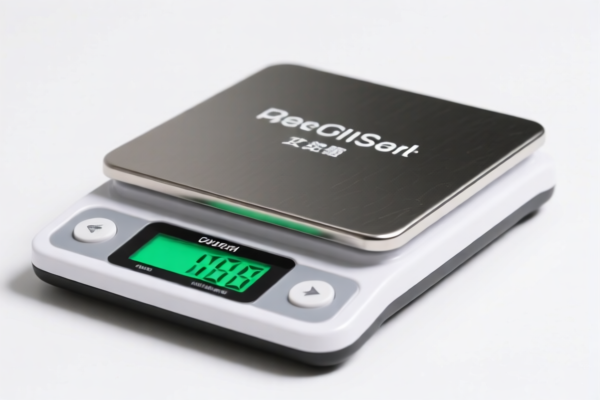
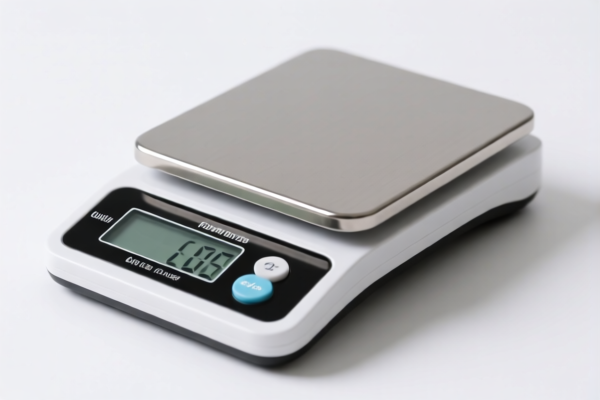
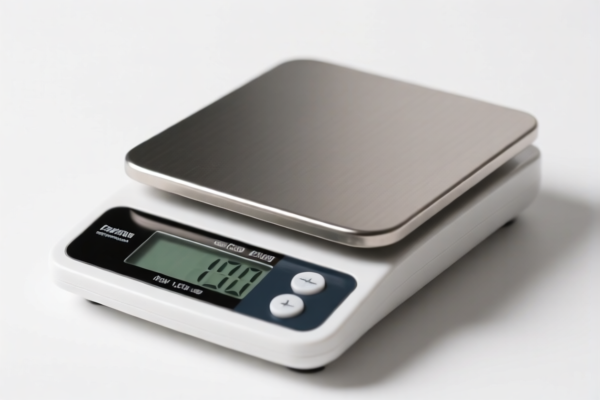
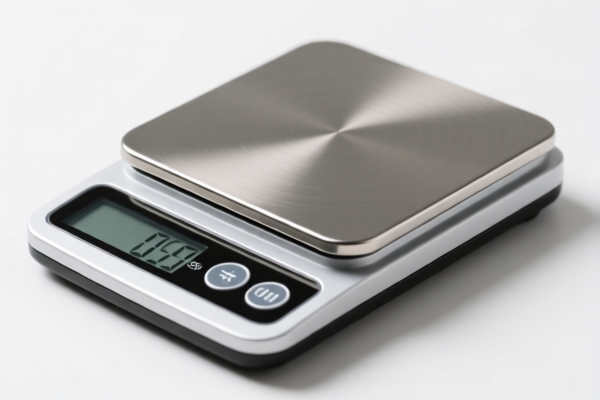
AI Analysis
⚖️ Digital Scale (电子秤/电子称量设备)
🌐 HS Code Reference & Clearance Guide | 2026 Latest Tariff Analysis | Professional Customs Strategy
📌 I. Product Definition & Classification: What Exactly is a "Digital Scale"?
A Digital Scale is an electronic weighing device that converts mechanical force into electrical signals to display weight digitally. In international trade, its classification depends heavily on its application, capacity, and internal structure.
It is generally categorized into two main buckets: 1. Weighing Machinery (Chapter 84): Devices primarily designed for commercial or industrial weighing (e.g., kitchen scales, platform scales). 2. Measuring Instruments (Chapter 90): Devices used for precise measurement, inspection, or laboratory analysis (e.g., high-precision kitchen scales, pharmaceutical scales).
⚠️ Key Distinction Point:
- If the device is a general-purpose weighing instrument (like a kitchen or postal scale) → It typically falls under Chapter 84 (8423).
- If the device is classified as a precision measuring instrument for general use (not just weighing) → It may fall under Chapter 90 (9031).
📦 II. HS Code Classification Details (2026 Latest Tariff Authority对照)
Based on the provided data, here are the potential HS Codes for Digital Scales, along with their logical justifications:
| HS Code | Product Description & Logic | Application Scenario | Key Differentiator |
|---|---|---|---|
8423.81.00.10 |
Electronic Weighing Equipment: Classified as electronic weighing equipment. No conflict in material or form; function is pure weighing. | Commercial kitchen scales, bathroom scales, retail counter scales. | Focuses on "Weighing Machinery" logic. |
8423.81.00.40 |
Other Weighing Machinery: Falls under the "catch-all" category for other weighing machines. Suitable for digital/electronic types not exceeding 30kg. | General-purpose digital scales, postal scales, industrial check-weighers. | "Catch-all" for weighing machines not specified elsewhere. |
9031.80.80.85 |
Measuring Instruments: Kitchen digital scales treated as measuring instruments. Fits Chapter 90’s function of measurement/inspection. No material conflict. | High-precision kitchen scales, food testing scales, lab-grade digital scales. | Emphasizes "Measurement/Inspection" function over simple weighing. |
9031.49.90.00 |
Optical/Mechanical Measuring Instruments: Digital scales viewed as other measuring/inspection instruments under optical/mechanical categories. | Precision instruments, scientific digital balances. | Broader "Measurement" category; no material conflict. |
🔍 Critical Reminder:
-8423is the most common chapter for standard weighing scales (kitchen, bathroom, industrial).
-9031is reserved for precision measuring instruments. If your scale is marketed as a "precision measurement tool" rather than just a "weigher,"9031might apply.
- No Conflict in Materials: All listed codes accept electronic/digital components without material conflicts.
💰 III. 2026 Latest Tariff Rate Details (Including Additional Taxes & Policies)
✅ Applicable Country: United States (US)
✅ Origin: China (CN)
✅ Effective Date: 2025/2026 Import Period
All listed HS Codes share the same tax structure based on the provided data.
🎯 1. All Listed HS Codes (8423.81.00.10, 8423.81.00.40, 9031.80.80.85, 9031.49.90.00)
| Item | Content |
|---|---|
| Base Tariff Rate | 0.0% (ad valorem) |
| Section 301 Tariff (Add-on) | +25.0% (USITC Footnote regarding Chinese imports) |
| Section 122 Tariff (Add-on) | +10.0% (Specific Chinese import duty under Section 122) |
| Total Tax Rate | 35.0% |
| Tax Calculation | CIF Value × 35% |
| De Minimis Exemption Eligible? | ❌ No (High tax rates disqualify from de minimis) |
| Legal Basis Path | USITC:8423/9031 → Section 301: 25% → Section 122: 10% |
📌 Explanation:
- "Base Tariff 0%": Under normal MFN (Most Favored Nation) treatment, these goods have 0% duty.
- "Section 301 Tariff 25%": This is the core penalty for Chinese-manufactured goods under the US Trade Act.
- "Section 122 Tariff 10%": An additional layer of tariff specifically targeting certain Chinese imports.
- Total 35%: This is a high-cost entry. Importers must calculate landed costs carefully.
- No De Minimis: Unlike low-value shipments (under $800), these high-tariff items cannot exploit the de minimis exemption. Every shipment is subject to duty.
🛠️ IV. Customs Clearance Practical Advice (Real-World Pitfall Avoidance)
✅ 1. Preparation Checklist (Essential Documents)
| Document | Required | Explanation |
|---|---|---|
| ✅ Product Specifications | ✔️ | Must include capacity (e.g., 30kg max), precision (e.g., 1g), power supply, and interface type. |
| ✅ Internal Structure Diagram | ✔️ | To prove it is a "weighing machine" (8423) vs. a "measuring instrument" (9031) if challenged. |
| ✅ Product Photos (Label/Screen) | ✔️ | Show digital display, brand, model, and input/output parameters. |
| ✅ Commercial Invoice | ✔️ | Must clearly state: "Digital Weighing Scale, Model XYZ, Capacity 30kg, Made in China." |
| ✅ Packing List | ✔️ | Separate accessories (power adapter, calibration weights) if shipped separately. |
| ✅ Certificate of Origin (CO) | ✔️ | Proves Chinese origin (triggers 35% tariff). |
✅ 2. Declaration Strategy (Key Mantra)
🔥 "Be Specific, Don't Guess: 'Scale' vs. 'Instrument'!"
| Scenario | Correct Declaration | Wrong Practice | Consequence |
|---|---|---|---|
| Standard Kitchen/Bathroom Scale | 8423.81.00.10 or 8423.81.00.40 |
Call it "Measurement Device" | Risk of misclassification audit. |
| High-Precision Lab Scale | 9031.80.80.85 or 9031.49.90.00 |
Call it "Commercial Scale" | May face higher scrutiny. |
| Scale with Printer/Connectivity | Still 8423.81 |
Split into "Printer" + "Scale" | Catastrophic: Split parts may attract higher combined taxes (up to 89.5% in worst cases). |
| Origin: China | Must declare CN | Declare "Made in Vietnam" | Fraud: Severe penalties, seizure, and blacklist. |
✅ 3. Special Situations
| Situation | Handling Advice |
|---|---|
| OEM Custom Scales | Provide design specs and customer PO to prove intent. Avoid vague descriptions like "Digital Device." |
| Scale with Bluetooth/WiFi | Still classified by primary function (Weighing/Metric). Not "Electronic Apparatus" (8517). |
| Calibration Weights Included | Declare as accessories to the scale. Do not ship as separate "Weights" (which have different HS codes). |
| Used/Refurbished Scales | Must declare as "Used." Some US ports restrict used weighing equipment due to hygiene/safety. |
🌍 V. Global Market Clearance Comparison (2026 Latest)
| Country/Region | Recommended HS Code | Tariff Rate (China Origin) | Certification Required | Notes |
|---|---|---|---|---|
| 🇺🇸 USA | 8423.81.00.10/40 or 9031.xxxx |
35% (0% Base + 25% Sec301 + 10% Sec122) | FCC (if wireless) | Highest cost market. |
| 🇨🇳 China | 8423.81.00 |
0% - 5% | CCC (if applicable) | No Section 301/122. |
| 🇪🇺 EU | 8423.81.00 |
0% - 2% | CE + RoHS | No major punitive tariffs. |
| 🇬🇧 UK | 8423.81.00 |
0% | UKCA | Post-Brexit zero tariff for many electronics. |
| 🇦🇺 Australia | 8423.81.00 |
5% | RCM | No Section 301 equivalent. |
📌 Conclusion:
- The US is the only major market with a 35% punitive tariff on Chinese digital scales.
- Strategy: If shipping to the US, consider supply chain diversification (e.g., manufacture in Vietnam/Malaysia) to avoid Section 301/122, if feasible.
- Pre-Clearance: Always obtain an Advance Ruling from US CBP to confirm HS Code classification before bulk shipment.
📌 VI. Common Errors & Pitfalls (Blood & Tears Lessons)
❌ Error 1: Using vague terms like "Digital Device" or "Electronic Tool"
👉 Consequence: Customs assigns highest duty rate (e.g., 25-89%) due to lack of specificity.
❌ Error 2: Splitting "Scale + Power Adapter" into two shipments
👉 Consequence: Power adapters may have different tariffs. Combined, it might trigger higher overall duty or inspection delays.
❌ Error 3: Ignoring Section 122 & 301 in Cost Calculation
👉 Consequence: Profit margin wiped out. You budget for 0% duty but pay 35%.
❌ Error 4: Misclassifying Precision Scales as General Weighers (or vice versa)
👉 Consequence: Audit risk. If CBP decides your "kitchen scale" is a "medical measuring device," they may reassess.
✅ Correct Declaration Example:
"Digital Electronic Kitchen Scale, Stainless Steel Platform, LCD Display, Max Capacity 5kg, Precision 1g, Model XYZ, Made in China. HS: 8423.81.00.10"
🎯 VII. Conclusion: Precise Classification Saves Money!
🎯 Remember the Mantra:
🔹 "Scale is Weighing (8423), Not Just Measuring (9031)."
🔹 "35% is the US Price Tag for Chinese Scales."
🔹 "Be Specific, Or Pay the Penalty."
📌 Pro Tip:
If your digital scale has special functions (e.g., temperature measurement, density calculation), it might move to 9031 (Measuring Instruments). Ensure your marketing materials and product name reflect the primary function to support your HS Code choice.
📣 Immediate Action:
📞 Contact a Licensed Customs Broker
📋 Provide Product Datasheet + Photos
🚀 Apply for CBP Advance Ruling if importing large volumes
💡 Consider Non-Chinese Origin if targeting the US Market
✨ Professional Customs Clearance Starts with Accurate Classification!
💼 Every Percent of Tariff Saved is Pure Profit!
Customer Reviews
About HS Code Classification
The Harmonized System (HS) is an internationally standardized nomenclature developed by the World Customs Organization (WCO) to classify traded products. Over 200 countries use the HS system as the basis for customs tariffs, trade statistics, and import/export regulations.
Each HS code follows a hierarchical structure:
- Chapter (2 digits) — Broad category of goods (e.g., Chapter 84: Machinery and Mechanical Appliances)
- Heading (4 digits) — More specific grouping within the chapter
- Subheading (6 digits) — Internationally standardized breakdown, used by all WCO member countries
- National subdivisions (8-10 digits) — Country-specific extensions for further classification, such as US HTSUS 10-digit codes
Correct HS code classification is essential for smooth customs clearance, accurate duty payment, and compliance with trade regulations. Misclassification can lead to customs delays, overpayment of duties, or penalties.
When importing from CN to US, the applicable tariff rates may include:
- Most-Favored-Nation (MFN) rate — The standard duty rate applied to WTO members
- General rate — Applied to countries without trade agreements
- Trade remedy duties — Additional tariffs such as Section 301 (anti-dumping), Section 232 (national security), or countervailing duties
The information provided on this page is for reference purposes only. For official classification, please consult with your local customs authority or a licensed customs broker.