Digital Tool Setter
CN → US| HS Code | Tariff Rate | Origin | Destination | Doc |
|---|---|---|---|---|
| 846620 | 0.0% | CN | US | Official Doc |
| 846693 | 0.0% | CN | US | Official Doc |
| 846620 | 0.0% | CN | US | Official Doc |
| 846693 | 0.0% | CN | US | Official Doc |
| 846620 | 0.0% | CN | US | Official Doc |
| 846693 | 0.0% | CN | US | Official Doc |
Product Images
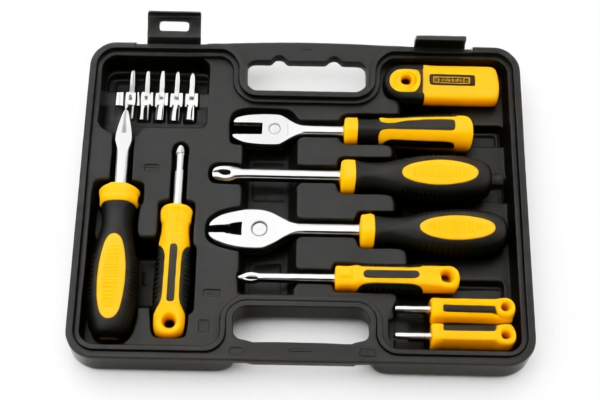
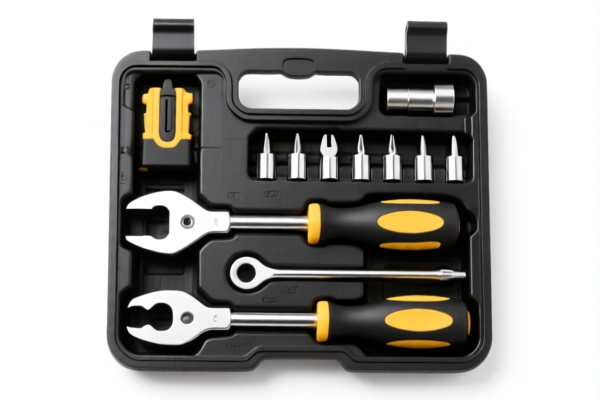
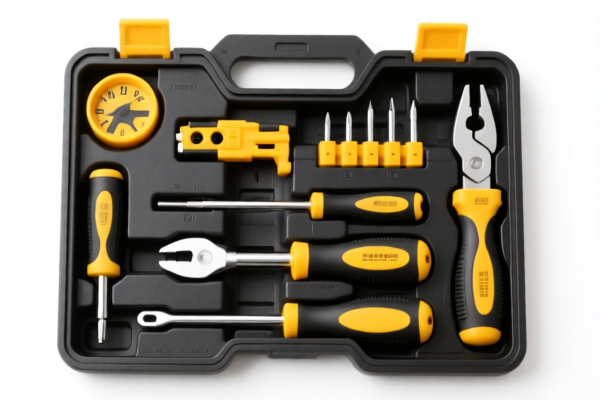

AI Analysis
🔧 Digital Tool Setter (CNC Machine Tool Measurement Devices)
🌐 HS Code Reference & Clearance Guide | 2026 Latest Tariff Analysis | Professional Customs Strategy
📌 I. Product Definition & Classification: Do You Really Know What a "Digital Tool Setter" Is?
A Digital Tool Setter is a critical measuring instrument and device used in machine tools (specifically CNC machining centers) for the precise measurement of tool length and diameter. It is not a standalone computer or monitor, but rather a specialized metrology accessory designed to check the dimensions, surface finish, or mechanical properties of components, or to calibrate cutting tools before operation.
In international trade, these devices are classified under Chapter 84 (Nuclear reactors, boilers, machinery and mechanical appliances; parts thereof), specifically under heading 8466, which covers parts and accessories suitable for use solely or principally with machines of heading 8456 to 8465.
⚠️ Key Distinction:
- If the device is primarily a measuring instrument for checking dimensions/surface finish → It falls under 8466.20.
- If it is considered an other measuring instrument/device not elsewhere specified, often including accessories for tool setting/calibration in CNC environments → It may fall under 8466.93.
- Note: The specific classification depends on the exact functionality and how the customs authority interprets the "primary purpose." Some authorities may view tool setters as general measuring instruments (Chapter 90), but the provided data explicitly links them to 8466.
📦 II. HS Code Classification Details (2026 Latest Tariff Authority对照)
Based on the provided data, the Digital Tool Setter is associated with two main HS Codes. Please note that tax information was not successfully retrieved in the source data, so tax rates are marked as "Error."
| HS Code | Product Description | Applicability | Primary Function |
|---|---|---|---|
8466.20 |
Measuring instruments and devices for measuring or checking the dimensions, surface finish, or mechanical properties of materials, articles, or components, including digital tool setters used in machine tools for precise measurement of tool length and diameter. | CNC Machining, Machine Tools | Precise measurement of tool length & diameter |
8466.93 |
Other measuring instruments and devices not elsewhere specified, including digital tool setters used in CNC machining for tool setting and calibration purposes. | CNC Machining, Tool Calibration | Tool setting and calibration |
🔍 Key Insight:
- 8466.20 focuses on the measurement of dimensions/surface finish. If your tool setter is heavily focused on verifying the physical attributes of the tool itself as a "measuring instrument," this code is appropriate.
- 8466.93 is a broader category for "other measuring instruments" not elsewhere specified. If the tool setter is seen as an accessory for calibration or general tool setting rather than just measurement, this code might be used.
- Recommendation: Check with your local customs broker to determine which subheading best fits your specific product’s primary function. Some jurisdictions may prefer one over the other based on technical manuals.
💰 III. 2026 Latest Tariff Rate Details (Including Additional Taxes, Policy Add-ons)
✅ Applicable Country: Not Specified in Data
✅ Country of Origin: Not Specified in Data
✅ Effective Time: Not Specified in Data
⚠️ Tax Information Status: Failed to retrieve tax information (total_tax: "Error")
🎯 1. 8466.20 —— Measuring Instruments for Machine Tools
| Item | Content |
|---|---|
| Base Rate | ❓ Failed to retrieve |
| Additional Taxes | ❓ Failed to retrieve |
| Total Rate | Error |
| Tax Calculation | N/A (Data unavailable) |
| De Minimis Eligibility | ❓ Unknown |
| Legal Basis Path | 8466.20 |
📌 Explanation:
The source data explicitly states:"tax_detail": "Failed to retrieve tax information". Therefore, no specific tariff rates (MFN, GSP, or Additional) can be provided for this code based on the current dataset. Importers must consult their local customs authority or a professional broker for accurate rate calculations.
🎯 2. 8466.93 —— Other Measuring Instruments and Devices
| Item | Content |
|---|---|
| Base Rate | ❓ Failed to retrieve |
| Additional Taxes | ❓ Failed to retrieve |
| Total Rate | Error |
| Tax Calculation | N/A (Data unavailable) |
| De Minimis Eligibility | ❓ Unknown |
| Legal Basis Path | 8466.93 |
📌 Explanation:
Similar to 8466.20, the tax data for 8466.93 is unavailable in the source. This code often attracts different duties depending on the importing country’s trade agreements. For example, in some regions, parts of machinery (8466) may have lower duties than general instruments (9031). Do not assume a rate; verify with local authorities.
🛠️ IV. Clearance Practical Advice (Practical Pitfall Avoidance Guide)
✅ 1. Required Documentation Checklist (All are essential)
| Document | Must Provide | Description |
|---|---|---|
| ✅ Product Specification Sheet | ✔️ | Include measurement range, accuracy, interface type (e.g., HSK, BT), and power requirements. |
| ✅ User Manual | ✔️ | Must clearly state the function: "Tool Setter for CNC Machines." |
| ✅ Product Photos | ✔️ | Clear images of the probe, housing, and any digital display. Show the connector type. |
| ✅ Commercial Invoice | ✔️ | Must describe the item as "Digital Tool Setter for CNC Machine" or "CNC Tool Measurement Device." Avoid vague terms like "Sensor." |
| ✅ HS Code Justification | ✔️ | Provide a brief explanation linking the product to 8466.20 or 8466.93 based on function. |
| ✅ Certificate of Origin (CO) | ✔️ | If applicable for preferential tariffs. |
| ✅ Packing List | ✔️ | Detail the contents, including any cables or adapters. |
✅ 2. Declaration Tips (Key Mnemonics)
🔥 “Function Defines Code, Precision Matters! Don’t Call It a ‘Computer’!”
| Situation | Correct Declaration Approach | Incorrect Approach |
|---|---|---|
| Primary Function is Measurement | Use 8466.20 if focused on checking dimensions/surface finish. | Misdeclare as a computer peripheral (e.g., 8471) → High duty risk. |
| Primary Function is Calibration/Setting | Use 8466.93 if viewed as an accessory for tool setting/calibration. | Misdeclare as a general sensor (e.g., 9031) → Potential classification dispute. |
| Sold as a Complete Unit | Declare as a single unit. | Split into "probe" + "controller" → Complicates clearance. |
| Vague Description | Be specific: "Digital Tool Setter for CNC." | Vague terms like "Industrial Gauge" → Delays in inspection. |
✅ 3. Special Circumstances Handling
| Situation | Handling Advice |
|---|---|
| OEM Custom Tool Setters | Provide client orders and technical drawings to prove specific machine compatibility. |
| Software Included | If the tool setter comes with specialized measurement software, clarify if it is embedded or stand-alone. Embedded software usually follows the hardware classification (8466). |
| Used in Medical or Aerospace | If used in highly regulated industries, ensure compliance with additional certifications (e.g., AS9100, ISO 13485) as required by the end-user, even if not a customs requirement. |
| High-Value Instruments | Consider Advance Ruling if the duty rate is significant and uncertain. This provides legal certainty before shipment. |
🌍 V. Global Major Market Clearance Comparison (2026 Latest)
Note: Since tax data was unavailable, this table provides general guidance based on typical Chapter 84 treatments. Verify with local authorities.
| Country/Region | Recommended HS Code | Typical Duty Trend | Certification Requirements | Remarks |
|---|---|---|---|---|
| 🇺🇸 United States | 8466.20 or 8466.93 |
Varies (Check USITC) | N/A (Generally) | Section 301 duties may apply if from China. Verify current footnotes. |
| 🇨🇳 China | 8466.20 or 8466.93 |
Standard MFN | CCC (if applicable) | Import duties may be low for high-tech equipment. |
| 🇪🇺 European Union | 8466.20 or 8466.93 |
Often 0-2% for Machinery Parts | CE Marking | Check if the tool setter is considered "machinery part" or "measuring instrument." |
| 🇬🇧 United Kingdom | 8466.20 or 8466.93 |
Standard UK TARIC | UKCA Marking | Post-Brexit rules apply. |
| 🇯🇵 Japan | 8466.20 or 8466.93 |
Low (Often 0-3%) | PSE (if electrical) | Japan often has favorable rates for industrial machinery parts. |
📌 Conclusion:
- Chapter 84 generally has lower duties than Chapter 90 (Optical/Measuring) in many jurisdictions, making the 8466 classification advantageous.
- USA: Be cautious of Section 301 additional duties if the product is of Chinese origin.
- EU/UK: Ensure CE/UKCA compliance for electrical safety.
📌 VI. Common Errors & Pitfall Avoidance Guide (Lessons Learned)
❌ Error 1: Classifying as "Computer Monitor" or "Input Device"
👉 Consequence: Incorrect HS Code (e.g., 8471) → High duties and potential rejection.
Fix: Emphasize "Measurement" and "Machine Tool Accessory."
❌ Error 2: Using vague terms like "Tool Gauge" or "Sensor"
👉 Consequence: Customs may reclassify under Chapter 90 (9031) → Different, often higher, duties.
Fix: Use specific terms: "Digital Tool Setter for CNC."
❌ Error 3: Ignoring the "Primary Function" distinction between 8466.20 and 8466.93
👉 Consequence: Classification dispute during inspection → Delays and fines.
Fix: Provide technical documentation that clearly states whether the device is for dimensional measurement (8466.20) or calibration/setting (8466.93).
❌ Error 4: Assuming Tax Rates are Zero because "Machinery Parts"
👉 Consequence: Surprise tax bills at customs.
Fix: Always verify current rates as the source data provided Error. Consult a broker.
✅ Correct Declaration Example:
"Digital Tool Setter for CNC Machining Center, Model XYZ, for precise measurement of tool length and diameter, Classify under HS 8466.20"
🎯 VII. Conclusion: Precision in Classification, Savings in Clearance
🎯 Remember the Mnemonic:
🔹 "Tool Setter is Part of Machine, 8466 is Key!
Measure Dimensions? 8466.20,
Calibrate/Other? 8466.93,
Tax Data Error? Check Local Broker!"
📌 Tips:
- If you are unsure about the exact subheading, provide detailed technical specs to your customs broker.
- Consider applying for an Advance Ruling if the duty difference between 8466.20 and 8466.93 is significant in your target market.
- Always ensure the product description matches the HS Code justification in the commercial invoice.
📣 Immediate Action:
📞 Contact your customs broker with the technical manual and product photos.
🚀 Ensure accurate classification to avoid delays, penalties, and unexpected tax liabilities!
✨ Professional Clearance Starts with Precise Classification!
💼 Your every penny saved is worth the extra attention to detail!
Customer Reviews
About HS Code Classification
The Harmonized System (HS) is an internationally standardized nomenclature developed by the World Customs Organization (WCO) to classify traded products. Over 200 countries use the HS system as the basis for customs tariffs, trade statistics, and import/export regulations.
Each HS code follows a hierarchical structure:
- Chapter (2 digits) — Broad category of goods (e.g., Chapter 84: Machinery and Mechanical Appliances)
- Heading (4 digits) — More specific grouping within the chapter
- Subheading (6 digits) — Internationally standardized breakdown, used by all WCO member countries
- National subdivisions (8-10 digits) — Country-specific extensions for further classification, such as US HTSUS 10-digit codes
Correct HS code classification is essential for smooth customs clearance, accurate duty payment, and compliance with trade regulations. Misclassification can lead to customs delays, overpayment of duties, or penalties.
When importing from CN to US, the applicable tariff rates may include:
- Most-Favored-Nation (MFN) rate — The standard duty rate applied to WTO members
- General rate — Applied to countries without trade agreements
- Trade remedy duties — Additional tariffs such as Section 301 (anti-dumping), Section 232 (national security), or countervailing duties
The information provided on this page is for reference purposes only. For official classification, please consult with your local customs authority or a licensed customs broker.