Dimmer
CN → US| HS Code | Tariff Rate | Origin | Destination | Doc |
|---|---|---|---|---|
| 8543709860 | 37.6% | CN | US | Official Doc |
| 8536509020 | 35.0% | CN | US | Official Doc |
| 8536509025 | 35.0% | CN | US | Official Doc |
| 8543709810 | 37.6% | CN | US | Official Doc |
| 8536509065 | 35.0% | CN | US | Official Doc |
Product Images
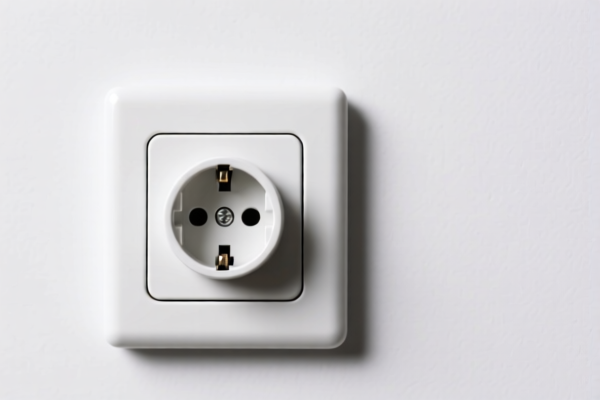
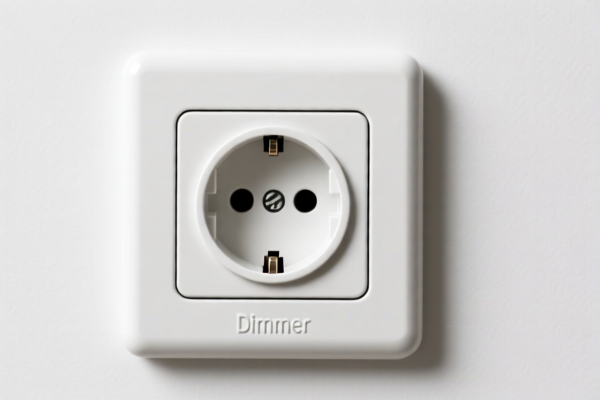
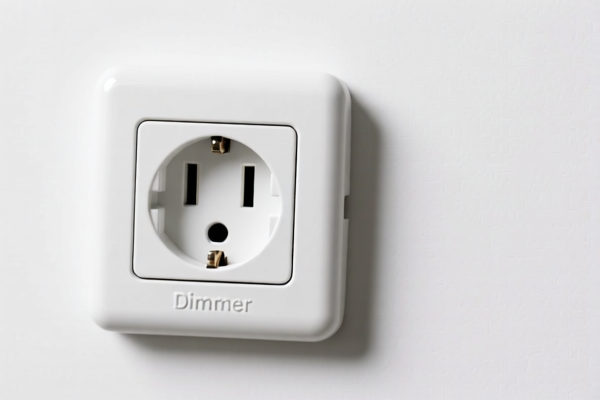
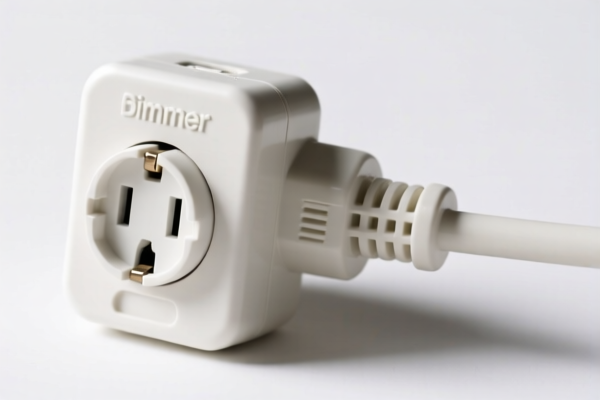
AI Analysis
💡 Dimmer (Lighting Control Switch)
🌐 HS Code Reference & Customs Clearance Guide | 2026 Latest Tariff Analysis | Professional Clearance Strategy
📌 I. Product Definition and Classification: Do You Really Understand "Dimmers"?
A Dimmer is an electronic device used to control the brightness of lights by varying the voltage or current supplied to the lamp. In international trade, its classification often hinges on whether it is viewed as a standalone electrical control device or a circuit switching component.
Two Main Classification Logic Paths:
- Independent Electrical Device (8543): Viewed as a specialized apparatus with independent functional capabilities for signal processing or power regulation.
- Circuit Switching Component (8536/8537): Viewed as a basic electrical switch or control board for voltages ≤ 1,000V.
⚠️ Key Distinction Point:
- If the dimmer is a standalone unit with its own housing, control logic, and power interface, it leans towards 8543.70.98 ("Other machines and apparatus").
- If the dimmer is considered a component of a larger switching system or a basic switch for circuits ≤ 1,000V, it falls under 8536.50.90 ("Other switches") or 8537.10.91 ("Control panels/boards").
📦 II. HS Code Classification Details (2026 Latest Tariff Authority Cross-Reference)
Based on the provided data, there are 6 possible HS Codes with varying tax implications. Below is the authoritative breakdown:
| HS Code | Product Description & Logic | Total Tax Rate | Tax Breakdown |
|---|---|---|---|
8543.70.98.60 |
Independent Control Device: Classified under "Other machines and apparatus" due to its independent electrical control functions. | 37.6% | Base: 2.6%, Section 301: 25%, 122(e): 10% |
8543.70.98.10 |
Independent Electrical Apparatus: Fits the "independent function electrical device" description within 8543.70.98. | 37.6% | Base: 2.6%, Section 301: 25%, 122(e): 10% |
8536.50.90.20 |
Circuit Switch (≤ 1,000V): Functionally a switch for circuits under 1,000V; classified as "Other switches". | 35.0% | Base: 0.0%, Section 301: 25%, 122(e): 10% |
8536.50.90.25 |
Electrical Switch Component: Classified as an electrical switch based on common sense inference for appliance components. | 35.0% | Base: 0.0%, Section 301: 25%, 122(e): 10% |
8536.50.90.65 |
Light Control Switch: Fits "Other switches" for light control equipment under 1,000V. | 35.0% | Base: 0.0%, Section 301: 25%, 122(e): 10% |
8537.10.91.70 |
Power Control Equipment (≤ 1,000V): Classified as a power control device/board for lighting control. | 37.7% | Base: 2.7%, Section 301: 25%, 122(e): 10% |
🔍 Critical Observation:
- Lowest Tax Rate (35.0%): Apply if classified as a standard Switch (8536.50.90.xx).
- Higher Tax Rate (37.6%-37.7%): Apply if classified as an Independent Apparatus (8543.70.98.xx) or Control Panel (8537.10.91.xx).
- Difference: The tax difference stems from the Base Tariff (0% vs ~2.6-2.7%), as the punitive tariffs (25% + 10%) are constant across all options for Chinese origin.
💰 III. 2026 Latest Tariff Rate Breakdown (Including Additional Taxes & Policy Surcharges)
✅ Applicable Country: United States (US)
✅ Country of Origin: China (CN)
✅ Effective Date: Post-November 2025 (Including subsequent imports)
🎯 1. Category A: "Other Switches" (HS Code: 8536.50.90.xx)
Includes: 8536.50.90.20, 8536.50.90.25, 8536.50.90.65
| Item | Detail |
|---|---|
| Base Tariff | 0.0% (Ad Valorem) |
| Section 301 Tariff | +25.0% |
| Section 122(e) Tariff | +10.0% |
| Total Tax Rate | 35.0% |
| Tax Calculation | CIF Value × 35% |
| De Minimis Eligibility | ❌ No (Denied) |
| Legal Basis Path | USITC:8536.50.90.xx → SECTION301:25% → SECTION122E:10% |
📌 Explanation:
- This is the most cost-effective classification if customs accepts the "Switch" definition. - The 0% base tariff saves you ~2.6-2.7% compared to the "Independent Device" category.
🎯 2. Category B: "Independent Machines & Apparatus" (HS Code: 8543.70.98.xx)
Includes: 8543.70.98.10, 8543.70.98.60
| Item | Detail |
|---|---|
| Base Tariff | 2.6% (Ad Valorem) |
| Section 301 Tariff | +25.0% |
| Section 122(e) Tariff | +10.0% |
| Total Tax Rate | 37.6% |
| Tax Calculation | CIF Value × 37.6% |
| De Minimis Eligibility | ❌ No (Denied) |
| Legal Basis Path | USITC:8543.70.98.xx → SECTION301:25% → SECTION122E:10% |
📌 Explanation:
- Dimmers are often considered more complex than simple switches because they process signals (phase cutting, PWM) to adjust light intensity. - Customs may argue they are "machines and apparatus" rather than simple "switches," triggering the higher base rate.
🎯 3. Category C: "Power Control Equipment/Boards" (HS Code: 8537.10.91.70)
| Item | Detail |
|---|---|
| Base Tariff | 2.7% (Ad Valorem) |
| Section 301 Tariff | +25.0% |
| Section 122(e) Tariff | +10.0% |
| Total Tax Rate | 37.7% |
| Tax Calculation | CIF Value × 37.7% |
| De Minimis Eligibility | ❌ No (Denied) |
| Legal Basis Path | USITC:8537.10.91.70 → SECTION301:25% → SECTION122E:10% |
📌 Explanation:
- If the dimmer is part of a larger control panel or board, it may fall under 8537. - This is the highest tax rate option and should be avoided unless the product is specifically a control board assembly.
🛠️ IV. Customs Clearance Practical Advice (Battle-Tested Pitfall Avoidance)
✅ 1. Preparation Checklist (Non-Negotiable)
| Document | Required? | Description |
|---|---|---|
| ✅ Product Spec Sheet | ✔️ | Must detail input voltage, max load, dimming technology (TRIAC, 0-10V, DALI, etc.). |
| ✅ Circuit Diagram / Schematic | ✔️ | Crucial to prove if it’s a simple switch or a complex control apparatus. |
| ✅ Product Photos | ✔️ | Clear images of the unit, labels, and internal components (if disassembled). |
| ✅ Test Reports | ✔️ | UL, CE, FCC (if applicable), RoHS compliance. |
| ✅ Commercial Invoice | ✔️ | Must clearly state "Lighting Dimmer Switch" and "For Voltage ≤ 1,000V". |
| ✅ Packing List | ✔️ | Ensure quantities match invoice and bill of lading. |
✅ 2. Declaration Strategy (Key Mantra)
🔥 "Switch for Low Voltage, 35% is the Target; Independent Device, 37.6% is the Trap!"
| Scenario | Recommended HS Code | Reasoning |
|---|---|---|
| Wall-mounted Dimmer Switch | 8536.50.90.xx |
Functionally a switch; simpler logic is often accepted for wall units. |
| Standalone Electronic Dimmer | 8543.70.98.xx |
If it has a screen, complex menu, or independent power supply, it looks like a "machine." |
| Integrated Control Panel | 8537.10.91.70 |
If part of a larger system board. |
| OEM/White Label Dimmer | 8536.50.90.xx |
Provide OEM agreements to simplify product description. |
✅ 3. Special Handling Tips
| Situation | Advice |
|---|---|
| Dual-Use Products | If the dimmer can also control fan speed or motor speed, emphasize "Lighting Control" in the description to avoid reclassification to motor control codes. |
| Smart Dimmers (WiFi/Zigbee) | Customs may view these as "computing devices" or "communication apparatus." Stick to "Smart Lighting Dimmer Switch" and link to 8536 or 8543 to avoid IT tariff complexities. |
| Component vs. Assembly | If shipping dimmers with other fixtures, declare separately. Do not bundle unless intended as a kit. |
| Dispute on 35% vs 37.6% | If customs assesses 37.6%, provide expert opinions stating the device functions as a "switch" that interrupts/modulates current, not a standalone "machine." |
🌍 V. Global Market Comparison (2026 Update)
| Region | Recommended HS Code | Est. Total Tariff (China Origin) | Notes |
|---|---|---|---|
| 🇺🇸 USA | 8536.50.90.xx |
35.0% | Best option. Use 8543 only if necessary. |
| 🇺🇸 USA | 8543.70.98.xx |
37.6% | Higher base rate. |
| 🇪🇺 EU | 9405.41.90 / 8536.50 |
0% - 4% | No punitive tariffs. Check CE marking. |
| 🇨🇳 China | 8536.50.90 |
0% | No import duty for domestic sale. |
| 🇬🇧 UK | 8536.50.90 |
0% | Post-Brexit rules apply, generally low duty. |
📌 Conclusion:
- The US market is the only high-risk zone for dimmers due to Section 301 (25%) and Section 122(e) (10%) tariffs. - Every 0.1% in base tariff counts. Aim for 8536.50.90.xx (35%) whenever possible.
📌 VI. Common Mistakes & Pitfalls (Blood & Tears Lessons)
❌ Mistake 1: Declaring as "Electrical Parts" (8543.99)
👉 Result: Customs may reclassify to 8536 or 8543.70, causing delays and potential back-tariffs.
❌ Mistake 2: Ignoring the "Independent Function"
👉 Result: If the dimmer has a complex display/logic, declaring it as a simple switch (8536) might be challenged. Be prepared with technical docs.
❌ Mistake 3: Incorrect Voltage Declaration
👉 Result: If voltage > 1,000V, it falls out of 8536/8537 into 8535 (Higher tax/stricter rules). Ensure all dimmers are ≤ 1,000V.
❌ Mistake 4: Missing Section 122(e) Disclosure
👉 Result: Failure to declare Section 122(e) (10%) leads to penalties and seizure.
✅ Correct Approach:
"Smart Light Dimmer Switch, 120V, 600W Max, Phase Cut, UL Listed, Model XYZ"
🎯 VII. Conclusion: Precision Classification Saves Money!
🎯 Remember the Mantra:
🔹 "Switch = 35%, Apparatus = 37.6%. The 2.6% Difference is Profit!"
🔹 "Always declare ≤ 1,000V to stay in 8536/8537."
📌 Pro Tip:
If your dimmers are high-tech IoT devices, consider pre-classification rulings (CBP Rulings) to lock in the 35.0% rate.
Engage a licensed customs broker to review your Technical Datasheets before shipment.
📣 Immediate Action:
📞 Contact your customs broker
📄 Prepare Circuit Diagrams & Spec Sheets
📝 Apply for CBP Ruling if volume is high
✨ Professional Clearance Starts with Precise Classification!
💼 Your Bottom Line Depends on These Digits!
Customer Reviews
About HS Code Classification
The Harmonized System (HS) is an internationally standardized nomenclature developed by the World Customs Organization (WCO) to classify traded products. Over 200 countries use the HS system as the basis for customs tariffs, trade statistics, and import/export regulations.
Each HS code follows a hierarchical structure:
- Chapter (2 digits) — Broad category of goods (e.g., Chapter 84: Machinery and Mechanical Appliances)
- Heading (4 digits) — More specific grouping within the chapter
- Subheading (6 digits) — Internationally standardized breakdown, used by all WCO member countries
- National subdivisions (8-10 digits) — Country-specific extensions for further classification, such as US HTSUS 10-digit codes
Correct HS code classification is essential for smooth customs clearance, accurate duty payment, and compliance with trade regulations. Misclassification can lead to customs delays, overpayment of duties, or penalties.
When importing from CN to US, the applicable tariff rates may include:
- Most-Favored-Nation (MFN) rate — The standard duty rate applied to WTO members
- General rate — Applied to countries without trade agreements
- Trade remedy duties — Additional tariffs such as Section 301 (anti-dumping), Section 232 (national security), or countervailing duties
The information provided on this page is for reference purposes only. For official classification, please consult with your local customs authority or a licensed customs broker.