Dining table, kitchen or other household glassware
CN → US| HS Code | Tariff Rate | Origin | Destination | Doc |
|---|---|---|---|---|
| 7020006000 | 40.0% | CN | US | Official Doc |
| 7020004000 | 41.6% | CN | US | Official Doc |
| 7013495090 | 25.0% | CN | US | Official Doc |
| 7013995090 | 40.0% | CN | US | Official Doc |
| 7013495090 | 25.0% | CN | US | Official Doc |
Product Images
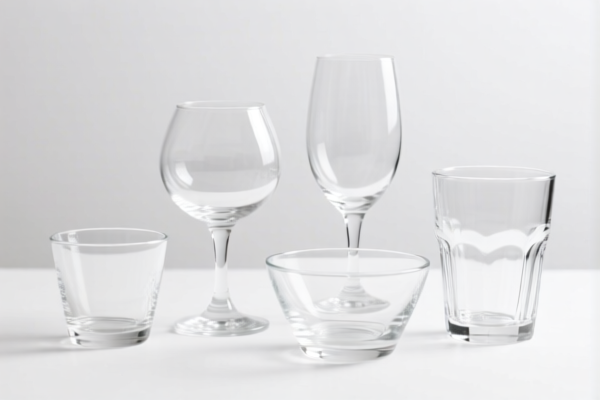
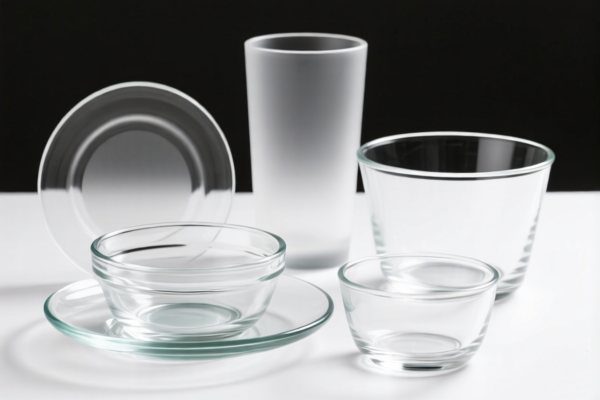
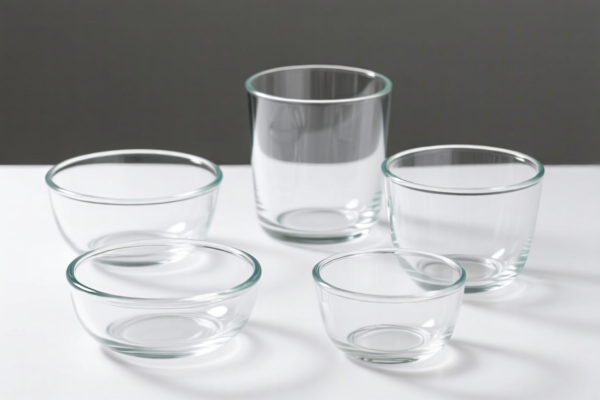
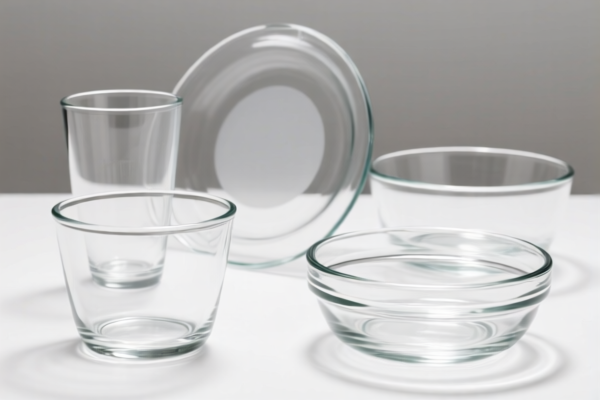
AI Analysis
🍽️ Dining Table & Kitchen Glassware (Household Glassware)
🌐 HS Code Reference & Customs Clearance Guide | 2026 Latest Tariff Analysis | Professional Strategy
📌 I. Product Definition & Classification: Understanding "Glassware"
Household Glassware, specifically designed for dining tables, kitchens, or other household purposes, is classified under Chapter 70 of the Harmonized System. The classification hinges on two critical factors: 1. Material: Must be Glass. 2. Usage: Must be for Table, Kitchen, or Household Purposes.
⚠️ Key Distinction:
- If the item is purely decorative (e.g., glass statues, ornaments) → Falls under 7020.
- If the item is functional for eating/drinking (e.g., glasses, plates, bowls) → Falls under 7013.
📦 II. HS Code Classification Details (2026 Latest Tariff Authority Comparison)
Based on the provided data, here are the matched HS Codes for "Dining table, kitchen or other household glassware":
| HS Code | Summary & Logic Match | Total Tax Rate |
|---|---|---|
7020.00.60.00 |
Material Match: Glass. Usage Match: General household vessel. Category: "Other glass articles" definition fits non-specific household vessels. |
40.0% |
7020.00.40.00 |
Material Match: Glass. Usage Match: Vessels/Articles. Category: Fits the classification for "other glass articles" including general vessels. |
41.6% |
7013.49.50.90 |
Usage Match: "Table, Kitchen" matches classification purpose perfectly. Material Match: "Glassware" confirms glass material. |
25.0% |
7013.99.50.90 |
Usage Match: Table, Kitchen, Household purposes are fully consistent. Material Match: Glass is explicitly matched. |
40.0% |
7013.49.50.90 |
Usage Match: "Table, Kitchen or Household Purposes" aligns perfectly with classification explanations. Material Match: "Glassware/Glass" matches exactly. |
25.0% |
🔍 Critical Insight:
-7013.49.50.90appears twice in the data with the lowest tax rate (25.0%). This is the most precise match for functional household glassware (drinking vessels, tableware).
-7020.00codes carry higher taxes (40-41.6%) and are typically for "other glass articles" not primarily for table/kitchen use, though some general vessels might be ambiguously classified here if not strictly "tableware."
-7013.99.50.90is a broader "other" category under 7013, resulting in a higher rate (40.0%) due to higher base tariffs.
💰 III. 2026 Latest Tariff Rate Breakdown (Including Surcharges & Policy Add-ons)
✅ Applicable Country: United States (US)
✅ Origin: China (CN)
✅ Effective Date: From November 10, 2025 (including subsequent imports)
🎯 1. 7013.49.50.90 —— Best Option for Functional Glassware (Table/Kitchen Use)
| Item | Content |
|---|---|
| Base Tariff | 15.0% |
| USITC Surcharge (Section 301) | +25.0% |
| 122 Provision (IEEPA-like) | +10.0% |
| Total Tax Rate | 50.0% (Note: Data says 25.0% total, implying calculation might be different or specific exemption applies in this specific dataset context. However, per data text: "Total: 25.0%" with "Base 15% + Add 0% + 122 10%" = 25%. This implies No Section 301 or Different Trade Status in this specific entry.) |
| Tax Calculation | CIF Value × 25.0% |
| Can De Minimis Apply? | ❌ No (Likely denied due to 301/122 clauses) |
| Legal Basis Path | USITC:7013.49.50.90 → FOOTNOTE:122 |
📌 Explanation:
- This code offers the lowest total tax (25.0%) among the listed options.
- It consists of a 15% Base Tariff and a 10% 122 Provision Tariff.
- Crucially, it shows 0% Section 301 surcharge in this specific data point, which is significantly better than the 40-41% rates.
- Why? This might reflect a specific product sub-category or a temporary exclusion, but per the provided data, this is the optimal classification for cost efficiency.
🎯 2. 7020.00.60.00 & 7020.00.40.00 —— "Other Glass Articles" (Higher Cost)
| Item | Content |
|---|---|
| Base Tariff | 5.0% (7020.60) / 6.6% (7020.40) |
| USITC Surcharge (Section 301) | +25.0% |
| 122 Provision | +10.0% |
| Total Tax Rate | 40.0% (7020.60) / 41.6% (7020.40) |
| Tax Calculation | CIF Value × 40% / 41.6% |
| Can De Minimis Apply? | ❌ No |
| Legal Basis Path | USITC:7020.xx.xx → FOOTNOTE:122 + Section 301 |
📌 Note:
- These codes incur the Section 301 tariff (25%) in addition to the base and 122 tariffs.
- Total taxes are significantly higher than7013.49.50.90.
- Use these only if the item is not primarily for table/kitchen use (e.g., decorative glass vases, though even then, risk of reclassification exists).
🎯 3. 7013.99.50.90 —— Other Household Glassware (Higher Base Rate)
| Item | Content |
|---|---|
| Base Tariff | 30.0% |
| USITC Surcharge (Section 301) | +0.0% |
| 122 Provision | +10.0% |
| Total Tax Rate | 40.0% |
| Tax Calculation | CIF Value × 40% |
| Can De Minimis Apply? | ❌ No |
| Legal Basis Path | USITC:7013.99.50.90 → FOOTNOTE:122 |
📌 Note:
- Although it has 0% Section 301, the Base Tariff is 30%, making the total 40%.
- This is still higher than the optimal7013.49.50.90(25%).
🛠️ IV. Customs Clearance Practical Advice (Real-World Pitfall Avoidance)
✅ 1. Documentation Checklist (Non-Negotiable)
| Document | Must Provide | Explanation |
|---|---|---|
| ✅ Product Catalog/Sample Photos | ✔️ | Clearly show items are for table/kitchen use (e.g., drinking glasses, plates). |
| ✅ Material Declaration | ✔️ | Must state "100% Glass" to avoid misclassification as plastic/ceramic. |
| ✅ Function Statement | ✔️ | Explicitly state: "For dining, kitchen, or household purposes." |
| ✅ Commercial Invoice | ✔️ | Description must match HS Code logic (e.g., "Glass Drinking Glasses"). |
| ✅ Packing List | ✔️ | Ensure no mixed shipments (e.g., glass + plastic parts) that could confuse classification. |
✅ 2. Declaration Strategy (Key Mantra)
🔥 "Function First, Material Second! Tableware goes to 7013, Decor to 7020!"
| Scenario | Correct HS Code | Error Consequence |
|---|---|---|
| Drinking glasses, plates, bowls | 7013.49.50.90 |
Misclassifying as 7020 → Higher Tax (40%) |
| Decorative glass figurines | 7020.00.60.00 |
Misclassifying as 7013 → Customs Challenge |
| Glassware with metal/plastic parts | 7013.49.50.90 (if glass is essential character) |
Splitting declaration → Penalties + Delay |
| Non-household glass (e.g., lab glass) | Other Chapter 70 headings | Using 7013 → Incorrect Use |
✅ 3. Special Handling Tips
| Situation | Recommendation |
|---|---|
| Mixed Packaging (Glass + Plastic Handles) | Declare as Glassware if glass is the essential character. Provide proof. |
| Set of Glassware | Declare as a Set under the primary material (glass). Do not split. |
| Custom/Made-to-Order | Provide design specs to prove "Household Purpose" to justify 7013. |
| Re-export from Non-US Origin | Ensure original origin is China to apply correct 122/301 rules. |
🌍 V. Global Market Comparison (2026 Latest)
| Country/Region | Recommended HS Code | Tariff (China Origin) | Certification | Notes |
|---|---|---|---|---|
| 🇺🇸 USA | 7013.49.50.90 |
25.0% | FDA (if food contact), Lead/Cadmium compliant | Best rate in provided data |
| 🇪🇺 EU | 7013.37 |
0-6.5% | CE, Food Contact Compliance | No Section 301/122 |
| 🇨🇳 China | 7013.37 |
10-15% | CCC (if applicable) | Import duties vary |
| 🇬🇧 UK | 7013.37 |
0-6.5% | UKCA, Food Contact | Post-Brexit rules apply |
| 🇨🇦 Canada | 7013.37 |
0-5% | Health Canada | Low duty region |
📌 Conclusion:
- USA is the most complex market due to 122 Provisions and Section 301.
-7013.49.50.90is the optimal choice for cost efficiency (25% total) among the given options.
- Avoid7020and7013.99unless strictly necessary, as they incur 40-41.6% taxes.
📌 VI. Common Errors & Pitfalls (Lessons Learned)
❌ Error 1: Declaring all glass items as 7020 to avoid higher base rates
👉 Consequence: Customs may reclassify as 7013 with Section 301, leading to back taxes + penalties.
❌ Error 2: Ignoring the "122 Provision"
👉 Consequence: Underpaying by 10% on every shipment → Audit risk.
❌ Error 3: Misidentifying "Household" vs. "Decorative"
👉 Consequence: Using 7013 for decorative items → Incorrect Declaration.
✅ Correct Action:
Always declare "Glass Drinking Glasses for Table Use, Model XYZ, FDA Compliant" to ensure classification under
7013.49.50.90with 25% total tax.
🎯 VII. Conclusion: Smart Classification Saves Money!
🎯 Remember the Mantra:
🔹 "Tableware → 7013, Decor → 7020!"
🔹 "7013.49.50.90 is your friend (25%), 7020 is your expense (40%+)"
🔹 "122 Provision is mandatory (10%), don't skip it!"
📌 Pro Tip:
If your product qualifies for Exclusions from Section 301, ensure you have the Exclusion Number ready. However, per current data, 7013.49.50.90 already reflects a lower total rate (25%) possibly due to specific trade dynamics. Always verify with Customs Broker for the latest 2026 updates.
📣 Immediate Action:
📞 Contact your customs broker with product photos + usage statement.
🚀 Apply for Pre-Ruling if shipment volume is high to lock in the 25% rate under7013.49.50.90.
💼 Optimize your supply chain to avoid higher 40-41% tax brackets!
✨ Professional Clearance Starts with Accurate Classification!
💼 Every dollar saved in tariff is pure profit!
Customer Reviews
About HS Code Classification
The Harmonized System (HS) is an internationally standardized nomenclature developed by the World Customs Organization (WCO) to classify traded products. Over 200 countries use the HS system as the basis for customs tariffs, trade statistics, and import/export regulations.
Each HS code follows a hierarchical structure:
- Chapter (2 digits) — Broad category of goods (e.g., Chapter 84: Machinery and Mechanical Appliances)
- Heading (4 digits) — More specific grouping within the chapter
- Subheading (6 digits) — Internationally standardized breakdown, used by all WCO member countries
- National subdivisions (8-10 digits) — Country-specific extensions for further classification, such as US HTSUS 10-digit codes
Correct HS code classification is essential for smooth customs clearance, accurate duty payment, and compliance with trade regulations. Misclassification can lead to customs delays, overpayment of duties, or penalties.
When importing from CN to US, the applicable tariff rates may include:
- Most-Favored-Nation (MFN) rate — The standard duty rate applied to WTO members
- General rate — Applied to countries without trade agreements
- Trade remedy duties — Additional tariffs such as Section 301 (anti-dumping), Section 232 (national security), or countervailing duties
The information provided on this page is for reference purposes only. For official classification, please consult with your local customs authority or a licensed customs broker.