Dinner Knife and Meat Cutting Knife
CN → US| HS Code | Tariff Rate | Origin | Destination | Doc |
|---|---|---|---|---|
| 8215995000 | 15.3% | CN | US | Official Doc |
| 8215990500 | 0.0% | CN | US | Official Doc |
| 8211915030 | 0.0% | CN | US | Official Doc |
| 8211929030 | 0.0% | CN | US | Official Doc |
Product Images
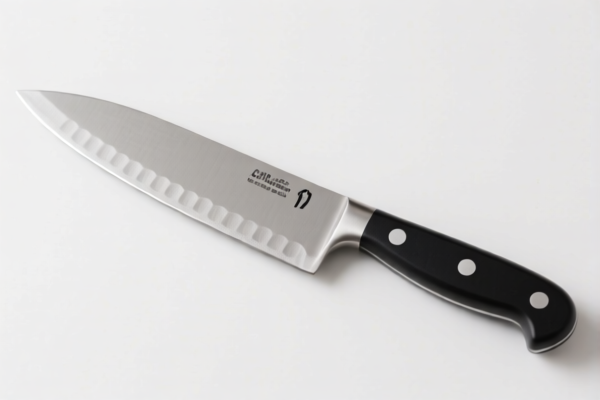
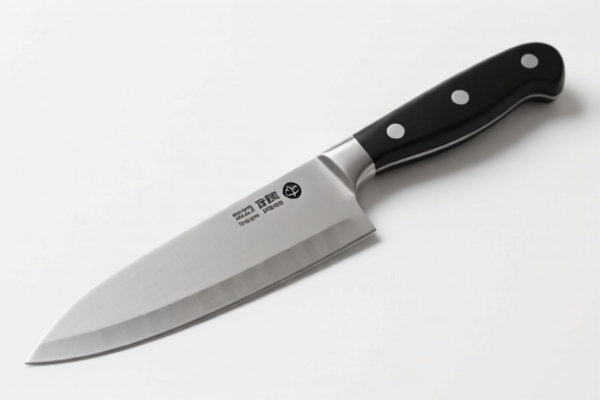
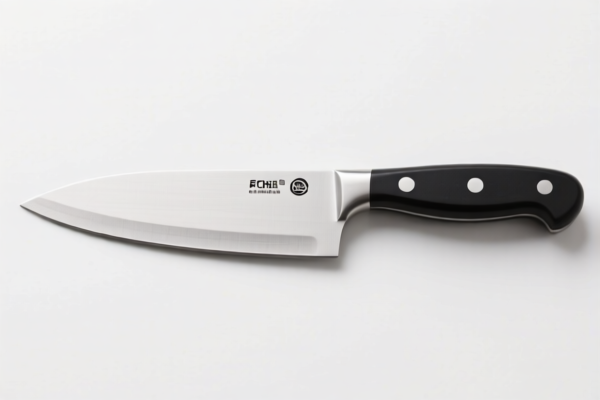
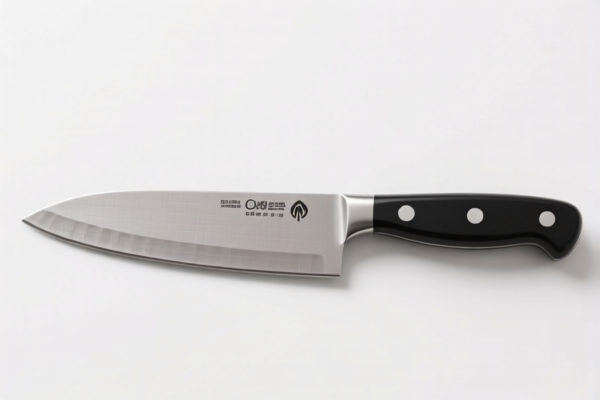
AI Analysis
🔪 Dinner Knife & Meat Cutting Knife (Kitchen Tableware)
🌐 HS Code Reference & Customs Clearance Guide | 2026 Latest Tariff Analysis | Professional Clearance Strategy
📌 I. Product Definition and Classification: Do You Know Your Knives?
Kitchen knives are divided into specific subcategories based on their handle material, blade structure, and intended use. In international trade, confusion often arises between "Table Knives" and general "Kitchen/Butcher Knives."
Table Knives (Fixed Blades): Typically used for dining; often feature specific handle materials (rubber, plastic, metal) or specialized blade shapes (e.g., steak knives). Other Kitchen/Butcher Knives: General-purpose cutting tools with fixed blades, usually without the specific "tableware" classification features like rubber/plastic handles meant solely for dining aesthetics or safety.
⚠️ Key Distinction Point:
- If the knife is a Table Knife with a fixed blade and rubber or plastic handle → Classify under 8211.91.50.30
- If it is a general Kitchen/Butcher Knife with a fixed blade (no specific table handle criteria) → Classify under 8211.92.90.30
- If it is part of a set or includes spoons/forks (base metal parts) → May fall under 8215.99 (Mixed Tableware)
📦 II. HS Code Classification Details (2026 Latest Tariff Authority Comparison)
| HS Code | Product Description | Application Scenario | Key Features |
|---|---|---|---|
8211.91.50.30 |
Table knives having fixed blades: Knives with rubber or plastic handles (Steak knives) | Dining steak knives, table settings with rubber/plastic grips | ✅ Rubber/Plastic Handle ✅ Fixed Blade ✅ Table Use |
8211.92.90.30 |
Other knives having fixed blades: Other Kitchen and butcher knives | Chef’s knives, cleavers, general kitchen cutters | ✅ No Specific Table Handle ✅ Fixed Blade ✅ Kitchen/Butcher Use |
8215.99.50.00 |
Spoons, forks, ladles... similar kitchen or tableware; base metal parts | Mixed sets, spare parts, non-steel metal components | ❌ Not a single knife ✅ Parts/Mixed Set |
8215.99.05.00 |
Forks: With stainless steel handles... containing nickel or >10% manganese | High-end stainless steel forks (non-knife) | ❌ Not a knife ✅ Fork Specifics |
🔍 Important Reminder:
- Steak Knives with rubber or plastic handles MUST be classified under 8211.91.50.30. They cannot be misclassified as general kitchen knives. - Chef’s Knives or Cleavers generally fall under 8211.92.90.30 unless they have specific tableware characteristics. - If importing mixed sets (knives + spoons), check if the primary value lies in the knife or the mixed tableware. Usually, knives are declared separately for accuracy.
💰 III. 2026 Latest Tariff Rate Details (Including Additional Duties & Policy Add-ons)
✅ Applicable Country: United States (US)
✅ Origin: China (CN)
✅ Effective Time: 2025–2026 (Current Trade Policies)
🎯 1. 8211.91.50.30 —— Table Knives (Rubber/Plastic Handle) / Steak Knives
| Item | Content |
|---|---|
| Basic Tariff | $0.007 each + 3.7% (Ad Valorem) |
| Section 301 Additional Tariff | +7.5% (China Origin Surcharge) |
| Total Tariff Rate | $0.007/unit + 11.2% (3.7% + 7.5%) |
| Tax Calculation | (CIF Value × 11.2%) + ($0.007 × Quantity) |
| De Minimis Eligibility | ❌ No (High value items; below $800 de minimis may still be scrutinized for accuracy) |
| Legal Basis Path | USITC:8211.91.50.30 → Section 301: 7.5% |
📌 Explanation:
- "Table Knives" are subject to a specific per-unit fee ($0.007 each) PLUS an ad valorem rate. - The 7.5% is the standard Section 301 surcharge on Chinese-made cutlery. - Total Cost Impact: For a $100 batch of steak knives, expect ~$11.20 + per-unit fees. This is higher than general kitchen knives if the volume is low but per-unit value is significant.
🎯 2. 8211.92.90.30 —— Other Kitchen & Butcher Knives (Fixed Blade)
| Item | Content |
|---|---|
| Basic Tariff | $0.004 each + 6.1% (Ad Valorem) |
| Section 301 Additional Tariff | +7.5% (China Origin Surcharge) |
| Total Tariff Rate | $0.004/unit + 13.6% (6.1% + 7.5%) |
| Tax Calculation | (CIF Value × 13.6%) + ($0.004 × Quantity) |
| De Minimis Eligibility | ❌ No (Subject to detailed inspection) |
| Legal Basis Path | USITC:8211.92.90.30 → Section 301: 7.5% |
📌 Note:
- Kitchen/Butcher Knives have a lower per-unit fee ($0.004) but a higher ad valorem percentage (6.1% vs 3.7%). - For high-value chef’s knives, the 13.6% ad valorem rate will outweigh the savings in per-unit fees. - Cheaper knives (low CIF value) benefit more from the lower per-unit fee.
🎯 3. 8215.99.50.00 —— Mixed Tableware / Parts (Non-Specific Knife)
| Item | Content |
|---|---|
| Basic Tariff | 5.3% (Ad Valorem) |
| Section 301 Additional Tariff | 0.0% (No additional surcharge for this specific subheading in some contexts, but verify) |
| Total Tariff Rate | 5.3% |
| Tax Calculation | CIF Value × 5.3% |
| De Minimis Eligibility | ⚠️ Case-by-Case (Lower value items may qualify, but mixed sets are risky) |
| Legal Basis Path | USITC:8215.99.50.00 |
📌 Caution:
- This code is NOT for standalone knives. It is for mixed sets or parts. - Misclassifying a knife as "parts" or "mixed tableware" to avoid higher tariffs is a high-risk compliance violation. - Only use if the import actually contains spoons, forks, ladles, etc., as the primary item.
🛠️ IV. Customs Clearance Practical Advice (Battle-Tested Pitfall Avoidance)
✅ 1. Document Checklist (Mandatory)
| Document | Required | Notes |
|---|---|---|
| ✅ Product Specification Sheet | ✔️ | Must specify: Blade material (Stainless Steel), Handle material (Rubber/Plastic/Steel), Blade type (Serrated/Smooth). |
| ✅ Product Photos | ✔️ | Clear images of handle, blade, and any serrations. Must show if it’s a "Table Knife" vs "Butcher Knife". |
| ✅ Commercial Invoice | ✔️ | Description must match HS Code exactly. E.g., "Steak Knife, Rubber Handle" for 8211.91.50.30. |
| ✅ Packing List | ✔️ | Detail quantity per box. Crucial for calculating the per-unit fee ($0.007 or $0.004). |
| ✅ Material Declaration | ✔️ | Confirm handle material. If it’s wood or metal, it may NOT qualify for 8211.91.50.30 (Rubber/Plastic only). |
✅ 2. Declaration Strategy (Key Mantras)
🔥 "Handle Defines, Blade Confirms, Fee Matters!"
| Scenario | Correct Declaration | Incorrect Practice |
|---|---|---|
| Steak Knife with Rubber Handle | 8211.91.50.30 (Table Knife) |
Declared as 8211.92.90.30 (Kitchen Knife) → Risk of Audit if handle is proven rubber/plastic. |
| Chef’s Knife with Plastic Handle | 8211.92.90.30 (Kitchen Knife) |
Declared as 8211.91.50.30 → Wrong Code. Plastic handle alone doesn’t make it a "Table Knife" if not for dining. |
| Mixed Set (Knife + Fork) | Declare Knives & Forks Separately | Grouping into 8215.99 → Penalty Risk. Separate lines for accuracy. |
| Knife with Wooden Handle | 8211.92.90.30 (Other) |
Try to force 8211.91 → Rejection. Only Rubber/Plastic qualifies for 8211.91.50.30. |
✅ 3. Special Cases Handling
| Case | Handling Advice |
|---|---|
| Serrated Steak Knives | Still 8211.91.50.30 if rubber/plastic handle. Serration doesn’t change the table knife classification. |
| Fixed Blade vs. Folding | This data applies to Fixed Blades. Folding knives may have different codes. Ensure "Fixed" is stated. |
| OEM Private Label | Provide brand authorization if required. HS Code remains the same regardless of brand. |
| High-Value Gift Sets | Do NOT try to classify a $50 steak knife set as "parts". Full declaration required. |
🌍 V. Global Market Clearance Comparison (2026 Latest)
| Country/Region | Recommended HS Code | Tariff (China Origin) | Certification Required | Notes |
|---|---|---|---|---|
| 🇺🇸 USA | 8211.91.50.30 / 8211.92.90.30 |
11.2% / 13.6% + Per-Unit Fee | None (General) | Section 301 7.5% is critical. |
| 🇨🇳 China | 8211.91 / 8211.92 |
~7-9% | None | Lower import tax, no Section 301. |
| 🇪🇺 EU | 8211.91 / 8211.92 |
14.5% | CE (if electrical, but these are manual) | Higher base rate, no US-style surcharges. |
| 🇬🇧 UK | 8211.91 / 8211.92 |
14.5% | None | Post-Brexit rules apply. |
📌 Conclusion:
- USA has the most complex tariff structure due to per-unit fees and Section 301. - Accuracy in handle material description is the #1 way to avoid penalties in the US. - China-origin knives face higher total costs in the US compared to EU/UK due to the 7.5% add-on.
📌 VI. Common Errors & Pitfall Guide (Lessons Learned)
❌ Error 1: Declaring a rubber-handled steak knife as a general kitchen knife (8211.92)
👉 Consequence: Customs may reassess to 8211.91, applying the higher per-unit fee ($0.007 vs $0.004) and potentially flagging for misdeclaration.
❌ Error 2: Assuming plastic handle = Table Knife for all purposes
👉 Consequence: If it’s a cleaver with a plastic handle, it’s still a kitchen/butcher knife (8211.92). Intent and Design matter.
❌ Error 3: Ignoring the per-unit fee in cost calculations
👉 Consequence: Underquoting duties. For 10,000 knives, the fee difference is $30, but the ad valorem difference is thousands.
❌ Error 4: Using 8215.99 for all cutlery to save taxes
👉 Consequence: High risk of audit. 8215 is for spoons/forks/ladles. Knives are explicitly excluded in many subheadings.
✅ Correct Practice:
"Table Knife, Steak Style, Stainless Steel Blade, Rubber Handle, Fixed Blade, Model XYZ, Chinese Origin"
🎯 VII. Conclusion: Professional Declaration, Cost Optimization, Risk Reduction!
🎯 Remember the Mantra:
🔹 "Rubber/Plastic Handle = Table Knife (8211.91)!"
🔹 "General Kitchen/Butcher = Other Knife (8211.92)!"
🔹 "US Tariff = 7.5% Surcharge + Per-Unit Fee!"
🔹 "Declare Accurately, Avoid Penalties, Save Money!"
📌 Pro Tip:
- If you are importing mixed sets (knives + forks), consider separating the HS Codes on the invoice for clarity.
- For US Imports, always calculate the total landed cost including the $0.007/$0.004 per-unit fee, as it scales with volume.
- Pre-clearance: If unsure, request a Binding Tariff Ruling from US Customs and Border Protection (CBP).
📣 Immediate Action:
📞 Contact a licensed Customs Broker + Provide Product Photos + Verify Handle Material
🚀 Ensure your knives clear US Customs smoothly, legally, and cost-effectively!
✨ Professional Customs Clearance Starts with Precise Classification!
💼 Every Penny in Tariffs Counts!
Customer Reviews
About HS Code Classification
The Harmonized System (HS) is an internationally standardized nomenclature developed by the World Customs Organization (WCO) to classify traded products. Over 200 countries use the HS system as the basis for customs tariffs, trade statistics, and import/export regulations.
Each HS code follows a hierarchical structure:
- Chapter (2 digits) — Broad category of goods (e.g., Chapter 84: Machinery and Mechanical Appliances)
- Heading (4 digits) — More specific grouping within the chapter
- Subheading (6 digits) — Internationally standardized breakdown, used by all WCO member countries
- National subdivisions (8-10 digits) — Country-specific extensions for further classification, such as US HTSUS 10-digit codes
Correct HS code classification is essential for smooth customs clearance, accurate duty payment, and compliance with trade regulations. Misclassification can lead to customs delays, overpayment of duties, or penalties.
When importing from CN to US, the applicable tariff rates may include:
- Most-Favored-Nation (MFN) rate — The standard duty rate applied to WTO members
- General rate — Applied to countries without trade agreements
- Trade remedy duties — Additional tariffs such as Section 301 (anti-dumping), Section 232 (national security), or countervailing duties
The information provided on this page is for reference purposes only. For official classification, please consult with your local customs authority or a licensed customs broker.