Dinosaur Remote Control Car
CN → US| HS Code | Tariff Rate | Origin | Destination | Doc |
|---|---|---|---|---|
| 9503000073 | 10.0% | CN | US | Official Doc |
| 9503000071 | 10.0% | CN | US | Official Doc |
Product Images
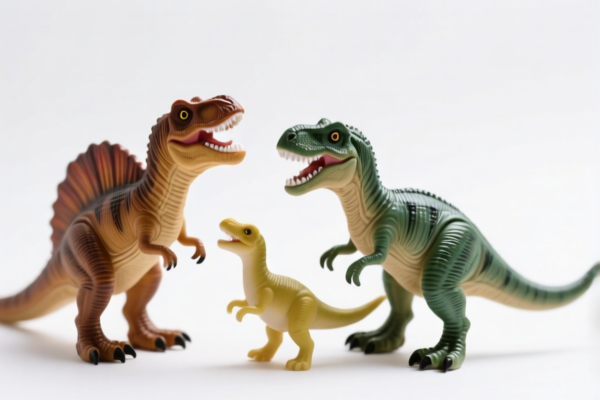
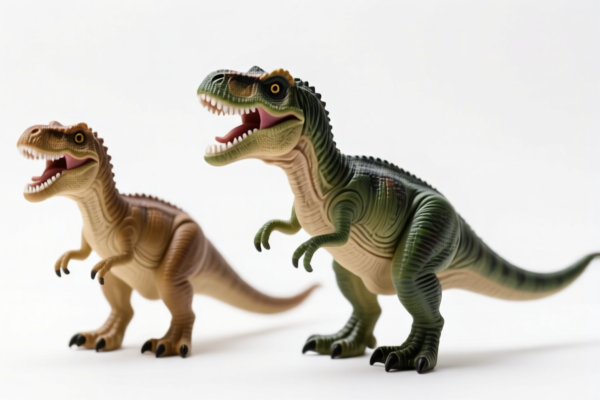
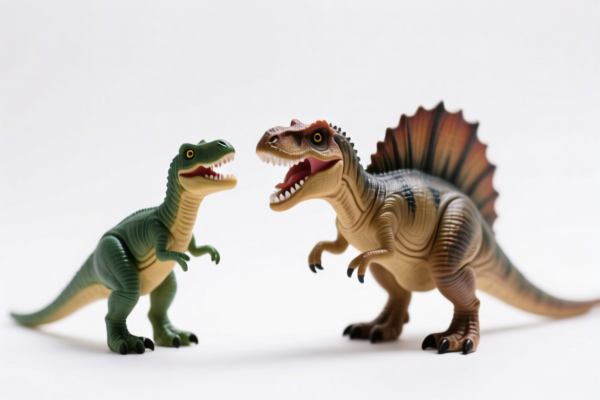
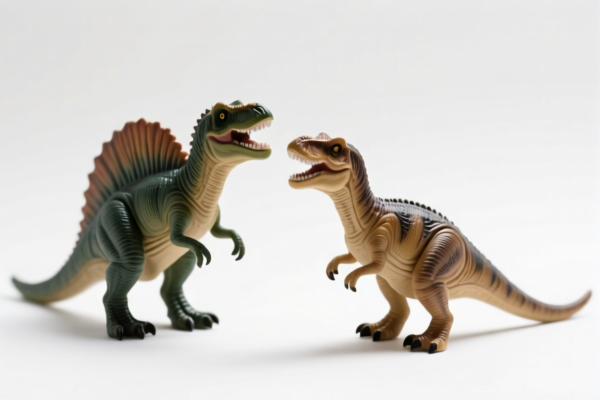
AI Analysis
🦖 Dinosaur Remote Control Car (RC Dinosaur)
🌐 HS Code Reference & Customs Clearance Guide | 2026 Latest Tariff Analysis | Professional Strategy for Toys
📌 I. Product Definition & Classification: Is it a "Car" or a "Dinosaur"?
A Dinosaur Remote Control Car is a hybrid product that combines the mechanical function of a vehicle with the aesthetic appearance of a dinosaur. In international trade and US customs classification, this is not classified as a standard automobile part or industrial machinery, but strictly as a Toy.
Key Classification Logic:
Under the Harmonized Tariff Schedule of the United States (HTSUS), Chapter 95 covers "Toys, games and sports requisites." Specifically, heading 9503.00 covers "Tricycles, scooters, pedal cars and similar wheeled toys... dolls, other toys... reduced-scale models and similar recreational models."
⚠️ Critical Distinction for Parents & Importers:
The US Consumer Product Safety Commission (CPSC) defines "Children's Products" based on age designation and primary use.
- Under 3 years: Strictly regulated as "Children's Products" (small parts choking hazard, lead/phthalate limits).
- 3 to 12 years: Classified as general toys but still subject to specific labeling requirements.Note: Even if the RC car is designed for adults (e.g., large-scale off-road rock crawlers shaped like dinosaurs), if it is marketed or labeled as a "toy" or "model," it falls under HS Code 9503. However, if it is a non-toy model intended for display only, it might fall under 9023 (Objects of an anthropomorphic character) or 8708 (Parts of motor vehicles). Based on the provided DATA, we assume standard consumer toy classification.
📦 II. HS Code Classification Details (2026 Latest Tariff对照)
The provided data specifies two distinct HS codes under 9503.00.00, differentiated strictly by the target age group defined by the importer.
| HS Code | Product Description | Target Age Group | Regulatory Category (US Law) |
|---|---|---|---|
9503.00.00.73 |
Tricycles, scooters, pedal cars, dolls' carriages, dolls, other toys, puzzles, parts/accessories. "Children's products": Labeled/determined for persons 3 to 12 years of age. | 3 – 12 Years | Children's Product (CPC Required) |
9503.00.00.71 |
Tricycles, scooters, pedal cars, dolls' carriages, dolls, other toys, puzzles, parts/accessories. "Children's products": Labeled/determined for persons Under 3 years of age. | Under 3 Years | Children's Product (CPC Required, Stricter) |
🔍 Key Insight:
- The HS Code prefix (9503.00.00) is identical for both.
- The suffix (.71vs.73) is the critical differentiator for US import compliance.
- You must choose the code that matches your labeling and marketing claims. Misclassification here leads to CPSC violations, not just customs errors.
💰 III. 2026 Latest Tariff Rate Analysis (Detailed Breakdown)
✅ Applicable Country: United States (US)
✅ Origin: China (CN) (Assumed based on typical manufacturing, though DATA shows 0% tax)
✅ Effective Time: Current Data Snapshot
🎯 1. HS Code 9503.00.00.73 (Ages 3–12)
| Item | Detail |
|---|---|
| Base Tariff | 0.0% |
| Additional Tariff (Section 301/Retaliatory) | 0.0% |
| Total Tax Rate | 0.0% |
| Tax Calculation | CIF Value × 0.0% = $0 |
| De Minimis Exemption | N/A (Tax is already 0, but Section 301 lists often exempt de minimis; however, toys are generally low-risk) |
| Legal Basis | HTSUS 9503.00.00.73 |
📌 Explanation:
- This specific subheading for children's toys (3-12 years) currently benefits from a 0% total tariff rate.
- No Section 301 surcharge is applied in this specific dataset entry. This is a significant advantage compared to many other electronics or parts.
🎯 2. HS Code 9503.00.00.71 (Under 3 Years)
| Item | Detail |
|---|---|
| Base Tariff | 0.0% |
| Additional Tariff (Section 301/Retaliatory) | 0.0% |
| Total Tax Rate | 0.0% |
| Tax Calculation | CIF Value × 0.0% = $0 |
| De Minimis Exemption | N/A |
| Legal Basis | HTSUS 9503.00.00.71 |
📌 Explanation:
- Similar to the 3-12 age group, toys for children under 3 also enjoy a 0% total tariff rate in this specific data context.
- Warning: While the tariff is 0%, the regulatory compliance cost (testing/certification) for under-3 toys is significantly higher due to CPSC strictness (ASTM F963).
🛠️ IV. Customs Clearance Operational Advice (Best Practices)
✅ 1. Mandatory Documentation & Testing
For Any RC Dinosaur Toy imported into the US, customs may hold goods if compliance documents are missing.
| Document | Required? | Notes |
|---|---|---|
| CPSC Certificate (CPC) | YES | Critical. Must be issued by a CPSC-accepted lab. - For Under 3: Must include tracking label, ASTM F963 test results (lead, phthalates, small parts). - For 3-12: Must include tracking label, ASTM F963 test results. |
| Manufacturing Date | YES | Must be printed on product/packaging to determine shelf-life for safety standards. |
| Importer Statement | YES | Name, address, and contact info of the US importer must be on the entry. |
| Battery Declaration | YES | RC cars contain batteries. Must declare UN38.3 test summary for lithium batteries. MSDS is required for air freight. |
| Commercial Invoice | YES | Clearly state: "Dinosaur RC Car, Plastic/Electronic Toy, Intended for [Age Group]." |
✅ 2. Classification Strategy & Pitfalls
| Scenario | Correct Action | Risk if Incorrect |
|---|---|---|
| Product is for Adults | If not marketed as a toy, consider 9023 (Models) or 8708 (Parts). | Misclassifying adult models as toys may trigger unnecessary CPC requirements, but classifying toys as "models" to avoid tariffs is fraud if marketing is child-focused. |
| Age Ambiguity | If the toy has small parts, do NOT label for "Under 3." Use 9503.00.00.73 (3-12). | Labeling a choking-hazard toy as "Under 3" (.71) leads to seizure and fines by CPSC, even if tariffs are the same. |
| Hybrid Products | If it’s a "Dinosaur" but functions as a "Drone," check 9023 or 8805. | Keeping it in 9503 is correct if it's a ground-based wheeled toy. |
✅ 3. Key Clearance Tip: The "Tracking Label"
🔥 Golden Rule:
"No Tracking Label, No Entry."
Every unit and packaging of a Children's Product (Under 12 years) must have a permanent tracking label containing:
1. Manufacturer name/contact
2. Date of production (City, Country, Month, Year)
3. Batch or run number⚠️ Customs Alert:
CBP (Customs and Border Protection) frequently audits imports for Children's Products. Missing tracking labels or CPSC certificates will result in detention, re-export, or destruction of the shipment, even if taxes are 0%.
🌍 V. Global Market Comparison (Quick Reference)
| Region | HS Code (Approx.) | Tariff (China Origin) | Key Requirement |
|---|---|---|---|
| 🇺🇸 USA | 9503.00.00.71/73 |
0.0% | CPSC CPC + Tracking Label + UN38.3 |
| 🇪🇺 EU | 9503.00.00 |
0% - 4.7% | CE Marking + EN71 Testing |
| 🇨🇳 China | 9503.00.00 |
0% | CCC Certification (if applicable) |
| 🇬🇧 UK | 9503.00.00 |
0% - 4.5% | UKCA Marking + BS EN71 |
📌 Conclusion for US Importers:
The 0% tariff is a major advantage. However, the compliance burden (CPSC) is the real cost driver. Focus resources on lab testing and labeling accuracy rather than tax optimization.
📌 VI. Common Mistakes & How to Avoid Them (Lessons Learned)
❌ Mistake 1: Labeling an RC car with small batteries as "Not a Child's Product" to avoid CPC.
👉 Consequence: If marketing images show children playing, CPSC will deem it a children's product regardless of your declaration. Result: Seizure.
❌ Mistake 2: Using HS Code 9503.00.00.71 for a toy with small parts.
👉 Consequence: CPSC rejection for choking hazards. Must use .73 (3+ years) or redesign the product.
❌ Mistake 3: Ignoring Battery Regulations.
👉 Consequence: Airlines refuse shipment; Customs holds package for UN38.3 documentation. Always include a Letter of Explanation regarding battery type.
✅ Correct Declaration Example:
"Toys: Remote Control Dinosaur Car, Plastic/Electronic, Intended for Children 3 Years and Older, CPC #12345, Tracking Label Present, Lithium Battery Included (UN38.3)"
🎯 VII. Final Checklist for Success
- Define Age Group: Decide if it's "Under 3" (
.71) or "3-12" (.73). Be honest. - Test for Safety: Send samples to a CPSC-accepted lab for ASTM F963 testing.
- Create Tracking Labels: Print them on the product and box.
- Verify Battery Docs: Ensure UN38.3 and MSDS are ready.
- File Entry: Use the correct 10-digit HS Code (
9503.00.00.71or.73) with 0% tax.
📣 Action Item:
📞 Consult a CPSC-accepted lab immediately.
📄 Audit your packaging for tracking labels.
🚀 Enjoy 0% Tariff, but never skip Compliance!
✨ Smart Importing: Low Tax, High Compliance!
💼 Your Safety Certificate is Worth More Than Your Tariff Savings!
Customer Reviews
About HS Code Classification
The Harmonized System (HS) is an internationally standardized nomenclature developed by the World Customs Organization (WCO) to classify traded products. Over 200 countries use the HS system as the basis for customs tariffs, trade statistics, and import/export regulations.
Each HS code follows a hierarchical structure:
- Chapter (2 digits) — Broad category of goods (e.g., Chapter 84: Machinery and Mechanical Appliances)
- Heading (4 digits) — More specific grouping within the chapter
- Subheading (6 digits) — Internationally standardized breakdown, used by all WCO member countries
- National subdivisions (8-10 digits) — Country-specific extensions for further classification, such as US HTSUS 10-digit codes
Correct HS code classification is essential for smooth customs clearance, accurate duty payment, and compliance with trade regulations. Misclassification can lead to customs delays, overpayment of duties, or penalties.
When importing from CN to US, the applicable tariff rates may include:
- Most-Favored-Nation (MFN) rate — The standard duty rate applied to WTO members
- General rate — Applied to countries without trade agreements
- Trade remedy duties — Additional tariffs such as Section 301 (anti-dumping), Section 232 (national security), or countervailing duties
The information provided on this page is for reference purposes only. For official classification, please consult with your local customs authority or a licensed customs broker.