Diodes, Transistors, and Similar Semiconductor Devices
CN → US| HS Code | Tariff Rate | Origin | Destination | Doc |
|---|---|---|---|---|
| 8542390090 | 60.0% | CN | US | Official Doc |
| 8542900000 | 60.0% | CN | US | Official Doc |
| 8541100080 | 60.0% | CN | US | Official Doc |
| 8541210095 | 60.0% | CN | US | Official Doc |
Product Images
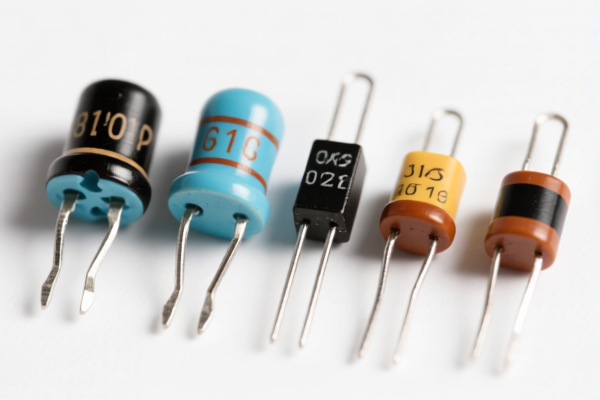
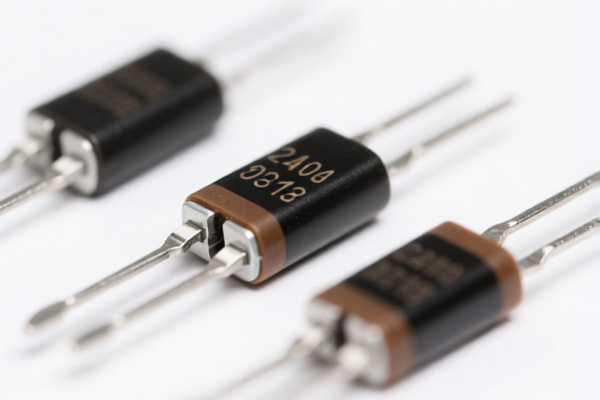
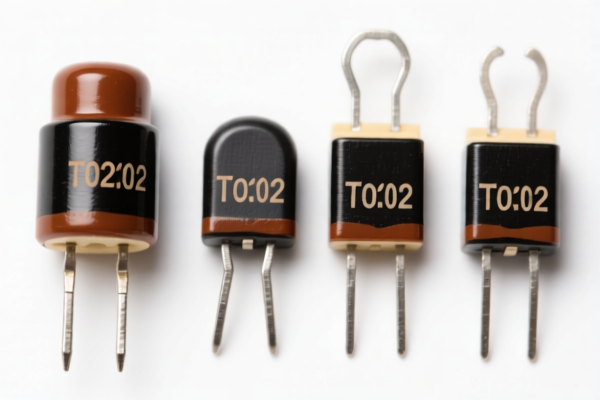
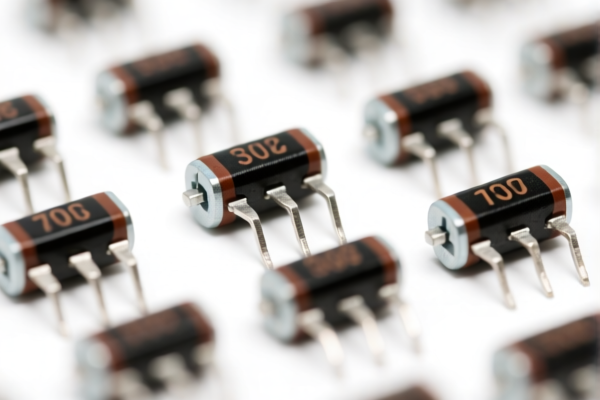
AI Analysis
⚡️ Diodes, Transistors, and Similar Semiconductor Devices (Integrated Circuits & Components)
🌐 HS Code Reference & Customs Clearance Guide | 2026 Latest Tariff Analysis | Professional Strategy
📌 I. Product Definition & Classification: Do You Really Understand "Semiconductors"?
Semiconductor devices form the backbone of modern electronics, ranging from basic rectifiers to complex microcontrollers. In international trade, they are strictly categorized by functionality and complexity:
1. Discrete Semiconductor Devices (Parts/Components):
Individual components like diodes, transistors, and photosensitive elements. They are classified under Chapter 85, Heading 8541. These are "atomic" building blocks.
2. Electronic Integrated Circuits (ICs):
Complete circuits manufactured on a single chip (microprocessors, logic ICs, memory, etc.). They are classified under Chapter 85, Heading 8542. These are "complex" assemblies.
⚠️ Key Distinction Point:
- If it is a single component (e.g., one transistor, one diode) without complex logic/memory integration → 8541.xxxx
- If it is a chip containing multiple circuits (e.g., CPU, GPU, Microcontroller, Memory IC) → 8542.xxxx
- Parts/Accessories specifically for these ICs (empty packages, ceramic substrates) → 8542.90 or 8541.90 (depending on context)
📦 II. HS Code Classification Details (2026 Latest Tariff Authority Match)
Based on the provided data <DATA>, here are the precise HS Codes and their corresponding tariff structures for US Imports from China:
| HS Code | Product Description | Category | Applicable Scenario |
|---|---|---|---|
8542.39.00.90 |
Electronic Integrated Circuits | Other Other ICs | Microprocessors, Control ICs, Memory ICs (General Purpose) |
8542.90.00.00 |
Parts of Electronic Integrated Circuits | Parts | Empty ceramic/plastic packages, substrates, or dedicated parts for ICs |
8541.10.00.80 |
Diodes (Other than Photosensitive/LED) | Discrete Device | Rectifier diodes, Zener diodes, Varactor diodes |
8541.21.00.95 |
Transistors (Dissipation < 1W) | Discrete Device | Small signal transistors, RF transistors with low power output |
🔍 Critical Reminder:
- Do not confuse "Discrete" with "Integrated": A single transistor is8541, not8542. An IC containing millions of transistors is8542.
- Packaging Matters: If you import empty ceramic packages intended specifically for mounting ICs, they may fall under8542.90.00.00. If they are general packaging, they might be elsewhere, but per this dataset, dedicated parts are in 8542.90.
💰 III. 2026 Latest Tariff Rate Breakdown (Including Additional Duties & Policies)
✅ Applicable Country: United States (US)
✅ Origin: China (CN)
✅ Effective Date: All rates include subsequent imports post-2025 policies.
🎯 1. 8542.39.00.90 & 8542.90.00.00 —— Integrated Circuits & Parts
| Item | Content |
|---|---|
| Base Tariff (MFN) | 0.0% (Ad Valorem) |
| Section 301 / Additional Tariff | +50.0% |
| Total Tariff Rate | 50.0% |
| Tax Calculation | CIF Value × 50.0% |
| De Minimis Exemption | ❌ NOT APPLICABLE (Deny de minimis) |
| Legal Basis Path | Section 301: 8542 → Total Tax: 50.0% |
📌 Explanation:
- Base Rate 0%: Under normal Most Favored Nation (MFN) treatment, integrated circuits often have low or zero base duties.
- Add-on 50%: Due to ongoing trade restrictions and Section 301 investigations targeting high-tech Chinese exports, a flat 50% additional tariff is applied.
- Impact: This is a massive cost driver. For a $10,000 shipment of ICs, you must pay $5,000 in duties alone.
🎯 2. 8541.10.00.80 —— Diodes (Non-LED/Photosensitive)
| Item | Content |
|---|---|
| Base Tariff (MFN) | 0.0% (Ad Valorem) |
| Section 301 / Additional Tariff | +50.0% |
| Total Tariff Rate | 50.0% |
| Tax Calculation | CIF Value × 50.0% |
| De Minimis Exemption | ❌ NOT APPLICABLE (Deny de minimis) |
| Legal Basis Path | Section 301: 8541 → Total Tax: 50.0% |
📌 Explanation:
- Even simple diodes are targeted. The "Electronic Components" category is broadly scrutinized.
- No matter if it's a power diode or a small signal diode, if it fits8541.10.00.80, the 50% total rate applies.
🎯 3. 8541.21.00.95 —— Transistors (< 1W Dissipation)
| Item | Content |
|---|---|
| Base Tariff (MFN) | 0.0% (Ad Valorem) |
| Section 301 / Additional Tariff | +50.0% |
| Total Tariff Rate | 50.0% |
| Tax Calculation | CIF Value × 50.0% |
| De Minimis Exemption | ❌ NOT APPLICABLE (Deny de minimis) |
| Legal Basis Path | Section 301: 8541 → Total Tax: 50.0% |
📌 Explanation:
- Small signal transistors are critical for consumer electronics.
- The 50% total tax remains consistent across all discrete semiconductors and ICs in this dataset.
🛠️ IV. Customs Clearance Practical Advice (Real-World Pitfall Guide)
✅ 1. Documentation Checklist (Mandatory)
| Document | Required | Description |
|---|---|---|
| ✅ Product Spec Sheet | ✔️ | Must specify: Type (Diode/Transistor/IC), Package Type (SMD/DIP), Dissipation Rate, Voltage/Current ratings. |
| ✅ Datasheet / Pinout Diagram | ✔️ | Essential to distinguish between 8541 (Discrete) and 8542 (Integrated). |
| ✅ Commercial Invoice | ✔️ | Must clearly state: "Electronic Component, Model XYZ, Origin China." Avoid vague terms like "Parts". |
| ✅ Packaging List | ✔️ | Clearly separate ICs, Diodes, and Transistors. Do not mix with non-HS 85/88 items. |
| ✅ Certificate of Origin (CO) | ✔️ | Required to prove Chinese origin (which triggers the 50% tax). |
| ✅ FCC Statement | ✔️ | If the device containing these components is subject to FCC regulation, provide end-use info. |
✅ 2. Declaration Tips (Key Mnemonic)
🔥 "IC is 8542, Discrete is 8541, 50% Tax is the Rule, Don't Guess or Lose!"
| Scenario | Correct HS Code | Wrong Practice | Consequence |
|---|---|---|---|
| Microcontroller Chip | 8542.39.00.90 |
Misdeclare as "Transistor" | Audit Risk: High. If caught, penalty + back taxes. |
| Single 2N2222 Transistor | 8541.21.00.95 |
Misdeclare as "Integrated Circuit" | Overpay: No, actually might underpay if rates differ, but here both are 50%. However, incorrect classification leads to rejection. |
| Rectifier Diode 1N4007 | 8541.10.00.80 |
Misdeclare as "Electronic Part" (Generic) | Delay: Customs will request specific classification. |
| Empty Ceramic IC Package | 8542.90.00.00 |
Misdeclare as "Ceramic Material" | Valuation Issue: Duty might be calculated differently or rejected. |
📌 Note: In this specific dataset, all listed HS codes have the same 50% total tax. However, correct classification is still critical for: 1. Regulatory Compliance: Some semiconductor categories may have export controls (EAR) or import restrictions. 2. Anti-Dumping/Countervailing Duties (AD/CVD): Specific subcategories might have additional hidden duties not listed in this simple tax view. 3. Statistics & Reporting: Accurate data for trade compliance audits.
✅ 3. Special Situations Handling
| Situation | Recommendation |
|---|---|
| Mixed Container (ICs + Diodes + Transistors) | Declare Separately. Use distinct HS codes for each line item to avoid confusion, even if tax rates are identical. |
| Kit with Board + Components | If components are soldered onto a PCB, the entire assembly may be classified as the final electronic device (e.g., 8543.70 or 8528.xxxx), not as separate semiconductors. Check if the board is functional. |
| OEM/White Label Products | Provide brand authorization letters. Customs may check if the brand is a known sanctioned entity. |
| High-Value ICs | Consider Bonded Warehousing or FTZ (Foreign Trade Zone) entry to defer the 50% duty until the final product is sold domestically. |
🌍 V. Global Market Comparison (2026 Latest)
| Country/Region | Recommended HS Code | Tariff (China Origin) | Certification Requirements | Notes |
|---|---|---|---|---|
| 🇺🇸 USA | 8542.xxxx / 8541.xxxx |
50.0% (Base 0% + 50% Add-on) | FCC (if applicable), No specific semiconductor cert | Highest Barrier: 50% is brutal for margins. |
| 🇨🇳 China | 8542.xxxx / 8541.xxxx |
0% ~ 5% | CCC (for end products, not parts) | Importing components into China is cheap. |
| 🇪🇺 EU | 8542.xxxx / 8541.xxxx |
0% (General) | CE Mark (for end products), RoHS | Free Trade: No major anti-dumping on standard semiconductors. |
| 🇲🇽 Mexico | 8542.xxxx / 8541.xxxx |
0% ~ 5% | NOM (for end products) | Beneficial for nearshoring strategies. |
| 🇻🇳 Vietnam | 8542.xxxx / 8541.xxxx |
0% | QCVN (End products) | Popular assembly hub to avoid US tariffs. |
📌 Conclusion:
- The US is the only major market imposing a punitive 50% tariff on these items under the provided data.
- EU, Mexico, and Vietnam offer significantly lower duties (often 0%).
- Strategy: Many companies are shifting final assembly to Vietnam or Mexico to avoid the US 50% tariff, though US Customs may still apply Rules of Origin checks to prevent circumvention.
📌 VI. Common Errors & Pitfall Guide (Lessons Learned)
❌ Error 1: Declaring a Processor (CPU) as a "Transistor" (8541)
👉 Consequence: Wrong Classification. CPUs are ICs (8542). While the tax is the same (50%) in this dataset, the legal compliance is violated. High risk of audit.
❌ Error 2: Splitting a Shipment of Diodes and Transistors into two separate invoices to hide value
👉 Consequence: Fraud. Customs algorithms detect linked shipments. Penalties include 3x duty value plus criminal charges.
❌ Error 3: Ignoring EAR (Export Administration Regulations)
👉 Consequence: Many semiconductors (even simple ones) may have encryption items or military use flags. Failure to check ECCN (Export Control Classification Number) can lead to shipment seizure.
❌ Error 4: Assuming "De Minimis" ($800) applies
👉 Consequence: Rejection. As stated in the data, deny_de_minimis is explicit for these HS codes. Every shipment, no matter how small, is subject to the 50% tax.
✅ Correct Approach:
"Integrated Circuit, Microcontroller, 32-bit, LQFP-64 Package, Model: XYZ123, Origin: China, HS Code: 8542.39.00.90, Duty: 50%."
🎯 VII. Conclusion: Professional Declaration, Cost Control, Risk Mitigation
🎯 Remember the Mantra:
🔹 "IC is 8542, Discrete is 8541, 50% Tax is Non-Negotiable, No De Minimis!"
🔹 "HS Code Precision Saves Time, Misclassification Costs Millions!"
📌 Pro Tip:
If your products are shipped from Vietnam, Mexico, or Malaysia (with substantial transformation), you may apply for IEEPA/Section 301 Exclusion or Origin Shift.
👉 Action:
📞 Consult a Trade Compliance Expert
📋 Apply for Advance Ruling (CBSA/USCBP)
🚀 Optimize Supply Chain to Bypass US 50% Tariff
✨ Professional Customs Clearance Starts with Accurate Classification!
💼 Your Every Dollar of Cost Deserves Precise Calculation!
Customer Reviews
About HS Code Classification
The Harmonized System (HS) is an internationally standardized nomenclature developed by the World Customs Organization (WCO) to classify traded products. Over 200 countries use the HS system as the basis for customs tariffs, trade statistics, and import/export regulations.
Each HS code follows a hierarchical structure:
- Chapter (2 digits) — Broad category of goods (e.g., Chapter 84: Machinery and Mechanical Appliances)
- Heading (4 digits) — More specific grouping within the chapter
- Subheading (6 digits) — Internationally standardized breakdown, used by all WCO member countries
- National subdivisions (8-10 digits) — Country-specific extensions for further classification, such as US HTSUS 10-digit codes
Correct HS code classification is essential for smooth customs clearance, accurate duty payment, and compliance with trade regulations. Misclassification can lead to customs delays, overpayment of duties, or penalties.
When importing from CN to US, the applicable tariff rates may include:
- Most-Favored-Nation (MFN) rate — The standard duty rate applied to WTO members
- General rate — Applied to countries without trade agreements
- Trade remedy duties — Additional tariffs such as Section 301 (anti-dumping), Section 232 (national security), or countervailing duties
The information provided on this page is for reference purposes only. For official classification, please consult with your local customs authority or a licensed customs broker.