Disc Brake
CN → US| HS Code | Tariff Rate | Origin | Destination | Doc |
|---|---|---|---|---|
| 7326902500 | 85.0% | CN | US | Official Doc |
| 8708305030 | 0.0% | CN | US | Official Doc |
| 8708995300 | 35.0% | CN | US | Official Doc |
| 8483506000 | 37.8% | CN | US | Official Doc |
| 7326908688 | 87.9% | CN | US | Official Doc |
Product Images
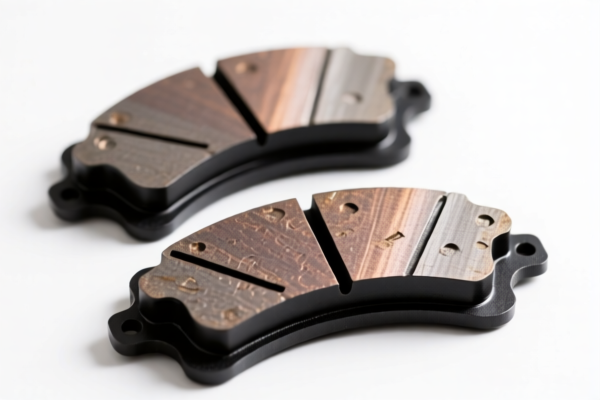
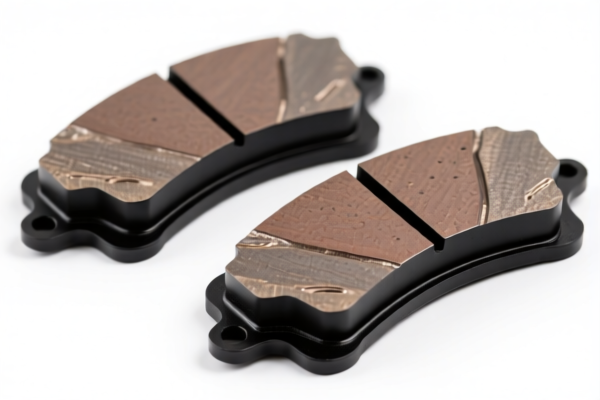
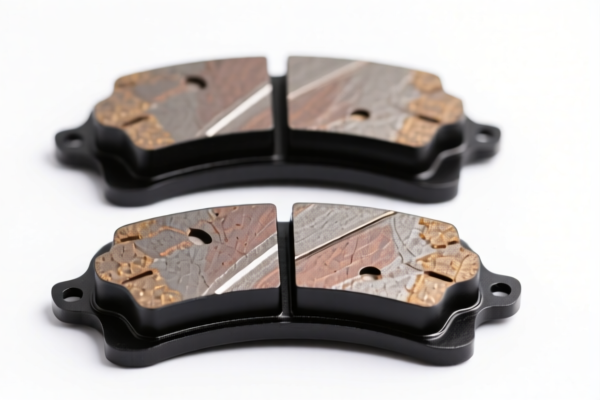
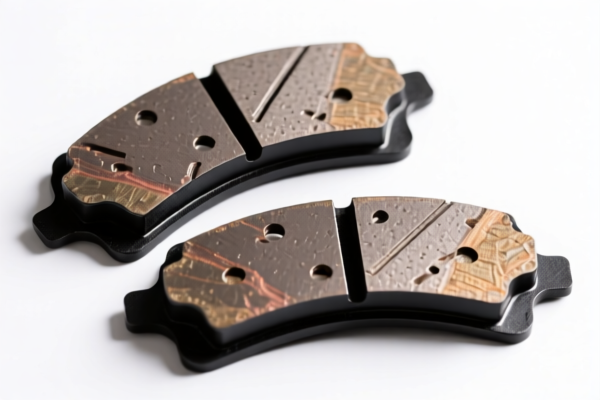
AI Analysis
🛑 Disc Brake Pads/Rotors (Automotive Brake Discs)
🌐 HS Code Reference & Customs Clearance Guide | 2026 Latest Tariff Analysis | Professional Clearance Strategy
📌 I. Product Definition & Classification: Do You Truly Understand "Brake Discs"?
A Disc Brake (specifically the brake rotor/disc component) is a critical safety component in modern automotive braking systems. In international trade, classification is highly sensitive to material composition, specific vehicle application, and functional specificity. Misclassification here can lead to severe tariff penalties due to specific trade wars (Section 232) and retaliatory measures (Section 301/IEEPA).
⚠️ Key Classification Logic:
- If the brake disc is made of steel/iron and is a general mechanical part → Likely Chapter 73 (Articles of Iron/Steel).
- If the brake disc is specifically identifiable as a part of a motor vehicle → Likely Chapter 87 (Vehicles).
- The material and specificity determine whether you face the heavy "Steel/Aluminum/ Copper" penalties or standard auto-part rates.
📦 II. HS Code Classification Details (2026 Latest Tariff Authority Mapping)
Based on the provided data, here are the four most probable HS Codes for Brake Discs, ranging from material-based to vehicle-part-based classifications.
| HS Code | Product Description | Application Logic | Material/Type |
|---|---|---|---|
7326.90.25.00 |
Steel Articles, Other | General steel制品; brake disc inferred as steel based on utility | Steel/Heavy Penalty |
8708.30.50.30 |
Parts of Braking Systems | Direct match for "Brake Rotors/Disks"; specific automotive part | Auto Part (Lower Base) |
8708.99.53.00 |
Other Parts of Motor Vehicles | "Other" category for auto parts; default metal part preference | Auto Part (Zero Base) |
8483.50.60.00 |
Flywheels & Pulleys | Mechanical component logic; "Disc" shape matches flywheels | Mechanical Part |
7326.90.86.88 |
Other Articles of Iron/Steel | Fallback/General category for iron/steel mechanical parts | Iron/Steel (High Penalty) |
🔍 Critical Note:
-8708.30.50.30is the most precise classification for brake discs because it specifically addresses "Braking Systems."
-7326.90.25.00and7326.90.86.88carry massive penalties due to Section 232 (Steel/Aluminum) duties. Avoid these unless the product is clearly NOT a vehicle part (e.g., industrial machinery).
💰 III. 2026 Latest Tariff Rate Breakdown (Including Surtaxes, Policy Surcharges)
✅ Applicable Country: United States (US)
✅ Origin: China (CN)
✅ Effective Date: Current trade war policies (Section 301, IEEPA, Section 232)
🎯 1. 8708.30.50.30 — Parts of Braking Systems (Most Recommended)
This is the preferred classification for automotive brake discs due to lower base rates, though surtaxes still apply.
| Item | Content |
|---|---|
| Base Tariff | 2.5% |
| Section 301 Surcharge | +25.0% (Retaliatory Tariff) |
| Section 232 / IEEPA Surcharge | +10.0% (122 Clause Tariff) |
| Total Tariff Rate | 37.5% |
| Tax Calculation | CIF Value × 37.5% |
| De Minimis Exemption | ❌ Not Applicable |
| Legal Basis Path | USITC:8708.30.50.30 → Section301:8708.30.50.30 → IEEPA:9903.01.24 |
📌 Explanation:
- While the base rate is low (2.5%), the 25% Section 301 and 10% IEEPA surcharges make the total effective rate nearly 37.5%.
- Advantage: It avoids the additional 50% Steel/Aluminum surcharge that applies to general steel articles.
🎯 2. 8708.99.53.00 — Other Parts of Motor Vehicles
A fallback for auto parts if 8708.30 is rejected by customs for specific reason.
| Item | Content |
|---|---|
| Base Tariff | 0.0% |
| Section 301 Surcharge | +25.0% |
| Section 232 / IEEPA Surcharge | +10.0% |
| Total Tariff Rate | 35.0% |
| Tax Calculation | CIF Value × 35.0% |
| De Minimis Exemption | ❌ Not Applicable |
| Legal Basis Path | USITC:8708.99.53.00 → Section301:8708.99.53.00 → IEEPA:9903.01.24 |
📌 Note:
- Lower total tax than8708.30(35% vs 37.5%) because the base is 0%.
- Risk: Customs may reclassify to8708.30if they deem the part "specifically for braking."
🎯 3. 7326.90.25.00 — Steel Articles, Other (HIGH RISK)
⚠️ WARNING: This classification triggers Section 232 Steel Tariffs.
| Item | Content |
|---|---|
| Base Tariff | 0.0% |
| Section 301 Surcharge | +25.0% |
| Section 232 Steel Surcharge | +50.0% (Specific to Steel/Al/Cu) |
| IEEPA Surcharge | +10.0% |
| Total Tariff Rate | 85.0% |
| Tax Calculation | CIF Value × 85.0% |
| De Minimis Exemption | ❌ Not Applicable |
| Legal Basis Path | USITC:7326.90.25.00 → Section232:Steel → Section301 → IEEPA |
📌 Explanation:
- DO NOT USE unless the brake disc is for non-automotive industrial machinery AND customs explicitly agrees it is not a vehicle part.
- The 50% Section 232 penalty makes this nearly prohibitive for auto parts.
🎯 4. 7326.90.86.88 — Other Articles of Iron/Steel (HIGH RISK)
Another material-based fallback with heavy penalties.
| Item | Content |
|---|---|
| Base Tariff | 2.9% |
| Section 301 Surcharge | +25.0% |
| Section 232 Steel Surcharge | +50.0% |
| IEEPA Surcharge | +10.0% |
| Total Tariff Rate | 87.9% |
| Tax Calculation | CIF Value × 87.9% |
| De Minimis Exemption | ❌ Not Applicable |
| Legal Basis Path | USITC:7326.90.86.88 → Section232:Steel → Section301 → IEEPA |
📌 Note:
- Highest tax burden in the dataset.
- Only applicable if the product is generic steel hardware with no automotive identity.
🎯 5. 8483.50.60.00 — Flywheels & Pulleys (Mechanical Parts)
A niche classification based on shape ("disc").
| Item | Content |
|---|---|
| Base Tariff | 2.8% |
| Section 301 Surcharge | +25.0% |
| IEEPA Surcharge | +10.0% |
| Total Tariff Rate | 37.8% |
| Tax Calculation | CIF Value × 37.8% |
| De Minimis Exemption | ❌ Not Applicable |
📌 Note:
- Risky classification. Customs may reject this if the item is clearly a brake disc, as Chapter 84 covers machinery parts, but Chapter 87 is lex specialis (specific law) for vehicles.
🛠️ IV. Customs Clearance Practical Advice (Real-World Pitfall Avoidance)
✅ 1. Essential Documentation Checklist
| Document | Mandatory? | Description |
|---|---|---|
| ✅ Product Specification Sheet | ✔️ | Must clearly state "Automotive Brake Disc Rotor" or "Brake Component." |
| ✅ Part Number (OE Number) | ✔️ | Link to specific vehicle models (e.g., "Fits Toyota Camry 2020"). This proves automotive use. |
| ✅ Material Certificate | ✔️ | Confirm steel grade. If it's cast iron vs. steel, it matters for Chapter 73 vs 87. |
| ✅ Commercial Invoice | ✔️ | Description: "Brake Disc, Steel, For Automotive Use, HS 8708.30.50.30." |
| ✅ Packing List | ✔️ | Clear quantification. |
| ✅ Proof of Non-Assembly | ✔️ | If shipped separately, ensure it's not considered an "Assembled Vehicle Part" which might have different rules. |
✅ 2. Declaration Strategy (Key Mantras)
🔥 "Specify Automotive, Avoid General Steel, Cite OE Number!"
| Scenario | Correct Declaration | Incorrect Declaration |
|---|---|---|
| Brake Disc for Car | 8708.30.50.30 - "Automotive Brake Disc" |
7326.90.25.00 - "Steel Part" → Triggers 50% Penalty! |
| Brake Disc for Industrial Machine | 7326.90.25.00 - "Industrial Steel Component" |
8708.30.50.30 - "Car Part" → Misdeclaration Risk |
| Brake Pad + Disc Kit | Declare as separate components if possible, or as "Brake System Parts" | Mix components arbitrarily → Valuation Issues |
✅ 3. Special Case Handling
| Situation | Handling Advice |
|---|---|
| Ceramic/Carbon Brake Discs | If not steel/iron, they may fall under Chapter 85 or Chapter 84. Do NOT use Chapter 73 codes. |
| OEM Replacement Parts | Provide the OEM number to prove it is a direct replacement for a vehicle part, supporting Chapter 87 classification. |
| Unassembled vs. Assembled | Brake discs are usually standalone. Ensure they are not packaged with calipers/pads in a way that suggests a "complete system" requiring different subheadings. |
| Section 232 Exemption | If you must use Chapter 73, check if your steel supplier has an exemption certificate. Rarely applicable for final automotive parts. |
🌍 V. Global Market Comparison (2026 Latest)
| Country/Region | Recommended HS Code | Tariff Rate (China Origin) | Key Certification | Notes |
|---|---|---|---|---|
| 🇺🇸 USA | 8708.30.50.30 |
~37.5% (High) | DOT (Safety), ISO 9001 | High Section 301 & IEEPA duties. Avoid Chapter 73. |
| 🇨🇳 China | 8708.30.50.30 |
6.5% - 8% | CCC (if applicable), ISO | Lower domestic taxes, but export to US faces high tariffs. |
| 🇪🇺 EU | 8708.30.50.30 |
4.5% (Most Favored Nation) | ECE R90 (Brake Systems) | No Section 301/232. ECE R90 is mandatory for brake parts. |
| 🇲🇽 Mexico | 8708.30.50.30 |
0% - 5% (USMCA eligible) | NOM Safety Standards | If assembled in Mexico/US/Canada, can be USMCA exempt. |
| 🇬🇧 UK | 8708.30.50.30 |
4.5% | ECE R90 | Post-Brexit rules. Similar to EU. |
📌 Conclusion:
- USA: Highest barrier due to trade wars. Precision in HS Code is critical to avoid 85%+ rates.
- EU: Requires ECE R90 certification for brake parts. No trade war tariffs.
- Mexico: Best route for US market if USMCA rules of origin are met.
📌 VI. Common Errors & Pitfall Guide (Blood & Tears Lessons)
❌ Error 1: Classifying automotive brake discs under 7326.90.25.00 (Steel Articles)
👉 Consequence: Triggers 50% Section 232 Steel Tariff + 25% Section 301 + 10% IEEPA = 85% Total Tax.
👉 Result: Loss of profitability, goods held at customs.
❌ Error 2: Missing the OE Part Number on the invoice
👉 Consequence: Customs cannot verify automotive use, may downgrade to general steel or question origin.
👉 Result: Delays, audits, potential reclassification.
❌ Error 3: Assuming "Brake Pads" and "Brake Discs" have the same HS Code
👉 Consequence: Brake pads might fall under 8708.30.10.00 or 8708.30.50.00 (different subheadings). Mixing them causes valuation errors.
👉 Result: Incorrect duty payment, penalties.
❌ Error 4: Using "Flywheel" (8483.50) for a Brake Disc
👉 Consequence: Customs sees it's for a vehicle, rejects Chapter 84, and reclassifies.
👉 Result: Back taxes and fines.
✅ Correct Practice:
"Automotive Brake Disc Rotor, Steel, Cast Iron, OE Number: XXXXXX, Fits: [Make/Model], HS Code: 8708.30.50.30"
🎯 VII. Conclusion: Professional Declaration, Save Cost, Ensure Clearance!
🎯 Remember the Mantra:
🔹 "Auto Parts are Chapter 87, Steel Articles are Chapter 73. Mix them up, and you pay 85%!"
🔹 "OE Number is King, Section 232 is the Enemy!"
📌 Pro Tip:
If you are shipping to the USA, strongly consider pre-clearance rulings or using a bonded warehouse in Mexico (under USMCA) to avoid Section 301 and 232 tariffs entirely.
📣 Immediate Action:
📞 Consult a licensed customs broker
📂 Prepare OE Numbers and Material Certs
🚀 Secure your supply chain, clear customs smoothly, and protect your margins!
✨ Professional clearance starts with precise classification!
💼 Every percentage point of tariff matters!
Customer Reviews
About HS Code Classification
The Harmonized System (HS) is an internationally standardized nomenclature developed by the World Customs Organization (WCO) to classify traded products. Over 200 countries use the HS system as the basis for customs tariffs, trade statistics, and import/export regulations.
Each HS code follows a hierarchical structure:
- Chapter (2 digits) — Broad category of goods (e.g., Chapter 84: Machinery and Mechanical Appliances)
- Heading (4 digits) — More specific grouping within the chapter
- Subheading (6 digits) — Internationally standardized breakdown, used by all WCO member countries
- National subdivisions (8-10 digits) — Country-specific extensions for further classification, such as US HTSUS 10-digit codes
Correct HS code classification is essential for smooth customs clearance, accurate duty payment, and compliance with trade regulations. Misclassification can lead to customs delays, overpayment of duties, or penalties.
When importing from CN to US, the applicable tariff rates may include:
- Most-Favored-Nation (MFN) rate — The standard duty rate applied to WTO members
- General rate — Applied to countries without trade agreements
- Trade remedy duties — Additional tariffs such as Section 301 (anti-dumping), Section 232 (national security), or countervailing duties
The information provided on this page is for reference purposes only. For official classification, please consult with your local customs authority or a licensed customs broker.