Dishwasher Clean Dirty Sign
CN → US| HS Code | Tariff Rate | Origin | Destination | Doc |
|---|---|---|---|---|
| 8310000000 | 35.0% | CN | US | Official Doc |
| 8310000000 | 35.0% | CN | US | Official Doc |
| 3926100000 | 15.3% | CN | US | Official Doc |
| 3926903500 | 16.5% | CN | US | Official Doc |
Product Images
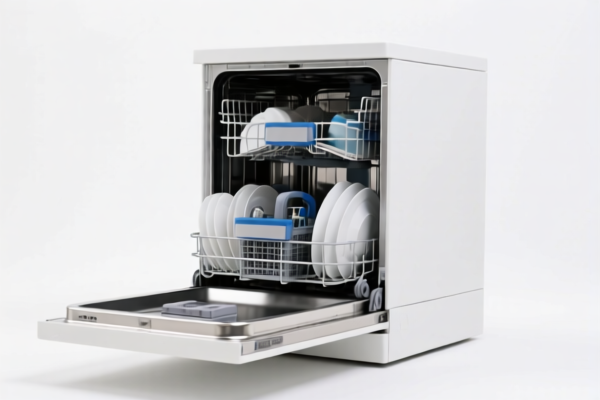
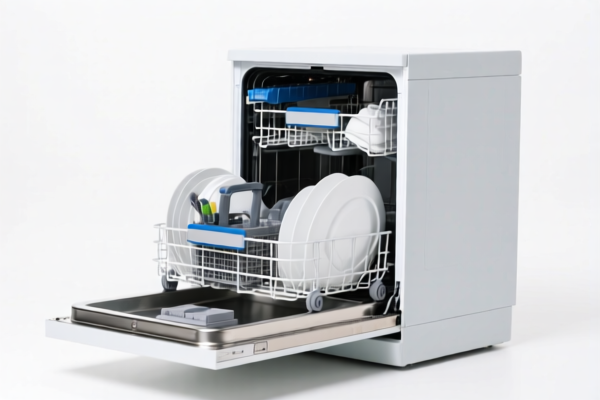
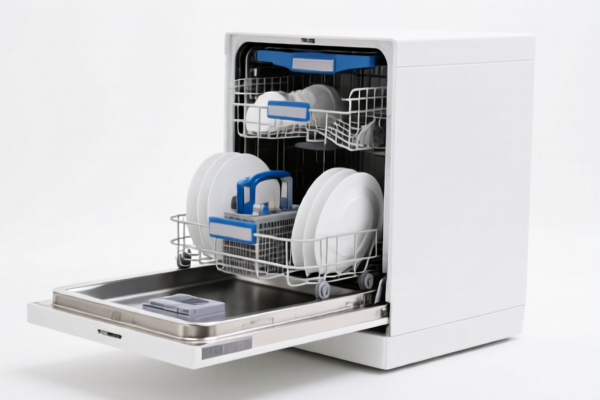

AI Analysis
🧼 Dishwasher "Clean / Dirty" Sign Plates
🌐 HS Code Reference & Customs Clearance Guide | 2026 Latest Tariff Analysis | Professional Clearance Strategy
📌 I. Product Definition & Classification: What Exactly Are These Signs?
"Dishwasher Clean / Dirty" sign plates are functional indicators used in residential and commercial dishwashing facilities. They serve to visually communicate the status of the dishwasher rack or unit to prevent cross-contamination. In international trade, these are classified as articles of base metal, excluding those intended as decorative lighting fixtures or furniture fittings.
Key Distinction: - Functional Sign Plates: Rigid metal plates (often stainless steel, brass, or coated aluminum) with engraved or printed text ("CLEAN", "DIRTY", or arrows). They are mechanical indicators. - Excluded Items: These are not lighting fixtures (Heading 9405) nor plastic articles (Chapter 39). They must be made of base metal (iron, steel, copper, zinc, etc.) to qualify for the correct HS Code in this dataset.
⚠️ Critical Clarification:
- If the product is made of plastic or resin, it falls under Chapter 39 (Plastics), not Chapter 83.
- If the product is an illuminated neon sign or integrated into a light fixture, it may fall under Heading 9405.
- For this guide, we strictly analyze base metal sign plates as per the provided data.
📦 II. HS Code Classification Details (Based on Provided Data)
| HS Code | Product Description | Material | Key Characteristics |
|---|---|---|---|
8310.00.00.00 |
Sign plates, name plates, address plates and similar plates, numbers, letters and other symbols, and parts thereof, of base metal, excluding those of heading 9405. | Base Metal (Steel, Iron, Aluminum, etc.) | Rigid, functional, non-illuminated, attached to machinery or cabinets. |
3926.10.00.00 |
Other articles of plastics and articles of other materials of headings 3901 to 3914: Office or school supplies. | Plastics | Plastic signs, labels, or holders (if applicable). |
3926.90.35.00 |
Other articles of plastics and articles of other materials of headings 3901 to 3914: Other: Beads, bugles and spangles, not strung... Other. | Plastics | Small plastic decorative elements or non-functional plastic parts. |
🔍 Focus for "Clean/Dirty" Signs:
The primary applicable HS Code for standard metal dishwasher signs is8310.00.00.00.
Plastic alternatives would fall under3926.10.00.00(if considered general plastic articles) or potentially3926.90.35.00depending on specific shape and use, but3926.10.00.00is more appropriate for generic plastic utility items.
💰 III. 2026 Latest Tariff Rate Breakdown
✅ Applicable Country: United States (US)
✅ Origin: China (CN)
✅ Effective Date: Current rates as per provided data
🎯 1. 8310.00.00.00 —— Base Metal Sign Plates
| Item | Details |
|---|---|
| Base Tariff | 0.0% |
| Additional Tariff (Section 301) | +25.0% |
| Total Tax Rate | 25.0% |
| Tax Calculation | CIF Value × 25% |
| De Minimis Exemption | ❌ Not Eligible (High tariff rate exceeds de minimis thresholds for duty-free entry) |
| Legal Basis | USITC HTSUS 8310.00.00.00 + Section 301 Additional Duties |
📌 Explanation:
- Although the base duty is 0%, the 25% Section 301 tariff applies to most goods from China. - This is a high-cost import category. Sellers must factor this into pricing. - The product is explicitly excluded from Heading 9405 (lighting), so it cannot claim any potential lower rates for decorative lighting.
🎯 2. 3926.10.00.00 —— Plastic Office/School Supplies (Plastic Signs)
| Item | Details |
|---|---|
| Base Tariff | 0.0% |
| Additional Tariff | 0.0% |
| Total Tax Rate | 0.0% |
| Tax Calculation | No duty |
| De Minimis Exemption | ✅ Eligible (Subject to general de minimis rules, e.g., $800 for de minimis entry) |
| Legal Basis | USITC HTSUS 3926.10.00.00 |
📌 Explanation:
- If the sign is made of plastic, it may qualify for 0% duty under specific "office supplies" or general plastic articles provisions. - Warning: Customs may scrutinize this classification. If the plastic item is clearly a "sign plate" rather than an "office supply," they may reclassify it to 3926.90.35.00 or even 8310.00.00.00 (if they deem it functionally equivalent to a metal sign). - Risk: Misclassification from 0% to 25% results in significant back duties and penalties.
🛠️ IV. Customs Clearance Practical Advice
✅ 1. Documentation Checklist
| Document | Required | Purpose |
|---|---|---|
| Commercial Invoice | ✔️ | Clearly state "Dishwasher Status Sign Plate, Base Metal/Plastic" |
| Product Photographs | ✔️ | Show material texture, engraving/printing, and mounting method |
| Material Specification Sheet | ✔️ | Confirm composition: e.g., "Stainless Steel 304" or "ABS Plastic" |
| Function Description | ✔️ | Explain it is a non-electrical, mechanical indicator |
| Packing List | ✔️ | List quantities and weights accurately |
✅ 2. Classification Strategy & Pitfalls
| Scenario | Recommended HS Code | Risk |
|---|---|---|
| Metal Sign (Stainless/Steel) | 8310.00.00.00 |
High Duty (25%). Must pay full Section 301. |
| Plastic Sign (Single Color) | 3926.10.00.00 |
Low Risk, 0% Duty. Ensure it is not deemed a "plastic sign plate" under other rules. |
| Plastic Sign (Complex/Decorative) | 3926.90.35.00 |
Low Duty (0%). But may be challenged as a "sign." |
| Illuminated Sign | 9405.42.00.00 |
Not in Dataset. Would have different rates (possibly 0% base, but check 301 applicability). |
🔥 Golden Rule:
"Material Dictates Code, Function Dictates Subheading."
- If it’s metal → 8310 (25% tax).
- If it’s plastic → 3926 (0% tax).
- Never mislabel metal as plastic to save duty. Customs inspections (X-ray, material test) will catch this.
✅ 3. Special Considerations
- OEM/Custom Labels: If the sign includes custom branding, ensure the invoice reflects "Trade Name" or "Model" to avoid generic description disputes.
- Sets: If sold as a "Clean/Dirty Kit" (2 plates + magnets/adhesive), declare the entire set under the primary material (usually metal).
- De Minimis: For shipments under $800, plastic signs (
3926) can enter duty-free. Metal signs (8310) still incur 25% duty unless eligible for de minimis if the total duty is under $2000 (but 25% of $800 is $200, which is under the $2000 exemption threshold, so metal signs may also enter de minimis duty-free if total value < $800).⚠️ Correction: Under US de minimis (Section 321), de minimis entry allows goods up to $800 to enter duty-free unless they are subject to certain restrictions. Section 301 duties may apply to de minimis shipments if declared. Best Practice: Treat 25% as unavoidable for metal signs in large shipments.
🌍 V. Global Market Comparison (2026)
| Country | HS Code | Duty Rate | Notes |
|---|---|---|---|
| 🇺🇸 USA | 8310.00.00.00 |
25% | Section 301 applies. |
| 🇺🇸 USA | 3926.10.00.00 |
0% | Plastic alternative is tax-efficient. |
| 🇪🇺 EU | 8310.00.00 | ~0-2% | No 301-equivalent tax. VAT applies. |
| 🇨🇳 China | 8310.00 | 0% | Imports of signs from US/EU. |
| 🇨🇦 Canada | 8310.00 | 0% | Under CUSMA, most US goods are duty-free. |
📌 Conclusion:
- The US market is the most expensive for metal signs due to the 25% tariff. - Plastic alternatives offer a tax-efficient solution for the US market (0% duty).
📌 VI. Common Errors & Avoidance Guide
❌ Error 1: Misclassifying metal signs as plastic to avoid 25% duty.
👉 Consequence: Customs seizure, back duties + 25% penalty.
❌ Error 2: Declaring as "Decorative Art" to claim lower rates.
👉 Consequence: Rejected under Heading 9701/9703; forced to pay 25%.
❌ Error 3: Ignoring Section 301 applicability to de minimis shipments.
👉 Consequence: Unexpected duty charges on small parcels.
✅ Correct Approach:
Declare accurately: "Stainless Steel Dishwasher Status Indicator Plate, Non-Illuminated."
Or: "ABS Plastic Clean/Dirty Sign for Dishwasher."
🎯 VII. Conclusion: Smart Sourcing for Cost Efficiency
🎯 Key Takeaway:
🔹 Metal Signs = 25% Duty (High Cost)
🔹 Plastic Signs = 0% Duty (Cost-Efficient)
🔹 Verify Material Composition before shipment.
📌 Pro Tip:
If you are importing large volumes to the US, consider switching to high-quality plastic or acrylic signs to eliminate the 25% tariff burden. Ensure the material is explicitly stated as "Plastic" or "Acrylic" on the invoice and product labeling.
📣 Immediate Action:
📞 Consult with a customs broker to confirm if your specific plastic sign qualifies for
3926.10.00.00or3926.90.35.00.
🚀 Optimize your supply chain by choosing the right material for the right market!
✨ Precise Classification, Maximum Profit!
💼 Don’t let 25% tariffs clean out your margins!
Customer Reviews
About HS Code Classification
The Harmonized System (HS) is an internationally standardized nomenclature developed by the World Customs Organization (WCO) to classify traded products. Over 200 countries use the HS system as the basis for customs tariffs, trade statistics, and import/export regulations.
Each HS code follows a hierarchical structure:
- Chapter (2 digits) — Broad category of goods (e.g., Chapter 84: Machinery and Mechanical Appliances)
- Heading (4 digits) — More specific grouping within the chapter
- Subheading (6 digits) — Internationally standardized breakdown, used by all WCO member countries
- National subdivisions (8-10 digits) — Country-specific extensions for further classification, such as US HTSUS 10-digit codes
Correct HS code classification is essential for smooth customs clearance, accurate duty payment, and compliance with trade regulations. Misclassification can lead to customs delays, overpayment of duties, or penalties.
When importing from CN to US, the applicable tariff rates may include:
- Most-Favored-Nation (MFN) rate — The standard duty rate applied to WTO members
- General rate — Applied to countries without trade agreements
- Trade remedy duties — Additional tariffs such as Section 301 (anti-dumping), Section 232 (national security), or countervailing duties
The information provided on this page is for reference purposes only. For official classification, please consult with your local customs authority or a licensed customs broker.