Disinfectant Product Shell
CN → US| HS Code | Tariff Rate | Origin | Destination | Doc |
|---|---|---|---|---|
| 3402905010 | 38.7% | CN | US | Official Doc |
| 3402905030 | 38.7% | CN | US | Official Doc |
| 3808594000 | 40.0% | CN | US | Official Doc |
| 3808941000 | 41.5% | CN | US | Official Doc |
Product Images
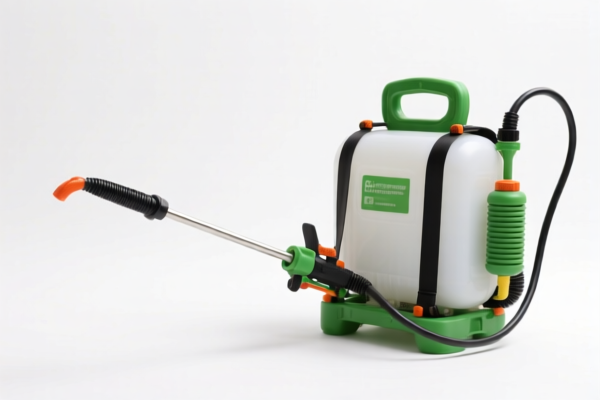
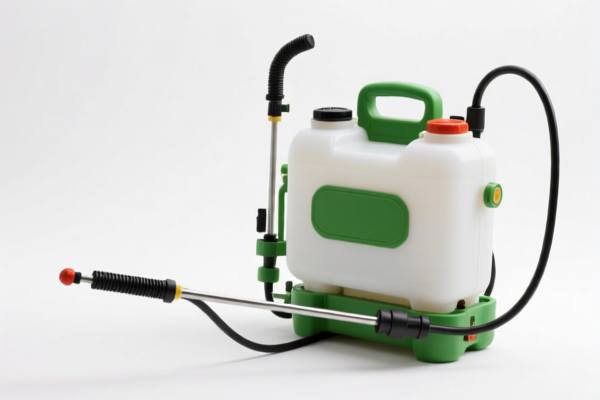
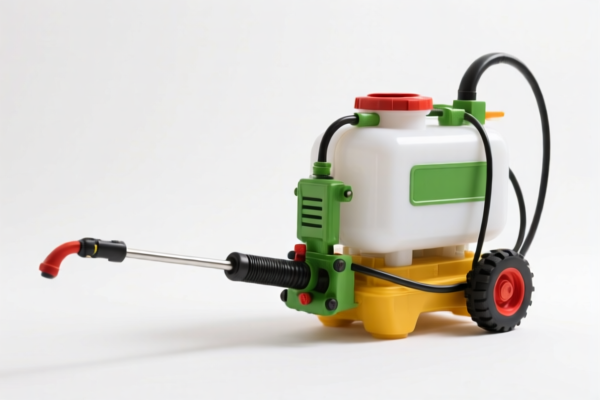

AI Analysis
🧴 Surface Disinfectant (Disinfectant Product Shell)
🌐 HS Code Reference & Customs Clearance Guide | 2026 Latest Tariff Analysis | Professional Clearance Strategy
📌 I. Product Definition & Classification: What Exactly is a "Surface Disinfectant"?
A Surface Disinfectant is a liquid chemical preparation designed to destroy or inhibit the growth of harmful microorganisms on inanimate objects and surfaces. In international trade, its classification hinges on two critical factors:
1. Primary Function: Is it primarily for cleaning/washing (surfactants) or killing pathogens (disinfectants)?
2. Chemical Composition: Does it contain significant active antimicrobial agents, or is it mainly a detergent with cleaning properties?
⚠️ Key Distinction:
- If the product is primarily a detergent/cleaning agent with some surface-active ingredients → Often classified under Chapter 34.
- If the product is primarily a biocide/germicide (disinfectant) → Often classified under Chapter 38.
📦 II. HS Code Classification Details (2026 Latest Tariff Authoritative Comparison)
| HS Code | Product Description | Applicable Scenario | Key Characteristic |
|---|---|---|---|
3402.90.50.10 |
Surface disinfectant, chemical preparation, contains surfactants, fits detergent category | Cleaning agents with some disinfectant properties, or "sanitizing" detergents | ✅ Surfactant-based (Cleaning focus) |
3402.90.50.30 |
Surface disinfectant, used for disinfection, inferred as liquid chemical preparation | Liquid chemical agents primarily for cleaning, with disinfectant claims | ✅ Liquid Chemical (Cleaning focus) |
3808.59.40.00 |
Surface disinfectant, name corresponds to "disinfectant", form is liquid preparation | Dedicated disinfectants, liquid form, clear antimicrobial purpose | ✅ Disinfectant (Killing focus) |
3808.94.10.00 |
Surface disinfectant, used for disinfection, inferred as disinfectant category, no material conflict | Other disinfectants not specified elsewhere, broad disinfectant category | ✅ Disinfectant (Killing focus) |
🔍 Key Reminder:
- Chapter 34 (3402.xx): Focuses on washing preparations. If the product is sold as a "cleaner that disinfects" or relies heavily on surfactants for soil removal, it may fall here.
- Chapter 38 (3808.xx): Focuses on disinfectants. If the primary marketed purpose and active ingredients are for killing germs (quaternary ammonium compounds, alcohol-based, etc.), it should be classified here.
- Misclassification Risk: Declaring a strong disinfectant as a detergent (3402) to save taxes is a major customs audit risk. Customs will test for active antimicrobial ingredients.
💰 III. 2026 Latest Tariff Rate Detailed Analysis (Including Surcharges, Policy Add-ons)
✅ Applicable Country: USA (US)
✅ Origin: China (CN)
✅ Effective Date: November 10, 2025 onwards (including subsequent imports)
🎯 1. 3402.90.50.10 —— Surface Disinfectant (Surfactant-based / Detergent Category)
| Item | Detail |
|---|---|
| Base Tariff | 3.7% |
| Section 301 Surcharge | +25.0% |
| Section 122 Tariff | +10.0% |
| Total Tax Rate | 38.7% |
| Tax Calculation | CIF Value × 38.7% |
| De Minimis Eligibility | ❌ No (deny_de_minimis) |
| Legal Basis Path | USITC:3402.90.50.10 → Section 301: Footnote 1 → Section 122: 6205.20 |
📌 Explanation:
- Base Tariff (3.7%): Standard Most Favored Nation (MFN) rate for washing preparations.
- Section 301 (25%): Additional tariff on Chinese goods under the U.S.-China Trade War.
- Section 122 (10%): Additional tariff on specific chemical preparations under U.S. Trade Expansion Act of 1962, Section 122.
- Total 38.7%: High cost. This rate applies if customs accepts the product as a "detergent-like" disinfectant.
🎯 2. 3402.90.50.30 —— Surface Disinfectant (Liquid Chemical Preparation / Cleaning)
| Item | Detail |
|---|---|
| Base Tariff | 3.7% |
| Section 301 Surcharge | +25.0% |
| Section 122 Tariff | +10.0% |
| Total Tax Rate | 38.7% |
| Tax Calculation | CIF Value × 38.7% |
| De Minimis Eligibility | ❌ No (deny_de_minimis) |
| Legal Basis Path | USITC:3402.90.50.30 → Section 301: Footnote 1 → Section 122: 6205.20 |
📌 Note:
- Same tax burden as3402.90.50.10.
- Applicable for liquid chemical cleaning agents with disinfectant claims.
- Critical Point: If the product is primarily a disinfectant, using this code is risky and may lead to reclassification.
🎯 3. 3808.59.40.00 —— Surface Disinfectant (Liquid Disinfectant Preparation)
| Item | Detail |
|---|---|
| Base Tariff | 5.0% |
| Section 301 Surcharge | +25.0% |
| Section 122 Tariff | +10.0% |
| Total Tax Rate | 40.0% |
| Tax Calculation | CIF Value × 40.0% |
| De Minimis Eligibility | ❌ No (deny_de_minimis) |
| Legal Basis Path | USITC:3808.59.40.00 → Section 301: Footnote 1 → Section 122: 6205.20 |
📌 Explanation:
- Base Tariff (5.0%): Standard MFN rate for disinfectants.
- Section 301 (25%): Standard 301 tariff.
- Section 122 (10%): Applies to chemical disinfectants.
- Total 40.0%: Slightly higher base rate than Chapter 34, but reflects the correct functional classification for dedicated disinfectants.
🎯 4. 3808.94.10.00 —— Surface Disinfectant (Other Disinfectants)
| Item | Detail |
|---|---|
| Base Tariff | 6.5% |
| Section 301 Surcharge | +25.0% |
| Section 122 Tariff | +10.0% |
| Total Tax Rate | 41.5% |
| Tax Calculation | CIF Value × 41.5% |
| De Minimis Eligibility | ❌ No (deny_de_minimis) |
| Legal Basis Path | USITC:3808.94.10.00 → Section 301: Footnote 1 → Section 122: 6205.20 |
📌 Note:
- Base Tariff (6.5%): Highest base rate among the options.
- Applicable for disinfectants that do not fit into the specific liquid disinfectant sub-category (3808.59).
- Total 41.5%: The highest total tax rate in the dataset. Use only if the product is a specialized disinfectant not covered by3808.59.
🛠️ IV. Customs Clearance Practical Advice (Battle-Tested Pitfall Avoidance Guide)
✅ 1. Document Checklist (Nothing Missing)
| Document | Required | Explanation |
|---|---|---|
| ✅ Product Specification Sheet | ✔️ | Must list active ingredients, concentration, pH, and intended use. |
| ✅ EPA Registration Number (if US market) | ✔️ | CRITICAL: If sold as a disinfectant in the US, it must be EPA-registered. Provide the EPA Control Number. |
| ✅ Certificate of Analysis (COA) | ✔️ | Proof of chemical composition and active ingredient levels. |
| ✅ MSDS/SDS | ✔️ | Safety Data Sheet. Must classify as hazardous or non-hazardous correctly. |
| ✅ Commercial Invoice | ✔️ | Clearly state "Surface Disinfectant, Liquid, for Disinfection" or "Cleaning Agent with Disinfectant Properties". |
| ✅ Bill of Lading | ✔️ | Ensure no conflicting descriptions. |
| ✅ Label Photos | ✔️ | Show front and back labels with ingredient lists and warning statements. |
✅ 2. Declaration Tips (Key Mantra)
🔥 “Function First, Ingredients Clear, EPA Number Present, Avoid Audit Fear!”
| Scenario | Correct Declaration | Wrong Practice |
|---|---|---|
| Dedicated Disinfectant (e.g., bleach, quats) | Use 3808.xx codes. List EPA number. |
Declare as "Detergent" (3402) to save taxes → Customs Audit! |
| Cleaning Detergent with Disinfectant Claims | Use 3402.xx codes. Emphasize cleaning function. |
Declare as "Disinfectant" (3808) if cleaning is primary → May trigger unnecessary chemical tests. |
| Unregistered Product | Do NOT import for sale as a disinfectant. | Import without EPA registration → Seizure & Destruction! |
| Mixed Package (Disinfectant + Wipes) | Declare separately or as a kit with main value. | Bundle as one item without breakdown → Customs Complexity. |
✅ 3. Special Case Handling
| Scenario | Handling Advice |
|---|---|
| EPA-Registered Disinfectant | Must provide EPA Control Number. Customs may verify with EPA database. |
| "Natural" or "Essential Oil" Disinfectants | Still subject to EPA regulation if claims are made. May fall under 3808.94 if not specifically listed. |
| Bulk Liquid for Repackaging | Declare as "Chemical Intermediate" if not for direct consumer sale. May avoid some retail restrictions but still subject to tariffs. |
| Non-EPA Claims (e.g., "Sanitizing" for Surfaces only) | If no antimicrobial claims, may qualify for 3402 (detergent). Caution: "Sanitize" often implies disinfection in US consumer context. |
🌍 V. Global Market Comparison (2026 Latest)
| Country/Region | Recommended HS Code | Tariff Rate | Certification Requirement | Notes |
|---|---|---|---|---|
| 🇺🇸 USA | 3808.59.40.00 (Disinfectant) |
40.0% | EPA Registration Mandatory | High tariff, strict enforcement. |
| 🇨🇳 China | 3808.59.40.00 |
~5% - 10% | No special import license for general use | Lower tariffs, but domestic production dominates. |
| 🇪🇺 EU | 3808.59.40.00 (Biocides) |
0% - 5% | BPR Registration Required | EU Biocidal Products Regulation (BPR) is strict. |
| 🇬🇧 UK | 3808.59.40.00 (Biocides) |
0% - 5% | UK Biocidal Products Regulation | Post-Brexit rules apply. |
| 🇦🇺 Australia | 3808.59.40.00 (GHS) |
5% | AICIS Registration | Australian Industrial Chemicals Introduction Scheme. |
📌 Conclusion:
- USA is the most complex market due to EPA requirements and high Section 122 + 301 tariffs.
- EU/UK require Biocidal Product Regulations (BPR) compliance, which is often harder than customs clearance.
- Tariff Cost: USA is significantly more expensive due to combined tariffs.
📌 VI. Common Mistakes & Pitfall Guide (Lessons Learned)
❌ Mistake 1: Declaring a strong disinfectant as a "Detergent" (3402) to avoid higher base tariff.
👉 Consequence: Customs laboratory test reveals high antimicrobial content → Reclassification to 3808 + Penalties + Back Taxes!
❌ Mistake 2: Failing to provide EPA Registration Number for US-bound disinfectants.
👉 Consequence: Shipment Seizure by FDA/Customs. Product destroyed or returned.
❌ Mistake 3: Ignoring Section 122 Tariff in cost calculations.
👉 Consequence: Underestimating landed cost by 10% → Profit Margin Erosion!
❌ Mistake 4: Using vague descriptions like "Cleaning Solution".
👉 Consequence: Customs requests clarification → Clearance Delay (Days to Weeks).
✅ Correct Practice:
"Surface Disinfectant, Liquid, Quaternary Ammonium Compound, EPA Reg. No. 12345-67, for Hospital Use, Not for Human Skin"
🎯 VII. Conclusion: Precise Classification, Smooth Clearance, Cost Control!
🎯 Remember the Mantra:
🔹 "Function Dictates Code, EPA is King in the US, Section 122 Adds 10%, Don't Guess!"
🔹 "Disinfectant is3808, Detergent is3402, Mix them up and Pay the Price!"
📌 Pro Tip:
- If your product is primarily a cleaner with mild disinfectant properties, consider arguing for 3402 classification, but be prepared to provide lab tests proving low active biocide content.
- If your product is primarily a disinfectant, use 3808 codes. The 1.3% - 2.8% base tariff difference is negligible compared to the risk of misclassification.
- Always check EPA status before shipping to the US.
📣 Immediate Action:
📞 Contact a Licensed Customs Broker + Provide EPA Registration + Verify Active Ingredients
🚀 Ensure Your Surface Disinfectant Clears Customs Smoothly, Avoids Seizures, and Maximizes Profit!
✨ Professional Clearance Starts with Accurate Classification!
💼 Every Percent of Tariff Counts in the Chemical Trade!
Customer Reviews
About HS Code Classification
The Harmonized System (HS) is an internationally standardized nomenclature developed by the World Customs Organization (WCO) to classify traded products. Over 200 countries use the HS system as the basis for customs tariffs, trade statistics, and import/export regulations.
Each HS code follows a hierarchical structure:
- Chapter (2 digits) — Broad category of goods (e.g., Chapter 84: Machinery and Mechanical Appliances)
- Heading (4 digits) — More specific grouping within the chapter
- Subheading (6 digits) — Internationally standardized breakdown, used by all WCO member countries
- National subdivisions (8-10 digits) — Country-specific extensions for further classification, such as US HTSUS 10-digit codes
Correct HS code classification is essential for smooth customs clearance, accurate duty payment, and compliance with trade regulations. Misclassification can lead to customs delays, overpayment of duties, or penalties.
When importing from CN to US, the applicable tariff rates may include:
- Most-Favored-Nation (MFN) rate — The standard duty rate applied to WTO members
- General rate — Applied to countries without trade agreements
- Trade remedy duties — Additional tariffs such as Section 301 (anti-dumping), Section 232 (national security), or countervailing duties
The information provided on this page is for reference purposes only. For official classification, please consult with your local customs authority or a licensed customs broker.