Disinfection Bottle
CN → US| HS Code | Tariff Rate | Origin | Destination | Doc |
|---|---|---|---|---|
| 7010900530 | 35.0% | CN | US | Official Doc |
| 7010900520 | 35.0% | CN | US | Official Doc |
| 8424201000 | 37.9% | CN | US | Official Doc |
| 8424209000 | 35.0% | CN | US | Official Doc |
| 3926909950 | 22.8% | CN | US | Official Doc |
| 3926902100 | 21.7% | CN | US | Official Doc |
Product Images
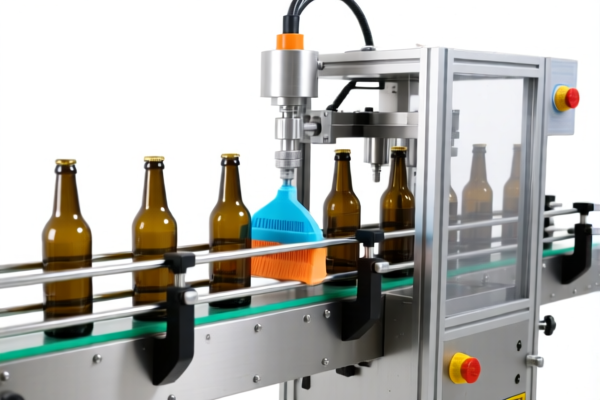
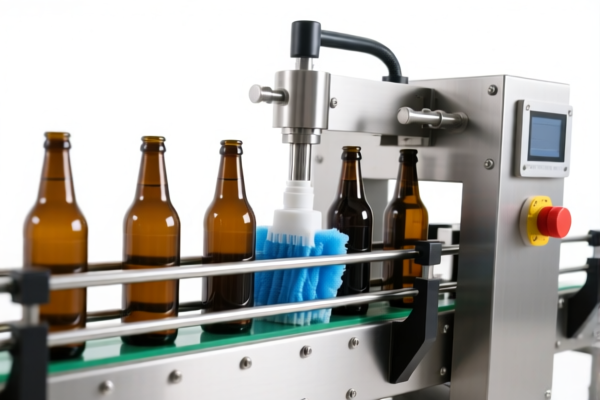
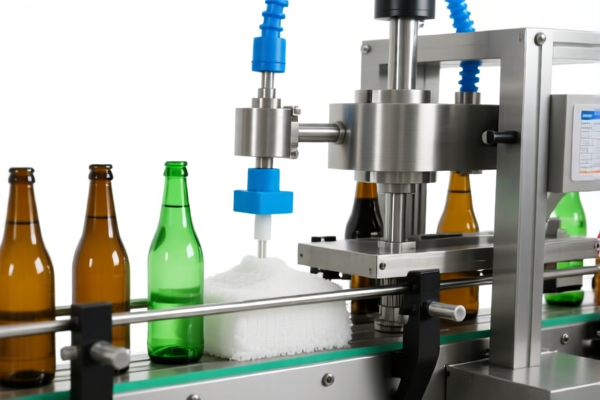
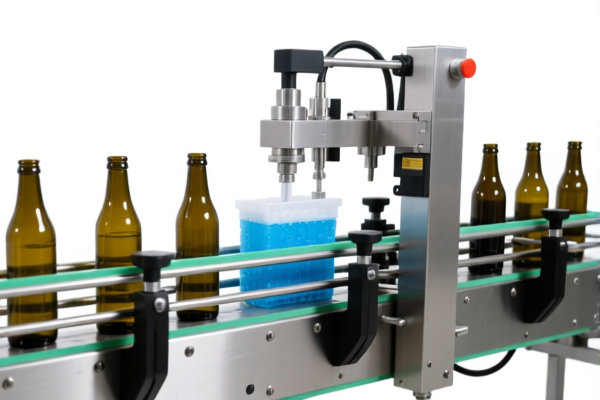
AI Analysis
🧴 Disinfection Bottle & Pharmaceutical Containers: HS Code Masterclass & Customs Clearance Guide
🌐 HS Code Reference & Customs Strategy | 2026 Latest Tariff Analysis | Professional Clearance Protocol
📌 I. Product Definition & Classification: Do You Really Understand "Disinfection Bottle"?
The term "Disinfection Bottle" is ambiguous in international trade. It typically falls into two distinct categories based on material and function:
- Glass Pharmaceutical/Dispensing Containers: Used for storing liquid disinfectants (e.g., alcohol, iodine) or serums. These are strictly classified under Chapter 70 (Glass).
- Plastic Medical/Waste Containers: Used for holding wipes, disinfectant dispensers, or medical waste. These fall under Chapter 39 (Plastics).
⚠️ Critical Distinction Point:
- If the bottle is Glass and used for pharmaceutical/conveyance purposes → Chapter 70
- If the item is a Plastic Dispenser, Shield, or Waste Container → Chapter 39
- Do not mix materials! Misclassification leads to significant tariff discrepancies (0% vs 25%).
📦 II. HS Code Classification Details (2026 Latest Tariff Authority Mapping)
Based on the provided <DATA>, here is the precise breakdown for "Disinfection Bottles" and related containers:
| HS Code | Product Description | Applicable Scenario | Material | Capacity Limit |
|---|---|---|---|---|
7010.90.05.30 |
Serum bottles, vials, and other pharmaceutical containers | Glass bottles for liquid disinfectants or medical serums | Glass | >0.15L but ≤0.33L |
7010.90.05.20 |
Serum bottles, vials, and other pharmaceutical containers | Larger glass bottles for disinfectants or medical use | Glass | >0.33L but ≤1L |
3926.90.99.50 |
Medical waste containers or disinfectant wipes dispensers | Plastic dispensers, shields, or waste bins for disinfection supplies | Plastic | N/A |
3926.90.21.00 |
Douche bags, enema bags, hot water bottles, etc. | Plastic medical bags (not typically for disinfection storage) | Plastic | N/A |
8424.20.10.00 |
Simple piston pump sprays | Hand-operated spray guns for applying disinfectant | Mechanical | N/A |
8424.20.90.00 |
Other spray guns and similar appliances | Mechanical spraying devices (not piston pump) | Mechanical | N/A |
🔍 Key Clarification:
- Glass Bottles: The capacity threshold is critical. 0.33 Liters is the dividing line between...05.30and...05.20.
- Plastic Dispensers: If your product is a plastic bottle with a pump/sprayer specifically designed for dispensing wipes or disinfectant liquid, it may be classified as a "disinfectant wipes dispenser" under3926.90.99.50.
- Sprayers vs. Containers: A "spray gun" (8424.20.x0) is a mechanical appliance, not a container. If the "bottle" includes a mechanical spraying mechanism, it might fall under Chapter 84, but standard dispensing bottles are Chapter 70 or 39.
💰 III. 2026 Latest Tariff Rate Details (US Market Focus)
✅ Applicable Country: United States (US)
✅ Origin: China (CN) (Assumed based on the "Additional Tariff" structure in the data)
✅ Effective Time: Current 2025/2026 Trade Policies
🎯 1. Glass Containers (7010.90.05.x0)
These are high-risk items due to Section 301 tariffs.
| HS Code | Product Description | Base Tariff | Section 301 Additional Tariff | Total Tariff Rate |
|---|---|---|---|---|
7010.90.05.30 |
Glass Serum/Pharm. Containers (0.15L - 0.33L) | 0.0% | 25.0% | 25.0% |
7010.90.05.20 |
Glass Serum/Pharm. Containers (0.33L - 1L) | 0.0% | 25.0% | 25.0% |
📌 Explanation:
- Although the Base Tariff is 0%, the 25% Additional Tariff applies to all glass pharmaceutical containers from China.
- Calculation:CIF Value × 25%
- De Minimis: ❌ Not Eligible for de minimis exemption if aggregated with other subject goods, depending on specific US CBP interpretations of "glass articles" under Section 301. Usually, glass is subject to scrutiny.
🎯 2. Plastic Medical/Dispensing Containers (3926.90.99.50)
These are lower risk regarding Section 301 but have base duties.
| HS Code | Product Description | Base Tariff | Section 301 Additional Tariff | Total Tariff Rate |
|---|---|---|---|---|
3926.90.99.50 |
Plastic Medical Waste Containers / Disinfectant Wipes Dispensers | 5.3% | 0.0% | 5.3% |
📌 Explanation:
- Base Tariff: 5.3% (Ad Valorem)
- Additional Tariff: 0% (This specific subheading is often exempt or not listed in the high-rate Section 301 lists for plastics, unlike general plastics).
- Calculation:CIF Value × 5.3%
- Advantage: Significantly cheaper than glass counterparts if the product fits this description.
🎯 3. Plastic Medical Bags/Fittings (3926.90.21.00)
| HS Code | Product Description | Base Tariff | Section 301 Additional Tariff | Total Tariff Rate |
|---|---|---|---|---|
3926.90.21.00 |
Douche bags, enema bags, hot water bottles, etc. | 4.2% | 7.5% | 11.7% |
📌 Explanation:
- If your "disinfection bottle" is actually a plastic flexible bag (e.g., enema bag, douche bag) used in medical hygiene, it falls here.
- Total Rate: 11.7%.
- Caution: Ensure the product is not misclassified as a "dispenser" (3926.90.99.50) if it is clearly a bag, as the rates differ.
🎯 4. Spray Mechanisms (8424.20.x0)
| HS Code | Product Description | Base Tariff | Section 301 Additional Tariff | Total Tariff Rate |
|---|---|---|---|---|
8424.20.10.00 |
Simple Piston Pump Sprays | 0.0% | 0.0% | 0.0% |
8424.20.90.00 |
Other Spray Guns | 0.0% | 25.0% | 25.0% |
📌 Explanation:
- If the product is a hand-held spray gun for spraying disinfectant powder/liquid, check the mechanism.
- Piston Pump: 0% Total.
- Other Spray Guns: 25% Total.
🛠️ IV. Customs Clearance Practical Advice (Operational Pitfall Guide)
✅ 1. Essential Documentation Checklist
| Document | Required? | Notes |
|---|---|---|
| ✅ Product Specifications | ✔️ | Must clearly state Material (Glass vs. Plastic), Capacity (for glass), and Function (Dispenser vs. Container). |
| ✅ Product Photos | ✔️ | Clear images of the bottle, label, and any spraying mechanism. |
| ✅ Commercial Invoice | ✔️ | Must accurately describe the goods (e.g., "Glass Serum Bottle, 200ml" NOT just "Bottle"). |
| ✅ Certificate of Origin (CO) | ✔️ | Critical for proving origin to apply/exempt tariffs if applicable (though 301 is China-specific). |
| ✅ Third-Party Testing Report | ✔️ | FDA compliance (if for medical use), RoHS, REACH. |
✅ 2. Declaration Strategy (Key Mnemonics)
🔥 "Glass Check Capacity, Plastic Check Function, Spray Check Mechanism!"
| Scenario | Correct HS Code | Incorrect Classification | Consequence |
|---|---|---|---|
| Glass Bottle, 200ml, for Disinfectant | 7010.90.05.30 (25%) |
7010.90.05.20 |
Under-declaration risk if >0.33L, but rate is same (25%). |
| Glass Bottle, 500ml, for Disinfectant | 7010.90.05.20 (25%) |
7010.90.05.30 |
Over-declaration risk. |
| Plastic Pump Dispenser for Wipes | 3926.90.99.50 (5.3%) |
3926.90.21.00 (11.7%) |
Saving 6.4%! Ensure it is a "dispenser," not a "bag." |
| Hand Spray Gun (Piston) | 8424.20.10.00 (0%) |
8424.20.90.00 (25%) |
Saving 25%! Must be "Simple Piston Pump." |
✅ 3. Special Handling Cases
| Situation | Recommendation |
|---|---|
| Product is a "Refillable Glass Bottle" | Declare as 7010.90.05.30/20. Emphasize "Pharmaceutical Container" to avoid classification as general glassware (which may have different duties). |
| Product is a "Plastic Spray Bottle" | If it has a mechanical pump, consider 8424.20.10.00 (0%) if it fits "Simple Piston Pump Sprays." This is a huge tax saving opportunity! |
| Product is a "Disinfectant Wipe Container" | Use 3926.90.99.50 (5.3%). Do not classify as general plastic packaging (3926.90.99.90) which may have higher base rates or different scrutiny. |
🌍 V. Global Market Comparison (2026)
| Market | Recommended HS Code | Est. Tariff (China Origin) | Key Requirement |
|---|---|---|---|
| 🇺🇸 USA | 7010.90.05.30 / 3926.90.99.50 |
25% (Glass) / 5.3% (Plastic) | FDA Registration (if medical), Section 301 Compliance |
| 🇪🇺 EU | 7010.90 / 3926.90 |
~0% - 5% (Most Favourable) | CE Marking, REACH, EPR Packaging Registration |
| 🇨🇳 China | 7010.90 / 3926.90 |
0% - 5% | CCC (if medical device), Business License |
| 🇯🇵 Japan | 7010.90 / 3926.90 |
0% - 3% | PMDA Registration (if medical) |
📌 Conclusion:
- USA is the most expensive market for glass containers due to 25% Section 301 tariffs.
- Plastic Dispensers (3926.90.99.50) offer a cost advantage in the US market (5.3% total) compared to glass.
- Spray Mechanisms (8424.20.10.00) are tax-free in the US if they are simple piston pumps.
📌 VI. Common Errors & Pitfalls (Lessons Learned)
❌ Error 1: Calling a "Glass Spray Bottle" a "Spray Gun"
👉 Result: If it doesn't fit "Simple Piston Pump," it gets 25%. If it does, it's 0%. Be precise!
❌ Error 2: Ignoring Capacity for Glass Bottles
👉 Result: Misdeclaring a 0.4L bottle as 0.2L can lead to fraud allegations or re-classification fines. The 0.33L threshold is strict.
❌ Error 3: Classifying Plastic Dispensers as General Plastic Goods
👉 Result: 3926.90.99.50 (5.3%) is often better than other plastic subheads. Ensure the "Medical/Waste/Dispenser" description is prominent in the invoice.
❌ Error 4: Assuming All Glass is 25%
👉 Result: Base rate is 0%, Additional is 25%. Total is 25%. No hidden base fees, but the additional fee is heavy.
✅ Correct Declaration Example:
"Glass Serum Bottle, Capacity 200ml, for Medical Disinfectant Storage, Not for Reusable Packaging, Origin: China"
🎯 VII. Conclusion: Professional Declaration, Cost Optimization!
🎯 Remember the Mantra:
🔹 "Glass: Check 0.33L Limit, Pay 25%.
🔹 Plastic Dispenser: Pay 5.3%.
🔹 Piston Spray Gun: Pay 0%!"
🔹 "HS Code Determines Duty, Precision Saves Millions!"
📌 Pro Tip:
If your product is a Plastic Spray Bottle, investigate if it qualifies as a "Simple Piston Pump Spray" (8424.20.10.00) to achieve 0% Tariff. This requires a mechanical analysis of the pump. If it is just a squeeze bottle, it stays in Chapter 39.
📣 Immediate Action:
📞 Consult a Customs Broker with your Product Spec Sheet.
📝 Request a Pre-Ruling from CBP if the classification is ambiguous (especially for Spray Mechanisms).
🚀 Optimize Your Supply Chain to use Plastic Dispensers or 0% Spray Mechanisms where possible to reduce costs.
✨ Professional Clearance Starts with Accurate Classification!
💼 Every Percentage Point Matters in International Trade!
Customer Reviews
About HS Code Classification
The Harmonized System (HS) is an internationally standardized nomenclature developed by the World Customs Organization (WCO) to classify traded products. Over 200 countries use the HS system as the basis for customs tariffs, trade statistics, and import/export regulations.
Each HS code follows a hierarchical structure:
- Chapter (2 digits) — Broad category of goods (e.g., Chapter 84: Machinery and Mechanical Appliances)
- Heading (4 digits) — More specific grouping within the chapter
- Subheading (6 digits) — Internationally standardized breakdown, used by all WCO member countries
- National subdivisions (8-10 digits) — Country-specific extensions for further classification, such as US HTSUS 10-digit codes
Correct HS code classification is essential for smooth customs clearance, accurate duty payment, and compliance with trade regulations. Misclassification can lead to customs delays, overpayment of duties, or penalties.
When importing from CN to US, the applicable tariff rates may include:
- Most-Favored-Nation (MFN) rate — The standard duty rate applied to WTO members
- General rate — Applied to countries without trade agreements
- Trade remedy duties — Additional tariffs such as Section 301 (anti-dumping), Section 232 (national security), or countervailing duties
The information provided on this page is for reference purposes only. For official classification, please consult with your local customs authority or a licensed customs broker.