Disposable Coated Paper Gasket
CN → US| HS Code | Tariff Rate | Origin | Destination | Doc |
|---|---|---|---|---|
| 4823906000 | 35.0% | CN | US | Official Doc |
| 3926904510 | 38.5% | CN | US | Official Doc |
| 4823908000 | 35.0% | CN | US | Official Doc |
Product Images
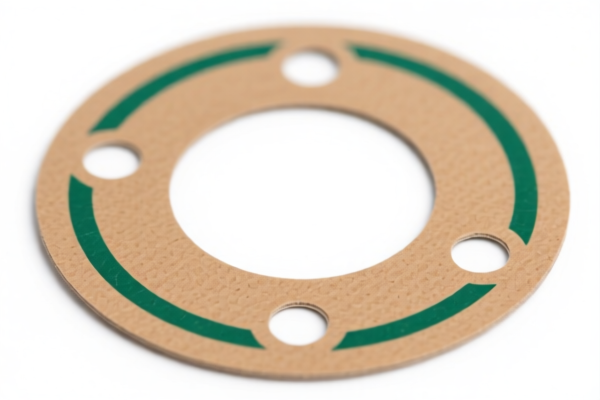
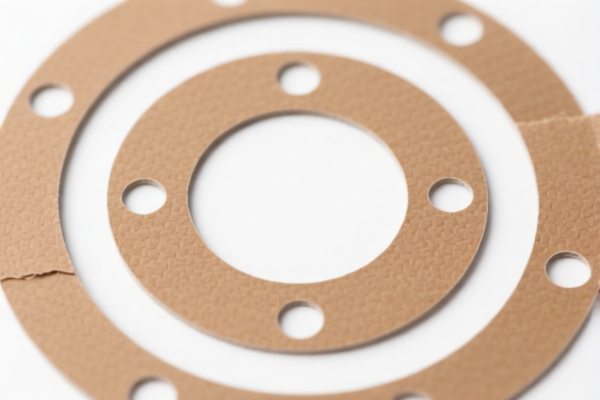
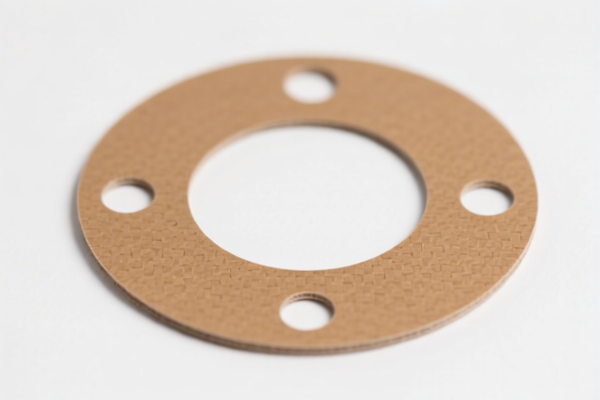
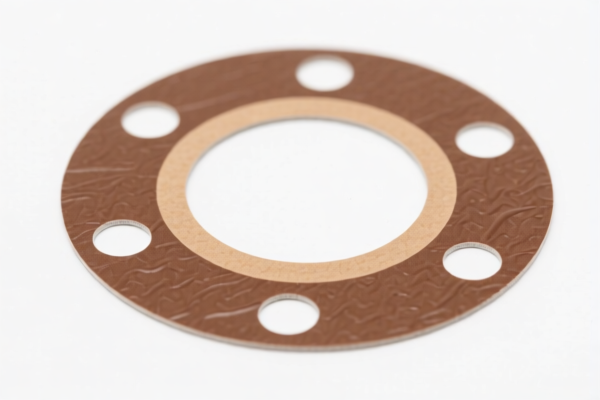
AI Analysis
🏭 Disposable Coated Paper Gaskets (Gaskets)
🌐 HS Code Reference & Customs Clearance Guide | 2026 Latest Tariff Analysis | Professional Compliance Strategy
📌 I. Product Definition & Classification: What are "Coated Paper Gaskets"?
Disposable Coated Paper Gaskets are sealing components primarily composed of paper (cellulose-based material), often treated or coated with rubber, resin, or other polymers to enhance sealing performance, durability, and resistance to fluids (oil, water, etc.).
In international trade, the classification of these gaskets hinges on two critical factors: 1. Material Composition: Is it primarily paper (Chapter 48) or a plastic/rubber composite (Chapter 39/40)? 2. Specific Use/Shape: Does it fit under "Gaskets" specifically, or is it considered a general "Other" article?
⚠️ Key Classification Divergence: - If deemed strictly Paper-based with specific gasket utility → Falls under HS Code 4823 (Paper Articles). - If deemed a Composite/Plastic-based sealing item (due to coating or binding agents) → Falls under HS Code 3926 (Plastic Articles).
📦 II. HS Code Classification Details (2026 Latest Tariff Authority)
| HS Code | Product Description | Application Scenario | Primary Material Determination |
|---|---|---|---|
4823.90.60.00 |
Expanded Paper Gaskets; Material: Paper; Use: Gaskets | General purpose paper gaskets, expanded for sealing | ✅ Paper |
3926.90.45.10 |
Other Sealing Articles (Gaskets); Form: Gasket; Material: Paper judged as Plastic/Composite | Coated paper gaskets where coating binds it to plastic category | ✅ Plastic/Composite |
4823.90.80.00 |
Other Paper Articles; Specifically Gaskets/Washers | Paper gaskets falling under other general paper article categories | ✅ Paper |
🔍 Crucial Distinction: - HS 4823 Series: Classifies items where the paper nature is dominant. "Expanded paper" often implies a specific manufacturing process for sealing. - HS 3926 Series: Classifies items where the sealing function and composite nature (paper + plastic/rubber coating) place it under plastic articles. Customs may judge "coated paper" as a plastic article if the coating alters the essential character.
💰 III. 2026 Latest Tariff Rate Breakdown (Including Surtaxes & Policy Add-ons)
✅ Applicable Country: United States (US)
✅ Origin: China (CN)
✅ Effective Date: Includes subsequent imports post-2025 policies
🎯 1. 4823.90.60.00 & 4823.90.80.00 —— Paper-Based Gaskets
| Item | Content |
|---|---|
| Base Tariff | 0% (ad valorem) |
| Section 301 Surtax | +25% (USITC Footnote) |
| Section 122 Surcharge | +10% (Specific USITC provision for China) |
| Total Tax Rate | 35.0% |
| Tax Calculation | CIF Value × 35% |
| De Minimis Eligibility | ❌ Not Eligible (High risk for small parcels due to high tariff + anti-circumvention laws) |
| Legal Basis Path | Base: 0% → S301: 25% → S122: 10% → Total: 35% |
📌 Explanation: - Base 0%: Paper articles often enjoy low base tariffs. - Section 301 (25%): Standard USITC surtax on Chinese goods. - Section 122 (10%): Specific surtax applied to certain paper/plastic goods from China. - Total 35%: High effective rate. Must be pre-calculated for cost control.
🎯 2. 3926.90.45.10 —— Plastic/Composite Gaskets
| Item | Content |
|---|---|
| Base Tariff | 3.5% (ad valorem) |
| Section 301 Surtax | +25% (USITC Footnote) |
| Section 122 Surcharge | +10% (Specific USITC provision for China) |
| Total Tax Rate | 38.5% |
| Tax Calculation | CIF Value × 38.5% |
| De Minimis Eligibility | ❌ Not Eligible |
| Legal Basis Path | Base: 3.5% → S301: 25% → S122: 10% → Total: 38.5% |
📌 Explanation: - Base 3.5%: Higher base tariff for plastic articles compared to paper. - Section 301 & 122: Same surcharges apply. - Total 38.5%: The highest effective rate among the options. - Risk: If customs judges your "coated paper" as a plastic article, you pay 3.5% more than if classified as pure paper.
🛠️ IV. Customs Clearance Practical Advice (Avoid Pitfalls)
✅ 1. Documentation Checklist (Essential)
| Document | Required | Explanation |
|---|---|---|
| ✅ Product Spec Sheet | ✔️ | Must detail material composition: % Paper vs. % Coating (Rubber/Resin). |
| ✅ Material Breakdown | ✔️ | Critical for HS classification. Is the coating >50% by weight? |
| ✅ Product Photos | ✔️ | Clear images of the gasket, showing texture and cross-section if possible. |
| ✅ Commercial Invoice | ✔️ | Describe as "Paper Gasket" or "Composite Gasket" consistently with HS. |
| ✅ Coating Analysis Report | ✔️ | Third-party lab test proving the nature of the coating (e.g., nitrile rubber, neoprene). |
| ✅ Packing List | ✔️ | Standard weight/volume details. |
✅ 2. Declaration Strategy (Key Mnemonic)
🔥 "Paper Base = 35%, Plastic Judge = 38.5%! Composition is King!"
| Scenario | Correct Declaration | Wrong Practice |
|---|---|---|
| Pure Paper Gasket (No significant plastic binding) | 4823.90.60.00 or 4823.90.80.00 |
Declaring as Plastic → 38.5% |
| Coated Paper Gasket (Coating makes it plastic-like) | 3926.90.45.10 |
Declaring as Paper → Risk of Audit/Downgrading |
| Expanded Paper Gasket (Specific type) | 4823.90.60.00 |
Vague description "Gasket" → Delays |
📌 Critical Note:
- The term "Coated" is ambiguous. If the coating is thin and paper remains the essential character, 4823 is preferred (lower risk, lower base).
- If the coating is thick or rubber-based, customs may enforce 3926.
- Recommendation: Provide a Material Composition Certificate stating the percentage of paper vs. coating to support your chosen HS Code.
✅ 3. Special Handling Tips
| Situation | Advice |
|---|---|
| OEM Custom Gaskets | Provide design drawings showing material layers. |
| Small Parcel (De Minimis) | ❌ Do NOT rely on de minimis. 35-38% taxes often exceed the value of goods, leading to seizure or return. Declare properly. |
| Dispute on Classification | Request an Advance Ruling from US Customs if unsure about "Paper vs. Plastic" status. |
| Origin Marking | Ensure "Made in China" is clearly marked on packaging to avoid origin fraud claims. |
🌍 V. Global Market Comparison (2026)
| Country/Region | Recommended HS Code | Tariff (China Origin) | Notes |
|---|---|---|---|
| 🇺🇸 USA | 4823.90.60.00 |
35.0% | High due to Section 301 & 122 |
| 🇺🇸 USA | 3926.90.45.10 |
38.5% | Highest rate; avoid if possible |
| 🇨🇳 China | 4823.90.60.00 |
5-10% | Lower import tariff for domestic use |
| 🇪🇺 EU | 4823.90 |
0-4% | No Section 301 equivalent; lower barriers |
| 🇬🇧 UK | 4823.90 |
0-4% | Post-Brexit rates similar to EU |
📌 Conclusion: - USA is the most challenging market due to layered surtaxes (Section 301 + 122). - Classification accuracy is vital: A 3.5% difference (35% vs 38.5%) is significant for high-volume shipments. - Paper-based (4823) is always cheaper than Plastic-based (3926) for this product.
📌 VI. Common Mistakes & Pitfalls (Lessons Learned)
❌ Mistake 1: Declaring "Coated Paper" simply as "Gaskets" without HS specificity.
👉 Consequence: Customs will audit and likely assign the highest applicable rate (38.5%) or demand a penalty.
❌ Mistake 2: Ignoring the "Section 122" surcharge.
👉 Consequence: Underestimating landed cost by 10%. Many brokers miss this specific line item.
❌ Mistake 3: Assuming "Paper" always means 0% tariff.
👉 Consequence: Failing to account for 25% + 10% surtaxes. The final cost is 35%, not 0%.
❌ Mistake 4: Using "Plastic Gasket" for a paper-based item to avoid paper-specific regulations.
👉 Consequence: Misdeclaration. If customs tests and finds it's paper, you face fines and potential blacklisting.
✅ Correct Practice:
"Expanded Paper Gasket, 100% Cellulose Base, Nitrile Rubber Coated, For Automotive Use, HS 4823.90.60.00"
🎯 VII. Conclusion: Precision in Classification Saves Money!
🎯 Remember the Key Takeaway:
🔹 "Paper Base = 35% (0% + 25% + 10%)"
🔹 "Plastic Judge = 38.5% (3.5% + 25% + 10%)"
🔹 "Section 122 is the Hidden 10%! Never Forget It!"
📌 Pro Tip:
If your shipment volume is high, apply for an Advance Ruling to lock in the HS Code. If the product can be technically justified as "Paper" (4823), always choose it over "Plastic" (3926) to save 3.5% on the base tariff, though the surtaxes remain.
📣 Immediate Action:
📞 Consult your customs broker with Material Composition Data.
📊 Calculate Landed Cost at 35% vs 38.5% before shipping.
🚀 Avoid costly misclassification penalties by being precise about "Coated Paper."
✨ Smart Customs Clearance, Start with Accurate HS Codes!
💼 Every Percentage Point Counts in Global Trade!
Customer Reviews
About HS Code Classification
The Harmonized System (HS) is an internationally standardized nomenclature developed by the World Customs Organization (WCO) to classify traded products. Over 200 countries use the HS system as the basis for customs tariffs, trade statistics, and import/export regulations.
Each HS code follows a hierarchical structure:
- Chapter (2 digits) — Broad category of goods (e.g., Chapter 84: Machinery and Mechanical Appliances)
- Heading (4 digits) — More specific grouping within the chapter
- Subheading (6 digits) — Internationally standardized breakdown, used by all WCO member countries
- National subdivisions (8-10 digits) — Country-specific extensions for further classification, such as US HTSUS 10-digit codes
Correct HS code classification is essential for smooth customs clearance, accurate duty payment, and compliance with trade regulations. Misclassification can lead to customs delays, overpayment of duties, or penalties.
When importing from CN to US, the applicable tariff rates may include:
- Most-Favored-Nation (MFN) rate — The standard duty rate applied to WTO members
- General rate — Applied to countries without trade agreements
- Trade remedy duties — Additional tariffs such as Section 301 (anti-dumping), Section 232 (national security), or countervailing duties
The information provided on this page is for reference purposes only. For official classification, please consult with your local customs authority or a licensed customs broker.