Disposable Cups
CN → US| HS Code | Tariff Rate | Origin | Destination | Doc |
|---|---|---|---|---|
| 3923300090 | 38.0% | CN | US | Official Doc |
| 4819502000 | 35.0% | CN | US | Official Doc |
| 3924102000 | 24.0% | CN | US | Official Doc |
| 3924104000 | 13.4% | CN | US | Official Doc |
| 4419901100 | 15.3% | CN | US | Official Doc |
Product Images
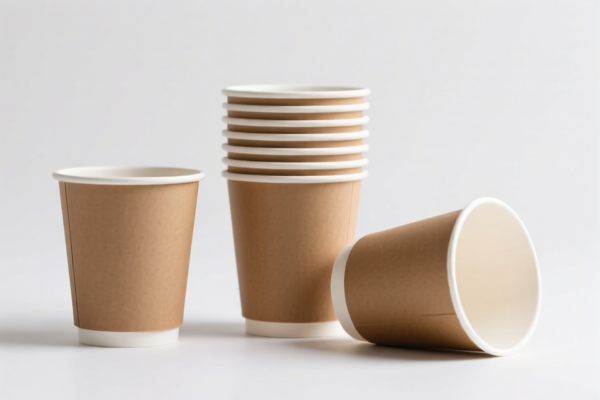
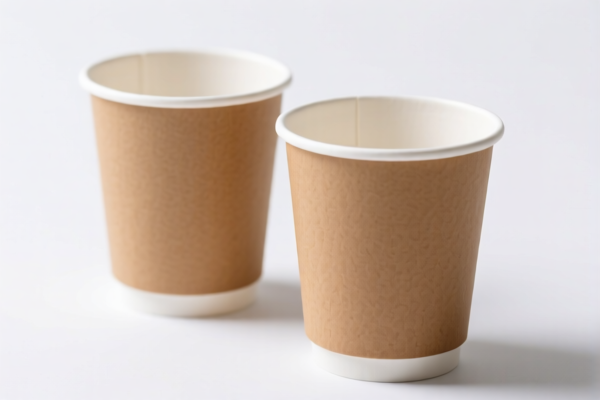
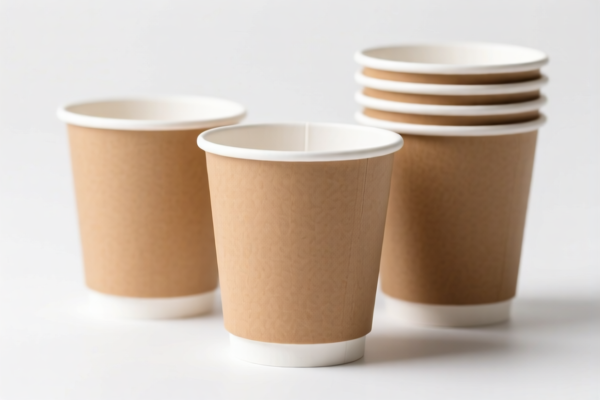
AI Analysis
🥤 Disposable Cups: The Ultimate Guide to HS Code Classification & US Customs Clearance
🌐 HS Code Reference & Customs Strategy | 2024/2025 Latest Tariff Analysis | Professional Compliance Guide
📌 I. Product Definition & Classification: What Exactly Are "Disposable Cups"?
Disposable cups are single-use containers designed for serving beverages. In international trade, they are not a single commodity. Their classification depends entirely on: 1. Material Composition: Plastic, Paper, or Wood? 2. Primary Use: Drinking vessel (Chapter 39/48) vs. Cutlery/Tableware (Chapter 39/44)?
⚠️ Critical Distinction Point:
- Plastic Cups can be classified as "Packaging" (3923.30) OR "Tableware" (3924.10). This choice drastically affects the tariff rate! - Paper Cups are strictly "Paper Containers" (4819.50). - Wooden Cups fall under "Wooden Cutlery" (4419.90).
📦 II. HS Code Classification Matrix (Based on Provided Data)
| HS Code | Material | Classification Description | Key Usage Scenario |
|---|---|---|---|
| 3923.30.00.90 | Plastic | Plastic bottles, jars, flasks, and similar articles (Other) | Large plastic water jugs, bulk plastic containers, Plastic Cups as Packaging/Storage. |
| 4819.50.20.00 | Paper | Paper or paperboard containers and articles (Other) | Standard Paper Cups, paper take-away containers. |
| 3924.10.20.00 | Plastic | Tableware and kitchenware of plastics (Other) | Plastic drinking cups classified explicitly as tableware. |
| 3924.10.40.00 | Plastic | Tableware and kitchenware of plastics (Other) | Plastic cups classified as other household articles (non-tableware specific). |
| 4419.90.11.00 | Wood | Wooden tableware and kitchenware (Other) | Wooden cups, disposable bamboo/plastic-lined wooden drinking vessels. |
🔍 Strategic Insight:
For plastic cups, the choice between 3923.30 (Packaging) and 3924.10 (Tableware) is the most critical decision.
- 3923.30: Often used if the cup is part of a packaging line or considered a "container."
- 3924.10: Used if the cup is marketed specifically as a "drinking vessel" or "tableware."
Note: The provided data shows significantly different tax rates for these two plastic subcategories.
💰 III. Detailed Tariff Rate Breakdown (USA Import from China)
✅ Applicable Country: United States (US)
✅ Origin: China (CN)
✅ Context: Includes Base Duty, Section 301 (25%) Tariff, and Section 122 (10%) Tariff.
🎯 1. 3923.30.00.90 —— Plastic Containers (Other)
| Item | Details |
|---|---|
| Base Duty | 3.0% |
| Section 301 Tariff | +25.0% |
| Section 122 Tariff | +10.0% |
| Total Tax Rate | 38.0% |
| Legal Basis | Base Rate + USITC Footnote 9903.88.01 (301) + IEEPA (122) |
📌 Explanation:
- High tariff burden. This classification is typically used for larger plastic containers or when the cup is deemed a "packaging item" rather than a simple disposable cup.
🎯 2. 4819.50.20.00 —— Paper Containers
| Item | Details |
|---|---|
| Base Duty | 0.0% |
| Section 301 Tariff | +25.0% |
| Section 122 Tariff | +10.0% |
| Total Tax Rate | 35.0% |
| Legal Basis | Base Rate + USITC Footnote 9903.88.01 (301) + IEEPA (122) |
📌 Explanation:
- Base duty is 0%, but the heavy tariffs (25% + 10%) still make it expensive. - Paper cups are generally easier to classify than plastic because there is less ambiguity between "packaging" and "tableware."
🎯 3. 3924.10.20.00 —— Plastic Tableware (Specific)
| Item | Details |
|---|---|
| Base Duty | 6.5% |
| Section 301 Tariff | +7.5% |
| Section 122 Tariff | +10.0% |
| Total Tax Rate | 24.0% |
| Legal Basis | Base Rate + Reduced 301 Rate + IEEPA (122) |
📌 Explanation:
- Significantly lower total tax (24%) compared to other plastic options. - This implies that if you classify plastic cups as "Tableware" under this specific subheading, you may benefit from a reduced Section 301 tariff (7.5% vs 25%). - Strategy: Verify if your specific plastic cups qualify for this "Tableware" classification to save 14% on taxes.
🎯 4. 3924.10.40.00 —— Plastic Household Articles (Other)
| Item | Details |
|---|---|
| Base Duty | 3.4% |
| Section 301 Tariff | 0.0% |
| Section 122 Tariff | +10.0% |
| Total Tax Rate | 13.4% |
| Legal Basis | Base Rate + Exempt from 301 + IEEPA (122) |
| Exemption | Section 301 Tariff Exempted |
📌 Explanation:
- Lowest Tax Rate (13.4%). - This classification exempts the product from the 25% Section 301 tariff. - Warning: This is only valid if the cups are classified as "Other Household Articles" and not as "Tableware" or "Packaging." Misclassification here can lead to severe penalties. - Strategy: This is the most cost-effective option if legally applicable. Ensure your product description supports "Other Household Articles" rather than specific tableware or packaging.
🎯 5. 4419.90.11.00 —— Wooden Tableware
| Item | Details |
|---|---|
| Base Duty | 5.3% |
| Section 301 Tariff | 0.0% |
| Section 122 Tariff | +10.0% |
| Total Tax Rate | 15.3% |
| Legal Basis | Base Rate + Exempt from 301 + IEEPA (122) |
| Exemption | Section 301 Tariff Exempted |
📌 Explanation:
- Very Low Tax Rate (15.3%). - Also exempt from the 25% Section 301 tariff. - Ideal for bamboo or wooden disposable cups. - Strategy: If switching materials is possible, wooden cups offer a highly competitive tax advantage.
🛠️ IV. Customs Clearance Practical Advice
✅ 1. Preparation Checklist (Non-Negotiable)
| Document | Required | Purpose |
|---|---|---|
| Product Specification Sheet | ✔️ | Detail material (e.g., PP, PET, Kraft Paper), dimensions, wall thickness. |
| Product Photos | ✔️ | Clear images of the cup, branding, and any labels. |
| Commercial Invoice | ✔️ | Must explicitly state material and intended use (e.g., "Plastic Drinking Cups"). |
| Packing List | ✔️ | Detail net/gross weight, quantity per carton. |
| Material Declaration | ✔️ | Confirm no restricted substances (BPA-free, FDA compliance if applicable). |
| Origin Certificate | ✔️ | If claiming exemption or preferential treatment (though limited for China). |
✅ 2. Declaration Strategy (Key Mnemonic)
🔥 "Material First, Use Second, 301 Check Last!"
| Scenario | Recommended HS Code | Why? |
|---|---|---|
| Plastic Cups | 3924.10.40.00 |
Lowest tax (13.4%). Exempt from Section 301. Classify as "Other Household Article." |
| Plastic Cups | 3924.10.20.00 |
Mid tax (24.0%). Lower Section 301 (7.5%). Classify as "Tableware." |
| Paper Cups | 4819.50.20.00 |
High tax (35.0%). 301 applies. Standard for paper. |
| Wooden Cups | 4419.90.11.00 |
Low tax (15.3%). Exempt from Section 301. Eco-friendly option. |
| Large Plastic Jugs | 3923.30.00.90 |
Highest tax (38.0%). If classified as packaging/container. Avoid if possible. |
⚠️ Critical Warning:
- Do NOT misclassify plastic cups as3924.10.40.00(Household Article) if they are clearly "Tableware." CBP (Customs and Border Protection) may audit and reassess at3924.10.20.00(24%) or3923.30(38%) + penalties. - Paper cups cannot be classified as plastic. The material must match.
✅ 3. Special Cases
| Situation | Advice |
|---|---|
| Bamboo/Wooden Cups | Ensure no plastic lining is declared as "wood." If lined, CBP may still classify as wood if the primary material is wood. |
| Stacked/Nested Cups | Ensure the description indicates they are "disposable." Non-disposable may fall under different chapters. |
| Custom Printed Cups | The printing does not change the HS code, but include it in the description. |
| FDA Compliance | For food-contact plastics/paper, ensure FDA compliance is documented, even though it doesn't change the tariff. |
🌍 V. Global Market Comparison (2024/2025)
| Market | Recommended HS Code | Est. Tariff (China Origin) | Notes |
|---|---|---|---|
| 🇺🇸 USA | 3924.10.40.00 |
13.4% | Best option for plastic. Exempt from 301. |
| 🇺🇸 USA | 4419.90.11.00 |
15.3% | Best for wooden/bamboo. Exempt from 301. |
| 🇪🇺 EU | Similar Codes | 0% - 6.5% | No Section 301. Standard EU duties. |
| 🇨🇳 China | Similar Codes | 0% - 6% | Import duties from Southeast Asia are low. |
📌 Conclusion:
- USA is the only market with significant Section 301 tariffs. - Strategic Shift: For US-bound plastic cups, aim for3924.10.40.00(13.4%) or3924.10.20.00(24%) instead of3923.30(38%). - Material Alternative: Switching to wooden/bamboo cups (4419.90.11.00) offers a very low 15.3% tax rate and aligns with eco-trends.
📌 VI. Common Mistakes & Pitfalls
❌ Mistake 1: Classifying all plastic cups under 3923.30.00.90.
👉 Result: 38% tax rate. You could have saved 24.6% by using 3924.10.40.00.
❌ Mistake 2: Ignoring Section 122 (10%) Tariff.
👉 Result: All Chinese-origin cups face this 10% tariff. Factor it into your pricing.
❌ Mistake 3: Misclassifying paper cups as plastic.
👉 Result: Customs rejection, fines, and potential seizure.
❌ Mistake 4: Assuming "Disposable" means "Exempt from Tariffs."
👉 Result: No such exemption exists for China-origin goods under current 301/122 rules.
✅ Correct Action:
"PP Plastic Disposable Cups, Clear, 16oz, FDA Compliant, Classified as Other Household Articles (HS 3924.10.40.00)"
🎯 VII. Conclusion: Optimize for Cost & Compliance
🎯 Key Takeaway:
🔹 Plastic Cups: Aim for
3924.10.40.00(13.4%). This is the sweet spot for cost savings.
🔹 Paper Cups: Accept4819.50.20.00(35.0%). No good alternative.
🔹 Wooden Cups: Best for4419.90.11.00(15.3%). Eco-friendly and low tax.
📌 Pro Tip:
📞 Consult a Customs Broker to confirm if your specific plastic cups can legally be classified as
3924.10.40.00(Other Household Articles) rather than Tableware. This single decision can save you 24.6% in tariffs.
📣 Immediate Action:
🚀 Review your current HS Code.
💰 Calculate the tax difference.
📄 Update your documentation to support the optimal classification.
✨ Smart Classification, Lower Taxes, Smoother Clearance!
💼 Don't let tariffs eat your profits!
Customer Reviews
About HS Code Classification
The Harmonized System (HS) is an internationally standardized nomenclature developed by the World Customs Organization (WCO) to classify traded products. Over 200 countries use the HS system as the basis for customs tariffs, trade statistics, and import/export regulations.
Each HS code follows a hierarchical structure:
- Chapter (2 digits) — Broad category of goods (e.g., Chapter 84: Machinery and Mechanical Appliances)
- Heading (4 digits) — More specific grouping within the chapter
- Subheading (6 digits) — Internationally standardized breakdown, used by all WCO member countries
- National subdivisions (8-10 digits) — Country-specific extensions for further classification, such as US HTSUS 10-digit codes
Correct HS code classification is essential for smooth customs clearance, accurate duty payment, and compliance with trade regulations. Misclassification can lead to customs delays, overpayment of duties, or penalties.
When importing from CN to US, the applicable tariff rates may include:
- Most-Favored-Nation (MFN) rate — The standard duty rate applied to WTO members
- General rate — Applied to countries without trade agreements
- Trade remedy duties — Additional tariffs such as Section 301 (anti-dumping), Section 232 (national security), or countervailing duties
The information provided on this page is for reference purposes only. For official classification, please consult with your local customs authority or a licensed customs broker.