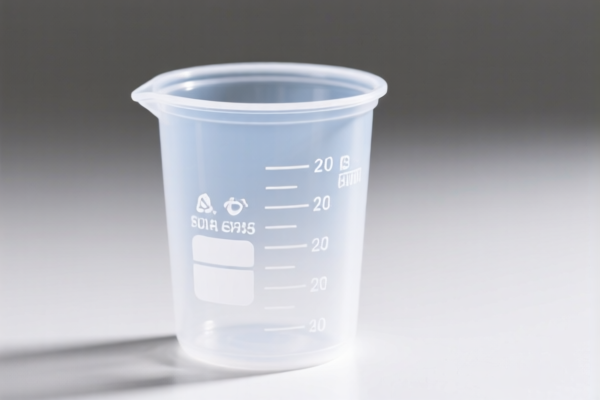
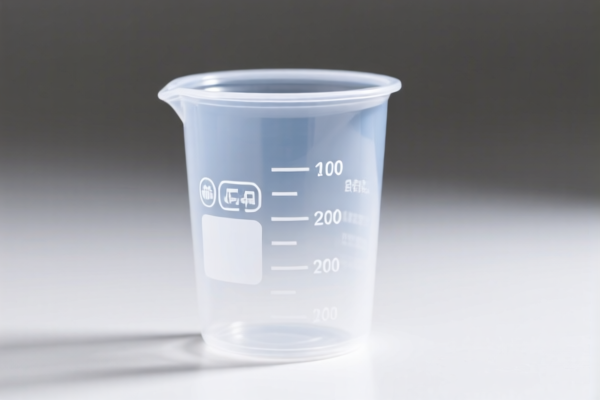
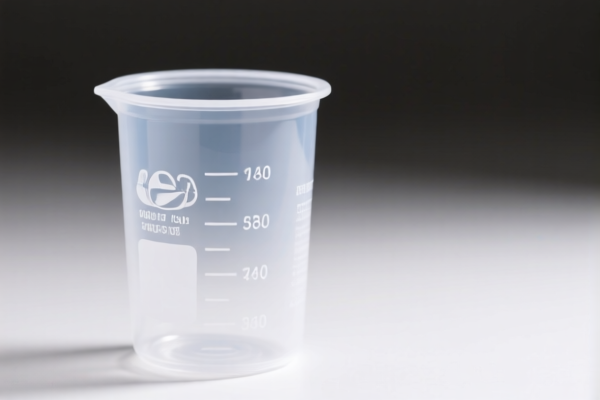
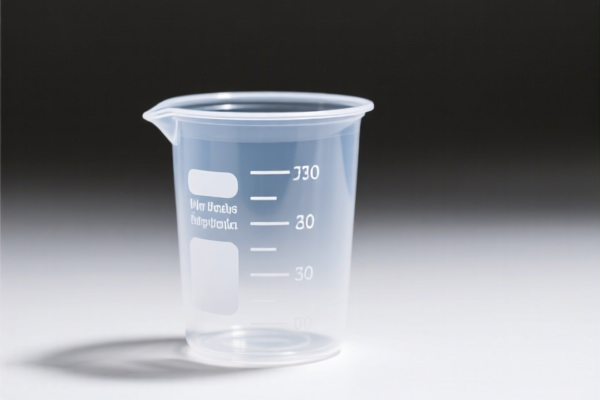
Disposable Plastic Laboratory Beaker
CN → US| HS Code | Tariff Rate | Origin | Destination | Doc |
|---|---|---|---|---|
| 3924905650 | 20.9% | CN | US | Official Doc |
| 3924104000 | 13.4% | CN | US | Official Doc |
| 3926909910 | 22.8% | CN | US | Official Doc |
| 3926909989 | 22.8% | CN | US | Official Doc |
| 3926909910 | 22.8% | CN | US | Official Doc |
Product Images
AI Analysis
🧪 Disposable Plastic Laboratory Beakers
🌐 HS Code Reference & Customs Clearance Guide | 2026 Latest Tariff Analysis | Professional Compliance Strategy
📌 I. Product Definition & Classification: Do You Really Understand "Plastic Beakers"?
A disposable plastic laboratory beaker is a standard vessel used in scientific experiments for holding, mixing, heating, or measuring liquids. Unlike glass beakers, these are made from polymers (such as PP, PE, or PS) designed for single-use to prevent cross-contination.
In international trade, the classification depends heavily on the intended use and specific material composition. The key distinction lies in whether the item is classified as general "household/lab utensils" or specialized "scientific instruments/parts."
⚠️ Key Distinction Points:
- If classified as a general lab utensil not elsewhere specified → Potentially lower base duty but subject to specific trade measures.
- If classified strictly as a general plastic article (Chapter 39.26) → Often attracts higher base duties.
- Crucial Note: All HS Codes below are subject to US Trade Remedies (Section 301 & Section 122), significantly impacting the final landed cost.
📦 II. HS Code Classification Details (2026 Latest Tariff Reference)
Based on the provided dataset, here are the four distinct classification paths for Disposable Plastic Laboratory Beakers. Note that 3926.90.99.10 appears twice in the source data with identical details; it is listed once below for clarity.
| HS Code | Product Description | Classification Context | Est. Total Tax Rate* |
|---|---|---|---|
3924.90.56.50 |
Other household/lab utensils, of plastic | Categorized under Other household or laboratory utensils (Chapter 39.24) | 20.9% |
3924.10.40.00 |
Other household articles, of plastic | Categorized under Other household articles/utensils (Chapter 39.24) | 13.4% |
3926.90.99.10 |
Other articles of plastic, specified elsewhere | Categorized under Laboratory goods/scientific apparatus (Chapter 39.26) | 22.8% |
3926.90.99.89 |
Other articles of plastic, n.e.s. | Categorized under Other articles (General residue category) | 22.8% |
🔍 Important Observation:
- The tax rate varies significantly based on the chapter of classification (39.24 vs 39.26).
-3924.10.40.00offers the lowest total tax burden at 13.4%.
-3926.90.99.10and3926.90.99.89carry the highest burden at 22.8%.
💰 III. 2026 Latest Tariff Rate Breakdown (Including Surcharges & Policy Levies)
✅ Applicable Market: United States (US)
✅ Country of Origin: China (CN) (Implied by the tax structure: Base + Section 301 + Section 122)
✅ Valid From: Current Trade War Era (2024-2026 Context)
🎯 1. 3924.90.56.50 — Other Household/Lab Utensils
| Item | Detail |
|---|---|
| Base Duty | 3.4% |
| Section 301 Surcharge | 7.5% |
| Section 122 Surcharge | 10% |
| Total Effective Rate | 20.9% |
| Calculation | CIF Value × 20.9% |
| De Minimis Exemption | ❌ Not Applicable (High tariff rates usually negate Section 321 de minimis benefits for commercial shipments; consult specialist) |
📌 Explanation:
- Base Duty (3.4%): Standard MFN rate for plastic utensils.
- Section 301 (7.5%): Retaliatory tariff on Chinese goods.
- Section 122 (10%): Additional tariff under Section 122 of the Trade Expansion Act of 1962, often applied to protect domestic manufacturing.
- Result: A moderate-high tax burden, but 1.5% cheaper than the 39.26 classification.
🎯 2. 3924.10.40.00 — Other Household Articles (Best Rate)
| Item | Detail |
|---|---|
| Base Duty | 3.4% |
| Section 301 Surcharge | 0.0% |
| Section 122 Surcharge | 10% |
| Total Effective Rate | 13.4% |
| Calculation | CIF Value × 13.4% |
| De Minimis Exemption | ❌ Check eligibility with broker |
📌 Why is this cheaper?
- While the Base Duty is the same (3.4%) as3924.90.56.50, the Section 301 surcharge is 0% for this specific subheading.
- Section 122 (10%) still applies.
- Savings: 7.5% less than the3924.90.56.50classification. This is the most cost-effective option if legally justifiable.
🎯 3. 3926.90.99.10 & 3926.90.99.89 — Other Plastic Articles (Highest Rate)
| Item | Detail |
|---|---|
| Base Duty | 5.3% |
| Section 301 Surcharge | 7.5% |
| Section 122 Surcharge | 10% |
| Total Effective Rate | 22.8% |
| Calculation | CIF Value × 22.8% |
| De Minimis Exemption | ❌ Not Applicable |
📌 Explanation:
- Base Duty (5.3%): Higher than Chapter 39.24 (3.4%) because Chapter 39.26 is a "residual" category for plastic articles.
- Section 301 (7.5%): Standard retaliatory tariff applies.
- Section 122 (10%): Applies universally to most Chinese plastic imports.
- Result: This is the most expensive classification. It should only be used if the product does not fit the definition of "household/lab utensils" in Chapter 39.24.
🛠️ IV. Customs Clearance Practical Advice (Avoiding Pitfalls)
✅ 1. Documentation Checklist (Mandatory)
| Document | Required? | Description |
|---|---|---|
| ✅ Product Specification | ✔️ | Material (PP/PE/PS), Capacity (e.g., 100ml, 500ml), Temperature Resistance |
| ✅ Commercial Invoice | ✔️ | Must clearly state "Disposable Plastic Beaker" and intended use ("Laboratory Use") |
| ✅ Packing List | ✔️ | Unit count, weight, dimensions |
| ✅ Certificate of Origin (CO) | ✔️ | To prove CN origin (affects Section 301/122 applicability) |
| ✅ FDA Food Contact Notice | ⚠️ Optional | If the beaker is marketed for food use, not just lab use, FDA compliance is critical |
✅ 2. Classification Strategy (The "Golden Rule")
🔥 "Justify the Chapter: 39.24 for Utensils, 39.26 for Residue!"
| Scenario | Recommended HS Code | Reason |
|---|---|---|
| Standard Lab Beaker | 3924.90.56.50 |
Best balance of classification accuracy and tax if 3924.10.40.00 is deemed "too general." |
| "Household" Style Beaker | 3924.10.40.00 |
Lowest Tax (13.4%). Use if the design resembles household plastic ware and can be argued as general "household articles." |
| Specialty/Industrial Plastic Part | 3926.90.99.10 / .89 |
Use ONLY if it's a custom-molded plastic part that doesn't fit "utensils." Avoid due to 22.8% tax. |
⚠️ Critical Warning:
- Do NOT arbitrarily choose3924.10.40.00to save tax. If Customs determines the item is strictly "Laboratory Apparatus" and not "Household Article," they may audit and demand the difference (9.4% retroactively) + penalties.
- Recommendation: For standard disposable lab beakers,3924.90.56.50is the safest accurate classification.3924.10.40.00is a strategic, lower-risk option if the product is unbranded and generic.
✅ 3. Special Case Handling
| Situation | Handling Advice |
|---|---|
| Bulk Import (Container Load) | Ensure HS Code consistency across all invoices. Mismatched codes lead to delays. |
| Small Parcel (De Minimis) | While Section 321 allows $800 duty-free entry, high-risk HS codes (like plastic from CN) may still face scrutiny. Be prepared for inspections. |
| Labeling | Mark "For Laboratory Use Only" or "Disposal Plastic." Avoid "Food Grade" claims unless certified, to avoid FDA complications that could shift classification. |
🌍 V. Global Market Comparison (2026)
| Country/Region | Typical HS Code | Base Duty | Trade Measures | Total Est. Rate |
|---|---|---|---|---|
| 🇺🇸 USA | 3924.90.56.50 |
3.4% | +7.5% (301) +10% (122) | 20.9% |
| 🇨🇳 China | 3924.90.56.50 |
6.5% | None | 6.5% |
| 🇪🇺 EU | 3924.00.90 |
0-2.5% | None | ~2.5% |
| 🇬🇧 UK | 3924.00.90 |
0-2.5% | None | ~2.5% |
📌 Conclusion:
- The US market is significantly more expensive for Chinese plastic lab ware due to Section 122 and Section 301 tariffs.
- Strategy: For the US, prioritize3924.10.40.00(13.4%) if defensible, otherwise accept3924.90.56.50(20.9%). Avoid Chapter 39.26 classifications unless absolutely necessary.
📌 VI. Common Mistakes & Pitfalls (Lessons Learned)
❌ Mistake 1: Classifying as 3926.90.99.89 just because it's "other plastic."
👉 Consequence: You pay 22.8% instead of 13.4% or 20.9%. Overpayment of 9.4%.
❌ Mistake 2: Claiming 3924.10.40.00 without justification for "Household" use.
👉 Consequence: Customs may reclassify to 3924.90.56.50 or higher, demanding back duties + interest.
❌ Mistake 3: Ignoring Section 122.
👉 Consequence: Even if Section 301 is reduced, the 10% Section 122 applies broadly to most plastic imports from China. It is rarely excluded.
❌ Mistake 4: Mixing "Lab" and "Kitchen" claims.
👉 Consequence: Ambiguous description ("Multi-purpose beaker") leads to Customs holds for further examination.
✅ Correct Practice:
"Disposable PP Beaker, 250ml, For Laboratory Use Only, Model LB-250"
🎯 VII. Conclusion: Professional Classification Saves Money!
🎯 Remember the Golden Rules:
🔹 "Chapter 39.24 is King: 13.4% to 20.9%."
🔹 "Chapter 39.26 is the Trap: 22.8% Minimum."
🔹 "Section 122 (10%) is Always There for CN Origin."
🔹 "Section 301 (7.5%) is Avoidable ONLY if you fit3924.10.40.00."
📌 Pro Tip:
If your volume is high, consider applying for a Binding Tariff Information (BTI) or US Customs Ruling for a definitive classification before shipment. The cost of a ruling is minimal compared to the risk of a 9.4% overpayment or a customs seizure.
📣 Immediate Action:
📞 Consult your freight forwarder with the exact product photos and material specs.
🚀 Request a pre-classification opinion if unsure between3924.10.40.00and3924.90.56.50.
💼 Optimize your landed cost by choosing the correct HS Code from day one!
✨ Precision Classification, Maximum Profit!
💼 Every percentage point matters in the US-China trade corridor!
Customer Reviews
About HS Code Classification
The Harmonized System (HS) is an internationally standardized nomenclature developed by the World Customs Organization (WCO) to classify traded products. Over 200 countries use the HS system as the basis for customs tariffs, trade statistics, and import/export regulations.
Each HS code follows a hierarchical structure:
- Chapter (2 digits) — Broad category of goods (e.g., Chapter 84: Machinery and Mechanical Appliances)
- Heading (4 digits) — More specific grouping within the chapter
- Subheading (6 digits) — Internationally standardized breakdown, used by all WCO member countries
- National subdivisions (8-10 digits) — Country-specific extensions for further classification, such as US HTSUS 10-digit codes
Correct HS code classification is essential for smooth customs clearance, accurate duty payment, and compliance with trade regulations. Misclassification can lead to customs delays, overpayment of duties, or penalties.
When importing from CN to US, the applicable tariff rates may include:
- Most-Favored-Nation (MFN) rate — The standard duty rate applied to WTO members
- General rate — Applied to countries without trade agreements
- Trade remedy duties — Additional tariffs such as Section 301 (anti-dumping), Section 232 (national security), or countervailing duties
The information provided on this page is for reference purposes only. For official classification, please consult with your local customs authority or a licensed customs broker.