Disposable Plastic Medical Protective Face Shields
CN → US| HS Code | Tariff Rate | Origin | Destination | Doc |
|---|---|---|---|---|
| 3926909950 | 22.8% | CN | US | Official Doc |
| 9004900010 | 20.0% | CN | US | Official Doc |
| 9004900090 | 20.0% | CN | US | Official Doc |
| 3926909910 | 22.8% | CN | US | Official Doc |
| 3926909950 | 22.8% | CN | US | Official Doc |
Product Images
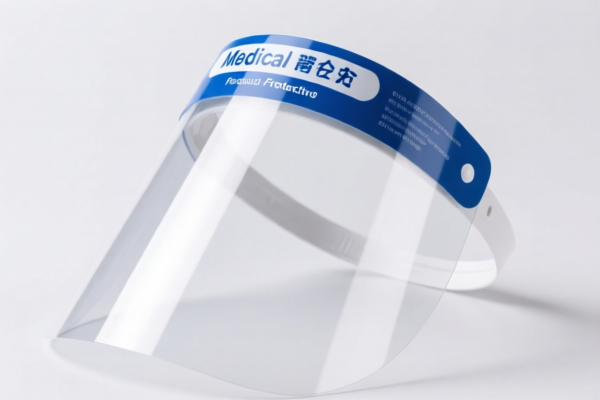
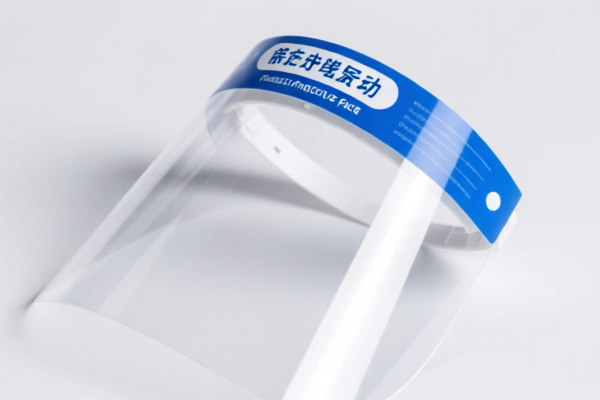
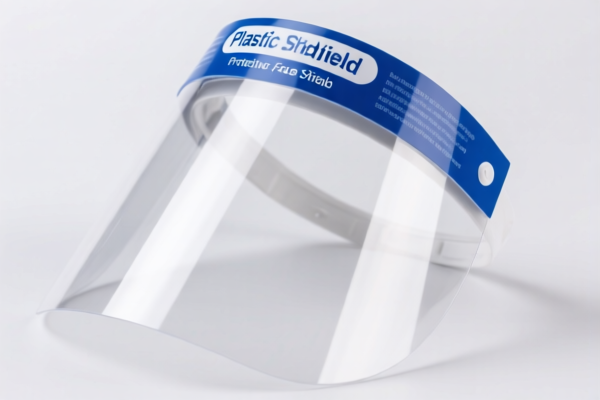
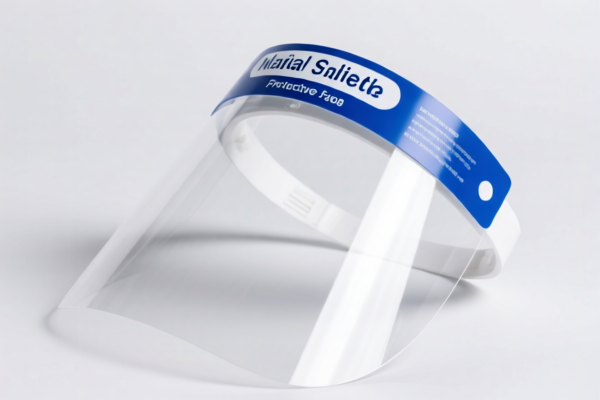
AI Analysis
🛡️ Disposable Plastic Medical Protective Face Shields
🌐 HS Code Reference & Customs Clearance Guide | 2026 Latest Tariff Analysis | Professional Clearance Strategy
📌 I. Product Definition and Classification: Do You Really Understand "Face Shields"?
Disposable plastic medical protective face shields are personal protective equipment (PPE) designed to protect the face, eyes, and mucous membranes from fluid splashes, droplets, or aerosols. In international trade, these products are primarily classified based on their material composition and functional design, falling into two main categories:
1. Pure Plastic Components (Chapters 39):
Shields made entirely of plastic sheets, frames, and elastic bands, often lacking specific optical correction features, categorized under general plastic articles.
2. Optical/Protective Equipment (Chapter 90):
Shields that function as goggles or protective eyewear, particularly if they have a rigid frame and are designed specifically to protect the eyes/face as a single unit under sanitary or industrial standards.
⚠️ Key Distinction Point:
- If the shield is viewed as a general plastic article (e.g., a simple visor attached to a headband without specific optical lens characteristics) → Classify under 3926.90.99.50 / 3926.90.99.10.
- If the shield is viewed as a protective optical device (similar to goggles, covering the eyes and face) → Classify under 9004.90.00.10 / 9004.90.00.90.
📦 II. HS Code Classification Details (2026 Latest Tariff Authoritative Comparison)
| HS Code | Product Description | Application Scenario | Classification Logic |
|---|---|---|---|
3926.90.99.50 |
Other plastic articles, not specified elsewhere (e.g., laboratory protective shields) | General-purpose plastic face shields, laboratory visors, non-optical protective covers | ✅ Classified as "Plastic Article" |
3926.90.99.10 |
Plastic articles for laboratory use or protective equipment | Lab器皿 (vessels) or protective gear made of plastic | ✅ Classified as "Plastic Article" |
9004.90.00.10 |
Goggles, protective spectacles, and similar articles (Plastic material) | Protective eyewear/face shields integrated as a unit, focusing on eye/face protection | ✅ Classified as "Optical/Protective Device" |
9004.90.00.90 |
Other goggles/protective articles (Plastic material) | Other protective face shields not specifically categorized as standard goggles | ✅ Classified as "Optical/Protective Device" |
🔍 Key Reminder:
- Customs often scrutinize plastic face shields closely. If the product includes a transparent visor and is marketed as medical PPE or laboratory safety equipment, some customs authorities may prefer Chapter 39 (Plastics), while others may classify it under Chapter 90 (Optical/Medical Instruments) if it emphasizes the protective lens/visor function. - Consistency is key: Ensure the product description, marketing material, and technical specs align with the chosen HS Code to avoid disputes.
💰 III. 2026 Latest Tariff Rate Details (Including Additional Taxes, Policy Surcharges)
✅ Applicable Country: United States (US)
✅ Origin: China (CN)
✅ Effective Time: 2025年11月10日起 (Including subsequent imports)
🎯 1. 3926.90.99.50 & 3926.90.99.10 —— Plastic Material, Laboratory/Protective Face Shields
| Item | Content |
|---|---|
| Basic Tariff | 5.3% |
| Additional Tariff (Section 301) | +7.5% |
| Section 122 Tariff | +10% |
| Total Tariff | 22.8% |
| Tax Calculation | CIF Value × 22.8% |
| De Minimis Exemption Eligibility | ❌ Not Eligible (deny_de_minimis) |
| Legal Basis Path | Base: 5.3% → Sec 301: 7.5% → Sec 122: 10% |
📌 Explanation:
- These HS Codes fall under Plastic Articles.
- Section 122 Tariff (+10%) applies to certain protective equipment and related items from China.
- Section 301 Tariff (+7.5%) applies to most plastic products from China.
- Total: 22.8%. This is a high tariff category, impacting cost significantly.
🎯 2. 9004.90.00.10 & 9004.90.00.90 —— Goggles/Protective Face Shields (Plastic)
| Item | Content |
|---|---|
| Basic Tariff | 2.5% |
| Additional Tariff (Section 301) | +7.5% |
| Section 122 Tariff | +10% |
| Total Tariff | 20.0% |
| Tax Calculation | CIF Value × 20.0% |
| De Minimis Exemption Eligibility | ❌ Not Eligible (deny_de_minimis) |
| Legal Basis Path | Base: 2.5% → Sec 301: 7.5% → Sec 122: 10% |
📌 Note:
- These HS Codes fall under Goggles/Protective Eyewear.
- The basic tariff is lower (2.5% vs 5.3%) because optical/protective devices often have preferential base rates.
- However, Section 301 (+7.5%) and Section 122 (+10%) still apply.
- Total: 20.0%. Slightly lower than plastic articles but still significant.
🛠️ IV. Customs Clearance Practical Advice (Battle-Tested Pitfall Avoidance Guide)
✅ 1. Required Documentation Checklist (None Can Be Missing)
| Document | Must Provide | Explanation |
|---|---|---|
| ✅ Product Specification Sheet | ✔️ | Material (PP, PE, etc.), dimensions, coverage area, disposable/reusable status |
| ✅ Product Photos (Clear) | ✔️ | Show full shield, headband, visor transparency, and packaging |
| ✅ Commercial Invoice | ✔️ | Clearly state "Disposable Plastic Medical Protective Face Shield" |
| ✅ Packing List | ✔️ | Specify unit count, weight, and packaging type |
| ✅ Declaration of Non-Optical Correction | ✔️ | If classified under Ch 39, confirm no prescription lens function |
| ✅ Third-Party Certification | ✔️ | FDA Registration (if medical), CE, ASTM F2191 (Fluid Resistance) |
| ✅ Origin Certificate | ✔️ | Proof of Chinese origin (if applicable) |
✅ 2. Declaration Tips (Key Mantras)
🔥 "Clear Name, Accurate Material, Correct Chapter, Tariff Saved!"
| Scenario | Correct Declaration | Wrong Practice |
|---|---|---|
| General Plastic Visor | 3926.90.99.50 - "Plastic Face Shield" |
Misdeclare as Goggles → 20% (lower, but risky if audited) |
| Medical Protective Shield | 9004.90.00.10 - "Protective Goggles/Shield" |
Misdeclare as Plastic Article → 22.8% (higher cost) |
| Lab Protective Visor | 3926.90.99.10 - "Plastic Lab Shield" |
Ambiguous description → Customs detention |
| With Prescription Lens | Not Applicable (Different HS) | Declare as disposable shield → High risk of penalty |
💡 Tip: If the shield is simple plastic with no specific optical features, 3926.90.99.50 is safer and aligns with "Plastic Articles." If it is marketed as medical PPE/goggles, 9004.90.00.10 is more appropriate.
✅ 3. Special Cases Handling
| Scenario | Handling Advice |
|---|---|
| OEM Custom Face Shields | Provide OEM contract and design specs to avoid "generic" classification disputes |
| Combined Package (Shield + Gloves + Mask) | Separate Declaration: Each item must have its own HS Code. Do not bundle into one line |
| Medical vs. Non-Medical | If for medical use, ensure FDA registration number is on invoice; otherwise, declare as "Industrial Safety Shield" |
| Material Variation (e.g., PET vs. PP) | Ensure material matches the declaration. Different plastics may have different duty rates if base rates differ |
🌍 V. Global Main Market Clearance Comparison (2026 Latest)
| Country/Region | Recommended HS Code | Tariff | Certification Requirement | Notes |
|---|---|---|---|---|
| 🇺🇸 USA | 3926.90.99.50 or 9004.90.00.10 |
20.0% - 22.8% | FDA, ASTM F2191 | Section 301 + 122 apply |
| 🇨🇳 China | 3926.90.99.50 |
5.3% | GB Standard | No additional tariffs |
| 🇪🇺 EU | 3926.90.99 |
4.5% | CE, EN 166 | No Section 301 |
| 🇬🇧 UK | 3926.90.99 |
4.5% | UKCA, EN 166 | Post-Brexit rules apply |
| 🇯🇵 Japan | 3926.90.99 |
3.5% | PSE (if electrical, not applicable) | Low tariff |
📌 Conclusion:
- USA has the highest total tariff due to Section 301 and Section 122.
- China and EU are more favorable with no additional punitive tariffs.
- Strategy: If exporting to the US, carefully choose between 3926 (Plastic) and 9004 (Goggles) based on product features to optimize cost, but ensure compliance with FDA/ASTM standards.
📌 VI. Common Errors & Pitfall Avoidance Guide (Lessons Learned)
❌ Error 1: Declaring a plastic face shield as goggles without optical features
👉 Consequence: Customs may reject the classification, leading to re-classification to 3926 (22.8%) or penalty.
❌ Error 2: Ignoring Section 122 Tariff
👉 Consequence: Underpayment of 10% → Back taxes + Penalties.
❌ Error 3: Failing to specify Material (e.g., "Plastic" vs. "Polypropylene")
👉 Consequence: Customs may assign a higher default rate or detain shipment for verification.
❌ Error 4: Declaring medical shields without FDA registration
👉 Consequence: FDA refusal of entry, even if customs clears it → Shipment return/destruction.
✅ Correct Practice:
"Disposable Plastic Face Shield, PP Material, ASTM F2191 Compliant, For Medical Use, Model XYZ, FDA Registered"
🎯 VII. Conclusion: Professional Declaration, Save Time, Reduce Costs!
🎯 Remember the Mantra:
🔹 "Plastic Article 22.8%, Goggle 20%, Section 122 is Key, FDA Compliance is King!"
🔹 "HS Code Determines Tax, Declaration Determines Speed, Compliance Determines Success!"
📌 Pro Tip:
If your face shields are manufactured in Vietnam, Thailand, or Malaysia, you may be eligible for IEEPA Exemptions or lower Section 301 rates depending on the current policy.
👉 Recommendation: Apply for a Binding Ruling from CBP before shipment to lock in the HS Code and tariff rate.
📣 Immediate Action:
📞 Contact a licensed Customs Broker + Provide Product Photos + Verify FDA Status
🚀 Ensure Smooth Clearance, Fast Release, Maximized Profit!
✨ Professional Clearance Starts with Accurate Classification!
💼 Every Cent of Cost Deserves Precise Calculation!
Customer Reviews
About HS Code Classification
The Harmonized System (HS) is an internationally standardized nomenclature developed by the World Customs Organization (WCO) to classify traded products. Over 200 countries use the HS system as the basis for customs tariffs, trade statistics, and import/export regulations.
Each HS code follows a hierarchical structure:
- Chapter (2 digits) — Broad category of goods (e.g., Chapter 84: Machinery and Mechanical Appliances)
- Heading (4 digits) — More specific grouping within the chapter
- Subheading (6 digits) — Internationally standardized breakdown, used by all WCO member countries
- National subdivisions (8-10 digits) — Country-specific extensions for further classification, such as US HTSUS 10-digit codes
Correct HS code classification is essential for smooth customs clearance, accurate duty payment, and compliance with trade regulations. Misclassification can lead to customs delays, overpayment of duties, or penalties.
When importing from CN to US, the applicable tariff rates may include:
- Most-Favored-Nation (MFN) rate — The standard duty rate applied to WTO members
- General rate — Applied to countries without trade agreements
- Trade remedy duties — Additional tariffs such as Section 301 (anti-dumping), Section 232 (national security), or countervailing duties
The information provided on this page is for reference purposes only. For official classification, please consult with your local customs authority or a licensed customs broker.