Disposable Safety Pants
CN → US| HS Code | Tariff Rate | Origin | Destination | Doc |
|---|---|---|---|---|
| 6108229020 | 33.1% | CN | US | Official Doc |
| 6208192000 | 28.7% | CN | US | Official Doc |
| 6117909075 | 32.1% | CN | US | Official Doc |
| 6117909060 | 32.1% | CN | US | Official Doc |
| 6108210010 | 25.1% | CN | US | Official Doc |
Product Images
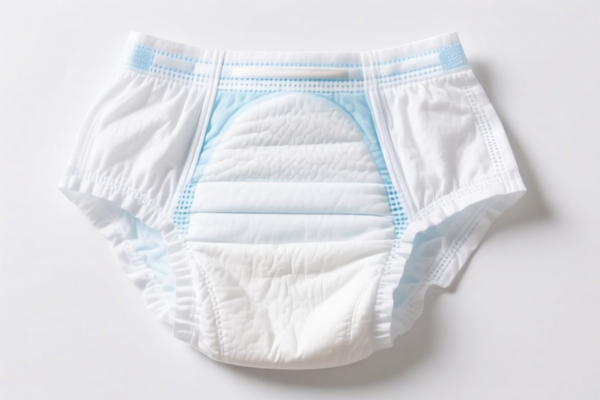
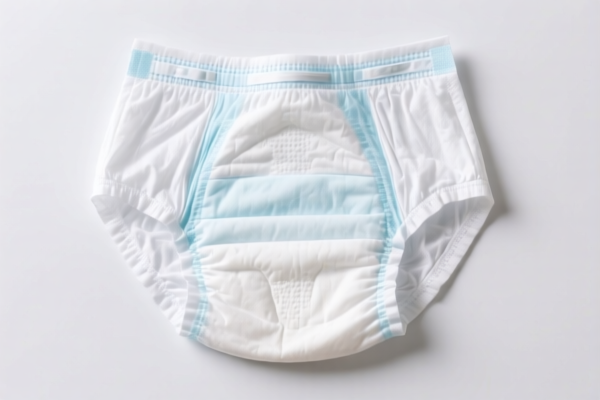
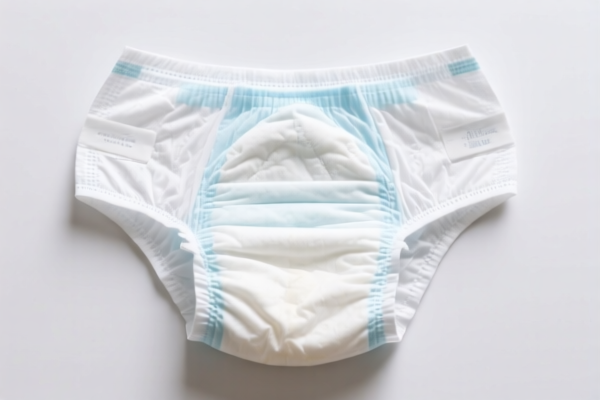
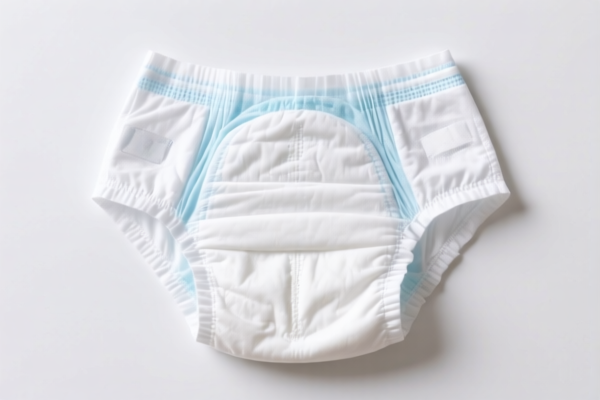
AI Analysis
🩲 Disposable Safety Pants (Women's Undershorts/Slip Shorts)
🌐 HS Code Reference & Customs Clearance Guide | 2026 Latest Tariff Analysis | Professional Strategy for US Imports
📌 I. Product Definition & Classification: Do You Really Know What "Safety Pants" Are?
Disposable Safety Pants (often referred to as Slip Shorts, Anti-Exposure Pants, or Undershorts) are essential undergarments for women, designed to prevent accidental exposure of underwear when wearing skirts or shorts. They can also refer to disposable hygienic undergarments used in medical or industrial settings.
In international trade, they are classified based on Material (Knitted vs. Woven) and Function (Lingerie vs. Accessory). Misclassification can lead to significant tariff differences due to US-China trade policies.
⚠️ Key Classification Distinction:
- If the product is knitted and functions primarily as underwear/lingerie →归入 6108 Chapter
- If the product is woven and functions as underwear → 归入 6208 Chapter
- If the product is classified as a clothing accessory rather than underwear → 归入 6117 Chapter
📦 II. HS Code Classification Details (2026 Latest Tariff Authority Comparison)
Based on the provided data, here are the 5 most relevant HS Codes for "Disposable Safety Pants" with their corresponding tax implications:
| HS Code | Product Description | Material/Feature Inference | Applicable Scenario |
|---|---|---|---|
6108.22.90.20 |
Safety pants classified as women's lingerie/underwear | Material inferred as Fiber Fabric (likely synthetic knitted) | General disposable safety pants, synthetic blend |
6108.21.00.10 |
Safety pants classified as women's underwear/panties | Material inferred as Cotton or Cotton-like Knitted | Premium cotton-knit safety pants |
6208.19.20.00 |
Safety pants classified as underwear products | Material inferred as Cotton or Synthetic Woven | Woven fabric safety pants (less common for "disposable") |
6117.90.90.75 |
Safety pants classified as clothing accessories | Material does not conflict with cotton/synthetic/wool | Classified as an accessory rather than primary underwear |
6117.90.90.60 |
Safety pants classified as clothing accessory/underwear | Material inferred as Cotton or Blended | Ambiguous classification, often used for mixed-use garments |
🔍 Critical Reminder:
- "Disposable" usually implies synthetic materials (polyester/spandex) → Likely falls under 6108.22 (Synthetic Knitted) or 6117.90.
- If made of Cotton Knitted → Falls under 6108.21.
- If made of Woven fabric → Falls under 6208.19.
- 6117 Codes are riskier as they may trigger higher duties if not strictly proven as "accessories."
💰 III. 2026 Latest Tariff Rate Breakdown (Including Additional Taxes & Policy Surcharges)
✅ Applicable Country: United States (US)
✅ Origin: China (CN)
✅ Effective Time: 2025/2026 Period (Current US-China Trade Policies)
🎯 1. 6108.22.90.20 – Women's Lingerie, Synthetic Knitted
| Item | Content |
|---|---|
| Base Tariff | 15.6% |
| Section 301 Surcharge | +7.5% |
| Section 122 Tariff | +10% |
| Total Tariff | 33.1% |
| Tax Calculation | CIF Value × 33.1% |
| De Minimis Exemption | ❌ Not Eligible (High tariff rate exceeds threshold) |
| Legal Basis Path | USITC:6108.22.90.20 → Section 301: 7.5% → Section 122: 10% |
📌 Explanation:
- This is the most common classification for synthetic disposable safety pants.
- Total 33.1% is a high burden. Must be factored into pricing strategies.
- Section 122 applies to specific textile categories from China; verify if your product code is listed.
🎯 2. 6208.19.20.00 – Other Women's Woven Undergarments
| Item | Content |
|---|---|
| Base Tariff | 11.2% |
| Section 301 Surcharge | +7.5% |
| Section 122 Tariff | +10% |
| Total Tariff | 28.7% |
| Tax Calculation | CIF Value × 28.7% |
| De Minimis Exemption | ❌ Not Eligible |
| Legal Basis Path | USITC:6208.19.20.00 → Section 301: 7.5% → Section 122: 10% |
📌 Note:
- Lower than 6108.22 by 4.4%.
- Only applicable if the product is Woven (not knitted). Most disposable pants are knitted, so this may not apply unless specifically woven.
- Risk: If customs determines the product is knitted, you will face back taxes + penalties for misclassification.
🎯 3. 6117.90.90.75 & 6117.90.90.60 – Clothing Accessories
| Item | Content |
|---|---|
| Base Tariff | 14.6% |
| Section 301 Surcharge | +7.5% |
| Section 122 Tariff | +10% |
| Total Tariff | 32.1% |
| Tax Calculation | CIF Value × 32.1% |
| De Minimis Exemption | ❌ Not Eligible |
| Legal Basis Path | USITC:6117.90.90.75 → Section 301: 7.5% → Section 122: 10% |
📌 Caution:
- 32.1% is slightly lower than6108.22but higher than6208.19.
- Risk: Classifying underwear as an "accessory" is aggressive. Customs may reject this if the primary function is clearly underwear.
- Use only if the product has unique features (e.g., attached pads, specific structural accessories) that distinguish it from standard underwear.
🎯 4. 6108.21.00.10 – Women's Underwear, Cotton Knitted
| Item | Content |
|---|---|
| Base Tariff | 7.6% |
| Section 301 Surcharge | +7.5% |
| Section 122 Tariff | +10% |
| Total Tariff | 25.1% |
| Tax Calculation | CIF Value × 25.1% |
| De Minimis Exemption | ❌ Not Eligible |
| Legal Basis Path | USITC:6108.21.00.10 → Section 301: 7.5% → Section 122: 10% |
📌 Opportunity:
- Lowest Total Rate (25.1%) among knitted options.
- Only applicable if the product is ≥50% Cotton (or classified as cotton).
- "Disposable" usually implies synthetic, so verify material content. If it's a high-end cotton safety pant, this is the best cost-saving code.
🛠️ IV. Customs Clearance Practical Advice (Real-World Pitfall Avoidance)
✅ 1. Required Documentation Checklist (Must-Haves)
| Document | Required | Notes |
|---|---|---|
| ✅ Product Specification Sheet | ✔️ | Must detail material composition (e.g., "80% Polyester, 20% Spandex") |
| ✅ Photos (Front/Back) | ✔️ | Show the product clearly as "Safety Pants" or "Slip Shorts" |
| ✅ Labeling | ✔️ | Must show care instructions, country of origin, and fiber content |
| ✅ Commercial Invoice | ✔️ | Clear description: "Women's Disposable Safety Pants, Knitted, Synthetic" |
| ✅ Packing List | ✔️ | Include units, weights, and dimensions |
| ✅ Third-Party Test Report | ✔️ | Fiber content analysis (to prove Cotton vs. Synthetic) |
✅ 2. Declaration Tips (Key Mantra)
🔥 "Material First, Function Second, Name Precise, Tax Minimized!"
| Scenario | Correct Declaration | Incorrect Practice |
|---|---|---|
| Synthetic Knitted | 6108.22.90.20 "Women's Knitted Safety Pants, Synthetic" |
Misclassifying as woven → 28.7% risk |
| Cotton Knitted | 6108.21.00.10 "Women's Knitted Safety Pants, Cotton" |
Using "Accessory" code → 32.1% penalty risk |
| Woven Fabric | 6208.19.20.00 "Women's Woven Safety Pants" |
Using knitted code → Back taxes |
| Accessory Feature | 6117.90.90.75 |
Using underwear code if it's truly an accessory |
📌 Important:
- If the product is "Disposable", it is likely non-woven or thin synthetic knitted.
- Non-woven fabrics often fall under 6117 (accessories) or 6208 (woven-like classification by customs).
- Always provide fiber content tests to prove whether it's Cotton (6108.21) or Synthetic (6108.22).
✅ 3. Special Cases Handling
| Situation | Recommendation |
|---|---|
| OEM Custom Safety Pants | Provide design drawings showing it's an undergarment, not an outerwear accessory. |
| Mixed Material (e.g., Cotton + Spandex) | If Cotton ≥ 50%, try 6108.21.00.10 (25.1%). If Synthetic ≥ 50%, use 6108.22.90.20 (33.1%). |
| Disposable Non-Woven | May be classified under 6117.90 (Accessory) or 6208.19 (Woven). Consult a broker for non-woven specifics. |
| Bulk Import (Container Load) | Apply for Advance Ruling if unsure between 6108 vs. 6117. |
🌍 V. Global Market Comparison (2026 Latest)
| Country/Region | Recommended HS Code | Total Tariff (China Origin) | Certification Required | Notes |
|---|---|---|---|---|
| 🇺🇸 USA | 6108.22.90.20 |
33.1% | No special certs | High tax due to Section 301 & 122 |
| 🇨🇳 China | 6108.22.00.00 |
~15% | None | Lower import duty |
| 🇪🇺 EU | 6108.29 |
~4-12% | REACH, CE | No Section 301/122 |
| 🇬🇧 UK | 6108.29 |
~12% | UKCA | Post-Brexit rules apply |
| 🇯🇵 Japan | 6108.29 |
~7-10% | None | FTA benefits possible |
📌 Conclusion:
- USA has the highest tariffs due to trade wars.
- EU and Japan are much more favorable (~4-12%).
- For US imports, cost optimization is critical. Consider shifting production to Vietnam/Mexico for IEEPA exemptions if volume is high.
📌 VI. Common Errors & Pitfalls (Lessons Learned)
❌ Error 1: Declaring "Safety Pants" as "Shorts" (6203)
👉 Consequence: Misclassification → Penalties + Back Taxes. Safety pants are underwear, not outerwear.
❌ Error 2: Using 6117.90 (Accessory) for standard underwear
👉 Consequence: Customs may reject if no unique accessory features. Risk of audit.
❌ Error 3: Ignoring Section 122 Tariff
👉 Consequence: Unexpected 10% surcharge on textile imports from China. Always budget for this.
❌ Error 4: Incorrect Fiber Content Declaration
👉 Consequence: If you declare Cotton but it's Polyester, you pay the higher rate (33.1% vs 25.1%) and face fines.
✅ Correct Practice:
"Women's Disposable Safety Pants, Knitted, 85% Polyester, 15% Spandex, for use under skirts, Model XYZ, Made in China"
🎯 VII. Conclusion: Professional Declaration, Cost Control, Efficiency!
🎯 Remember the Mantra:
🔹 "Material Dictates Code: Cotton=25.1%, Synthetic=33.1%, Woven=28.7%."
🔹 "Section 122 is the Hidden 10%: Always Add It!"
🔹 "Disposable ≠ Accessory: Prove it's Underwear to Avoid 6117 Audit!"
📌 Pro Tip:
If your safety pants are shipped from Vietnam, Mexico, or Malaysia, you may be eligible for IEEPA Exemptions, reducing tariffs to 0-5%.
For US imports, pre-classification rulings are highly recommended for bulk shipments.
📣 Immediate Action:
📞 Contact a licensed customs broker + Provide Fiber Content Test Reports + Request HS Code Pre-Ruling
🚀 Ensure Smooth Clearance, Minimize Tariffs, Maximize Profits!
✨ Professional Customs Clearance Starts with Accurate Classification!
💼 Every Penny in Tariffs is Worth Calculating Precisely!
Customer Reviews
About HS Code Classification
The Harmonized System (HS) is an internationally standardized nomenclature developed by the World Customs Organization (WCO) to classify traded products. Over 200 countries use the HS system as the basis for customs tariffs, trade statistics, and import/export regulations.
Each HS code follows a hierarchical structure:
- Chapter (2 digits) — Broad category of goods (e.g., Chapter 84: Machinery and Mechanical Appliances)
- Heading (4 digits) — More specific grouping within the chapter
- Subheading (6 digits) — Internationally standardized breakdown, used by all WCO member countries
- National subdivisions (8-10 digits) — Country-specific extensions for further classification, such as US HTSUS 10-digit codes
Correct HS code classification is essential for smooth customs clearance, accurate duty payment, and compliance with trade regulations. Misclassification can lead to customs delays, overpayment of duties, or penalties.
When importing from CN to US, the applicable tariff rates may include:
- Most-Favored-Nation (MFN) rate — The standard duty rate applied to WTO members
- General rate — Applied to countries without trade agreements
- Trade remedy duties — Additional tariffs such as Section 301 (anti-dumping), Section 232 (national security), or countervailing duties
The information provided on this page is for reference purposes only. For official classification, please consult with your local customs authority or a licensed customs broker.