Disposable Seamless Surgical Gloves
CN → US| HS Code | Tariff Rate | Origin | Destination | Doc |
|---|---|---|---|---|
| 4014905000 | 14.2% | CN | US | Official Doc |
| 3926201010 | 10.0% | CN | US | Official Doc |
| 3926201020 | 10.0% | CN | US | Official Doc |
| 6116105510 | 30.7% | CN | US | Official Doc |
| 6116104810 | 36.1% | CN | US | Official Doc |
Product Images

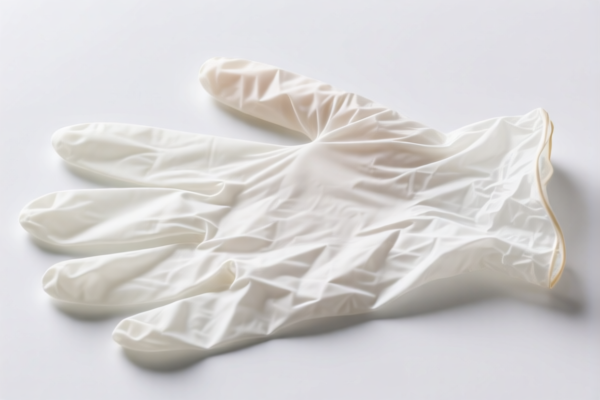

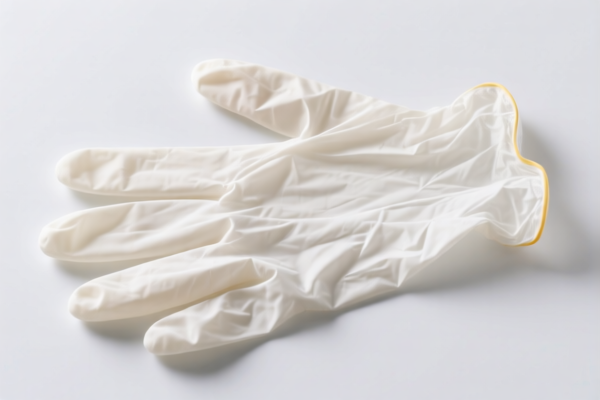
AI Analysis
🧤 Disposable Seamless Surgical Gloves
🌐 HS Code Reference & Customs Clearance Guide | 2026 Latest Tariff Analysis | Professional Clearance Strategy
📌 I. Product Definition & Classification: Do You Really Understand "Surgical Gloves"?
Disposable Seamless Surgical Gloves are critical medical devices used in healthcare settings for infection control and sterile procedures. In international trade, their classification depends heavily on the material composition (Latex vs. Plastic/Polymer) and the specific medical purpose (Surgical vs. Examination).
Key Distinction: - Rubber/Latex/Nitrile: Classified under Chapter 40 (Rubber). High protection, often used for surgery. - Plastic/Polymer (PVC/PE): Classified under Chapter 39 (Plastics). Often used for non-sterile examination or specific "seamless" polymer applications.
⚠️ Critical Classification Point:
- If made of Rubber (Latex/Nitrile) and for medical use → 4014.90.50.00
- If made of Plastics and for surgical/medical use → 3926.20.10.10 or 3926.20.10.20
- If made of Textiles/Fabrics (coated) → 6116.10.55.10 or 6116.10.48.10
📦 II. HS Code Classification Details (2026 Latest Tariff Authority Comparison)
Based on the provided data, here are the potential HS Codes for "Disposable Seamless Surgical Gloves," categorized by material inference:
| HS Code | Product Description | Applicability Scenario | Material Inference |
|---|---|---|---|
4014.90.50.00 |
Rubber gloves (other than hard rubber), of a kind used in medical, surgical, dental, or veterinary fields | Sterile surgical gloves made of Latex or Nitrile | ✅ Rubber (Sulfur-processed) |
3926.20.10.10 |
Gloves and mittens of plastics, for surgical or medical purposes | Seamless surgical gloves made of Polymer/Plastic | ✅ Plastic |
3926.20.10.20 |
Gloves and mittens of plastics, for surgical or medical purposes (One-time use implied) | Disposable surgical gloves where "plastic" is the primary material | ✅ Plastic |
6116.10.55.10 |
Gloves with impregnation, coating, covering, or lamination of rubber or plastics, knitted or crocheted | Textile gloves coated with rubber/plastic, seamless/no finger separation | ✅ Textile/Coated |
6116.10.48.10 |
Other gloves with impregnation, coating, covering, or lamination of plastics, knitted or crocheted | Seamless surgical gloves with plastic coating, medical use | ✅ Textile/Coated |
🔍 Key Insight:
- The term "Seamless" usually implies a dipped manufacturing process common in Rubber (4014) or Plastic (3926) gloves. - "Surgical" strongly points to Chapter 40 (if rubber) or Chapter 39 (if plastic). - Misclassification between Rubber (Ch 40) and Plastic (Ch 39) is a common customs error.
💰 III. 2026 Latest Tariff Rate Breakdown (Including Surcharges)
✅ Applicable Country: United States (US)
✅ Origin: China (CN)
✅ Effective Time: Includes imports subject to Section 301 and IEEPA tariffs
🎯 1. 4014.90.50.00 —— Rubber Surgical Gloves
| Item | Content |
|---|---|
| Base Tariff | 4.2% (ad valorem) |
| USITC Surtax | 0.0% |
| Section 301 / IEEPA Surtax | 10.0% |
| Total Tariff Rate | 14.2% |
| Tax Calculation | CIF Value × 14.2% |
| De Minimis Exemption | ❌ Not Applicable (Standard commercial clearance) |
| Legal Basis Path | Base: 4.2% → Add-on: 10% (Section 301/IEEPA) |
📌 Explanation:
- Rubber surgical gloves face a 14.2% total duty when imported from China. - This is a moderate-to-high rate for medical supplies, significantly impacting cost structures.
🎯 2. 3926.20.10.10 & 3926.20.10.20 —— Plastic Surgical Gloves
| Item | Content |
|---|---|
| Base Tariff | 0.0% |
| USITC Surtax | 0.0% |
| Section 301 / IEEPA Surtax | 10.0% |
| Total Tariff Rate | 10.0% |
| Tax Calculation | CIF Value × 10.0% |
| De Minimis Exemption | ❌ Not Applicable |
| Legal Basis Path | Base: 0.0% → Add-on: 10% (Section 301/IEEPA) |
📌 Explanation:
- If classified as Plastic (Chapter 39), the base tariff is 0%, but the 10% IEEPA/Section 301 surcharge still applies. - Total Cost: 10%, which is 4.2% lower than the Rubber classification. - Strategy Tip: If the material is indeed plastic (e.g., PVC, PE, or specific polymers), ensure the product description clearly states "Plastic" to leverage the lower base rate.
🎯 3. 6116.10.55.10 & 6116.10.48.10 —— Textile/Coated Gloves
| Item | Content |
|---|---|
| Base Tariff | 13.2% - 18.6% |
| USITC Surtax | 7.5% |
| Section 301 / IEEPA Surtax | 10.0% |
| Total Tariff Rate | 30.7% - 36.1% |
| Tax Calculation | CIF Value × (30.7% ~ 36.1%) |
| De Minimis Exemption | ❌ Not Applicable |
| Legal Basis Path | Base: 13.2%-18.6% → Add-on: 7.5% → Add-on: 10% |
📌 Warning:
- DO NOT classify standard rubber/plastic surgical gloves under Chapter 61 (Textiles) unless they are explicitly knitted/crocheted fabric gloves with coating. - Misclassifying seamless rubber/plastic gloves as textile gloves will result in significantly higher tariffs (30-36%) and potential penalties for misdeclaration.
🛠️ IV. Customs Clearance Practical Advice (Avoiding Pitfalls)
✅ 1. Required Documentation Checklist (Mandatory)
| Document | Must Provide? | Explanation |
|---|---|---|
| ✅ Product Specification Sheet | ✔️ | Must clearly state Material (Latex, Nitrile, PVC, PE, etc.) |
| ✅ Material Safety Data Sheet (MSDS) | ✔️ | To prove chemical composition (Rubber vs. Plastic) |
| ✅ Product Photos (Unopened) | ✔️ | Show "Seamless" texture, packaging, and "Sterile" label if applicable |
| ✅ FDA Registration/FDA 510(k) | ✔️ | Crucial for Medical Devices. FDA requires this for surgical gloves imported into the US |
| ✅ Commercial Invoice | ✔️ | Clearly describe: "Disposable Seamless Surgical Gloves, Made of [Material]" |
| ✅ Packing List | ✔️ | Quantity, weight, and dimensions |
✅ 2. Declaration Tips (Key Mnemonics)
🔥 “Material First, Purpose Second, Name Accurate!”
| Scenario | Correct Declaration | Error Avoidance |
|---|---|---|
| Natural Latex/Nitrile | "Surgical Gloves, Rubber, Seamless" → 4014.90.50.00 | Don't call them "Plastic" |
| PVC/PE Polymer | "Surgical Gloves, Plastic, Seamless" → 3926.20.10.10 | Don't call them "Rubber" |
| Coated Fabric | "Coated Gloves, Textile, Medical" → 6116.10.55.10 | Only if actually textile-based |
| General "Gloves" | ❌ Vague Description | Leads to manual examination & delays |
✅ 3. Special Considerations for Medical Imports
| Situation | Handling Advice |
|---|---|
| Sterile vs. Non-Sterile | If "Sterile," ensure FDA 510(k) clearance is on file. Non-sterile may have simpler entry but still requires accurate HS Code. |
| "Seamless" Claim | Ensure the manufacturing process matches the HS Code. "Seamless" is typical for dipped rubber/plastic gloves. |
| Origin Marking | Must be clearly marked "Made in China" on the product/packaging to trigger the 10% surcharge accurately. |
🌍 V. Global Market Comparison (2026 Latest)
| Country/Region | Recommended HS Code | Tariff (China Origin) | Certification Requirements | Notes |
|---|---|---|---|---|
| 🇺🇸 USA | 4014.90.50.00 (Rubber) |
14.2% | FDA 510(k), Labeling Compliance | High scrutiny on material accuracy |
| 🇺🇸 USA | 3926.20.10.10 (Plastic) |
10.0% | FDA 510(k) | Lower base tariff, same surcharge |
| 🇨🇳 China | 4014.90.50.00 |
4.2% | NMPA Registration | No additional surtaxes |
| 🇪🇺 EU | 4014.10.00.00 |
0% (Under EBA) | CE Marking (MDR/IVDR) | Different subheading structure |
📌 Conclusion for US Imports:
- Plastic gloves (3926) are cheaper in duties (10%) compared to Rubber gloves (4014) (14.2%). - However, Rubber (Nitrile/Latex) is more common for true "Surgical" use due to superior barrier protection. - Do not misdeclare to save on tariffs; FDA compliance and material accuracy are paramount.
📌 VI. Common Errors & Pitfalls (Lessons Learned)
❌ Error 1: Classifying Rubber Gloves as "Plastic" to get 10% tariff
👉 Consequence: Customs audit, retroactive duties + penalties + FDA compliance issues.
❌ Error 2: Ignoring the 10% IEEPA/Section 301 Surcharge
👉 Consequence: Underpayment of duties by 10%, leading to interest and penalties.
❌ Error 3: Using "Gloves" without specifying material or purpose
👉 Consequence: Customs officer uses discretion, likely defaulting to the higher-rated or more restrictive code.
❌ Error 4: Confusing "Seamless" with "Textile"
👉 Consequence: Misclassifying dipped gloves as Chapter 61 textiles leads to 30%+ tariffs unnecessarily.
✅ Correct Practice:
"Disposable Seamless Surgical Gloves, Nitrile, Sterile, Pack of 100, Model XYZ, FDA Cleared, Made in China"
🎯 VII. Conclusion: Precise Classification Saves Money!
🎯 Key Takeaways:
🔹 Material is King: Rubber = 14.2%, Plastic = 10.0%, Textile/Coated = 30-36%.
🔹 FDA is Mandatory: For surgical gloves, ensure FDA registration is in place before shipping.
🔹 Be Specific: Use "Surgical," "Seamless," and exact material names in your commercial invoice.
📌 Pro Tip:
If your product is Nitrile (Synthetic Rubber), it still falls under Chapter 40 (Rubber) in most HS interpretations for gloves, so expect the 14.2% rate. Confirm with your supplier if it is truly Plastic (Chapter 39) to potentially save 4.2%.
📣 Immediate Action:
📞 Consult Customs Broker: Verify material composition.
📄 Prepare FDA Docs: Ensure 510(k) clearance.
🚀 Declare Accurately: Avoid costly audits and delays.
✨ Professional Customs Clearance Starts with Accurate Classification!
💼 Every Percentage Point Matters in Medical Device Importation!
Customer Reviews
About HS Code Classification
The Harmonized System (HS) is an internationally standardized nomenclature developed by the World Customs Organization (WCO) to classify traded products. Over 200 countries use the HS system as the basis for customs tariffs, trade statistics, and import/export regulations.
Each HS code follows a hierarchical structure:
- Chapter (2 digits) — Broad category of goods (e.g., Chapter 84: Machinery and Mechanical Appliances)
- Heading (4 digits) — More specific grouping within the chapter
- Subheading (6 digits) — Internationally standardized breakdown, used by all WCO member countries
- National subdivisions (8-10 digits) — Country-specific extensions for further classification, such as US HTSUS 10-digit codes
Correct HS code classification is essential for smooth customs clearance, accurate duty payment, and compliance with trade regulations. Misclassification can lead to customs delays, overpayment of duties, or penalties.
When importing from CN to US, the applicable tariff rates may include:
- Most-Favored-Nation (MFN) rate — The standard duty rate applied to WTO members
- General rate — Applied to countries without trade agreements
- Trade remedy duties — Additional tariffs such as Section 301 (anti-dumping), Section 232 (national security), or countervailing duties
The information provided on this page is for reference purposes only. For official classification, please consult with your local customs authority or a licensed customs broker.