Disposable Shoe Cover
CN → US| HS Code | Tariff Rate | Origin | Destination | Doc |
|---|---|---|---|---|
| 6307909891 | 24.5% | CN | US | Official Doc |
| 3926909989 | 22.8% | CN | US | Official Doc |
| 3926201020 | 10.0% | CN | US | Official Doc |
| 3921901910 | 40.3% | CN | US | Official Doc |
| 6405902000 | 21.3% | CN | US | Official Doc |
Product Images
AI Analysis
👟 Disposable Shoe Covers: HS Code Classification & Customs Clearance Guide (2026)
🌐 HS Code Reference & Customs Clearance Strategy | 2026 Updated Tariff Analysis | Professional Compliance Guide
📌 I. Product Definition & Classification: What Exactly Are "Disposable Shoe Covers"?
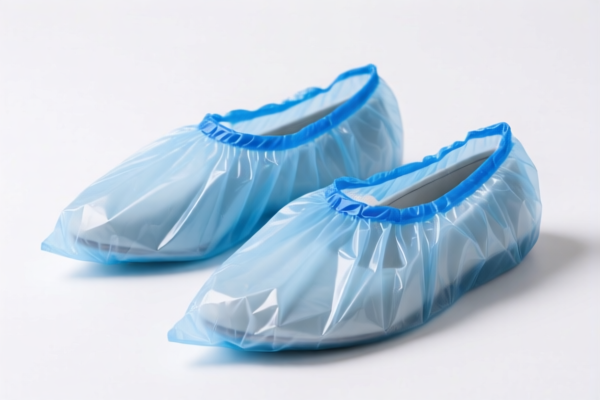
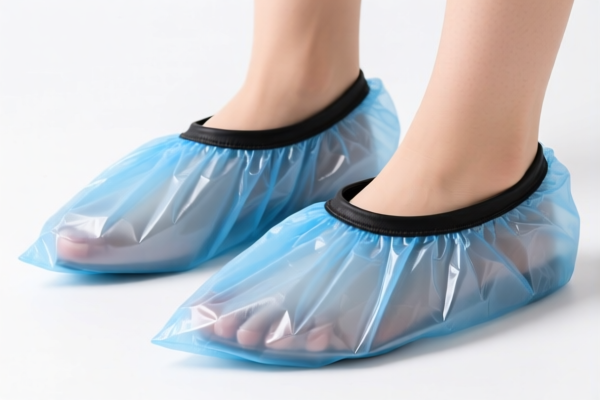
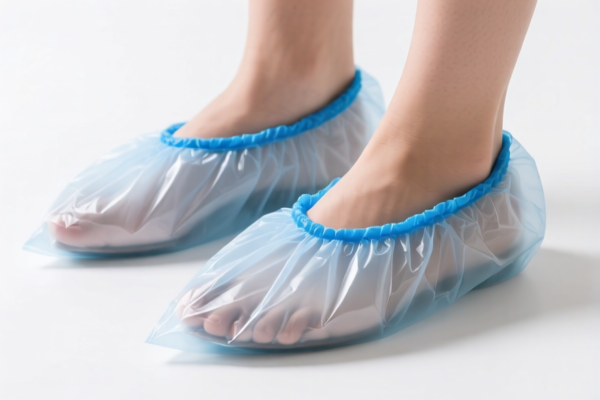
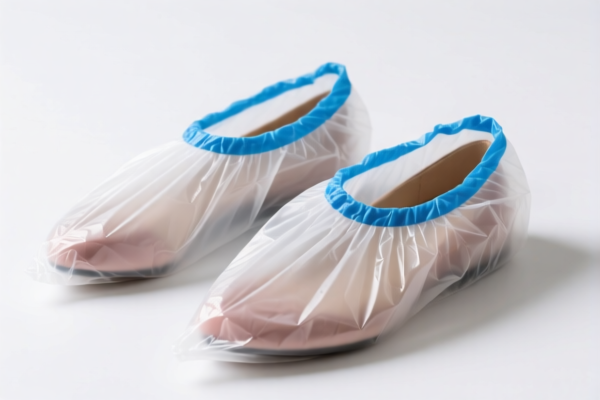
Disposable shoe covers are thin, protective over-shoes worn to prevent contamination of floors or shoes. In international trade, their classification depends heavily on material composition and intended use. They generally fall into two main categories:
Non-Woven/Plastic Finished Goods: If made of non-woven fabric or simple plastic, often classified under "Other made-up articles." Plastic Products/Sheeting: If made specifically of plastic sheets or films, they may fall under plastic product chapters. Footwear: Rarely, if structured like a shoe, they might be misclassified as footwear.
⚠️ Key Distinction Point: - Material is King: Is it plastic (
Chapter 39), non-woven textile (Chapter 63), or rubber/leather-like (Chapter 64)? - Use Case: Medical/Industrial hygiene vs. general-purpose dust protection.
📦 II. HS Code Classification Details (2026 Latest Tariff Authority对照)
Based on the provided data, here are the five potential HS Codes for Disposable Shoe Covers, ranging from low-tariff plastic-specific codes to high-tariff general articles.
| HS Code | Product Description | Application Scenario | Material/Type | Total Tax Rate |
|---|---|---|---|---|
3926.20.10.20 |
Disposable Plastic Shoe Covers | Explicitly covers disposable plastic covers. Matches plastic product classification. | Plastic, Disposable | 10.0% |
3926.90.99.89 |
Other Plastic Articles | Plastic covers not specifically listed elsewhere. General plastic category. | Plastic | 22.8% |
6405.90.20.00 |
Other Footwear | Classified as "footwear" due to shape, inferred plastic material. | Plastic, Shoe-like | 21.3% |
6307.90.98.91 |
Other Made-up Articles | Finished goods category, inferred plastic or non-woven fabric. | Non-woven/Plastic | 24.5% |
3921.90.19.10 |
Other Plastic Plates/Films | Treated as plastic film/sheet application. | Plastic Film | 40.3% |
🔍 Critical Note: -
3926.20.10.20offers the lowest total tax (10%) but requires explicit recognition as "disposable plastic shoe covers." -3921.90.19.10has the highest total tax (40.3%) due to specific "122 Clause" and additional duties on plastic films. -6307.90.98.91and6405.90.20.00are fallback categories with moderate-to-high tariffs.
💰 III. 2026 Latest Tariff Rate Breakdown (Including Additional Taxes & Policy Surcharges)
✅ Applicable Country: United States (US) ✅ Country of Origin: China (CN) ✅ Effective Date: As per current trade policies (Subject to change)
🎯 1. 3926.20.10.20 — Disposable Plastic Shoe Covers (BEST OPTION)
| Item | Content |
|---|---|
| Base Tariff | 0.0% (ad valorem) |
| Section 301 Additional Duty | 0.0% (Specific exemption or low rate for this subheading) |
| Section 122 Duty | +10% (针对中国/香港产品) |
| Total Tax Rate | 10.0% |
| Tax Calculation | CIF Value × 10% |
| De Minimis Eligibility | ❌ No (Must declare properly) |
| Legal Basis Path | Section 122:9903 → USITC:3926.20.10.20 |
📌 Explanation: - This is the most favorable classification if the product can be explicitly identified as "disposable plastic shoe covers." - No Section 301 additional duty applies here, unlike other plastic goods. - Only the 10% Section 122 duty applies, making it significantly cheaper than other plastic classifications.
🎯 2. 3926.90.99.89 — Other Plastic Articles (General Category)
| Item | Content |
|---|---|
| Base Tariff | 5.3% |
| Section 301 Additional Duty | +7.5% |
| Section 122 Duty | +10% |
| Total Tax Rate | 22.8% |
| Tax Calculation | CIF Value × 22.8% |
| De Minimis Eligibility | ❌ No |
| Legal Basis Path | IEEPA:9903.01.24 → USITC:3926.90.99.89 → FOOTNOTE:Section 122 |
📌 Note: - Used if the product is plastic but doesn't fit the specific "disposable shoe cover" subheading. - Moderate tax burden compared to film or general made-up articles.
🎯 3. 6405.90.20.00 — Other Footwear (Misclassification Risk)
| Item | Content |
|---|---|
| Base Tariff | 3.8% |
| Section 301 Additional Duty | +7.5% |
| Section 122 Duty | +10% |
| Total Tax Rate | 21.3% |
| Tax Calculation | CIF Value × 21.3% |
| De Minimis Eligibility | ❌ No |
| Legal Basis Path | Section 301 → Section 122 → USITC:6405.90.20.00 |
📌 Warning: - Classifying shoe covers as "footwear" is risky. Customs may reject this if the product lacks structure, soles, or laces. - Tax rate is competitive but not as low as
3926.20.10.20.
🎯 4. 6307.90.98.91 — Other Made-up Articles (Non-Woven/Textile)
| Item | Content |
|---|---|
| Base Tariff | 7.0% |
| Section 301 Additional Duty | +7.5% |
| Section 122 Duty | +10% |
| Total Tax Rate | 24.5% |
| Tax Calculation | CIF Value × 24.5% |
| De Minimis Eligibility | ❌ No |
| Legal Basis Path | Section 301 → Section 122 → USITC:6307.90.98.91 |
📌 Note: - Applies if the shoe covers are made of non-woven fabric (common for medical/surgical use). - Higher base tariff than plastic-specific codes.
🎯 5. 3921.90.19.10 — Other Plastic Plates/Films (HIGHEST RISK)
| Item | Content |
|---|---|
| Base Tariff | 5.3% |
| Section 301 Additional Duty | +25.0% |
| Section 122 Duty | +10% |
| Total Tax Rate | 40.3% |
| Tax Calculation | CIF Value × 40.3% |
| De Minimis Eligibility | ❌ No |
| Legal Basis Path | IEEPA:9903.01.25 → Section 301:25% → Section 122 → USITC:3921.90.19.10 |
📌 Critical Warning: - DO NOT USE unless absolutely necessary. - The 25% Section 301 duty makes this the most expensive option. - Only apply if the product is strictly considered a "plastic sheet/film" and not a finished article.
🛠️ IV. Customs Clearance Practical Advice (Battle-Tested Pitfall Avoidance)
✅ 1. Preparation Checklist (Non-Negotiable)
| Document | Required | Notes |
|---|---|---|
| ✅ Product Specifications | ✔️ | Must specify material (Plastic vs. Non-Woven), thickness, and disposal type. |
| ✅ Product Photos | ✔️ | Show the product clearly as "covers," not "shoes." Highlight elasticity/elastic bands. |
| ✅ Commercial Invoice | ✔️ | Use precise description: "Disposable Plastic Shoe Covers for Hygiene Use." Avoid vague terms like "Protective Gear." |
| ✅ Packing List | ✔️ | Detail quantity per carton. |
| ✅ Material Certification | ✔️ | If non-woven, provide proof of material composition to avoid misclassification as plastic. |
✅ 2. Declaration Strategy (Key Mantra)
🔥 “Material Defines Code, Description Matches Function, Avoid ‘Film’, Choose ‘Cover’!”
| Scenario | Correct Declaration | Wrong Declaration |
|---|---|---|
| Plastic Shoe Covers | 3926.20.10.20 - "Disposable Plastic Shoe Covers" |
3921.90.19.10 - "Plastic Film Sheets" → 40.3% |
| Non-Woven Shoe Covers | 6307.90.98.91 - "Non-Woven Disposable Covers" |
6405.90.20.00 - "Footwear" → 21.3% (Risk of rejection) |
| General Plastic Covers | 3926.90.99.89 - "Other Plastic Articles" |
3926.20.10.20 - "Disposable Shoe Covers" (If not explicitly disposable/plastic) |
✅ 3. Special Considerations
| Situation | Handling Advice |
|---|---|
| OEM/Private Label | Provide OEM agreement and design specs to prove "disposable" nature. |
| Medical vs. Industrial | If for medical use, emphasize "hygiene" and "single-use" in description to support 3926.20.10.20. |
| Bulk vs. Retail | Ensure packaging reflects retail-ready units if declaring as finished goods. |
| Origin: China | All rates above assume CN origin. Verify if any preferential trade agreements apply (unlikely for US). |
🌍 V. Global Market Comparison (2026 Update)
| Country/Region | Recommended HS Code | Total Tax (CN Origin) | Certification Required | Notes |
|---|---|---|---|---|
| 🇺🇸 USA | 3926.20.10.20 |
10.0% | None specific | Best rate for plastic disposable covers. |
| 🇨🇳 China | 3926.20.10.20 |
~5-10% | CCC (if applicable) | Lower import tax, no Section 301/122. |
| 🇪🇺 EU | 3926.90.99 |
~6.5% | CE (if medical) | No Section 301. |
| 🇬🇧 UK | 3926.90.99 |
~6.5% | UKCA | Post-Brexit rules apply. |
| 🇦🇺 Australia | 3926.90.99 |
~5.0% | None | Competitive rate. |
📌 Conclusion: - USA is the most complex market due to Section 301 and Section 122 duties. -
3926.20.10.20is the golden ticket for US importers, offering the lowest possible rate (10%) for plastic disposable shoe covers.
📌 VI. Common Mistakes & Pitfalls (Blood-Tested Lessons)
❌ Mistake 1: Classifying as "Plastic Film" (3921.90.19.10)
👉 Consequence: 40.3% Tax → Profit Margin Destroyed!
❌ Mistake 2: Calling them "Shoes" (6405.90.20.00)
👉 Consequence: Customs Rejection or 21.3% Tax + Delay. Not actual footwear.
❌ Mistake 3: Vague Description ("Protective Covers") 👉 Consequence: Audits, Delays, Potential Re-classification to Higher Tax Bracket.
❌ Mistake 4: Ignoring Section 122 👉 Consequence: Underpayment of 10% Duty → Penalties & Back Taxes.
✅ Correct Approach:
"Disposable Plastic Shoe Covers, Non-Woven/PE Material, Single-Use, For Hygiene/Industrial Purpose, Model XYZ, No Medical Claim"
🎯 VII. Conclusion: Professional Declaration, Save Money, Avoid Risks!
🎯 Remember the Mantra:
🔹 “Plastic Disposable = 10% (3926.20.10.20)” 🔹 “General Plastic = 22.8% (3926.90.99.89)” 🔹 “Plastic Film = 40.3% (3921.90.19.10) – AVOID!” 🔹 “Non-Woven = 24.5% (6307.90.98.91)”
📌 Tip:
If your shoe covers are made of non-woven fabric, you cannot use
3926.20.10.20. You must use6307.90.98.91(24.5%). Ensure your material specification matches the HS Code. Apply for Advance Ruling if unsure about material composition vs. classification.
📣 Immediate Action:
📞 Contact a professional customs broker + Provide product specs + Request HS Code Advance Ruling for
3926.20.10.20. 🚀 Let your disposable shoe covers pass smoothly, reduce costs, and maximize profits!
✨ Professional Clearance Starts with Precise Classification! 💼 Every penny of tax paid is worth calculating precisely!
Customer Reviews
About HS Code Classification
The Harmonized System (HS) is an internationally standardized nomenclature developed by the World Customs Organization (WCO) to classify traded products. Over 200 countries use the HS system as the basis for customs tariffs, trade statistics, and import/export regulations.
Each HS code follows a hierarchical structure:
- Chapter (2 digits) — Broad category of goods (e.g., Chapter 84: Machinery and Mechanical Appliances)
- Heading (4 digits) — More specific grouping within the chapter
- Subheading (6 digits) — Internationally standardized breakdown, used by all WCO member countries
- National subdivisions (8-10 digits) — Country-specific extensions for further classification, such as US HTSUS 10-digit codes
Correct HS code classification is essential for smooth customs clearance, accurate duty payment, and compliance with trade regulations. Misclassification can lead to customs delays, overpayment of duties, or penalties.
When importing from CN to US, the applicable tariff rates may include:
- Most-Favored-Nation (MFN) rate — The standard duty rate applied to WTO members
- General rate — Applied to countries without trade agreements
- Trade remedy duties — Additional tariffs such as Section 301 (anti-dumping), Section 232 (national security), or countervailing duties
The information provided on this page is for reference purposes only. For official classification, please consult with your local customs authority or a licensed customs broker.