Disposable Shoe Covers (Blue Non woven Fabric)
CN → US| HS Code | Tariff Rate | Origin | Destination | Doc |
|---|---|---|---|---|
| 6307909891 | 24.5% | CN | US | Official Doc |
| 6307909884 | 24.5% | CN | US | Official Doc |
Product Images
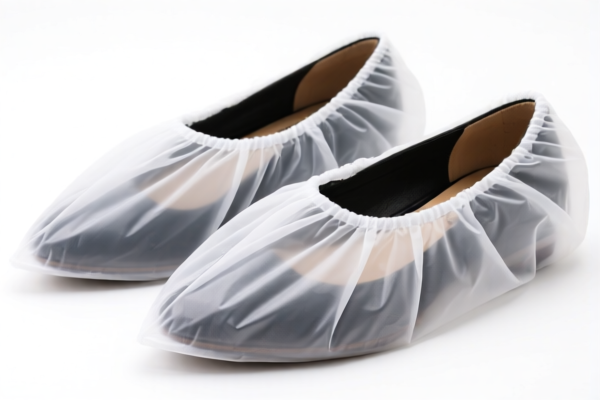
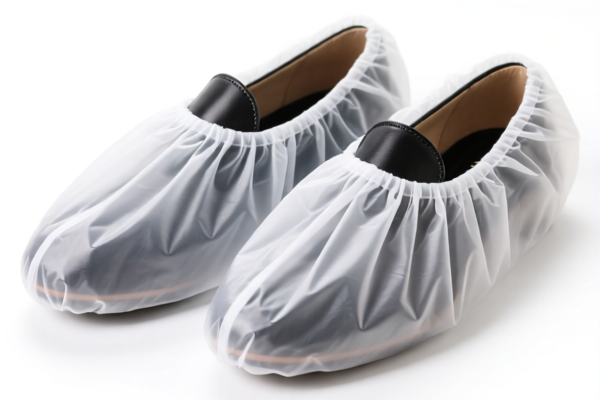
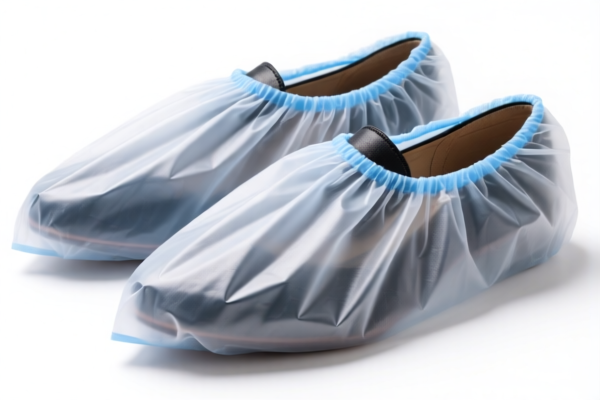
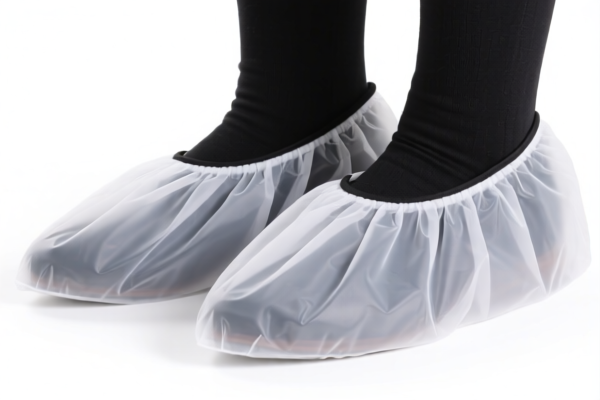
AI Analysis
👟 Disposable Shoe Covers (Blue Non-Woven Fabric)
🌐 HS Code Reference & Customs Clearance Guide | 2026 Latest Tariff Analysis | Professional Clearance Strategy
📌 1. Product Definition & Classification: Do You Really Know "Shoe Covers"?
Disposable Shoe Covers are essential personal protective equipment (PPE) used in healthcare, food processing, electronics manufacturing, and cleanroom environments. Their primary purpose is to prevent cross-contamination. In international trade, the classification depends heavily on the material composition and specific use.
Non-Woven Fabric (Synthetic Fibers): Most common for disposable covers. Made from polypropylene (PP) or other man-made fibers.
Woven Cotton/Textile: Less common for "disposable" items, usually reusable.
Rubber/Latex: Usually classified differently (under footwear or rubber articles).
⚠️ Key Distinction Point:
- If made of non-woven man-made fibers (e.g., PP) → Classified under Chapter 63 (Other Made-Up Articles).
- If made of rubber or plastic (impenetrable) → May fall under Chapter 39 or 40 (Footwear accessories).
- For this analysis, we focus on the standard "Blue Non-Woven Fabric" variant, which typically falls under HS Code 6307.
📦 2. HS Code Classification Details (2026 Latest Tariff Authority Comparison)
| HS Code | Product Description | Applicable Scenario | Material | Tax Rate (Total) |
|---|---|---|---|---|
6307.90.98.91 |
Other made-up articles, including dress patterns: Other: Other: Other | General disposable non-woven shoe covers, non-woven fabric, other uses | Non-woven man-made fibers | 14.5% |
6307.90.98.84 |
Other made-up articles, including dress patterns: Other: Other: Other Other towels of man-made fibers | Special Note: Often misclassified. While shoe covers are not "towels," this code is sometimes used for specific non-woven textile articles if not explicitly listed elsewhere. However, 91 is more common for general "other" non-woven goods. Check local customs preference. |
Non-woven man-made fibers | 14.5% |
🔍 Key Reminder:
- Most standard disposable blue non-woven shoe covers are classified under 6307.90.98.91 ("Other made-up articles").
- Avoid classifying them as "footwear" (Chapter 64) unless they have a rigid sole and are designed for permanent wear. Disposable covers are accessories/ppe, not footwear.
- Ensure the description clearly states "Disposable, Non-Woven, Man-Made Fibers" to avoid confusion with reusable textile shoes.
💰 3. 2026 Latest Tariff Rate Details (Including Surtaxes & Policy Add-ons)
✅ Applicable Country: United States (US)
✅ Origin: China (CN)
✅ Effective Time: 2025+ (Subject to ongoing Section 301 & IEEPA measures)
🎯 1. 6307.90.98.91 – Disposable Shoe Covers (Non-Woven, Other Made-Up Articles)
| Item | Content |
|---|---|
| Base Tariff | 7.0% (Ad Valorem) |
| Additional Tariff (Section 301) | +7.5% (On many textile/non-woven articles from China) |
| Total Tax Rate | 14.5% |
| Tax Calculation | CIF Value × 14.5% |
| De Minimis Exemption Eligible | ✅ Yes (For shipments under $800, if all other conditions met) |
| Legal Basis Path | HTSUS:6307.90.98.91 → Section 301 Footnote |
📌 Explanation:
- Base Rate (7.0%): Standard US MFN (Most Favored Nation) rate for "Other made-up articles."
- Additional Tariff (7.5%): Part of the broader Section 301 tariffs affecting Chinese textiles and non-woven products.
- Total (14.5%): This is a moderate tariff compared to electronics or steel, but still significant for low-margin disposable items.
- De Minimis: If shipped via courier (e.g., DHL, FedEx, UPS) as individual parcels under $800, these tariffs may be exempted under the de minimis rule (Section 321), unless the product is specifically excluded (currently, most non-woven PPE is not excluded from de minimis, but verify latest CBP rulings).
🎯 2. 6307.90.98.84 – Other Towels/Articles of Man-Made Fibers
| Item | Content |
|---|---|
| Base Tariff | 7.0% |
| Additional Tariff (Section 301) | +7.5% |
| Total Tax Rate | 14.5% |
| De Minimis Exemption Eligible | ✅ Yes (Under $800) |
| Legal Basis Path | HTSUS:6307.90.98.84 → Section 301 Footnote |
📌 Note:
- While "towels" seems inaccurate for shoe covers, some customs brokers use this code if91is deemed too vague. However, 91 is preferred for general non-woven made-up articles.
- The tariff impact is identical (14.5%), so the financial outcome is the same.
- Recommendation: Use 6307.90.98.91 for accuracy and compliance.
🛠️ 4. Customs Clearance Practical Advice (Real-World Pitfall Avoidance)
✅ 1. Documentation Checklist (Must-Have)
| Document | Required | Notes |
|---|---|---|
| ✅ Commercial Invoice | ✔️ | Must state: "Disposable Shoe Covers, Non-Woven, PP, Blue" |
| ✅ Packing List | ✔️ | Include count per box, total boxes, weight |
| ✅ Product Specification | ✔️ | Detail fabric weight (e.g., 20gsm, 30gsm), material (PP), usage (medical/industrial) |
| ✅ Certificate of Origin (CO) | ✔️ | If claiming any preferential treatment (though US-China has none) |
| ✅ FDA Registration (If Medical) | ✔️ | If claimed as "Medical Device" or "Surgical," FDA clearance may be required. For general industrial use, usually not. |
| ✅ Customs Bond | ✔️ | Required for commercial imports over $2,500 |
✅ 2. Declaration Tips (Key Phrases)
🔥 “Clear Description, No Ambiguity!”
| Scenario | Correct Declaration | Wrong Declaration |
|---|---|---|
| Standard Disposable Covers | Disposable Shoe Covers, Non-Woven Polypropylene, Blue, For Industrial Use |
Shoe Covers (Too vague) |
| Medical Grade | Non-Woven Surgical Shoe Covers, FDA Cleared |
Medical Shoe Covers (Without FDA info) |
| Bulk Export | 10,000 pcs, 50 boxes, CIF New York |
Shoes (Wrong chapter!) |
⚠️ Critical Warning:
- Never declare as "Footwear" (6401-6406). Shoe covers are not footwear. They are temporary covers. Misclassification can lead to audits, penalties, and duty evasion charges.
- Avoid "Textile" vague terms. Specify "Non-Woven Man-Made Fibers" to ensure correct HTSUS classification.
✅ 3. Special Cases Handling
| Situation | Handling Advice |
|---|---|
| De Minimis Shipment (<$800) | ✅ No duty or tax (usually). Ensure carrier files Form 7512. Keep invoices clear. |
| Medical/Healthcare Use | ✅ Check if FDA registration is needed. If yes, add "FDA Registered" to docs. |
| OEM/Private Label | ✅ Provide client logo approval if applicable. No tax impact, but ensure brand compliance. |
| Mixed Packages (Covers + Gloves) | ✅ Declare separately. Gloves may have different HS codes. Do not combine unless same tariff rate. |
🌍 5. Global Market Comparison (2026 Latest)
| Country/Region | Recommended HS Code | Tariff Rate | Certification | Notes |
|---|---|---|---|---|
| 🇺🇸 USA | 6307.90.98.91 |
14.5% (CN) | FDA (if medical) | De minimis exempt for < $800 |
| 🇪🇺 EU | 6307.90.98 |
4.5% | CE (if medical) | No Section 301 equivalent |
| 🇨🇦 Canada | 6307.90.90 |
5.0% | Health Canada (if medical) | Low tariff, easy clearance |
| 🇬🇧 UK | 6307.90.90 |
4.5% | UKCA (if medical) | Post-Brexit rules apply |
| 🇦🇺 Australia | 6307.90.90 |
5.0% | TGA (if medical) | Standard MFN rate |
📌 Conclusion:
- USA is the highest-tariff market due to Section 301 (14.5% vs. 4.5-5% elsewhere).
- De minimis advantage in the US makes small B2C shipments very cost-effective.
- EU/UK/Canada have lower base tariffs but stricter medical device regulations.
📌 6. Common Mistakes & Pitfalls (Lessons Learned)
❌ Mistake 1: Declaring as "Footwear"
👉 Consequence: Incorrect HS Code (64xx), potential 10%+ penalty, delays.
❌ Mistake 2: Omitting "Disposable" in Description
👉 Consequence: Customs may assume reusable textile, leading to classification review and holdups.
❌ Mistake 3: Ignoring De Minimis Rules
👉 Consequence: Paying 14.5% duty on a $500 shipment when it could have been duty-free.
❌ Mistake 4: Using "Textile Shoe Covers" Without Material Spec
👉 Consequence: Customs may downgrade to woven fabric rates or require additional info.
✅ Best Practice:
"Disposable Non-Woven PP Shoe Covers, Blue, 20gsm, For Industrial/Healthcare Use, Non-Medical"
🎯 7. Conclusion: Smart Clearance, Lower Costs, Faster Delivery!
🎯 Remember:
🔹 "Non-Woven = 6307, Not 64xx!"
🔹 "De Minimis < $800 = No Duty (Check Carrier Rules)"
🔹 "14.5% is the Standard for CN Origin, But Avoidable for Small Parcels"
📌 Pro Tip:
For large B2B shipments, calculate the 14.5% cost into your pricing. For B2C/Dropshipping, leverage de minimis by splitting shipments or using courier services that handle Form 7512 correctly.
📣 Immediate Action:
📞 Consult a licensed customs broker for pre-classification ruling if volume is high.
🚀 Ensure your invoice description is precise to avoid customs holds.
✨ Professional Clearance, Start with Accurate Classification!
💼 Every Percentage Point Matters in Global Trade!
Customer Reviews
About HS Code Classification
The Harmonized System (HS) is an internationally standardized nomenclature developed by the World Customs Organization (WCO) to classify traded products. Over 200 countries use the HS system as the basis for customs tariffs, trade statistics, and import/export regulations.
Each HS code follows a hierarchical structure:
- Chapter (2 digits) — Broad category of goods (e.g., Chapter 84: Machinery and Mechanical Appliances)
- Heading (4 digits) — More specific grouping within the chapter
- Subheading (6 digits) — Internationally standardized breakdown, used by all WCO member countries
- National subdivisions (8-10 digits) — Country-specific extensions for further classification, such as US HTSUS 10-digit codes
Correct HS code classification is essential for smooth customs clearance, accurate duty payment, and compliance with trade regulations. Misclassification can lead to customs delays, overpayment of duties, or penalties.
When importing from CN to US, the applicable tariff rates may include:
- Most-Favored-Nation (MFN) rate — The standard duty rate applied to WTO members
- General rate — Applied to countries without trade agreements
- Trade remedy duties — Additional tariffs such as Section 301 (anti-dumping), Section 232 (national security), or countervailing duties
The information provided on this page is for reference purposes only. For official classification, please consult with your local customs authority or a licensed customs broker.