Disposable Thermometer Cover
CN → US| HS Code | Tariff Rate | Origin | Destination | Doc |
|---|---|---|---|---|
| 4823908000 | 35.0% | CN | US | Official Doc |
| 9025900600 | 35.0% | CN | US | Official Doc |
| 9025114000 | 10.0% | CN | US | Official Doc |
| 4823908680 | 35.0% | CN | US | Official Doc |
| 4823908000 | 35.0% | CN | US | Official Doc |
Product Images
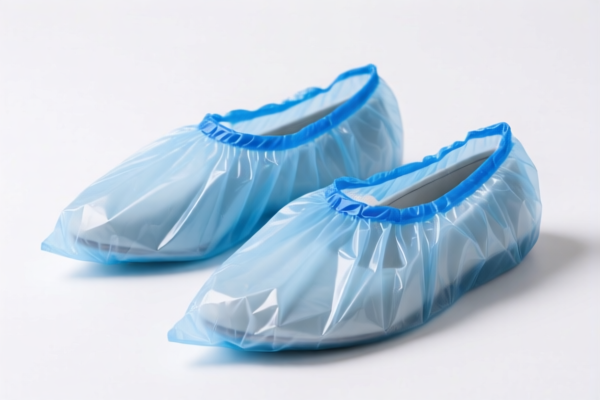



AI Analysis
🌡️ Disposable Thermometer Cover (Paper Sleeve)
🌐 HS Code Reference & Customs Clearance Guide | 2026 Latest Tariff Analysis | Professional Entry Strategy
📌 I. Product Definition & Classification: What Exactly is a "Thermometer Cover"?
Disposable Thermometer Covers (specifically those made of paper) are accessory components used to maintain hygiene during temperature measurement. In international trade, their classification is highly sensitive to how they are perceived: as independent paper products or as integral parts of a medical device.
Paper Sleeves/Cases: Disposable paper wraps designed to cover the bulb/head of a thermometer. Accessory/Part of Thermometer: Components that do not constitute the principal function of the thermometer but are essential for its sterile operation.
⚠️ Key Distinction:
- If the paper is just a generic packaging or protective sleeve → Classified under Chapter 48 (Paper Products)
- If the paper is specifically shaped/customized solely for thermometer attachment and lacks independent utility → Classified under Chapter 90 (Instruments)
📦 II. HS Code Classification Details (2026 Latest Tariff Authority)
Based on the provided data, here are the five possible classifications and their corresponding tax implications:
| HS Code | Product Description | Application Scenario | Tax Rate (China Origin -> US) | Legal Basis / Rationale |
|---|---|---|---|---|
4823.90.80.00 |
Paper sleeves as paper sealing or protective articles | Generic paper covers, loose sheets, or simple protective wraps | 35.0% | Base 0% + 301 Tariff 25% + Section 122 Tariff 10% |
4823.90.80.00 |
Paper sleeves classified as other paper products | General paper goods without specific medical accessory intent | 35.0% | Base 0% + 301 Tariff 25% + Section 122 Tariff 10% |
4823.90.86.80 |
Paper products cut into specific shapes | Pre-cut, die-cut paper sleeves specifically shaped for thermometers | 35.0% | Base 0% + 301 Tariff 25% + Section 122 Tariff 10% |
9025.90.06.00 |
Thermometer accessories (paper sleeves) classified as parts | Classified strictly as a "part" of the thermometer apparatus | 35.0% | Base 0% + 301 Tariff 25% + Section 122 Tariff 10% |
9025.11.40.00 |
Thermometer accessories classified as non-metallic components | Classified as a component of the thermometer itself | 10.0% | Base 0% + 301 Tariff 0% + Section 122 Tariff 10% |
🔍 Critical Alert:
- Most scenarios carry a high 35% tariff because they either fall under Paper Products (Ch 48) or Parts (Ch 90) subject to 301 Tariffs (25%).
- Only9025.11.40.00offers a significant tax advantage (10%), but this requires strict justification that the item is a "non-metallic component" of the thermometer, not just an accessory.
- Section 122 Tariff (10%) applies to all entries from China in this dataset.
💰 III. 2026 Latest Tariff Rate Breakdown (Detailed Explanation)
✅ Applicable Country: United States (US)
✅ Country of Origin: China (CN)
✅ Effective Time: Current regulations apply (including Section 301 and Section 122 measures)
🎯 1. High-Tariff Scenarios: 4823.90.80.00, 4823.90.86.80, 9025.90.06.00
| Item | Content |
|---|---|
| Basic Duty Rate | 0.0% (Ad Valorem) |
| USITC Additional Tariff (Section 301) | +25.0% |
| Section 122 Tariff | +10.0% |
| Total Effective Rate | 35.0% |
| Tax Calculation | CIF Value × 35% |
| De Minimis Exemption? | ❌ NO (deny_de_minimis) |
| Legal Basis Path | Section 301: 9903.88.01 → Section 122 → HS Code (4823/9025) |
📌 Explanation:
- The 25% is the standard punitive tariff under Section 301 for Chinese goods in these categories.
- The 10% is the additional levy under Section 122 (often related to specific trade remedies or new restrictions).
- Total 35% is extremely high. This applies whether you declare it as "Paper" (48xx) or "Thermometer Part" (9025.90).
- Risk: Misclassification here leads to massive cost overruns.
🎯 2. Low-Tariff Scenario: 9025.11.40.00
| Item | Content |
|---|---|
| Basic Duty Rate | 0.0% |
| USITC Additional Tariff (Section 301) | 0.0% (Exempt or Not Applicable) |
| Section 122 Tariff | +10.0% |
| Total Effective Rate | 10.0% |
| Tax Calculation | CIF Value × 10% |
| De Minimis Exemption? | ❌ NO (deny_de_minimis) |
| Legal Basis Path | Section 122 → HS Code: 9025.11.40.00 |
📌 Strategic Advantage:
- This is the only entry with 0% Section 301 tariff.
- To qualify, you must prove the paper cover is a "non-metallic component" of the thermometer (e.g., integral to its operation/safety) rather than a standalone accessory or packaging.
- Savings: 25% less tax compared to other classifications.
🛠️ IV. Customs Clearance Practical Advice (Avoid Pitfalls)
✅ 1. Documentation Checklist (Mandatory)
| Document | Required? | Explanation |
|---|---|---|
| ✅ Product Specification Sheet | ✔️ | Must specify material (Paper), dimensions, and usage (Thermometer Cover). |
| ✅ Photos/Images | ✔️ | Show the cover on the thermometer. Crucial for proving it's a "part" vs "packaging". |
| ✅ Bill of Materials (BOM) | ✔️ | List the paper cover as a component of the final sale unit. |
| ✅ Commercial Invoice | ✔️ | Description should be precise: "Thermometer Accessory (Paper Sleeve)" or "Thermometer Component". Avoid vague terms like "Paper Goods". |
| ✅ Packing List | ✔️ | Ensure quantity matches invoice. |
| ✅ Certificate of Origin | ✔️ | Required for Section 301/122 determination. |
✅ 2. Declaration Strategy (Key Mantras)
🔥 "Prove Component, Not Packaging; Aim for 9025.11!"
| Scenario | Recommended HS Code | Reasoning |
|---|---|---|
| Loose paper sleeves sold separately | 4823.90.80.00 |
Treated as general paper products. High tax (35%). |
| Pre-cut shapes, sold as accessories | 4823.90.86.80 or 9025.90.06.00 |
Still likely subject to 301 tariffs. High tax (35%). |
| Integral part of thermometer sale | 9025.11.40.00 |
Best Option. Argue it is a non-metallic component essential for hygiene/function. Low tax (10%). |
📌 Note:
- Do not declare as "Packaging Materials" if you want to avoid Section 301, but be careful: customs may still classify it as paper products.
- Goal: Justify the classification under9025.11.40.00by showing the covers are custom-fit and essential for the thermometer's sterile use.
✅ 3. Special Cases & Handling
| Situation | Handling Advice |
|---|---|
| OEM/Custom Orders | Provide design specs showing the cover is shaped specifically for the thermometer head. |
| Sold with Thermometer | Declare as a single unit or accessory to support the "component" argument. |
| Sold Separately | High risk of being classified as Paper (48xx). Prepare for 35% tax. |
| Multi-Purpose Cover | If the same paper cover can be used for other devices, it is likely "Paper" (48xx), not "Thermometer Part" (9025). |
🌍 V. Global Market Comparison (2026)
| Country/Region | Recommended HS Code | Tariff Rate | Notes |
|---|---|---|---|
| 🇺🇸 USA | 9025.11.40.00 (Best) |
10% | Only option with 0% Section 301. Hard to justify but worth fighting for. |
| 🇺🇸 USA | 4823.90.80.00 (Default) |
35% | High cost. Likely if classification fails. |
| 🇨🇳 China | 4823.90.80.00 |
~5-10% | Lower duty, no 301/122 tariffs. |
| 🇪🇺 EU | 4823.90.80 |
~6.5% | No Section 301/122 equivalent. Standard MFN rates apply. |
| 🇬🇧 UK | 4823.90.80 |
~5% | Post-Brexit tariffs may vary slightly. |
📌 Conclusion:
- The USA is the only market where the Section 301 (25%) and Section 122 (10%) tariffs create a huge disparity.
- China origin triggers these high rates.
- Strategy: Try to classify under9025.11.40.00to save 25%. If rejected, accept4823at 35%.
📌 VI. Common Mistakes & Pitfalls (Blood Lessons)
❌ Mistake 1: Declaring as "Paper Packaging" to avoid "Parts" scrutiny
👉 Result: Still classified as Paper (48xx) + 301 Tariff. Tax remains 35%. No savings.
❌ Mistake 2: Using vague description "Paper Cover"
👉 Result: Customs may audit, delay shipment, and apply highest possible rate (35%) due to uncertainty.
❌ Mistake 3: Claiming "Component" without proof
👉 Result: Rejection of 9025.11.40.00. Forced to pay 35%.
❌ Mistake 4: Ignoring Section 122
👉 Result: Even if you get 0% Section 301, you still owe 10% Section 122. Don't plan for 0% total tax.
✅ Correct Practice:
"Thermometer Hygiene Sleeve (Paper Component), Custom-Fit, For Use with Digital Mercury-Free Thermometers. HS Code: 9025.11.40.00."
🎯 VII. Conclusion: Strategic Sourcing & Cost Management
🎯 Key Takeaway:
🔹 "Paper = 35%, Component = 10%. Fight for 9025.11!"
🔹 "Section 301 kills margins. Section 122 is inevitable."
🔹 "Documentation is your shield. Prove it's a part, not a wrapper."
📌 Pro Tip:
- If your volume is high, consider Advance Rulings from CBP (US Customs) to lock in the 9025.11.40.00 classification.
- If classification as "Part" is rejected, explore if the product can be packaged/shipped from a non-China origin to avoid Section 301/122 (though material likely still China-origin, so verify rules of origin).
📣 Immediate Action:
📞 Engage a licensed customs broker.
📄 Submit product specs & photos for pre-classification review.
🚀 Optimize your supply chain to absorb or mitigate the 10-35% tariff hit.
✨ Professional Clearance Starts with Precise Classification!
💼 Your bottom line depends on this 25% difference!
Customer Reviews
About HS Code Classification
The Harmonized System (HS) is an internationally standardized nomenclature developed by the World Customs Organization (WCO) to classify traded products. Over 200 countries use the HS system as the basis for customs tariffs, trade statistics, and import/export regulations.
Each HS code follows a hierarchical structure:
- Chapter (2 digits) — Broad category of goods (e.g., Chapter 84: Machinery and Mechanical Appliances)
- Heading (4 digits) — More specific grouping within the chapter
- Subheading (6 digits) — Internationally standardized breakdown, used by all WCO member countries
- National subdivisions (8-10 digits) — Country-specific extensions for further classification, such as US HTSUS 10-digit codes
Correct HS code classification is essential for smooth customs clearance, accurate duty payment, and compliance with trade regulations. Misclassification can lead to customs delays, overpayment of duties, or penalties.
When importing from CN to US, the applicable tariff rates may include:
- Most-Favored-Nation (MFN) rate — The standard duty rate applied to WTO members
- General rate — Applied to countries without trade agreements
- Trade remedy duties — Additional tariffs such as Section 301 (anti-dumping), Section 232 (national security), or countervailing duties
The information provided on this page is for reference purposes only. For official classification, please consult with your local customs authority or a licensed customs broker.