Distribution Board Electrical Accessories
CN → US| HS Code | Tariff Rate | Origin | Destination | Doc |
|---|---|---|---|---|
| 8537109150 | 37.7% | CN | US | Official Doc |
| 8537109120 | 37.7% | CN | US | Official Doc |
Product Images
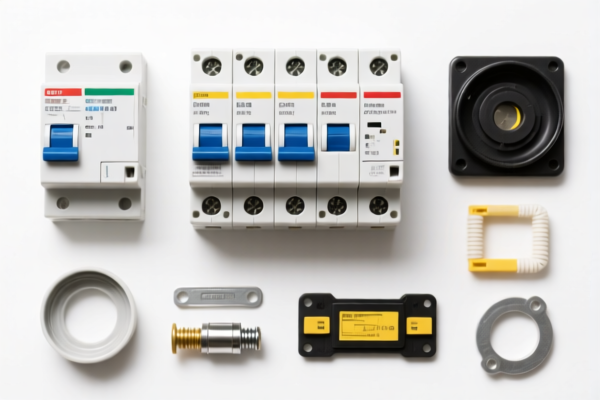
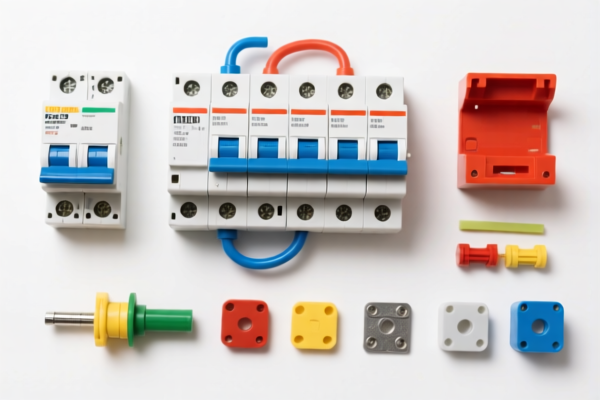
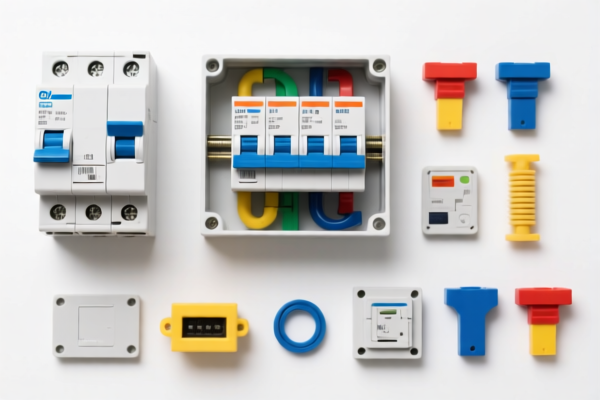
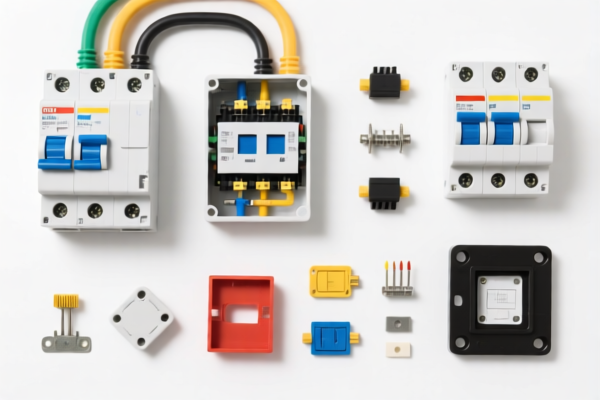
AI Analysis
⚡ Distribution Boards & Electrical Control Panels (8537.10)
🌐 HS Code Reference & Customs Clearance Guide | 2026 Latest Tariff Analysis | Professional Clearance Strategy
📌 I. Product Definition & Classification: Do You Really Understand "Electrical Control Gear"?
Distribution Boards (also known as switchboards, panel boards, or control consoles) are the backbone of electrical infrastructure. They are not simple "switches" but complex assemblies designed to control, distribute, and protect electrical power.
In international trade, the distinction is critical: * Simple Switching Apparatus (Heading 8536): Single switches, relays, or circuit breakers standing alone. * Control/Distribution Boards (Heading 8537): An assembly (board, panel, console, cabinet, or desk) containing two or more apparatus of heading 8535 or 8536. This includes those incorporating instruments (Chapter 90) or numerical control apparatus.
⚠️ Key Distinction Point:
- If it is a single switch, socket, or relay → Go to 8536.
- If it is a panel/board/cabinet with multiple switches/circuit breakers/instruments integrated for control or distribution → Go to 8537.
- Voltage Limit: The specific HS codes provided in apply to equipment with a voltage not exceeding 1,000 V.
📦 II. HS Code Classification Details (2026 Latest Tariff Authority Comparison)
Based on the provided , there are two primary classifications for these accessories, both sharing the same tax structure. The difference lies in the specific function: General Distribution vs. Switchgear/Switchboards.
| HS Code | Product Description | Application Scenario | Key Characteristic |
|---|---|---|---|
8537.10.91.50 |
Panel Boards and Distribution Boards | General power distribution, residential/commercial main panels, sub-panels | Focuses on distributing electricity to multiple circuits. |
8537.10.91.20 |
Switchgear Assemblies and Switchboards | Industrial control panels, factory automation boards, complex electrical switching systems | Focuses on control, protection, and switching logic (often heavier industrial use). |
🔍 Important Note:
- Both codes fall under "Other" for voltage ≤ 1,000 V.
- The description explicitly includes "bases... equipped with two or more apparatus of heading 8535 or 8536".
- Do not misclassify as single switches (8536) if multiple devices are mounted on the same board.
- If instruments (e.g., ammeters, voltmeters from Chapter 90) are incorporated, it still belongs to 8537.
💰 III. 2026 Latest Tariff Rate Details (Detailed Tax Clauses)
✅ Applicable Context: Based on the provided, which reflects a 27.7% Total Tax structure. This structure is typical for US Imports from China under specific Section 301 tariffs (though the prompt does not explicitly state "US/China", the 2.7% base + 25% additional tax is characteristic of the US-China trade war tariffs for this category).
✅ Origin Assumption: High-tariff origin (e.g., China).
✅ Total Tax Rate: 27.7%
🎯 1. 8537.10.91.50 —— Panel Boards and Distribution Boards
| Item | Content |
|---|---|
| Base Tariff | 2.7% (Ad Valorem) |
| Additional Tariff (Section 301) | +25.0% |
| Total Tax Rate | 27.7% |
| Tax Calculation | CIF Value × 27.7% |
| De Minimis Exemption | ❌ Not Applicable (High-value capital goods/industrial equipment typically excluded from $800 de minimis) |
| Legal Basis | HTSUS 8537.10.91.50 + US Note 301 (25% duty) |
📌 Explanation:
- The 2.7% is the standard Most Favored Nation (MFN) duty for electrical control gear.
- The 25% is the punitive tariff added under US Trade Law Section 301 against Chinese imports.
- Combined: 2.7% + 25.0% = 27.7%.
- Cost Impact: For a $10,000 shipment, tax payable is $2,770.
🎯 2. 8537.10.91.20 —— Switchgear Assemblies and Switchboards
| Item | Content |
|---|---|
| Base Tariff | 2.7% (Ad Valorem) |
| Additional Tariff (Section 301) | +25.0% |
| Total Tax Rate | 27.7% |
| Tax Calculation | CIF Value × 27.7% |
| De Minimis Exemption | ❌ Not Applicable |
| Legal Basis | HTSUS 8537.10.91.20 + US Note 301 (25% duty) |
📌 Note:
- Tax rate is identical to 8537.10.91.50.
- The distinction is purely descriptive for customs statistical and regulatory purposes.
- Even if "Switchgear" sounds more technical, the tariff burden is the same.
🛠️ IV. Customs Clearance Practical Advice (Real-World Pitfall Avoidance Guide)
✅ 1. Documentation Checklist (Non-Negotiable)
| Document | Required? | Description |
|---|---|---|
| ✅ Product Specification Sheet | ✔️ | Must list: Number of circuits, type of breakers, max voltage (≤1000V), enclosure rating (IP rating). |
| ✅ Circuit Diagram / One-Line Diagram | ✔️ | Critical! To prove it is an assembly of ≥2 apparatus, not a single switch. |
| ✅ Commercial Invoice | ✔️ | Clearly state: "Electrical Distribution Board, Voltage ≤ 1000V, Model XYZ". Avoid vague terms like "Electrical Box". |
| ✅ Bill of Lading / Packing List | ✔️ | Show dimensions and weight. Ensure no spare parts are mixed if they change classification. |
| ✅ CE / UL / IEC Certification | ✔️ | Proof of safety compliance for the electrical components. |
| ✅ Country of Origin Certificate | ✔️ | Crucial for determining if the 25% additional tariff applies. |
✅ 2. Declaration Tips (Key Mantra)
🔥 "Assembly of Two, Voltage Below Thousand, Base 2.7, Add 25, Total 27.7!"
| Scenario | Correct Declaration | Wrong Practice |
|---|---|---|
| Multiple breakers on a panel | 8537.10.91.50 (Panel Board) |
Misdeclare as "Switches" (8536) → 0-6% base + potential penalty for misclassification |
| Industrial Control Panel | 8537.10.91.20 (Switchgear) |
Declare as "Machine Part" (8466) → 0-3% base, but high risk of rejection if not clearly a machine part |
| Single Switch | 8536.20 or 8536.40 |
Over-declare as Panel Board → 27.7% (Unnecessary cost) |
| Voltage > 1000V | Different HS Code (8537.10.90.xx) | Declare as ≤1000V → Severe penalty, seizure, or re-shipment |
📌 Critical Warning:
- If the voltage exceeds 1,000 V, these HS codes are invalid. Use the correct subheading for high-voltage apparatus.
- Do not split one panel into multiple shipments to avoid the 25% tariff; customs tracks serial numbers and descriptions.
✅ 3. Special Handling
| Situation | Advice |
|---|---|
| OEM Custom Panels | Provide detailed schematics. Customs may inspect to ensure it's not a "kit" (which might have different rules). |
| Mixed Voltage | If one unit has both ≤1000V and >1000V components, the entire unit may be classified under the higher voltage rule or the principal function rule. Consult a broker. |
| Used Equipment | Additional EPA/EPA restrictions may apply. Ensure no hazardous materials (e.g., old capacitor oil) are present. |
🌍 V. Global Market Comparison (2026 Latest)
| Country/Region | Recommended HS Code | Base Tariff | Additional Tariff | Total | Remarks |
|---|---|---|---|---|---|
| 🇺🇸 USA | 8537.10.91.50 / .20 |
2.7% | +25.0% (China) | 27.7% | High cost. Consider third-country assembly if possible. |
| 🇨🇳 China | 8537.10.91.50 / .20 |
~1% - 4% | None | ~1-4% | Low cost for domestic/imports. |
| 🇪🇺 EU | 8537.10.99 |
2.7% | None (GSP may apply) | ~2.7% | No Section 301. Check for anti-subsidy duties. |
| 🇬🇧 UK | 8537.10.99 |
2.7% | None | ~2.7% | Post-Brexit rules. |
| 🇨🇦 Canada | 8537.10.90.90 |
0% - 5% | None | ~0-5% | CUSMA benefits may apply for US/Mexico origin. |
📌 Conclusion:
- USA is the most expensive market for these goods if originating from China due to the 25% punitive tariff.
- EU/UK/Canada are significantly cheaper for customs duties.
- Strategy: If targeting the US market, consider supply chain diversification (e.g., assemble in Vietnam or Mexico) to potentially bypass the 25% tariff, provided rules of origin are met.
📌 VI. Common Mistakes & Pitfalls (Lessons Learned)
❌ Mistake 1: Declaring a single circuit breaker as 8537.10.91.50
👉 Consequence: Overpayment of duty (if base rate for single breaker is lower) or audit flag for misclassification.
👉 Fix: Single items go to 8536.
❌ Mistake 2: Declaring a panel as "Electrical Parts" (8466 or 8504)
👉 Consequence: Customs rejection, delay, and potential penalty. "Boards" are specifically classified in 8537.
👉 Fix: Always use 8537 for assembled boards/panels.
❌ Mistake 3: Ignoring Voltage specification
👉 Consequence: If voltage > 1,000V, using 8537.10.91.xx is illegal.
👉 Fix: Verify voltage on nameplate. If > 1,000V, use 8537.10.90.xx (other).
✅ Correct Declaration Example:
"ELECTRICAL DISTRIBUTION BOARD, MODEL XYZ, VOLTAGE 480V, CONTAINS 12 CIRCUIT BREAKERS, UL LISTED, ORIGIN CHINA"
→ HS Code:8537.10.91.50
→ Tax: 27.7%
🎯 VII. Conclusion: Professional Declaration, Cost Optimization!
🎯 Remember the Mantra:
🔹 "Two or More, Voltage Low, 8537 is the Row."
🔹 "US Import, China Origin, 27.7% is the Cost."
🔹 "Panel vs Switch, Check the Count, Don't Lose Your Cost!"
📌 Pro Tip:
If you are importing into the US, consider applying for a Section 301 Exclusion if your specific product was previously eligible (check current exclusion lists). However, for general distribution boards, exclusions are rare.
For non-US markets, ensure you have CE/UKCA/CCC certification to clear customs smoothly.
📣 Immediate Action:
📞 Contact a licensed customs broker.
📄 Provide schematic diagrams and nameplate photos.
🚀 Accurate classification saves thousands in duties!
✨ Professional Clearance Starts with Precise Classification!
💼 Every cent of duty countable, every shipment smooth!
Customer Reviews
About HS Code Classification
The Harmonized System (HS) is an internationally standardized nomenclature developed by the World Customs Organization (WCO) to classify traded products. Over 200 countries use the HS system as the basis for customs tariffs, trade statistics, and import/export regulations.
Each HS code follows a hierarchical structure:
- Chapter (2 digits) — Broad category of goods (e.g., Chapter 84: Machinery and Mechanical Appliances)
- Heading (4 digits) — More specific grouping within the chapter
- Subheading (6 digits) — Internationally standardized breakdown, used by all WCO member countries
- National subdivisions (8-10 digits) — Country-specific extensions for further classification, such as US HTSUS 10-digit codes
Correct HS code classification is essential for smooth customs clearance, accurate duty payment, and compliance with trade regulations. Misclassification can lead to customs delays, overpayment of duties, or penalties.
When importing from CN to US, the applicable tariff rates may include:
- Most-Favored-Nation (MFN) rate — The standard duty rate applied to WTO members
- General rate — Applied to countries without trade agreements
- Trade remedy duties — Additional tariffs such as Section 301 (anti-dumping), Section 232 (national security), or countervailing duties
The information provided on this page is for reference purposes only. For official classification, please consult with your local customs authority or a licensed customs broker.