Distribution Panel Electrical Accessories
CN → US| HS Code | Tariff Rate | Origin | Destination | Doc |
|---|---|---|---|---|
| 8537109150 | 37.7% | CN | US | Official Doc |
| 8537109120 | 37.7% | CN | US | Official Doc |
Product Images
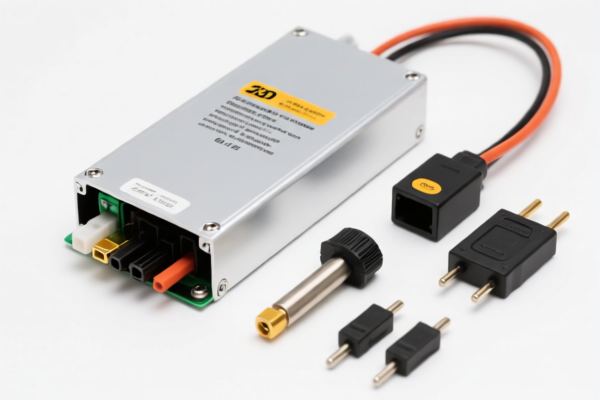
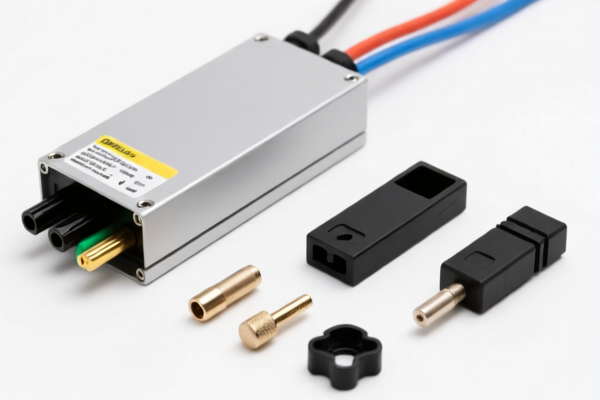


AI Analysis
⚡ Distribution Panel Electrical Accessories
🌐 HS Code Reference & Customs Clearance Guide | 2026 Latest Tariff Analysis | Professional Clearance Strategy
📌 I. Product Definition: What Are "Distribution Panel Electrical Accessories"?
In the international trade of electrical equipment, "Distribution Panel Electrical Accessories" is a broad term that usually refers to components used in electric control or distribution boards for voltages not exceeding 1,000 V.
However, in customs classification, the key is not what the part is, but how it is installed and functioning.
Critical Distinction: * Complete Assembled Panels/Boards: If the accessories are already mounted on a base (cabinet, desk, console) forming a complete unit for controlling or distributing electricity, they are classified as Complete Panels. * Loose Accessories/Parts: If the items are sold separately as individual components (e.g., standalone breakers, meters, terminals) without being pre-assembled into a control/distribution base, they fall under different chapters (e.g., Chapter 85 Switching Apparatus or Chapter 90 Instruments).
⚠️ Key Classification Point:
- If the product is a base equipped with two or more apparatus of heading 8535 or 8536 → HS Code 8537.10
- If the product is a single standalone breaker or loose terminal → Not 8537.10 (Look to 8536 or 9030)
📦 II. HS Code Classification Details (Based on Provided Data)
According to the specific data provided in the <DATA> section, these "Accessories" are classified when they are part of an assembled panel/consoles/base.
| HS Code | Product Description (Official WCO/US Harmonized System) | Application Scenario | Key Condition |
|---|---|---|---|
| 8537.10.91.50 | Panel boards and distribution boards (For voltage ≤ 1,000 V; Other) |
General purpose electrical distribution cabinets, home main panels, commercial light industrial panels. | Contains ≥2 apparatuses of 8535/8536; Used for control/distribution. |
| 8537.10.91.20 | Switchgear assemblies and switchboards (For voltage ≤ 1,000 V; Other) |
Industrial switchboards, factory control consoles, complex electrical bases with multiple switches/relays. | Complex assembly, often includes numerical control or specific switching functions. |
🔍 Important Note:
- Both codes fall under Heading 8537: Boards, panels, consoles, desks, cabinets and other bases, equipped with two or more apparatus of heading 8535 or 8536...
- "Accessories" alone do not get these codes. Only when accessories are assembled into a base do they qualify for 8537.10.91.50 or 8537.10.91.20.
- Voltage Limit: Must be ≤ 1,000 V. For voltages > 1,000 V, a different subheading (8537.10.95.xx) would apply (not in this data set).
💰 III. 2026 Latest Tariff Rate Details (Detailed Breakdown)
✅ Applicable Country: United States (US)
✅ Origin: China (CN) (Assumed based on "Additional Duty" structure typical in US-China trade data)
✅ Effective Time: Current USITC/USMCA/Section 301 Rules
🎯 1. HS Code: 8537.10.91.50 – Panel Boards and Distribution Boards
| Item | Detail |
|---|---|
| Base Tariff (MFN) | 2.7% |
| Additional Duty (Section 301) | 25.0% |
| Total Tax Rate | 27.7% |
| Tax Calculation | (CIF Value) × 27.7% |
| Legal Basis | Section 301 Tariff List (USITC) + HTSUS 8537.10.91.50 |
📌 Explanation:
- The 2.7% is the standard Most Favored Nation (MFN) rate for electrical control/distribution apparatus.
- The 25.0% is the additional tariff imposed under Section 301 of the Trade Act of 1974 on products from China.
- Total Liability: 27.7% of the customs value (CIF). This is a high-cost classification for Chinese exporters.
🎯 2. HS Code: 8537.10.91.20 – Switchgear Assemblies and Switchboards
| Item | Detail |
|---|---|
| Base Tariff (MFN) | 2.7% |
| Additional Duty (Section 301) | 25.0% |
| Total Tax Rate | 27.7% |
| Tax Calculation | (CIF Value) × 27.7% |
| Legal Basis | Section 301 Tariff List (USITC) + HTSUS 8537.10.91.20 |
📌 Explanation:
- Identical tariff structure to 8537.10.91.50.
- Both subheadings are treated equally under current Section 301 rules for Chinese origin goods.
🛠️ IV. Customs Clearance Practical Advice (Pitfall Avoidance Guide)
✅ 1. Documentation Checklist (Essential for Clearance)
| Document | Must Provide? | Purpose |
|---|---|---|
| Commercial Invoice | ✅ Yes | Must clearly state: "Distribution Panel" or "Switchgear Assembly", NOT just "Electrical Parts". |
| Product Catalog/Spec Sheet | ✅ Yes | Prove it contains ≥2 apparatuses of 8535/8536 (e.g., circuit breakers, fuses, relays). |
| Assembly Diagram | ✅ Yes | Show that apparatuses are mounted on a base/cabinet/console. |
| Voltage Declaration | ✅ Yes | Confirm voltage is ≤ 1,000 V. |
| Country of Origin | ✅ Yes | Critical for calculating the 25% Additional Duty. |
| Bill of Lading | ✅ Yes | Ensure packaging reflects "Assembled Panel" not loose "Parts". |
✅ 2. Classification Strategy (Key Tips)
🔥 "Don't Ship Loose Parts as Panels!"
| Scenario | Correct Classification | Risk if Misclassified |
|---|---|---|
| Assembled Panel with breakers, meters, and busbars on a metal base | 8537.10.91.50 / 91.20 | If declared as "Parts" (8536/9030), you risk lower duty but face seizure for false declaration. |
| Loose Circuit Breakers (not mounted) | 8536.20/30 | If declared as "Panel", you overpay 27.7% vs ~0-3% for breakers. |
| Loose Meters | 9030.80 | If declared as "Panel", you overpay 27.7% vs ~0% for meters. |
| Voltage > 1,000 V | 8537.10.95.xx | If declared as ≤1,000V, you face penalties for misdeclaration. |
✅ 3. Special Circumstances Handling
| Situation | Handling Advice |
|---|---|
| Mixed Shipment (Some assembled, some loose) | Split the shipment or declare separately. Do not mix "assembled panels" with "loose breakers" on one line item. |
| OEM Custom Panels | Provide customer drawings showing the assembly. Customs may ask for a "Functional Description" of the control/distribution system. |
| Digital Numerical Control Apparatus | If the panel includes CNC controllers or PLCs, still classify under 8537.10.91.20 if it's a base for electricity distribution. |
| Voltage Exactly 1,000 V | ✅ Accepted under 8537.10.91.xx. ❌ If 1,001 V → Incorrect. Must use 8537.10.95.xx. |
🌍 V. Global Market Comparison (2026 Context)
| Market | HS Code | Base Duty | Additional Duty | Total (China Origin) | Notes |
|---|---|---|---|---|---|
| 🇺🇸 USA | 8537.10.91.50 / .20 | 2.7% | +25% (Sec 301) | 27.7% | High tariff due to trade tensions. |
| 🇨🇳 China (Import) | 8537.10 | 1.0% - 3.0% | 0% | ~1-3% | China encourages import of high-voltage electrical equipment. |
| 🇪🇺 EU | 8537.10 | ~2.7% | 0% | ~2.7% | No Section 301 equivalent; lower cost for exporters. |
| 🇬🇧 UK | 8537.10 | ~2.7% | 0% | ~2.7% | Post-Brexit tariff aligns closely with EU. |
📌 Conclusion:
- USA is the most expensive market for these goods due to the 25% additional duty.
- Exporters should consider supply chain diversification (e.g., assembling in Mexico or Vietnam) to potentially avoid the 25% duty, provided rules of origin are met.
📌 VI. Common Mistakes & Pitfalls (Blood Lesson)
❌ Mistake 1: Declaring "Electrical Accessories" as "Parts" (8536/9030) when they are actually Assembled Panels.
👉 Consequence: Customs inspection reveals a full panel → Penalty for fraud + Back taxes + Possible seizure.
❌ Mistake 2: Declaring "Switchgear" as "Panel Boards" when it doesn't meet the "≥2 apparatus" rule.
👉 Consequence: Misclassification → Delay in clearance, requests for additional evidence.
❌ Mistake 3: Ignoring the Voltage Limit.
👉 Consequence: If voltage is 1,200 V, using 8537.10.91.xx is incorrect. Must use 8537.10.95.xx. Penalty for misdeclaration.
❌ Mistake 4: Not specifying "China Origin" correctly.
👉 Consequence: You might pay only 2.7% initially, but face retroactive 25% charge + interest during post-clearance audit.
✅ Correct Practice:
"Assembled Distribution Panel, 480V, 3-Phase, containing 10 Circuit Breakers and 2 Meters, HS Code 8537.10.91.50, Origin: China"
🎯 VII. Conclusion: Precision in Classification Saves Money!
🎯 Remember the Golden Rules:
🔹 "Base + ≥2 Apparatus = 8537.10"
🔹 "Voltage ≤ 1,000 V = 91.xx"
🔹 "China Origin + USA = 27.7% Total Duty"
🔹 "Loose Parts ≠ Panels"
📌 Pro Tip:
If your product is assembled in a third country (e.g., Mexico under USMCA), you may qualify for 0% Section 301 duty.
Recommendation: Apply for an Advance Ruling from U.S. Customs if the assembly process is complex.
📣 Immediate Action Required:
📞 Verify if your "Accessories" are pre-assembled on a base.
📄 Provide circuit diagrams to prove ≥2 apparatuses.
🚀 Classify correctly to avoid 27.7% liability traps!
✨ Professional Classification, Seamless Clearance!
💼 Every Percent Matters in Electrical Trade!
Customer Reviews
About HS Code Classification
The Harmonized System (HS) is an internationally standardized nomenclature developed by the World Customs Organization (WCO) to classify traded products. Over 200 countries use the HS system as the basis for customs tariffs, trade statistics, and import/export regulations.
Each HS code follows a hierarchical structure:
- Chapter (2 digits) — Broad category of goods (e.g., Chapter 84: Machinery and Mechanical Appliances)
- Heading (4 digits) — More specific grouping within the chapter
- Subheading (6 digits) — Internationally standardized breakdown, used by all WCO member countries
- National subdivisions (8-10 digits) — Country-specific extensions for further classification, such as US HTSUS 10-digit codes
Correct HS code classification is essential for smooth customs clearance, accurate duty payment, and compliance with trade regulations. Misclassification can lead to customs delays, overpayment of duties, or penalties.
When importing from CN to US, the applicable tariff rates may include:
- Most-Favored-Nation (MFN) rate — The standard duty rate applied to WTO members
- General rate — Applied to countries without trade agreements
- Trade remedy duties — Additional tariffs such as Section 301 (anti-dumping), Section 232 (national security), or countervailing duties
The information provided on this page is for reference purposes only. For official classification, please consult with your local customs authority or a licensed customs broker.