Document Organization and Storage
CN → US| HS Code | Tariff Rate | Origin | Destination | Doc |
|---|---|---|---|---|
| 3926100000 | 15.3% | CN | US | Official Doc |
| 3926908700 | 40.3% | CN | US | Official Doc |
| 7326903500 | 92.8% | CN | US | Official Doc |
| 7326908688 | 87.9% | CN | US | Official Doc |
| 4820300040 | 35.0% | CN | US | Official Doc |
| 4820300020 | 35.0% | CN | US | Official Doc |
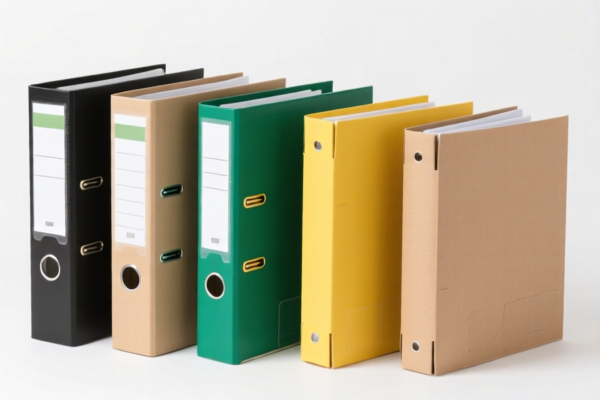
Product Images



AI Analysis
📂 Document Organization and Storage: The Ultimate Strategic Guide
Welcome to your comprehensive masterclass on turning chaos into clarity.
Whether you are a small business owner, a legal practitioner, a healthcare provider, or an individual seeking digital peace of mind, mastering Document Organization and Storage is the cornerstone of efficiency, compliance, and security.
🌟 One-Stop Summary: Why This Matters
In the digital age, "Paperless" does not mean "Unorganized."
Poorly managed documents lead to:
* ⏳ Lost Productivity: 30-50% of time wasted searching for files.
* ⚖️ Legal Risk: Non-compliance with data retention laws (GDPR, HIPAA, etc.).
* 💸 Financial Loss: Missed deadlines, duplicate payments, or lost contracts.
* 🚨 Security Breaches: Sensitive data left in unsecured locations.
🗂️ Part 1: The Philosophy of Organization (Before You File)
Before opening a folder or clicking "save," you must establish a Taxonomy.
1. The "Flat is Better" Rule
Avoid deep nesting (e.g., Projects > 2023 > Q1 > Legal > Contracts > Vendor A > Signed).
✅ Best Practice: Keep folders shallow (max 3 levels).
* Year → Category → Document Name
2. The Naming Convention is King
A file without a clear name is a lost file forever.
* ❌ Bad: scan001.pdf, Final_Final_v2.docx, contract.pdf
* ✅ Good: YYYY-MM-DD_Description_DocumentType_Vendor-Name.pdf
* Example: 2023-10-25_SupplierContract_AcmeCorp_v1.2.pdf
Pro Tip: Use ISO 8601 Date Format (YYYY-MM-DD) to ensure automatic chronological sorting.
3. The 4-Pillar Classification System
Adopt a hybrid structure based on your workflow:
| Pillar | Description | Example Folders |
| :--- | :--- | :--- |
| 📅 Temporal | Organize by time | 2024, 2024-Q1, Tax-2024 |
| 📁 Functional | Organize by department/function | HR, Finance, Legal, Marketing |
| 🏢 Entity | Organize by external partner | Clients, Vendors, Partners |
| ⚠️ Critical | High-priority, low-frequency items | Legal-Compliance, Emergency-Plans |
☁️ Part 2: Storage Strategies (Physical vs. Digital)
🖥️ Digital Storage: The Cloud & Local Hybrid
Don't rely on a single hard drive. Use the 3-2-1 Backup Rule: 1. 3 copies of your data. 2. 2 different media types (e.g., Cloud + External SSD). 3. 1 copy offsite (e.g., Cloud server in a different region).
Recommended Cloud Ecosystems
| Platform | Best For | Security Level |
|---|---|---|
| Google Drive | Collaboration, Docs, Sheets | High (AES-256) |
| Microsoft 365 | Corporate ecosystems, SharePoint | Enterprise (Zero Trust) |
| Dropbox/Box | Large file sharing, Enterprise compliance | High (Encryption) |
| iCloud/OneDrive | Personal devices, Apple/Windows users | Medium-High |
🔒 Security Note: Enable Multi-Factor Authentication (MFA) on all accounts. Encrypt sensitive files before uploading (using tools like 7-Zip or VeraCrypt).
📁 Physical Storage: The "Shedding" Protocol
If you must keep paper: 1. Scan First: Digitize everything with a high-quality scanner (300 DPI minimum). 2. Shred Immediately: Once digitized and verified, shred sensitive documents. 3. Archive Smartly: Use Archival Boxes (acid-free) for tax/legal records. 4. Labeling: Use color-coded tabs. * 🔴 Red = Urgent/Financial * 🔵 Blue = Personal/Legal * 🟢 Green = Reference/Media
🛠️ Part 3: The Workflow (How to Execute)
🔄 Step-by-Step Implementation Plan
| Phase | Action | Time Estimate |
|---|---|---|
| 1. Audit | Gather all loose papers and digital folders. Identify "Zombie Files" (unused for 2+ years). | 1 Week |
| 2. Purge | Destroy (shred/recycle) or archive (box) everything not needed daily. | 1 Week |
| 3. Structure | Create your master folder hierarchy (3-2-1 system). | 2 Days |
| 4. Migrate | Move files into new folders. Rename them using the YYYY-MM-DD standard. | 2 Weeks |
| 5. Automate | Set up rules (e.g., "Move all PDFs from Email to Finance/Tax folder"). |
1 Day |
| 6. Maintain | Schedule a "Friday 15-minute" cleanup session every week. | Ongoing |
🤖 Automation Tools (Save Hours)
- Dropbox Paper / Microsoft OneNote: For meeting notes and quick capture.
- Adobe Scan / CamScanner: Turn phone photos into searchable PDFs.
- DocuWare / M-Files: AI-powered document management systems (DMS) for enterprises.
- Apple Shortcuts / IFTTT: Automate file sorting based on keywords.
⚖️ Part 4: Compliance & Retention Policies
Never keep documents forever; never delete them too soon.
| Document Type | Recommended Retention | Disposal Method |
|---|---|---|
| Tax Records | 7 Years (US) / 6 Years (UK) | Shred (Paper) / Wipe (Digital) |
| Contracts | 3-5 Years post-expiration | Secure Shred |
| HR Records | Permanent (Employee) / 7 Years | Secure Shred |
| Medical Records | 10 Years (Adults) / Age of Majority + 7 | Secure Destruction |
| Invoices | 3-7 Years | Shred |
⚠️ Legal Warning: "Retain until statute of limitations expires." If you are in a lawsuit, suspend deletion immediately (Legal Hold).
🚀 Part 5: Quick Wins & Best Practices
| ✅ Do This | ❌ Avoid This |
|---|---|
| Use "Shared Folders" only for active projects. | Storing sensitive data on personal email attachments. |
| Create a "Downloads" folder that is emptied weekly. | Letting the "Downloads" folder become a graveyard of chaos. |
| Use a Password Manager for all stored credentials. | Writing passwords on sticky notes or in text files. |
Version Control: Use v1, v2, Final_v2 naming. |
Overwriting files without saving history. |
| Regular Backups: Test your backups annually. | Assuming "Cloud = Safe" without checking sync status. |
🌐 Global Context: 2026 Trends
- AI-Driven Archiving: Systems now auto-tag, classify, and extract data from unstructured documents.
- Zero Trust Architecture: No file is trusted by default; access is granted per session.
- Blockchain for Provenance: Digital signatures on contracts to prove "who touched what and when."
📝 Conclusion: Your Document Action Plan
Organization is not a one-time event; it is a lifestyle.
- Audit your current mess.
- Define your structure (The 4-Pillar System).
- Digitize and Name everything correctly.
- Automate the cleanup.
- Backup using the 3-2-1 rule.
"A well-organized document is an asset. A disorganized one is a liability."
🚀 Start Today: Pick one drawer or one folder. Organize it perfectly. Then move to the next. In one week, you will save hundreds of hours next year.
Disclaimer: This guide is for informational purposes. Consult a legal professional for specific compliance advice regarding your jurisdiction.
Customer Reviews
About HS Code Classification
The Harmonized System (HS) is an internationally standardized nomenclature developed by the World Customs Organization (WCO) to classify traded products. Over 200 countries use the HS system as the basis for customs tariffs, trade statistics, and import/export regulations.
Each HS code follows a hierarchical structure:
- Chapter (2 digits) — Broad category of goods (e.g., Chapter 84: Machinery and Mechanical Appliances)
- Heading (4 digits) — More specific grouping within the chapter
- Subheading (6 digits) — Internationally standardized breakdown, used by all WCO member countries
- National subdivisions (8-10 digits) — Country-specific extensions for further classification, such as US HTSUS 10-digit codes
Correct HS code classification is essential for smooth customs clearance, accurate duty payment, and compliance with trade regulations. Misclassification can lead to customs delays, overpayment of duties, or penalties.
When importing from CN to US, the applicable tariff rates may include:
- Most-Favored-Nation (MFN) rate — The standard duty rate applied to WTO members
- General rate — Applied to countries without trade agreements
- Trade remedy duties — Additional tariffs such as Section 301 (anti-dumping), Section 232 (national security), or countervailing duties
The information provided on this page is for reference purposes only. For official classification, please consult with your local customs authority or a licensed customs broker.