Document Organizer Box
CN → US| HS Code | Tariff Rate | Origin | Destination | Doc |
|---|---|---|---|---|
| 3923102000 | 35.0% | CN | US | Official Doc |
| 4202999000 | 55.0% | CN | US | Official Doc |
| 3923109000 | 38.0% | CN | US | Official Doc |
| 3926901000 | 20.9% | CN | US | Official Doc |
| 4202929315 | 52.6% | CN | US | Official Doc |
Product Images
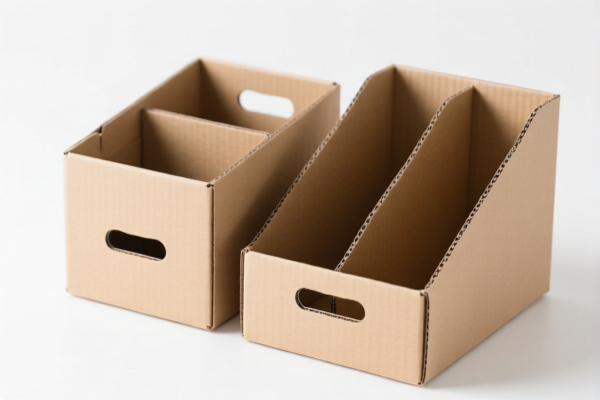
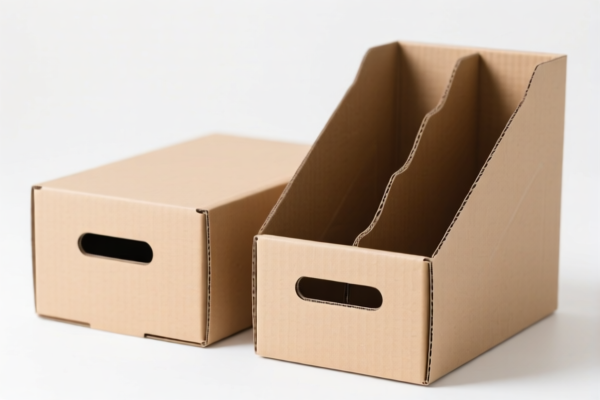
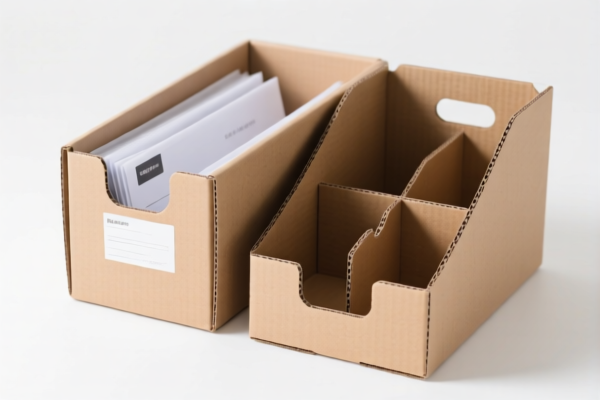
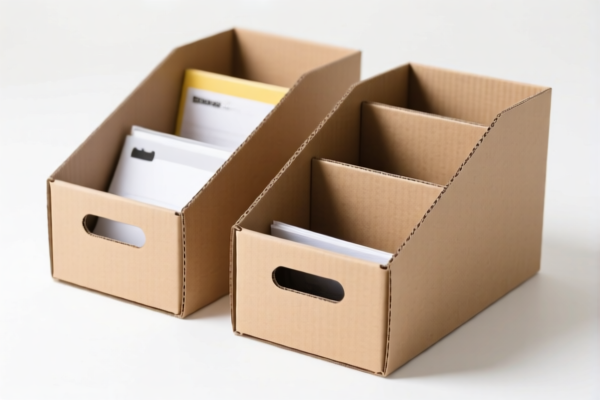
AI Analysis
📂 Document Organizer Box (收纳盒)
🌐 HS Code Reference & Customs Clearance Guide | 2024/2025 Tariff Full Analysis | Professional Level Entry Strategy
📌 Part 1: Product Definition & Classification: Do You Really Understand "Document Organizers"?
A Document Organizer Box is a versatile storage solution used in offices, homes, and industrial settings to manage paper, files, documents, or small items. In international trade, its classification heavily depends on the material composition and specific design intent. Since the term "Document Organizer Box" is generic, customs authorities require precise material identification to assign the correct Harmonized System (HS) Code.
There are two primary categorization paths based on common sense and material inference:
Path A: Plastic-Based Organizers
- Characteristics: Made primarily of rigid or semi-rigid plastic. Designed for packaging, storage, or containerization.
- Classification Logic: Falls under Chapter 39 (Plastics and Articles Thereof). Specifically, items like "Boxes, cases, crates, and similar articles" made of plastic.
Path B: Textile, Paper, or Other Material-Based Organizers
- Characteristics: Made of woven fabric, non-woven fabric, cardboard, or other flexible materials. Often used as soft-sided containers or bags.
- Classification Logic: Falls under Chapter 42 (Articles of Leather; Saddle Harnesses; Bags; Containers). Specifically, "Articles of apparel and clothing accessories, not elsewhere specified or included" or "Other articles of materials specified in Chapter 42."
⚠️ Key Distinction Point:
- If the box is rigid plastic → It is treated as a Plastic Container/Packaging Article (Chapter 39).
- If the box is fabric/soft material → It is treated as a Bag/Container (Chapter 42).
- If the box is paper/cardboard → It may fall under Chapter 48 or 42 depending on structure, but often grouped with other containers in Chapter 42 if not purely packaging.
📦 Part 2: HS Code Classification Details (Based on Provided Data)
| HS Code | Product Description | Material Assumption | Key Classification Logic |
|---|---|---|---|
3923.10.20.00 |
Articles for the conveyance or packaging of goods, of plastics: Boxes | Plastic | "Based on common sense, the material is plastic; form (box) and use (packaging/storage) fit plastic packaging articles. No material conflict." |
4202.99.90.00 |
Articles of apparel and clothing accessories, not elsewhere specified...: Other: Other: Other | Plastic, Textile, Cardboard, etc. | "Match basis: Organizer box belongs to containers/bags; based on common sense, material is inferred as plastic, textile, or cardboard (no conflict)." |
3923.10.90.00 |
Articles for the conveyance or packaging of goods, of plastics: Other | Plastic | "Match basis: Organizer box belongs to 'boxes, cases, crates...'; based on common sense, material is plastic, fitting the category of plastic packaging articles." |
3926.90.10.00 |
Other articles of plastics and articles of other materials of headings 3901 to 3914: Other | Plastic | "Match basis: Based on use 'organizer box', material is reasonably inferred as plastic (common in Chapter 39); belongs to 'other articles', functionally consistent with containers like buckets." |
4202.92.93.15 |
Other articles of apparel and clothing accessories...: Of textiles: Other: Other: Other | Textile (Surface) | "Match basis: Based on name 'organizer box' and use, inferred as a container; under 'no obvious conflict' principle, initially judged to fit this category (inferring outer surface involves textile materials)." |
🔍 Critical Reminder:
- Plastic Boxes generally fall under Chapter 39 (Plastics).
- Fabric/Soft Boxes generally fall under Chapter 42 (Textiles/Leather articles).
- Misclassification can lead to significant duty differences (e.g., 20.9% vs 55.0%).
- Always declare the primary material clearly in customs documentation.
💰 Part 3: 2024/2025 Latest Tariff Rate Breakdown (Including Surcharges)
✅ Applicable Country: United States (US)
✅ Origin: China (CN)
✅ Effective Time: Current Trade Policy (Section 301 & IEEPA)
🎯 1. 3923.10.20.00 —— Plastic Boxes (Packaging/Storage)
| Item | Content |
|---|---|
| Base Duty | 0.0% |
| Section 301 Surcharge | +25.0% |
| IEEPA Surcharge | +10.0% |
| Total Duty Rate | 35.0% |
| Tax Calculation | CIF Value × 35.0% |
| De Minimis Eligibility | ❌ No (High tariff items are excluded) |
| Legal Basis Path | USITC:3923.10.20.00 → SECTION301:8526.40.01.00 (Footnote 9903.88.01 applies) → IEEPA:9903.01.25 |
📌 Explanation:
- Base Tariff: 0% for many plastic packaging articles.
- Section 301: 25% additional duty for Chinese-origin plastic articles.
- IEEPA: 10% additional duty for Chinese-origin goods (effective Nov 2025).
- Total: 35%. This is a moderate-to-high burden for plastic goods.
🎯 2. 3923.10.90.00 —— Other Plastic Packaging Articles
| Item | Content |
|---|---|
| Base Duty | 3.0% |
| Section 301 Surcharge | +25.0% |
| IEEPA Surcharge | +10.0% |
| Total Duty Rate | 38.0% |
| Tax Calculation | CIF Value × 38.0% |
| De Minimis Eligibility | ❌ No |
| Legal Basis Path | USITC:3923.10.90.00 → SECTION301 → IEEPA:9903.01.25 |
📌 Note:
- Slightly higher base duty (3%) compared to3923.10.20.00.
- Total 38% duty. Ensure the product description matches "Other" plastic packaging articles.
🎯 3. 3926.90.10.00 —— Other Plastic Articles (Containers)
| Item | Content |
|---|---|
| Base Duty | 3.4% |
| Section 301 Surcharge | +7.5% |
| IEEPA Surcharge | +10.0% |
| Total Duty Rate | 20.9% |
| Tax Calculation | CIF Value × 20.9% |
| De Minimis Eligibility | ❌ No |
| Legal Basis Path | USITC:3926.90.10.00 → SECTION301:8526.40.01.00 (Footnote 9903.88.01 may apply differently) → IEEPA:9903.01.25 |
📌 Advantage:
- This code offers the lowest total duty (20.9%) among plastic options.
- Condition: The product must be classified as "Other Plastic Articles" rather than "Packaging." If the organizer is clearly a packaging box, this code might be challenged. Use with caution and strong justification (e.g., reusable, durable, non-disposable).
🎯 4. 4202.99.90.00 —— Other Articles (Mixed/Plastic/Textile)
| Item | Content |
|---|---|
| Base Duty | 20.0% |
| Section 301 Surcharge | +25.0% |
| IEEPA Surcharge | +10.0% |
| Total Duty Rate | 55.0% |
| Tax Calculation | CIF Value × 55.0% |
| De Minimis Eligibility | ❌ No |
| Legal Basis Path | USITC:4202.99.90.00 → SECTION301 → IEEPA:9903.01.25 |
📌 Warning:
- This is the highest duty rate (55%) for general goods.
- Applies if the item is classified as a general "Article" under Chapter 42 with no specific textile or leather designation.
- Avoid this code if possible due to cost impact.
🎯 5. 4202.92.93.15 —— Textile-Based Containers
| Item | Content |
|---|---|
| Base Duty | 17.6% |
| Section 301 Surcharge | +25.0% |
| IEEPA Surcharge | +10.0% |
| Total Duty Rate | 52.6% |
| Tax Calculation | CIF Value × 52.6% |
| De Minimis Eligibility | ❌ No |
| Legal Basis Path | USITC:4202.92.93.15 → SECTION301 → IEEPA:9903.01.25 |
📌 Note:
- Applies if the organizer is made of textiles (e.g., fabric, non-woven).
- High base duty (17.6%) plus surcharges result in 52.6%.
- Consider if plastic options (3926.90.10.00at 20.9%) are viable for your product design.
🛠️ Part 4: Customs Clearance Practical Advice (Real-World Pitfall Avoidance)
✅ 1. Required Documentation Checklist (Non-Negotiable)
| Document | Must Provide | Explanation |
|---|---|---|
| ✅ Product Specification Sheet | ✔️ | Dimensions, capacity, material composition (e.g., "100% PP Plastic" or "Polyester Fabric"). |
| ✅ Material Declaration | ✔️ | Explicitly state primary material. Customs will question mixed materials. |
| ✅ Product Photos | ✔️ | Show interior, exterior, labels, and usage context. |
| ✅ Commercial Invoice | ✔️ | Accurate description: e.g., "Plastic Document Organizer Box" vs. "Textile File Bag." |
| ✅ Packing List | ✔️ | Weight, dimensions, number of units. |
| ✅ Certificate of Origin (CO) | ✔️ | Required for tariff calculation and potential exemptions. |
✅ 2. Declaration Strategy (Key Mnemonics)
🔥 "Material First, Function Second, Avoid 'Other' if Possible!"
| Scenario | Correct HS Code | Risk if Incorrect |
|---|---|---|
| Rigid Plastic Box | 3923.10.20.00 or 3923.10.90.00 |
Misclassified as Chapter 42 → 35-55% duty instead of 35-38%. |
| Plastic Box (Reusable/Durable) | 3926.90.10.00 (If justified) |
Risk of audit if deemed "packaging." Justify as "container for office use, not disposable." |
| Fabric/Textile Box | 4202.92.93.15 |
Misclassified as plastic → Penalty + back taxes. |
| Cardboard Box | 4202.99.90.00 (Often) |
High duty (55%). Check if it qualifies as "paper packaging" (Chapter 48) if applicable. |
✅ 3. Special Circumstances Handling
| Situation | Handling Advice |
|---|---|
| Mixed Materials (e.g., Plastic frame + Fabric insert) | Declare the primary material that defines the character. If plastic dominates, use Chapter 39. |
| OEM Custom Boxes | Provide design drawings and material samples to Customs Broker to support HS Code selection. |
| Low-Value Shipments | No De Minimis Exemption for high-tariff Chinese goods (Section 301/IEEPA applies regardless of value). |
| Re-export | If goods are transshipped, ensure documentation matches original origin to avoid additional duties. |
🌍 Part 5: Global Market Comparison (2024/2025)
| Country/Region | Recommended HS Code | Estimated Duty (China Origin) | Notes |
|---|---|---|---|
| 🇺🇸 USA | 3926.90.10.00 |
20.9% (Best for Plastic) | Highest complexity due to Section 301 & IEEPA. |
| 🇨🇳 China | 3923.10.90.00 |
~5-10% | No surcharges. Domestic consumption. |
| 🇪🇺 EU | 3923.10.20.00 |
~4-6% | No Section 301. Standard MFN rates apply. |
| 🇬🇧 UK | 3923.10.20.00 |
~4-6% | Post-Brexit tariffs similar to EU for many plastics. |
| 🇦🇺 Australia | 3923.10.20.00 |
~5% | Low duties, no surcharges. |
📌 Conclusion:
- The USA is the most challenging market due to cumulative surcharges (25% + 10%).
- Plastic containers (3926.90.10.00) offer the lowest duty (20.9%) in the US if correctly classified.
- Textile/General articles (4202) face nearly 50-55% duty, making them less competitive.
📌 Part 6: Common Mistakes & Pitfalls (Lessons Learned)
❌ Mistake 1: Calling a "Plastic Box" a "Container" under 4202.99.90.00
👉 Consequence: Duty jumps from 35% to 55%. Loss of 20% margin!
❌ Mistake 2: Ignoring the "IEEPA 10%" surcharge
👉 Consequence: Under-declaration by 10%. Customs audit leads to penalties + back taxes.
❌ Mistake 3: Not declaring material composition
👉 Consequence: Customs assigns default "Other" code with highest possible duty. Delays + Additional Costs.
❌ Mistake 4: Assuming "Document Organizer" is a unique category
👉 Consequence: No such unique HS code exists. Must map to existing Plastic or Textile categories.
✅ Correct Approach:
"Plastic Document Organizer Box, Rectangular, Reusable, Made of Polypropylene, Model XYZ, No Electronic Components"
🎯 Part 7: Conclusion: Precise Classification Saves Money!
🎯 Remember the Mnemonic:
🔹 "Plastic Box = Chapter 39 (Lowest Duty ~21-38%)"
🔹 "Textile Box = Chapter 42 (Highest Duty ~53-55%)"
🔹 "Always Declare Material! Never Guess!"
📌 Pro Tip:
If your product can be designed as Plastic rather than Textile, you save ~30-35% in duty in the US market.
Consider Advance Ruling (Ruling Request) from US Customs if the product is complex or mixed-material.
📣 Immediate Action:
📞 Contact a licensed Customs Broker
📸 Provide Clear Product Photos & Material Specs
🚀 Optimize HS Code to3926.90.10.00if possible for maximum savings!
✨ Professional Clearance, Starting with Accurate Classification!
💼 Every Percent Saved is Pure Profit!
Customer Reviews
About HS Code Classification
The Harmonized System (HS) is an internationally standardized nomenclature developed by the World Customs Organization (WCO) to classify traded products. Over 200 countries use the HS system as the basis for customs tariffs, trade statistics, and import/export regulations.
Each HS code follows a hierarchical structure:
- Chapter (2 digits) — Broad category of goods (e.g., Chapter 84: Machinery and Mechanical Appliances)
- Heading (4 digits) — More specific grouping within the chapter
- Subheading (6 digits) — Internationally standardized breakdown, used by all WCO member countries
- National subdivisions (8-10 digits) — Country-specific extensions for further classification, such as US HTSUS 10-digit codes
Correct HS code classification is essential for smooth customs clearance, accurate duty payment, and compliance with trade regulations. Misclassification can lead to customs delays, overpayment of duties, or penalties.
When importing from CN to US, the applicable tariff rates may include:
- Most-Favored-Nation (MFN) rate — The standard duty rate applied to WTO members
- General rate — Applied to countries without trade agreements
- Trade remedy duties — Additional tariffs such as Section 301 (anti-dumping), Section 232 (national security), or countervailing duties
The information provided on this page is for reference purposes only. For official classification, please consult with your local customs authority or a licensed customs broker.