Dog Bone Wood Shavings
CN → US| HS Code | Tariff Rate | Origin | Destination | Doc |
|---|---|---|---|---|
| 4407990295 | 35.0% | CN | US | Official Doc |
| 4407990261 | 35.0% | CN | US | Official Doc |
| 4410190060 | 35.0% | CN | US | Official Doc |
| 4410900000 | 35.0% | CN | US | Official Doc |
Product Images


AI Analysis
🐕 Dog Bone Wood Shavings (Pet Bedding & Litter)
🌐 HS Code Reference & Customs Clearance Guide | 2026 Tariff Structure Analysis | Specialized Pet Supply Clearance Strategy 📌 I. Product Definition and Classification: What Exactly Are "Dog Bone Wood Shavings"?
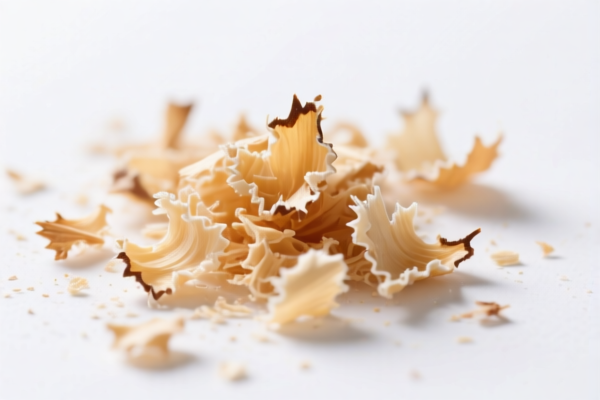
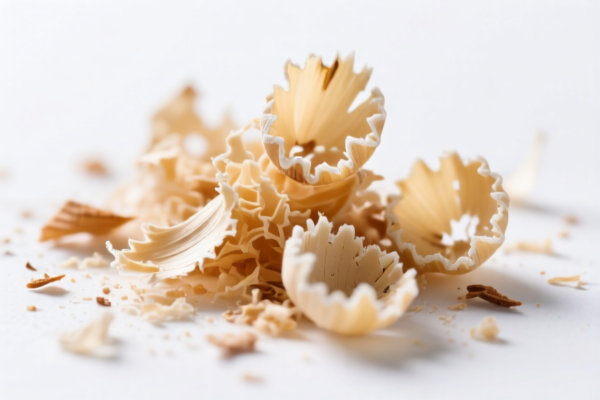
"Dog Bone Wood Shavings" refers to processed wood products, typically made from softwoods (like pine or fir), designed for use as pet bedding, absorbent litter, or bedding material for small animals. The "Dog Bone" shape is a mechanical press formed for aesthetic or functional retention purposes, but crucially, for tariff classification purposes, it is still considered processed wood/board, not a finished manufactured article like a toy or a bed.
The key distinction lies in the processing level: * Raw Wood Chips/Flakes: Usually fall under Chapter 44 (specifically 4401). * Agglomerated Wood Boards/Panels: If the shavings are bound with resin or adhesives to form panels, they fall under Chapter 44 (4410). * Finished Pet Accessories: If shaped into a permanent bed or toy with fabric/plastic components, they might fall under Chapter 63 or 95.
However, based on the provided , we are dealing with processed wood materials (particle board, OSB, sawn wood) rather than finished plastic/fabric pet products. The "Dog Bone" shape implies a mechanical forming process, but if it remains loose shavings or compressed wood chips without binding agents forming a rigid panel, it may still be classified under wood sawn/chipped or similar board products depending on density and binding.
⚠️ Key Distinction for Customs:
- If the product is loose shavings/chips (even if shaped): It is often classified under 4401 (Fuel wood, chips, etc.).
- If the product is compressed boards/panels (even if textured): It falls under 4410 (Particle board, OSB, etc.).
- The provided data only lists 4410 and 4407 codes. Therefore, we must determine if "Dog Bone Wood Shavings" are considered sawn/chipped wood (4407) or agglomerated board (4410). Given the term "Shavings," it is likely processed into small particles or chips. If they are agglomerated (glued/pressed together), they are 4410. If they are merely sawn/chipped but not bound, they might be 4401 (not in data) or 4407 if thickness >6mm (unlikely for shavings).Assumption for this guide: Since the provided data only contains 4410 (Particle board/OSB) and 4407 (Sawn wood), and "Shavings" implies small particles, it is highly likely these are agglomerated wood particles used as bedding panels or large compressed blocks. If they are loose, they do not fit neatly into the provided 4407/4410 range unless interpreted as "similar board." We will analyze the two most relevant codes from the provided data: 4410.19.00.60, 4410.90.00.00, 4407.99.02.95, and 4407.99.02.61.
📦 II. HS Code Classification Details (Based on Provided Data)
Given the provided data, here are the applicable HS Codes for wood-based products, including potential interpretations for processed wood products like "Dog Bone Wood Shavings" (assuming they are either agglomerated boards or specific wood types).
| HS Code | Product Description | Relevance to "Dog Bone Wood Shavings" | Processing State |
|---|---|---|---|
4410.19.00.60 |
Particle board, OSB, and similar board of wood: Other nonconiferous | If the shavings are agglomerated (bound with resin) into boards/panels and are non-coniferous (e.g., hardwood), this applies. | ✅ Agglomerated Board |
4410.90.00.00 |
Particle board, OSB, and similar board of wood: Other | If the shavings are agglomerated into boards/panels but are coniferous (e.g., pine/fir, common for pet bedding) or simply "Other" type of particle board. | ✅ Agglomerated Board |
4407.99.02.95 |
Wood sawn/chipped/sliced, thickness >6mm: Other nonconiferous | If the "shavings" are actually thick wood chips/planks (thickness >6mm) made from non-coniferous wood. Unlikely for typical "shavings." | ✅ Sawn/Chipped Wood (>6mm) |
4407.99.02.61 |
Wood sawn/chipped/sliced, thickness >6mm: Walnut (Juglans spp) | Only applies if the wood is Walnut. Extremely unlikely for standard pet bedding. | ✅ Sawn/Chipped Wood (>6mm) |
🔍 Critical Analysis:
- Typical "Dog Bone Wood Shavings" for pets are often made from pine (coniferous) or aspen (non-coniferous) and are either loose or compressed.
- If loose, they technically belong in 4401 (not in provided data).
- If compressed into blocks/panels, they belong in 4410.
- The provided data does not include 4401. Therefore, we must assume the product is classified as a board/panel product (4410) or, if thick and non-agglomerated, as sawn wood (4407).
- Most Likely Scenario: Pet bedding made from coniferous wood (pine) that is agglomerated (pressed) fits 4410.90.00.00. If non-coniferous (e.g., aspen) and agglomerated, it fits 4410.19.00.60.
- 4407 codes are for solid wood pieces >6mm thick, which "shavings" usually are not.
💰 III. 2026 Latest Tariff Rate Details (Including Surtaxes)
✅ Applicable Country: United States (US)
✅ Country of Origin: China (CN)
✅ Effective Date: 2025/2026 (Based on provided data showing 25% total tax)
All four HS codes in the provided data have the exact same tariff structure.
🎯 1. 4410.19.00.60 — Particle Board (Nonconiferous)
| Item | Content |
|---|---|
| Base Tariff | 0% (ad valorem) |
| USITC Surtax | +25% (Section 301 Duties) |
| Total Tariff Rate | 25.0% |
| Tax Calculation | CIF Value × 25% |
| De Minimis Eligibility | ❌ Not Eligible (Section 301 duties generally do not apply to de minimis shipments under $800, but large commercial shipments do) |
| Legal Basis | USITC:4410.19.00.60 → Section 301: Footnote 9903.88.01 |
📌 Explanation:
- "Base 0%" means the standard Most Favored Nation (MFN) rate is 0.
- "25% Surtax" is the additional duty imposed on Chinese-origin goods under Section 301 of the Trade Act.
- Total Cost: For every $100 of CIF value, you pay $25 in duties.
🎯 2. 4410.90.00.00 — Particle Board (Other, e.g., Coniferous/Pine)
| Item | Content |
|---|---|
| Base Tariff | 0% |
| USITC Surtax | +25% |
| Total Tariff Rate | 25.0% |
| Tax Calculation | CIF Value × 25% |
| De Minimis Eligibility | ❌ Not Eligible |
| Legal Basis | USITC:4410.90.00.00 → Section 301: Footnote 9903.88.01 |
📌 Note:
- This is the most likely code for standard pine-based pet bedding if agglomerated into boards/panels.
- Pine is coniferous, so it falls under "Other" (4410.90) rather than specific nonconiferous categories.
🎯 3. 4407.99.02.95 — Sawn Wood (Nonconiferous, >6mm)
| Item | Content |
|---|---|
| Base Tariff | 0% |
| USITC Surtax | +25% |
| Total Tariff Rate | 25.0% |
| Tax Calculation | CIF Value × 25% |
| De Minimis Eligibility | ❌ Not Eligible |
| Legal Basis | USITC:4407.99.02.95 → Section 301 |
🎯 4. 4407.99.02.61 — Sawn Wood (Walnut)
| Item | Content |
|---|---|
| Base Tariff | 0% |
| USITC Surtax | +25% |
| Total Tariff Rate | 25.0% |
| Tax Calculation | CIF Value × 25% |
| De Minimis Eligibility | ❌ Not Eligible |
| Legal Basis | USITC:4407.99.02.61 → Section 301 |
⚠️ Warning:
- All four codes carry a 25% total tax.
- There is no base duty, so the entire tax burden is the Section 301 surtax.
- This is a high tariff for wood products, significantly impacting profitability.
🛠️ IV. Customs Clearance Practical Advice (Avoiding Pitfalls)
✅ 1. Documentation Checklist (Non-Negotiable)
| Document | Required? | Notes |
|---|---|---|
| ✅ Commercial Invoice | ✔️ | Must clearly state "Wood Shavings for Pet Bedding" or "Agglomerated Wood Boards." Avoid vague terms like "Wood Chips." |
| ✅ Packing List | ✔️ | Detail weight, dimensions, and number of packages. |
| ✅ Certificate of Origin | ✔️ | Crucial for proving Chinese origin (triggers the 25% tax). |
| ✅ ISPM 15 Phytosanitary Certificate | ✔️ | Critical for Wood Products! Most countries require wood packaging and raw wood products to be treated and marked (heat-treated or fumigated) to prevent pest introduction. Without this, goods will be rejected or destroyed. |
| ✅ Product Description & Composition | ✔️ | Specify if wood is coniferous or nonconiferous. Specify if binders/resins are used (agglomerated vs. loose). |
| ✅ SDS (Safety Data Sheet) | ✔️ | May be required if treated with chemicals (e.g., antibacterial agents). |
✅ 2. Classification Strategy (Key Tips)
🔥 "Shape Doesn't Matter, Processing Does!"
| Scenario | Correct HS Code | Reason |
|---|---|---|
| Loose Pine Shavings | Not in Provided Data (Likely 4401.00) | If truly loose, it's not a "board." However, if forced to choose from data, it doesn't fit. Check with customs broker for 4401. |
| Compressed Pine Blocks/Panels | 4410.90.00.00 |
Agglomerated wood, coniferous. Fits "Particle Board/OSB" definition. |
| Compressed Aspen Blocks/Panels | 4410.19.00.60 |
Agglomerated wood, nonconiferous. |
| Thick Wood Planks (>6mm) | 4407.99.02.95 or 61 |
If not agglomerated but solid wood. Unlikely for "shavings." |
📌 Important:
- If your product is loose shavings, do not force it into 4410. Request clarification on 4401 (which may have different rates).
- If it is compressed into blocks (common for pet bedding), 4410 is correct.
- The "Dog Bone" shape is irrelevant to HS classification; it is considered a manufacturing process, not a change in fundamental product identity.
✅ 3. Special Considerations for Wood Products
| Issue | Solution |
|---|---|
| Pest Control | Ensure ISPM 15 marking is present on all wooden packaging and the product itself if raw wood. |
| Chemical Treatment | If wood is treated with preservatives, declare it. Some treatments may trigger additional environmental regulations. |
| Moisture Content | Declare moisture content. High moisture can lead to rejection or classification as "wet wood" (different code). |
| Dust Control | Ensure packaging prevents excessive dust, which may be regulated as hazardous if containing chemical residues. |
🌍 V. Global Market Comparison (2026)
| Country/Region | Recommended HS Code | Tariff (China Origin) | Notes |
|---|---|---|---|
| 🇺🇸 USA | 4410.90.00.00 |
25% | High Section 301 tax. |
| 🇨🇳 China | 4410.90.00.00 |
0% - 5% | Exported from China, so import tariff not applicable to exporter. |
| 🇪🇺 EU | 4410.90.00 |
~5% - 10% | No Section 301. Check for REACH compliance. |
| 🇬🇧 UK | 4410.90.00 |
~5% - 10% | Post-Brexit tariffs. |
| 🇨🇦 Canada | 4410.90.00 |
~0% - 5% | USMCA may apply if produced in NA. |
📌 Conclusion:
- USA is the highest-tariff market for these wood products due to Section 301.
- Consider supply chain diversification if exporting to the US.
📌 VI. Common Mistakes & Pitfalls (Lessons Learned)
❌ Mistake 1: Classifying loose shavings as "Particle Board" (4410)
👉 Consequence: If deemed loose, customs may reclassify to 4401 (different rate) or reject for incorrect documentation.
✅ Fix: Clearly describe as "Loose Wood Shavings" or "Agglomerated Wood Boards."
❌ Mistake 2: Ignoring ISPM 15 Requirements
👉 Consequence: Goods held, fined, or destroyed at border due to pest risk.
✅ Fix: Obtain phytosanitary certificate and ensure heat-treatment marks are visible.
❌ Mistake 3: Assuming "Dog Bone" shape qualifies for a different HS Code
👉 Consequence: Classification error. Shape is not a classification criterion.
✅ Fix: Focus on wood type and processing method (sawn vs. agglomerated).
❌ Mistake 4: Not disclosing Chemical Treatments
👉 Consequence: Regulatory violations if chemicals are not declared.
✅ Fix: Provide full ingredient list and SDS if treated.
🎯 VII. Conclusion: Precise Classification, Smooth Clearance!
🎯 Remember the Mantra:
🔹 "Loose = 4401 (Check!), Compressed = 4410, Shape = Irrelevant."
🔹 "25% Tax in USA, ISPM 15 is Mandatory."
🔹 "Accurate Description Saves Money!"
📌 Pro Tip:
If your product is loose shavings, do not use
4410. Contact your customs broker to verify 4401.00 (which may have different tax implications).
If it is compressed, use4410.90.00.00(for pine/coniferous) or4410.19.00.60(for nonconiferous).
📣 Immediate Action:
📞 Consult a licensed customs broker.
📄 Obtain ISPM 15 Phytosanitary Certificate.
📝 Label correctly: "Agglomerated Wood Boards for Pet Bedding" (if compressed) or "Wood Shavings" (if loose).
🚀 Ensure smooth, cost-effective clearance!
✨ Professional Customs Clearance Starts with Accurate Classification!
💼 Every percentage point of tax impacts your bottom line!
Customer Reviews
About HS Code Classification
The Harmonized System (HS) is an internationally standardized nomenclature developed by the World Customs Organization (WCO) to classify traded products. Over 200 countries use the HS system as the basis for customs tariffs, trade statistics, and import/export regulations.
Each HS code follows a hierarchical structure:
- Chapter (2 digits) — Broad category of goods (e.g., Chapter 84: Machinery and Mechanical Appliances)
- Heading (4 digits) — More specific grouping within the chapter
- Subheading (6 digits) — Internationally standardized breakdown, used by all WCO member countries
- National subdivisions (8-10 digits) — Country-specific extensions for further classification, such as US HTSUS 10-digit codes
Correct HS code classification is essential for smooth customs clearance, accurate duty payment, and compliance with trade regulations. Misclassification can lead to customs delays, overpayment of duties, or penalties.
When importing from CN to US, the applicable tariff rates may include:
- Most-Favored-Nation (MFN) rate — The standard duty rate applied to WTO members
- General rate — Applied to countries without trade agreements
- Trade remedy duties — Additional tariffs such as Section 301 (anti-dumping), Section 232 (national security), or countervailing duties
The information provided on this page is for reference purposes only. For official classification, please consult with your local customs authority or a licensed customs broker.