Dog Collar Black (L)
CN → US| HS Code | Tariff Rate | Origin | Destination | Doc |
|---|---|---|---|---|
| 3926906520 | 14.2% | CN | US | Official Doc |
| 4201003000 | 37.4% | CN | US | Official Doc |
| 4201006000 | 37.8% | CN | US | Official Doc |
| 4201003000 | 37.4% | CN | US | Official Doc |
| 4201006000 | 37.8% | CN | US | Official Doc |
Product Images
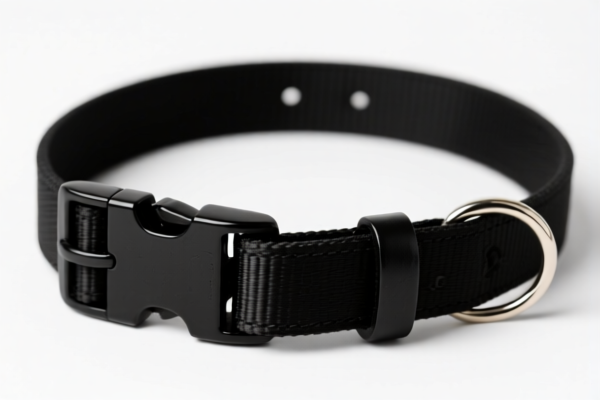
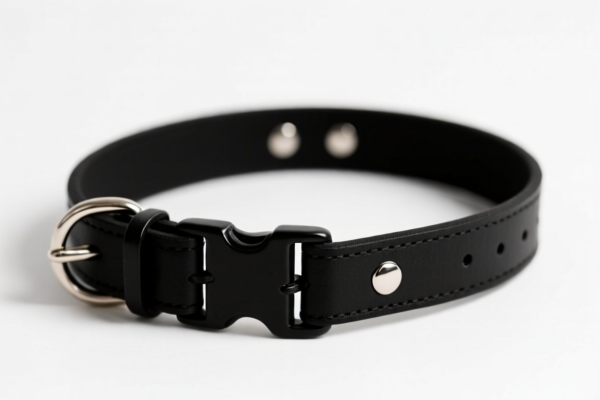
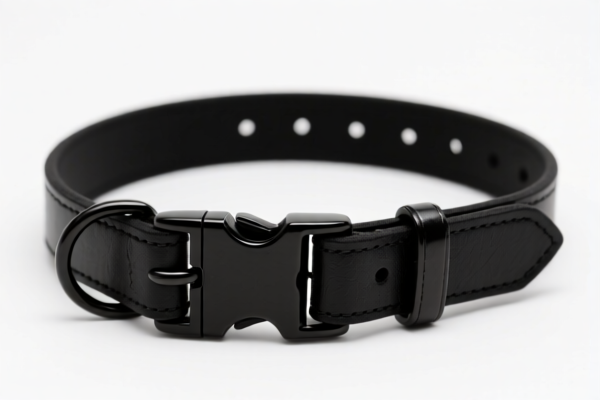
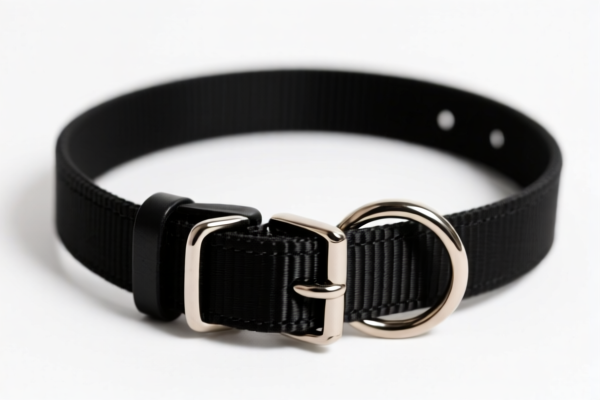
AI Analysis
🐕 Dog Collar Black (Large) – HS Code Classification & US Import Tax Analysis
🌐 HS Code Reference & Customs Clearance Guide | 2026 Latest Tariff Analysis | Professional Clearance Strategy
📌 I. Product Definition & Classification: Understanding the "Dog Collar"
A Dog Collar is an accessory worn around a dog's neck, primarily used for identification, control, and safety. In international trade, the classification depends heavily on material composition and intended use.
- Plastic/Nylon/Cloth Collars: Often classified under Chapter 42 (Articles of Leather; Saddle Harness) if considered "Animal Use Items" (Saddle & Harness), OR under Chapter 39 (Plastics) if deemed simple plastic articles.
- Leather Collars: Strictly classified under Chapter 42 as articles of leather.
⚠️ Key Distinction Point:
- If the collar is made of plastic/synthetic material and lacks complex harness features → It may fall under 3926.90.65.20 (Other plastic articles).
- If the collar is made of leather, nylon, or fabric and is specifically for animal use → It falls under 4201.00.30.00 or 4201.00.60.00 (Saddle harness and other articles of animal origin, or other articles of leather/fabric for animals).
📦 II. HS Code Classification Details (Based on Provided Data)
The following HS Codes are derived from the provided dataset, reflecting potential classifications based on material inference and use.
| HS Code | Product Description | Material Inference | Application Scenario |
|---|---|---|---|
3926.90.65.20 |
Other Plastic Articles (General) | Plastic or Synthetic Leather | Generic plastic collar; low-value accessory |
4201.00.30.00 |
Saddle Harness & Other Animal Articles (Leather/Nylon/Cloth) | Leather, Nylon, or Fabric | Dog collar made of textile or leather; standard pet accessory |
4201.00.60.00 |
Other Saddle Harness & Animal Articles | Leather or Fabric | Dog collar; specific animal use category |
4201.00.30.00 |
Saddle Harness & Other Animal Articles (Leather/Nylon/Cloth) | Fabric or Leather | Duplicate entry; standard dog collar classification |
🔍 Important Note:
- 3926.90.65.20 is applicable if the collar is deemed a generic plastic product without specific "animal harness" characteristics.
- 4201.00.30.00 and 4201.00.60.00 are more accurate for dog collars as they are explicitly used for animals (dogs). The material (leather, nylon, fabric) is inferred from common sense and matches the description.
💰 III. 2026 Latest Tariff Rate Breakdown (US Import from China)
✅ Applicable Country: United States (US)
✅ Origin: China (CN)
✅ Effective Date: 2025 Nov 10 onwards (includes subsequent imports)
🎯 1. 3926.90.65.20 – Plastic Articles
| Item | Details |
|---|---|
| Base Duty Rate | 4.2% |
| Section 301 Duty | 0.0% (No additional 25% tariff for this specific subheading in the provided data) |
| IEEPA (Section 122) Duty | +10% |
| Total Duty Rate | 14.2% |
| Tax Calculation | CIF Value × 14.2% |
| De Minimis Exemption | ❌ Not Applicable (Requires detailed review) |
| Legal Basis Path | IEEPA:9903.01.24 → USITC:3926.90.65.20 |
📌 Explanation:
- This classification assumes the collar is a plastic item.
- The 14.2% total duty is relatively lower compared to leather/textile alternatives.
- However, if the collar is clearly for animal use, customs may challenge this classification.
🎯 2. 4201.00.30.00 – Saddle Harness & Other Animal Articles (Leather/Nylon/Cloth)
| Item | Details |
|---|---|
| Base Duty Rate | 2.4% |
| Section 301 Duty | +25.0% |
| IEEPA (Section 122) Duty | +10% |
| Total Duty Rate | 37.4% |
| Tax Calculation | CIF Value × 37.4% |
| De Minimis Exemption | ❌ Not Applicable |
| Legal Basis Path | IEEPA:9903.01.24 → USITC:4201.00.30.00 → FOOTNOTE:9903.88.01 |
📌 Explanation:
- This is the most likely classification for a standard dog collar made of nylon, cloth, or leather.
- The 37.4% total duty is significantly higher than the plastic classification.
- Section 301 (25%) applies broadly to many Chinese goods.
- IEEPA (10%) is an additional penalty on Chinese-origin goods.
🎯 3. 4201.00.60.00 – Other Saddle Harness & Animal Articles
| Item | Details |
|---|---|
| Base Duty Rate | 2.8% |
| Section 301 Duty | +25.0% |
| IEEPA (Section 122) Duty | +10% |
| Total Duty Rate | 37.8% |
| Tax Calculation | CIF Value × 37.8% |
| De Minimis Exemption | ❌ Not Applicable |
| Legal Basis Path | IEEPA:9903.01.24 → USITC:4201.00.60.00 |
📌 Explanation:
- Similar to4201.00.30.00, but potentially for different types of animal articles.
- The 37.8% total duty is the highest among the three options.
- Use this only if the collar does not fit neatly into the "leather/nylon/cloth" subheading of 4201.00.30.
🛠️ IV. Customs Clearance Practical Advice (Avoid Pitfalls)
✅ 1. Required Documentation Checklist
| Document | Required | Notes |
|---|---|---|
| ✅ Product Description | ✔️ | Specify "Dog Collar, Black, Size L" |
| ✅ Material Composition | ✔️ | Critical for HS Code selection (Plastic vs. Leather/Nylon) |
| ✅ Product Photos | ✔️ | Show collar, buckle, material texture, and size |
| ✅ Commercial Invoice | ✔️ | Must match HS Code and duty rate |
| ✅ Packing List | ✔️ | Include quantity, weight, and dimensions |
| ✅ Certificate of Origin | ✔️ | To confirm Chinese origin |
✅ 2. Declaration Strategy (Key Tips)
🔥 "Material Matters, Use Defines Code, Name Must Be Clear!"
| Scenario | Correct Declaration | Risk of Error |
|---|---|---|
| Plastic Collar | 3926.90.65.20 |
Low risk if material is confirmed plastic |
| Nylon/Fabric Collar | 4201.00.30.00 |
High duty (37.4%); do not misdeclare as plastic |
| Leather Collar | 4201.00.30.00 or 4201.00.60.00 |
High duty (37.4%-37.8%); accurate material declaration is key |
| Mixed Material | 4201.00.30.00 |
If any significant part is leather/fabric, Chapter 42 is preferred |
⚠️ Warning:
- Misclassification from3926.90.65.20(14.2%) to4201.00.30.00(37.4%) can result in significant back taxes and penalties.
- Always provide material samples or detailed specs to CBP if uncertain.
✅ 3. Special Considerations
| Situation | Advice |
|---|---|
| OEM Custom Collars | Provide design specs and material invoices |
| Collar with Metal Parts | Still falls under Chapter 42 if primarily leather/fabric |
| Collar for Pets Only | Explicitly state "For Dog Use" to support Chapter 42 classification |
| Small Quantity (De Minimis) | ❌ Not Eligible: Section 301 and IEEPA duties apply even for small shipments |
🌍 V. Global Market Comparison (2026)
| Country/Region | Recommended HS Code | Duty Rate | Notes |
|---|---|---|---|
| 🇺🇸 USA | 4201.00.30.00 |
37.4% | High due to Section 301 & IEEPA |
| 🇨🇳 China | 4201.00.30.00 |
2.4% | No additional tariffs for imports into China |
| 🇪🇺 EU | 4201.00.30.00 |
0-2% | Low duty; requires CE marking |
| 🇬🇧 UK | 4201.00.30.00 |
0-2% | Post-Brexit tariffs may vary |
| 🇯🇵 Japan | 4201.00.30.00 |
0-8% | No additional sanctions |
📌 Conclusion:
- The USA imposes the highest duties on dog collars from China due to trade tensions.
- Material declaration is critical: Plastic (14.2%) vs. Leather/Nylon (37.4%+).
- For cost optimization, consider sourcing from non-China countries (e.g., Vietnam, Bangladesh) to avoid Section 301 and IEEPA duties.
📌 VI. Common Errors & Pitfalls (Lessons Learned)
❌ Error 1: Declaring a nylon collar as "Plastic Article" (3926.90.65.20)
👉 Consequence: CBP rejects declaration, imposes 37.4% duty + penalties.
❌ Error 2: Omitting material details in commercial invoice
👉 Consequence: Customs holds shipment for inspection, causing delays and storage fees.
❌ Error 3: Assuming De Minimis exemption applies
👉 Consequence: All Section 301 and IEEPA duties apply, even for small packages.
❌ Error 4: Using generic terms like "Accessory" instead of "Dog Collar"
👉 Consequence: Classification ambiguity, potential misclassification.
✅ Correct Approach:
"Dog Collar, Black, Size L, Material: Nylon, For Pet Use, Model XYZ"
🎯 VII. Conclusion: Professional Clearance, Cost Optimization!
🎯 Key Takeaways:
🔹 "Plastic = 14.2%, Nylon/Leather = 37.4%+!"
🔹 "Always declare material accurately!"
🔹 "Section 301 and IEEPA apply to all Chinese-origin pet accessories!"
📌 Pro Tip:
If your dog collars are made of nylon or leather, expect ~37.4% duty. To reduce costs, consider:
1. Sourcing from Vietnam/Bangladesh (avoid Chinese tariffs).
2. Applying for an Advance Ruling from CBP to confirm HS Code.
3. Accurate Material Declaration to avoid penalties.
📣 Immediate Action:
📞 Consult a licensed customs broker.
📄 Prepare detailed material specifications.
🚀 Ensure smooth customs clearance and maximize profit margins.
✨ Professional Customs Clearance Starts with Accurate Classification!
💼 Every Percent of Duty Counts!
Customer Reviews
About HS Code Classification
The Harmonized System (HS) is an internationally standardized nomenclature developed by the World Customs Organization (WCO) to classify traded products. Over 200 countries use the HS system as the basis for customs tariffs, trade statistics, and import/export regulations.
Each HS code follows a hierarchical structure:
- Chapter (2 digits) — Broad category of goods (e.g., Chapter 84: Machinery and Mechanical Appliances)
- Heading (4 digits) — More specific grouping within the chapter
- Subheading (6 digits) — Internationally standardized breakdown, used by all WCO member countries
- National subdivisions (8-10 digits) — Country-specific extensions for further classification, such as US HTSUS 10-digit codes
Correct HS code classification is essential for smooth customs clearance, accurate duty payment, and compliance with trade regulations. Misclassification can lead to customs delays, overpayment of duties, or penalties.
When importing from CN to US, the applicable tariff rates may include:
- Most-Favored-Nation (MFN) rate — The standard duty rate applied to WTO members
- General rate — Applied to countries without trade agreements
- Trade remedy duties — Additional tariffs such as Section 301 (anti-dumping), Section 232 (national security), or countervailing duties
The information provided on this page is for reference purposes only. For official classification, please consult with your local customs authority or a licensed customs broker.