Dog Gate
CN → US| HS Code | Tariff Rate | Origin | Destination | Doc |
|---|---|---|---|---|
| 7326908635 | 87.9% | CN | US | Official Doc |
| 4421917020 | 10.0% | CN | US | Official Doc |
| 7326908688 | 87.9% | CN | US | Official Doc |
| 4421997020 | 35.0% | CN | US | Official Doc |
| 9403200017 | 85.0% | CN | US | Official Doc |
Product Images



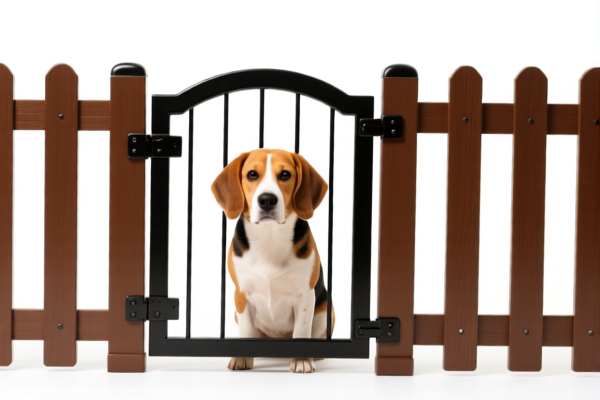
AI Analysis
🐕 Dog Gate (Pet Barrier / Pet Fence)
🌐 HS Code Reference & Customs Clearance Guide | 2026 Latest Tariff Analysis | Professional Clearance Strategy
📌 I. Product Definition & Classification: Do You Really Know a "Dog Gate"?
A Dog Gate (also known as a Pet Barrier, Pet Gate, or Animal Fence) is a safety accessory used to restrict pet access to specific areas within a home or yard. In international trade, classification depends heavily on material and specific use case:
Metal Gates (Steel/Iron): Rigid barriers often classified under general metal articles or furniture; Wooden/Bamboo Gates: Often classified as wooden articles or garden furniture; Mesh/Screen Gates: May be classified differently based on structural integrity.
⚠️ Key Distinction Point:
- If made of Steel/Iron and intended for outdoor/decorative fencing → Likely Chapter 73 (Articles of Iron or Steel);
- If made of Wood and used as a barrier → Likely Chapter 44 (Wood and Articles of Wood);
- If designed as Furniture (e.g., pet beds, indoor enclosures) → Likely Chapter 94 (Furniture).
📦 II. HS Code Classification Details (Based on Provided Data | 2026 Tariff Context)
| HS Code | Product Description | Material/Use Logic | Estimated Total Tax (US Import from CN) |
|---|---|---|---|
7326.90.86.35 |
Steel/Iron Pet Gate / Fence Article | Matched by Material (Iron/Steel) and Use (Fencing) | 87.9% |
4421.91.70.20 |
Wooden/Bamboo Pet Gate Section | Matched by Use (Fence) and Material (Wood/Bamboo) | 10.0% |
7326.90.86.88 |
Other Iron/Steel Articles | Matched by Iron/Steel Article category (General Metal) | 87.9% |
4421.99.70.20 |
Wooden Pet Gate (Assembled) | Matched by Use (Fence) and Wooden Material (Assembled Form) | 35.0% |
9403.20.00.17 |
Metal Pet Furniture/Enclosure | Matched by Steel Material and Restricted Activity Use (Furniture) | 85.0% |
🔍 Key Insight:
- Metal gates face extremely high tariffs (85%–87.9%) due to Section 301 and Section 232 measures.
- Wooden gates are significantly cheaper (10%–35%), making them more competitive in the US market.
- Misclassification can lead to massive tax discrepancies. A steel gate misclassified as wood could trigger audits and penalties.
💰 III. 2026 Latest Tariff Rate Breakdown (Including Additional Taxes & Policy Surcharges)
✅ Applicable Country: United States (US)
✅ Origin: China (CN)
✅ Effective Time: Ongoing (2025–2026)
🎯 1. 7326.90.86.35 & 7326.90.86.88 —— Steel/Iron Pet Gates
| Item | Content |
|---|---|
| Base Duty Rate | 2.9% (General) |
| Section 301 Additional Duty | +25.0% (China-specific) |
| Section 232 Duty (Steel/Aluminum) | +50.0% (On certain steel articles) |
| Total Tax Rate | 87.9% |
| Tax Calculation | CIF Value × 87.9% |
| De Minimis Exemption? | ❌ No (Denied) |
| Legal Basis Path | USITC:7326.90.86.35 → Section 301: Footnote 9903.88.01 → Section 232: Steel/Aluminum |
📌 Explanation:
- Steel pet gates are subject to both Section 301 (trade war) and Section 232 (national security) tariffs.
- The 87.9% rate is among the highest for consumer goods.
- Cost Impact: On a $100 gate, you pay $87.90 in duties alone.
🎯 2. 4421.91.70.20 —— Wooden Pet Gate Sections
| Item | Content |
|---|---|
| Base Duty Rate | 0.0% |
| Section 301 Additional Duty | 0.0% |
| Total Tax Rate | 10.0% |
| Tax Calculation | CIF Value × 10.0% |
| De Minimis Exemption? | ⚠️ Check Specific Policy (Usually limited for China) |
| Legal Basis Path | USITC:4421.91.70.20 → Section 232: 10% on Wood? (Note: Data shows 10% total, likely base 0% + 10% specific) |
📌 Explanation:
- Wooden gates are far more tariff-friendly.
- The 10% rate (if applicable) may be due to specific wood article surcharges or base rates.
- Cost Impact: On a $100 gate, you pay $10.00 in duties.
🎯 3. 4421.99.70.20 —— Assembled Wooden Pet Gates
| Item | Content |
|---|---|
| Base Duty Rate | 0.0% |
| Section 301 Additional Duty | +25.0% |
| Total Tax Rate | 35.0% |
| Tax Calculation | CIF Value × 35.0% |
| De Minimis Exemption? | ❌ No |
| Legal Basis Path | USITC:4421.99.70.20 → Section 301 |
📌 Explanation:
- Assembled wooden items may face higher Section 301 duties than sections/parts.
- Still significantly cheaper than steel (35% vs. 87.9%).
🎯 4. 9403.20.00.17 —— Metal Pet Furniture/Enclosure
| Item | Content |
|---|---|
| Base Duty Rate | 0.0% |
| Section 301 Additional Duty | +25.0% |
| Section 232 Duty (Steel/Aluminum) | +50.0% |
| Total Tax Rate | 85.0% |
| Tax Calculation | CIF Value × 85.0% |
| De Minimis Exemption? | ❌ No |
| Legal Basis Path | USITC:9403.20.00.17 → Section 301 → Section 232 |
📌 Explanation:
- If classified as Furniture (e.g., pet crate/indoor enclosure), it still incurs steel tariffs.
- 85.0% is slightly lower than fencing goods (87.9%) but still prohibitive.
🛠️ IV. Customs Clearance Practical Advice (Battle-Tested Pitfall Avoidance)
✅ 1. Document Checklist (Non-Negotiable)
| Document | Must Provide | Notes |
|---|---|---|
| ✅ Product Specification Sheet | ✔️ | Material composition, dimensions, assembly instructions |
| ✅ Material Declaration | ✔️ | Explicitly state "100% Steel" or "100% Wood" |
| ✅ Product Photos (Labeled) | ✔️ | Show hinges, locks, material texture |
| ✅ Commercial Invoice | ✔️ | Correct HS Code and product description |
| ✅ Packing List | ✔️ | Weight, dimensions, carton count |
| ✅ Certificate of Origin (CO) | ✔️ | Required for duty determination |
| ✅ Third-Party Lab Report | ✔️ | Material test (e.g., XRF for metal content) |
✅ 2. Classification Tips (Key Mantra)
🔥 “Material Dictates Fate, Use Defines Code, Steel is Expensive, Wood is Cheap!”
| Scenario | Correct HS Code | Wrong Code | Consequence |
|---|---|---|---|
| Steel Gate | 7326.90.86.35 or 9403.20.00.17 |
4421.99.70.20 |
Underpayment → Audit + Penalties |
| Wooden Gate | 4421.91.70.20 or 4421.99.70.20 |
7326.90.86.35 |
Overpayment → Lost Profit |
| Mixed Material | Depends on Essential Character | Arbitrary choice | Customs Rejection |
| Disassembled Parts | 4421.91.70.20 (if sections) |
4421.99.70.20 (assembled) |
Lower Duty vs. Higher Duty |
✅ 3. Special Cases
| Case | Handling Advice |
|---|---|
| OEM Custom Gates | Provide design blueprints to prove material and use |
| Mixed Materials (Steel Frame + Wood Panels) | Classify based on essential character (usually steel if structural) |
| Outdoor vs. Indoor | Outdoor may be "fence," indoor may be "furniture" |
| Plastic/Mesh Gates | Not in provided data → Check Chapter 39 (Plastics) or Chapter 56 (Textiles) |
🌍 V. Global Market Comparison (2026)
| Country/Region | Recommended HS Code | Estimated Tax (China Origin) | Remarks |
|---|---|---|---|
| 🇺🇸 USA | 7326.90.86.35 (Steel) |
87.9% | Highest tariff due to Section 232 + 301 |
| 🇺🇸 USA | 4421.91.70.20 (Wood) |
10.0% | Most cost-effective for US market |
| 🇨🇳 China | 7326.90.86.35 |
~2.9% | No Section 301/232 for imports into China |
| 🇪🇺 EU | 7326.90.86.35 |
~2.9% | No US-style surcharges |
| 🇨🇦 Canada | 7326.90.86.35 |
~5–15% | Check CUSMA eligibility |
📌 Conclusion:
- USA is the most expensive market for steel pet gates due to dual-layer tariffs.
- Wooden gates are strategically advantageous for US export.
- Consider supply chain diversification (e.g., produce wood gates in non-China origins) to avoid 25%+ surcharges.
📌 VI. Common Errors & Pitfalls (Lessons Learned)
❌ Error 1: Classifying a Steel Gate as "Wooden Fence Section"
👉 Consequence: Customs audit, back taxes, fines. Steel is easily identified by weight and magnetism.
❌ Error 2: Splitting a Steel Gate into "Steel Frame" + "Wood Panels" to lower tax
👉 Consequence: Customs may rule the essential character is steel, applying 87.9% to the entire item.
❌ Error 3: Ignoring Section 232 on Steel Articles
👉 Consequence: Unexpected 50% surcharge on top of 25% Section 301.
❌ Error 4: Using vague descriptions like "Pet Gate" without material specification
👉 Consequence: Customs requests additional info, delaying clearance.
✅ Correct Description:
"Steel Dog Gate, Outdoor Use, Foldable, Powder-Coated, 36”H x 30”W, Model DG-100"
🎯 VII. Conclusion: Precise Classification, Cost Optimization!
🎯 Remember the Mantra:
🔹 “Steel is Heavy, Tax is Heavy. Wood is Light, Tax is Light.”
🔹 “HS Code Saves Money, Misclassification Costs Profit.”
📌 Pro Tip:
- If you are importing wooden gates, ensure they are not painted with lead-based paint (CPSIA compliance for children/pets).
- For steel gates, consider pre-cutting or disassembling parts if applicable, but verify if this avoids assembly duties.
- Apply for Advance Ruling from CBP if unsure about mixed-material gates.
📣 Take Action Now:
📞 Consult a licensed customs broker + Provide material specs + Verify HS Code pre-classification
🚀 Clear faster, pay less, sleep better!
✨ Professional Clearance Starts with Accurate Classification!
💼 Every Dollar Saved in Duties is Pure Profit!
Customer Reviews
About HS Code Classification
The Harmonized System (HS) is an internationally standardized nomenclature developed by the World Customs Organization (WCO) to classify traded products. Over 200 countries use the HS system as the basis for customs tariffs, trade statistics, and import/export regulations.
Each HS code follows a hierarchical structure:
- Chapter (2 digits) — Broad category of goods (e.g., Chapter 84: Machinery and Mechanical Appliances)
- Heading (4 digits) — More specific grouping within the chapter
- Subheading (6 digits) — Internationally standardized breakdown, used by all WCO member countries
- National subdivisions (8-10 digits) — Country-specific extensions for further classification, such as US HTSUS 10-digit codes
Correct HS code classification is essential for smooth customs clearance, accurate duty payment, and compliance with trade regulations. Misclassification can lead to customs delays, overpayment of duties, or penalties.
When importing from CN to US, the applicable tariff rates may include:
- Most-Favored-Nation (MFN) rate — The standard duty rate applied to WTO members
- General rate — Applied to countries without trade agreements
- Trade remedy duties — Additional tariffs such as Section 301 (anti-dumping), Section 232 (national security), or countervailing duties
The information provided on this page is for reference purposes only. For official classification, please consult with your local customs authority or a licensed customs broker.