Dog Scratching Board
CN → US| HS Code | Tariff Rate | Origin | Destination | Doc |
|---|---|---|---|---|
| 3926909989 | 22.8% | CN | US | Official Doc |
| 4421919880 | 38.3% | CN | US | Official Doc |
| 5603949090 | 35.0% | CN | US | Official Doc |
| 3926305000 | 22.8% | CN | US | Official Doc |
| 4421999880 | 38.3% | CN | US | Official Doc |
Product Images
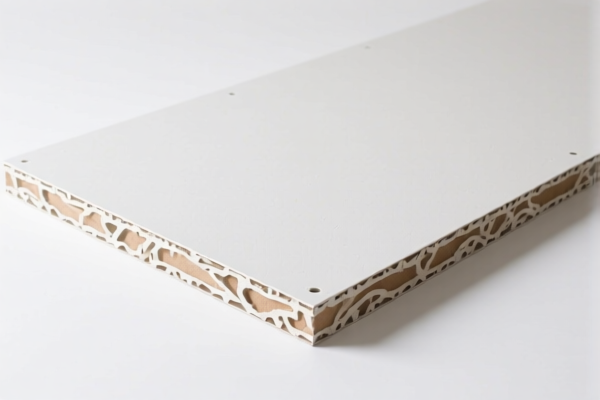
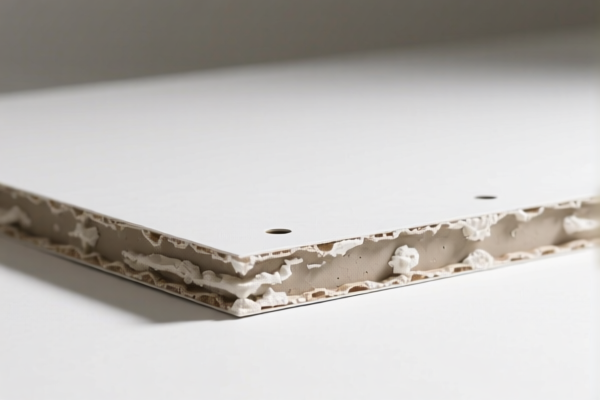
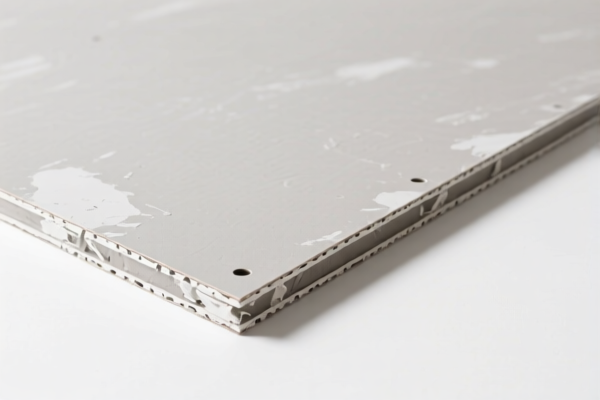

AI Analysis
🐕 Dog Scratching Board (Pet Enrichment Product)
🌐 HS Code Reference & Customs Clearance Guide | 2026 Latest Tariff Analysis | Professional Clearance Strategy
📌 I. Product Definition & Classification: Do You Really Understand "Dog Scratching Board"?
A Dog Scratching Board is typically a rectangular or angled board made of natural materials (such as sisal, corrugated cardboard, or wood) used for pet grooming, scratching, or playing. In international trade, classification depends entirely on the primary material and composition of the board.
There are three main scenarios based on the inferred material in the provided data:
- Sisal/Corrugated Fiber Board: If the board is primarily made of sisal fibers or corrugated paper pulp, it is classified as a non-woven fabric/composite product.
- Wooden/Bamboo Base: If the board has a solid wooden or bamboo base/frame, it is classified as a wooden article.
- Plastic Base/Coating: If the board has a plastic base, frame, or is coated with plastic, it is classified as a plastic article.
⚠️ Key Distinction:
- If the product is primarily fiber-based (sisal/cardboard) → Go to 5603.94.90.90
- If the product is primarily wooden/bamboo → Go to 4421.91.98.80 or 4421.99.98.80
- If the product is primarily plastic → Go to 3926.90.99.89 or 3926.30.50.00
📦 II. HS Code Classification Details (2026 Latest Tariff Authority对照)
Based on the provided data, here are the three most likely HS Code classifications for Dog Scratching Boards depending on material composition:
| HS Code | Product Description | Material Inference | Applicable Scenario |
|--------|--------------------------|---------------------------------|
| 5603.94.90.90 | Other non-woven fabrics, other (Inferred: Sisal/Corrugated Fiber) | Sisal or Corrugated Paper Fiber | Boards made of woven sisal rope or compressed cardboard fibers; categorized as "other non-woven products." |
| 4421.91.98.80 | Other articles of bamboo (Inferred: Bamboo/Wooden) | Bamboo or Wood | Boards with a bamboo or wooden base/frame; categorized as "wooden products, bamboo category." |
| 4421.99.98.80 | Other wooden articles (Inferred: Wooden Base) | Wood or Wood-Containing Base | Boards with a wooden base or entirely wooden construction; categorized as "other wooden products." |
| 3926.90.99.89 | Other articles of plastics (Inferred: Plastic Material) | Plastic or Plastic Composite | Boards made of plastic or containing significant plastic components; categorized as "other plastic products." |
| 3926.30.50.00 | Other articles of plastics for furniture or vehicle fittings (Inferred: Plastic Base/Coating) | Plastic Base/Coating | Boards with a plastic base or plastic coating; categorized as "plastic accessories/fittings." |
🔍 Key Reminder:
- Material is King: Customs will inspect the main material. A wooden board with sisal scratching surface is often classified by the base material (Wood) unless the sisal is the dominant value component. - Composite Products: If the product is a composite (e.g., wood frame + plastic base), customs may classify it based on the material that gives it its essential character. - Avoid Misclassification: Do not classify a wooden board as "plastic" just because it has a small plastic screw; this leads to severe penalties.
💰 III. 2026 Latest Tariff Rate Breakdown (Including Surcharges & Policy Add-ons)
✅ Applicable Country: United States (US)
✅ Origin: China (CN)
✅ Effective Time: From November 10, 2025 (and subsequent imports)
🎯 1. 5603.94.90.90 —— Non-Woven Fabric Board (Sisal/Cardboard)
| Item | Content |
|---|---|
| Basic Tariff | 0.0% (ad valorem) |
| Section 301 Surcharge | +25.0% |
| Section 122 Tariff | +10.0% |
| Total Tax Rate | 35.0% |
| Tax Calculation | CIF Value × 35.0% |
| De Minimis Eligibility | ❌ No (deny_de_minimis) |
| Legal Basis Path | USITC:5603.94.90.90 → SECTION 301 → SECTION 122 |
📌 Explanation:
- Basic Tariff 0%: Non-woven fabrics generally have low basic duties.
- Section 301 Surcharge (+25%): Applies to Chinese-origin goods under US Trade Act Section 301.
- Section 122 Tariff (+10%): Additional surcharge under Section 122 of the Trade Expansion Act.
- Total 35%: High effective tax rate despite low basic tariff.
🎯 2. 4421.91.98.80 & 4421.99.98.80 —— Wooden/Bamboo Board
| Item | Content |
|---|---|
| Basic Tariff | 3.3% (ad valorem) |
| Section 301 Surcharge | +25.0% |
| Section 122 Tariff | +10.0% |
| Total Tax Rate | 38.3% |
| Tax Calculation | CIF Value × 38.3% |
| De Minimis Eligibility | ❌ No (deny_de_minimis) |
| Legal Basis Path | USITC:4421.91.98.80 / 4421.99.98.80 → SECTION 301 → SECTION 122 |
📌 Explanation:
- Basic Tariff 3.3%: Wooden articles carry a small base duty.
- Section 301 Surcharge (+25%): Standard 301 tariff on Chinese wood products.
- Section 122 Tariff (+10%): Additional 10% surcharge.
- Total 38.3%: Highest total tax rate among the three categories.
🎯 3. 3926.90.99.89 & 3926.30.50.00 —— Plastic Board
| Item | Content |
|---|---|
| Basic Tariff | 5.3% (ad valorem) |
| Section 301 Surcharge | +7.5% |
| Section 122 Tariff | +10.0% |
| Total Tax Rate | 22.8% |
| Tax Calculation | CIF Value × 22.8% |
| De Minimis Eligibility | ❌ No (deny_de_minimis) |
| Legal Basis Path | USITC:3926.90.99.89 / 3926.30.50.00 → SECTION 301 → SECTION 122 |
📌 Explanation:
- Basic Tariff 5.3%: Plastic articles have a moderate base duty.
- Section 301 Surcharge (+7.5%): Lower 301 surcharge for certain plastic goods compared to wood.
- Section 122 Tariff (+10%): Additional 10% surcharge.
- Total 22.8%: Lowest total tax rate among the three options.
🛠️ IV. Customs Clearance Practical Advice (Real-World Pitfall Guide)
✅ 1. Required Documents Checklist (All Mandatory)
| Document | Must Provide | Explanation |
|---|---|---|
| ✅ Product Spec Sheet | ✔️ | Material composition (e.g., "80% Sisal, 20% Plywood"), dimensions, weight. |
| ✅ Material Test Report | ✔️ | Lab report confirming fiber type or wood/plastic content. |
| ✅ Product Photos | ✔️ | Clear images of the board, base, and packaging. |
| ✅ Commercial Invoice | ✔️ | Must state "Dog Scratching Board" and specify material (e.g., "Wooden Board with Sisal Rope"). |
| ✅ Packing List | ✔️ | Detail quantity, weight, and packaging type. |
| ✅ Origin Certificate | ✔️ | If not from China, apply for preferential rates. |
✅ 2. Declaration Tips (Key Mantra)
🔥 “Material First, Name Second, Don’t Split, Don’t Guess!”
| Scenario | Correct Declaration | Wrong Practice |
|---|---|---|
| Wooden Base + Sisal Rope | Declare as Wooden Product (4421.99.98.80) |
Declare as "Fibers" → Risk of higher audit |
| Plastic Base + Cardboard | Declare as Plastic Product (3926.90.99.89) |
Declare as "Cardboard" → 38.3% vs 22.8% |
| 100% Sisal Rope Board | Declare as Non-Woven (5603.94.90.90) |
Declare as "Plastic" → Wrong HTS |
| Mixed Materials | Declare based on Essential Character | Split declaration → Each part taxed separately |
📌 Pro Tip:
- If the board is wooden, declare it as Wood. Even if it has sisal, the wooden base often defines the "essential character."
- If the board is plastic, declare it as Plastic. The 22.8% rate is significantly lower than wood (38.3%).
- Never under-declare material composition. If it’s 50% wood, it’s wood.
✅ 3. Special Cases Handling
| Scenario | Handling Advice |
|---|---|
| OEM Custom Board | Provide design specs to prove material ratio. Avoid being classified as "miscellaneous" (higher tax). |
| Board with Plastic Screws/Parts | If plastic parts are <5% by value, still declare as Wood/Plastic based on main body. Do not split. |
| Eco-Friendly Cardboard Board | If 100% cardboard, declare as Non-Woven (5603.94.90.90) → 35.0% tax. |
| Board for Commercial Grooming | If used in salons, same rules apply. No "commercial use" tax exemption. |
🌍 V. Global Market Clearance Comparison (2026 Latest)
| Country/Region | Recommended HS Code | Tariff | Certification Required | Notes |
|---|---|---|---|---|
| 🇺🇸 USA | 3926.90.99.89 (Plastic) |
22.8% | None | Lowest tax rate for plastic. |
| 🇺🇸 USA | 4421.99.98.80 (Wood) |
38.3% | None | Highest tax rate. |
| 🇨🇳 China | 4421.99.98.80 |
5% | FSC (if wood) | No 301/122 surcharges. |
| 🇪🇺 EU | 4421.99.98.80 |
0-2% | EUTR (Wood) | Low tax, strict wood legality. |
| 🇬🇧 UK | 4421.99.98.80 |
0-2% | FSC/PEFC | Post-Brexit rules apply. |
📌 Conclusion:
- USA is the most costly market due to 301 and Section 122 surcharges.
- Plastic boards (22.8%) are significantly cheaper to import into the USA than wooden (38.3%) or fiber (35.0%) boards.
- Consider shifting material to plastic if cost is a major factor for US import.
📌 VI. Common Mistakes & Pitfall Guide (Lessons from Blood & Tears)
❌ Mistake 1: Declaring a wooden board as "Cardboard" to avoid 301 tariffs
👉 Consequence: Customs inspection reveals wood → Penalty + Back Taxes + Delay
❌ Mistake 2: Splitting declaration (e.g., "Wood Frame" + "Sisal Rope")
👉 Consequence: Each item taxed separately → Total tax exceeds 60%!
❌ Mistake 3: Ignoring Section 122 surcharge
👉 Consequence: Under-declaring tax by 10% → Audit & Fine
✅ Correct Approach:
"Dog Scratching Board, 24x18x2 inches, Wooden Base with Sisal Rope, Made in China"
→ Declared as4421.99.98.80(Wooden Article) → 38.3% Total Tax
🎯 VII. Conclusion: Smart Declaration, Save Money, Speed Up Clearance
🎯 Remember the Mantra:
🔹 "Plastic is Cheapest (22.8%), Wood is Most Expensive (38.3%)!"
🔹 "Material Defines Code, Code Defines Tax, Tax Defines Profit!"
📌 Pro Tip:
If you are importing wooden boards into the USA, consider shifting production to Vietnam or Thailand to avoid 301 + 122 surcharges (Tax drops to ~3-5%).
For plastic boards, the 22.8% rate is unavoidable for Chinese origin, so optimize design to reduce weight/CIF value.
📣 Immediate Action:
📞 Consult a Customs Broker + Provide Material Spec + Apply for HS Code Advance Ruling
🚀 Let your Dog Scratching Board Clear Smoothly, Export Efficiently, and Boost Profit!
✨ Professional Clearance Starts with Accurate Classification!
💼 Every Cent of Your Cost Deserves Precise Calculation!
Customer Reviews
About HS Code Classification
The Harmonized System (HS) is an internationally standardized nomenclature developed by the World Customs Organization (WCO) to classify traded products. Over 200 countries use the HS system as the basis for customs tariffs, trade statistics, and import/export regulations.
Each HS code follows a hierarchical structure:
- Chapter (2 digits) — Broad category of goods (e.g., Chapter 84: Machinery and Mechanical Appliances)
- Heading (4 digits) — More specific grouping within the chapter
- Subheading (6 digits) — Internationally standardized breakdown, used by all WCO member countries
- National subdivisions (8-10 digits) — Country-specific extensions for further classification, such as US HTSUS 10-digit codes
Correct HS code classification is essential for smooth customs clearance, accurate duty payment, and compliance with trade regulations. Misclassification can lead to customs delays, overpayment of duties, or penalties.
When importing from CN to US, the applicable tariff rates may include:
- Most-Favored-Nation (MFN) rate — The standard duty rate applied to WTO members
- General rate — Applied to countries without trade agreements
- Trade remedy duties — Additional tariffs such as Section 301 (anti-dumping), Section 232 (national security), or countervailing duties
The information provided on this page is for reference purposes only. For official classification, please consult with your local customs authority or a licensed customs broker.