Dog kibble
CN → US| HS Code | Tariff Rate | Origin | Destination | Doc |
|---|---|---|---|---|
| 3923210095 | 38.0% | CN | US | Official Doc |
| 3923290000 | 38.0% | CN | US | Official Doc |
| 4819400040 | 35.0% | CN | US | Official Doc |
| 4819300040 | 35.0% | CN | US | Official Doc |
| 6305330080 | 25.9% | CN | US | Official Doc |
Product Images

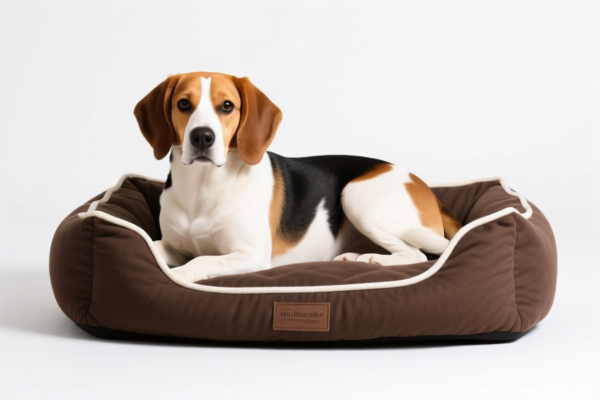
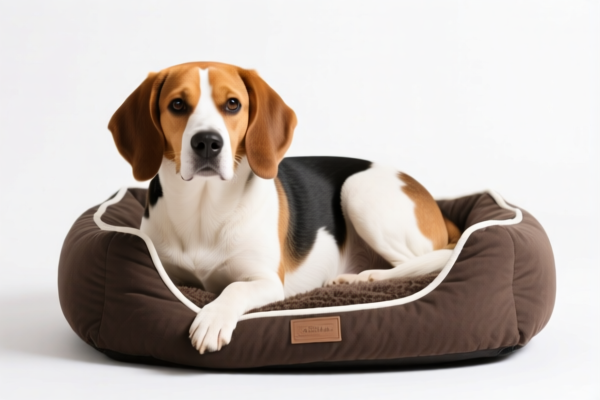
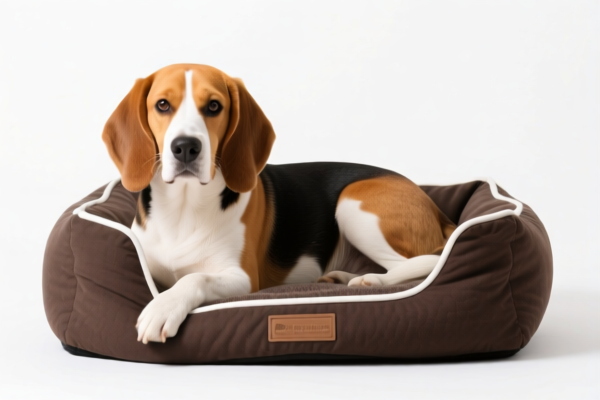
AI Analysis
🐶 Dog Kibble – Comprehensive HS Code & Tariff Guide (2026 Edition)
🌐 HS Code Classification & Customs Clearance Strategy | 2026 Updated Tariff Rules | Pro Tips for Exporters & Importers
📦 1. Product Definition & Classification: What Exactly Is "Dog Kibble"?
Dog kibble refers to dry, pelletized pet food specifically formulated for canine consumption. It is typically made from a mixture of grains, meat meals, vitamins, and additives, and is pre-packaged for retail sale.
⚠️ Key Classification Criteria: - Must be preparations for animal feeding (not raw ingredients) - Designed for dogs or cats (not livestock) - Put up for retail sale (i.e., consumer-ready packaging) - Not in airtight containers (this triggers a different HS Code)
📌 Critical Distinction: - If in airtight containers → HS Code 2309.10.00.10 - If not in airtight containers → HS Code 2309.10.00.90
🔍 2. HS Code Breakdown (2026 Official Tariff List – US & Global)
| HS Code | Product Description | Packaging Type | Retail Ready? | Key Differentiator |
|---|---|---|---|---|
2309.10.00.90 |
Dog or cat food, not in airtight containers, put up for retail sale | Standard packaging (e.g., plastic bag, cardboard box) | ✅ Yes | Non-airtight = this code |
2309.10.00.10 |
Dog or cat food, in airtight containers, put up for retail sale | Sealed pouches, vacuum-packed, metal tins | ✅ Yes | Airtight = this code |
✅ Both codes fall under the same category: Preparations of a kind used in animal feeding – Dog or cat food, put up for retail sale
💰 3. 2026 Tariff & Duty Breakdown (U.S. Focus – China Origin)
✅ Applicable Country: United States (US)
✅ Origin: China (CN)
✅ Effective Date: 2025–2026 (ongoing Section 301 & IEEPA tariffs)
🎯 1. 2309.10.00.90 – Dog Kibble (Not in Airtight Containers)
| Tax Component | Rate | Explanation |
|---|---|---|
| Base Duty | 0.0% | Standard tariff rate under HTSUS |
| Section 301 (USITC) Additional Duty | +25.0% | Imposed under U.S. Trade Act 301 for Chinese-origin goods |
| IEEPA (International Emergency Economic Powers Act) Additional Duty | +0.0% | Not applicable for this product |
| Total Effective Duty | 25.0% | CIF value × 25% |
| De Minimis Threshold | ❌ Not applicable | No de minimis exemption (due to 301 tariff) |
| Legal Basis | USITC: 2309.10.00.90 → FOOTNOTE 9903.88.01 → IEEPA: 9903.01.25 (but not triggered) |
📌 Why 25%?
- This is a Section 301 tariff under U.S. Trade Representative (USTR) list:
→ “Additional duties on certain goods from China”
- Applies to all dog/cat food regardless of packaging type, unless it’s in airtight containers.
🎯 2. 2309.10.00.10 – Dog Kibble (In Airtight Containers)
| Tax Component | Rate | Explanation |
|---|---|---|
| Base Duty | 0.0% | Standard HTSUS rate |
| Section 301 (USITC) Additional Duty | +25.0% | Same as above – applies to all Chinese-origin pet food |
| IEEPA Additional Duty | +0.0% | Not applicable |
| Total Effective Duty | 25.0% | CIF value × 25% |
| De Minimis Threshold | ❌ Not applicable | 301 tariff overrides de minimis |
| Legal Basis | USITC: 2309.10.00.10 → FOOTNOTE 9903.88.01 → IEEPA: 9903.01.25 (not triggered) |
📌 Important Note:
- Even if the product is in airtight packaging, the 25% Section 301 tariff still applies. - The only difference is the HS Code, not the tariff rate. - Airtight packaging is not a tariff exemption.
🛠️ 4. Customs Clearance Best Practices (Pro Tips for Success)
✅ 1. Required Documentation (Must-Have)
| Document | Required? | Why It Matters |
|---|---|---|
| ✅ Commercial Invoice | ✔️ | Must clearly state: “Dog Kibble, Retail Packaged, Not in Airtight Container” |
| ✅ Packing List | ✔️ | Show quantity, weight, and packaging type |
| ✅ Product Label (Front & Back) | ✔️ | Must show: brand, ingredients, net weight, "For Dogs" |
| ✅ Certificate of Origin (CO) | ✔️ | Prove origin (China/CN) – affects tariff |
| ✅ FDA/USDA Compliance (if applicable) | ✔️ | For pet food, FDA registration may be required |
| ✅ Third-Party Lab Test (e.g., for Salmonella, heavy metals) | ✔️ | Highly recommended for high-value shipments |
✅ 2.申报技巧(Key Tips)
🔥 “Packaging Defines Code, Origin Defines Duty”
| Scenario | Correct HS Code | Common Mistake |
|---|---|---|
| Kibble in plastic bag, no seal | 2309.10.00.90 |
Mislabeling as “in container” → wrong code |
| Kibble in vacuum-sealed pouch | 2309.10.00.10 |
Calling it “not airtight” → error |
| Kibble from Vietnam (non-China) | 2309.10.00.90 or .10 |
May qualify for 0% tariff under IEEPA exemption |
| Kibble with 10% soybean meal | 2309.10.00.90 |
Still applies – not excluded |
✅ 3. Special Cases & Workarounds
| Situation | Recommended Action |
|---|---|
| Non-Chinese origin (e.g., Vietnam, Mexico, Thailand) | Apply for IEEPA exemption – tariff drops to 0% |
| Small shipment (< $800) | ❌ No de minimis benefit – 301 tariff still applies |
| Kibble with added supplements (e.g., glucosamine) | Still falls under 2309.10.00.90/.10 – no special treatment |
| Private label / OEM kibble | Provide client contract + label proof to avoid misclassification |
🌍 5. Global Tariff Comparison (2026 Update)
| Country | Recommended HS Code | Base Duty | Additional Duty | Total Duty | Notes |
|---|---|---|---|---|---|
| 🇺🇸 United States | 2309.10.00.90 or .10 |
0.0% | +25.0% (301) | 25.0% | No de minimis |
| 🇨🇳 China | 2309.10.00.90 |
0.0% | 0.0% | 0.0% | Domestic trade |
| 🇪🇺 European Union | 2309.10.00.90 |
0.0% | 0.0% | 0.0% | No 301 tariff |
| 🇦🇺 Australia | 2309.10.00.90 |
0.0% | 0.0% | 0.0% | No extra duties |
| 🇯🇵 Japan | 2309.10.00.90 |
0.0% | 0.0% | 0.0% | Free trade agreement |
📌 Insight:
- Only the U.S. applies the 25% tariff on dog kibble from China. - All other major markets treat this product as duty-free.
🚨 6. Common Mistakes & Risk Warnings (Avoid These!)
❌ Mistake 1: Claiming "airtight" packaging to avoid 301 tariff
👉 Reality: 25% still applies – only HS Code changes.
❌ Mistake 2: Not specifying “retail sale” on invoice
👉 Result: Customs may reclassify as bulk feed → higher risk of inspection or rejection.
❌ Mistake 3: Using “dog food” without mentioning “kibble”
👉 Risk: Misleading description → audit or delay.
❌ Mistake 4: Assuming de minimis applies
👉 Truth: No – 301 tariffs override de minimis ($800) for China-origin goods.
✅ 7. Pro Strategy: How to Reduce Tariff Burden
🔥 “Change the Origin, Not the Product”
| Strategy | How It Works | Expected Result |
|---|---|---|
| ✅ Shift production to Vietnam/Mexico | Use FTA-compliant origin rules | 0% tariff in U.S. |
| ✅ Use a third-country distributor | Ship via Malaysia or Thailand | Avoids China origin |
| ✅ Apply for Advance Ruling (AR) | Get official HS Code & tariff confirmation | Avoids disputes |
| ✅ Use bonded warehouse (U.S.) | Delay tariff payment until sale | Cash flow benefit |
🎯 8. Final Verdict: What You Must Do
📌 Key Takeaway: - All dog kibble from China → 25% tariff in the U.S., regardless of packaging. - HS Code 2309.10.00.90 = standard retail kibble - HS Code 2309.10.00.10 = kibble in airtight containers - Both carry 25% total duty
✅ Pro Tip:
“Label it clearly, package it right, origin it wisely — or pay 25% extra.”
📣 Call to Action: Secure Your Shipment Today!
📞 Contact a licensed customs broker with experience in pet food
📊 Request an HS Code pre-ruling for your product
🌐 Explore non-China manufacturing to avoid 301 tariffs
💼 Turn your dog kibble into a profitable, compliant export
✨ Your Pet Food’s Future Starts with the Right HS Code!
💼 Accurate classification = Lower duty, faster clearance, higher profits!
Customer Reviews
About HS Code Classification
The Harmonized System (HS) is an internationally standardized nomenclature developed by the World Customs Organization (WCO) to classify traded products. Over 200 countries use the HS system as the basis for customs tariffs, trade statistics, and import/export regulations.
Each HS code follows a hierarchical structure:
- Chapter (2 digits) — Broad category of goods (e.g., Chapter 84: Machinery and Mechanical Appliances)
- Heading (4 digits) — More specific grouping within the chapter
- Subheading (6 digits) — Internationally standardized breakdown, used by all WCO member countries
- National subdivisions (8-10 digits) — Country-specific extensions for further classification, such as US HTSUS 10-digit codes
Correct HS code classification is essential for smooth customs clearance, accurate duty payment, and compliance with trade regulations. Misclassification can lead to customs delays, overpayment of duties, or penalties.
When importing from CN to US, the applicable tariff rates may include:
- Most-Favored-Nation (MFN) rate — The standard duty rate applied to WTO members
- General rate — Applied to countries without trade agreements
- Trade remedy duties — Additional tariffs such as Section 301 (anti-dumping), Section 232 (national security), or countervailing duties
The information provided on this page is for reference purposes only. For official classification, please consult with your local customs authority or a licensed customs broker.