Doll
CN → US| HS Code | Tariff Rate | Origin | Destination | Doc |
|---|---|---|---|---|
| 9503000090 | 10.0% | CN | US | Official Doc |
| 9503000073 | 10.0% | CN | US | Official Doc |
| 9503000071 | 10.0% | CN | US | Official Doc |
| 3926400090 | 15.3% | CN | US | Official Doc |
| 3926909989 | 22.8% | CN | US | Official Doc |
| 6307909891 | 24.5% | CN | US | Official Doc |
Product Images
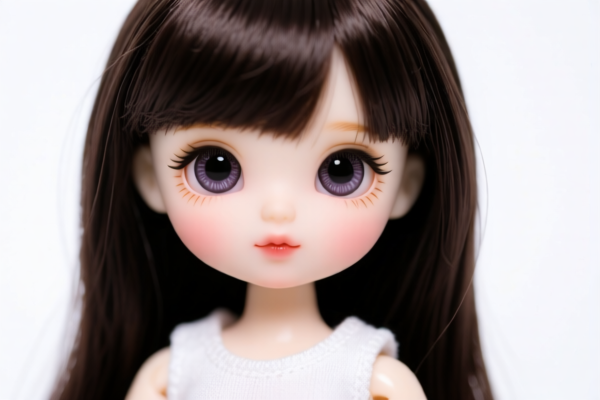
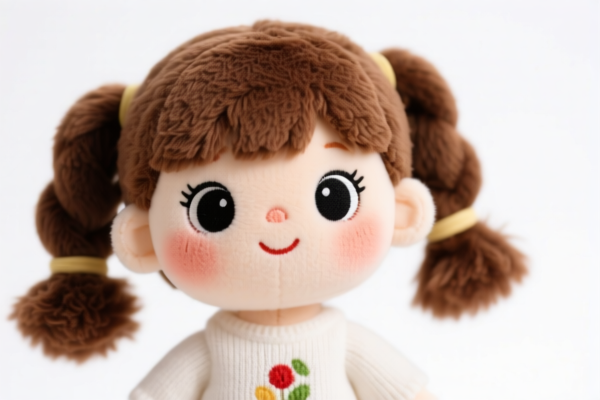
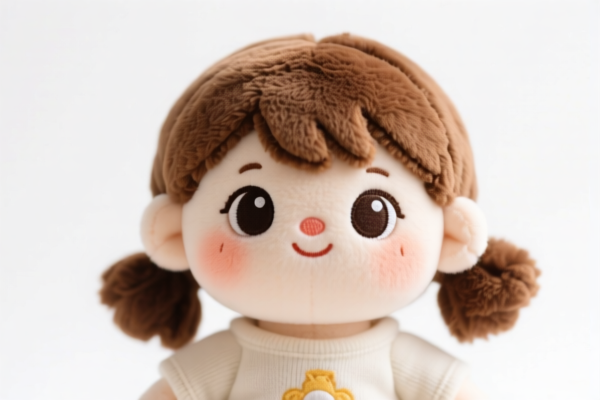
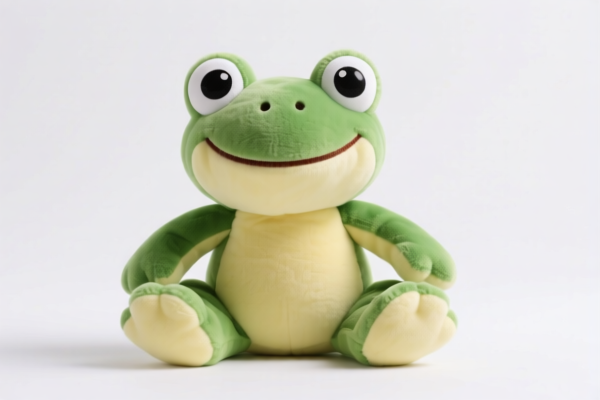
AI Analysis
🎀 Dolls (Toy & Artistic Figures) – HS Code & Tariff Guide | 2026 Global Customs Compliance Handbook
🌐 HS Code Classification & Duty Breakdown | US & Global Market Rules | Pro Tips for Smooth Clearance
📌 One: Product Definition & Classification – What Exactly Is a "Doll"?
A doll is a human-shaped figure used for play, decoration, or artistic expression. In international trade, dolls are classified based on material, form, intended use, and degree of realism. The key distinction lies in whether the item is:
- ✅ A toy (for children, recreational use) → falls under Chapter 95 (Toys, Games, Sports Equipment)
- ✅ A decorative sculpture or artistic figure → may fall under Chapter 39 (Plastics) or Chapter 63 (Textile Articles)
⚠️ Critical Differentiator:
- If it’s designed for play, made of plastic or fabric, and resembles a child → HS Code 9503.00.00.x
- If it’s realistic, stylized, or sold as collectible art, even if made of plastic → HS Code 3926.40.00.90 or 3926.90.99.89
📦 Two: HS Code Classification Table (2026 Updated – US Focus)
| HS Code | Product Description | Material | Use Case | Tax Rate |
|---|---|---|---|---|
9503.00.00.90 |
Doll clothing (accessory) | Fabric | For dolls (e.g., outfits, hats, shoes) | 10.0% |
9503.00.00.73 |
Plastic doll (toy form, play use) | Plastic | Child’s toy, typical doll shape | 10.0% |
9503.00.00.71 |
Plastic doll (dolls category, no conflict) | Plastic | General-purpose doll, non-ambiguous | 10.0% |
3926.40.00.90 |
Plastic doll (sculptural/decorative) | Plastic | Artistic, collectible, high-end figure | 15.3% |
3926.90.99.89 |
Plastic doll (other plastic products) | Plastic | Unclassified plastic figure, not clearly a toy | 22.8% |
6307.90.98.91 |
Fabric doll (textile, finished product) | Textile | Stuffed doll, soft toy, ready-made | 24.5% |
🔍 Why the difference?
- 9503.00.00.x = Toy category → lower tax
- 3926.40.00.90 = Artistic/collectible → higher base tariff
- 3926.90.99.89 = "Other plastic products" → highest tax due to broad catch-all classification
- 6307.90.98.91 = Textile-made doll → includes fabric + stuffing + stitching → highest risk of misclassification
💰 Three: 2026 Tariff Breakdown – Full Tax Clause Analysis (US Market)
✅ Applicable Country: United States (US)
✅ Origin: China (CN)
✅ Effective Date: November 10, 2025 (post-301 & IEEPA enforcement)
🎯 1. 9503.00.00.90 – Doll Clothing (Accessory)
| Item | Detail |
|---|---|
| Base Duty | 0.0% (ad valorem) |
| Additional Tariff (Section 301) | 0.0% |
| Section 122 Tariff (IEEPA) | 10.0% |
| Total Duty | 10.0% |
| Tax Calculation | CIF × 10.0% |
| De Minimis Exemption? | ✅ Yes (under $800) |
| Legal Basis Path | IEEPA:9903.01.25 → Section 122: 10% |
📌 Explanation:
- This is a dolls’ accessory, not the doll itself → not subject to 301 tariffs
- Only 10% IEEPA Section 122 tariff applies
- Lowest risk of audit or penalty
🎯 2. 9503.00.00.73 – Plastic Doll (Toy Form)
| Item | Detail |
|---|---|
| Base Duty | 0.0% |
| Additional Tariff (Section 301) | 0.0% |
| Section 122 Tariff (IEEPA) | 10.0% |
| Total Duty | 10.0% |
| Tax Calculation | CIF × 10.0% |
| De Minimis Exemption? | ✅ Yes |
| Legal Basis Path | IEEPA:9903.01.25 → Section 122: 10% |
📌 Explanation:
- Clearly a toy (plastic, child-like, for play) → qualifies for toy tariff exemption
- No 301 or additional trade war tariffs
- Safe for mass export to US
🎯 3. 9503.00.00.71 – Plastic Doll (General Doll Use, No Conflict)
| Item | Detail |
|---|---|
| Base Duty | 0.0% |
| Additional Tariff (Section 301) | 0.0% |
| Section 122 Tariff (IEEPA) | 10.0% |
| Total Duty | 10.0% |
| Tax Calculation | CIF × 10.0% |
| De Minimis Exemption? | ✅ Yes |
| Legal Basis Path | IEEPA:9903.01.25 → Section 122: 10% |
📌 Note:
- Same as 9503.00.00.73 — no conflict in classification
- Best for standard dolls sold in toy stores
🎯 4. 3926.40.00.90 – Plastic Doll (Sculptural/Decorative)
| Item | Detail |
|---|---|
| Base Duty | 5.3% |
| Additional Tariff (Section 301) | 0.0% |
| Section 122 Tariff (IEEPA) | 10.0% |
| Total Duty | 15.3% |
| Tax Calculation | CIF × 15.3% |
| De Minimis Exemption? | ❌ No (above $800 threshold) |
| Legal Basis Path | Base: 3926.40.00.90 → IEEPA:9903.01.25 → Section 122: 10% |
📌 Explanation:
- Not a toy — styled like a collectible figure, highly detailed, not for children
- Falls under Chapter 39 (Plastics) → higher base duty (5.3%)
- 10% IEEPA tariff still applies
- High audit risk — customs may challenge if it looks like a toy
🎯 5. 3926.90.99.89 – Plastic Doll (Other Plastic Products)
| Item | Detail |
|---|---|
| Base Duty | 5.3% |
| Additional Tariff (Section 301) | 7.5% |
| Section 122 Tariff (IEEPA) | 10.0% |
| Total Duty | 22.8% |
| Tax Calculation | CIF × 22.8% |
| De Minimis Exemption? | ❌ No |
| Legal Basis Path | Base: 3926.90.99.89 → Section 301: 7.5% → IEEPA:9903.01.25 → Section 122: 10% |
📌 Warning:
- This is the "catch-all" plastic category — used when no specific code fits
- 7.5% Section 301 tariff applies because it's not clearly a toy
- High-risk classification — common for unclear or hybrid dolls
- Avoid this code unless absolutely necessary
🎯 6. 6307.90.98.91 – Fabric Doll (Textile, Finished)
| Item | Detail |
|---|---|
| Base Duty | 7.0% |
| Additional Tariff (Section 301) | 7.5% |
| Section 122 Tariff (IEEPA) | 10.0% |
| Total Duty | 24.5% |
| Tax Calculation | CIF × 24.5% |
| De Minimis Exemption? | ❌ No |
| Legal Basis Path | Base: 6307.90.98.91 → Section 301: 7.5% → IEEPA:9903.01.25 → Section 122: 10% |
📌 Critical Insight:
- Textile dolls (stuffed, fabric-covered) are not toys unless clearly labeled as such
- 7.5% Section 301 tariff applies due to non-toy classification
- Highest tax rate — avoid unless the product is clearly decorative or collectible
🛠️ Four: Customs Clearance Best Practices (Pro Tips)
✅ 1. Required Documentation (Must-Have)
| Document | Required? | Purpose |
|---|---|---|
| ✅ Product Photos (front, back, label) | ✔️ | Show material, form, realism |
| ✅ Technical Specs (size, weight, material) | ✔️ | Prove toy vs. art |
| ✅ Commercial Invoice | ✔️ | Must state "Plastic Doll for Children" or "Collectible Figure" |
| ✅ Packing List | ✔️ | Show full shipment contents |
| ✅ Certificate of Origin (CO) | ✔️ | If claiming preferential tariff |
| ✅ Test Reports (if applicable) | ✔️ | ASTM F963 (toy safety), CPSIA, etc. |
| ✅ Design Drawings (for complex dolls) | ✔️ | Prove intent (play vs. art) |
✅ 2.申报技巧(Key Rules to Remember)
🔥 "Label Clearly, Form Matters, Toy vs. Art — One Word Changes Everything!"
| Scenario | Correct HS Code | Wrong Code | Risk |
|---|---|---|---|
| Child’s plastic doll with big eyes, smile, simple clothes | 9503.00.00.73 |
3926.40.00.90 |
+5.3% duty |
| Stylized, anime-style, detailed face, non-childlike | 3926.40.00.90 |
9503.00.00.73 |
Audit risk, penalties |
| Stuffed fabric doll with button eyes | 6307.90.98.91 |
9503.00.00.73 |
+17.5% duty |
| Doll outfit (dress, hat) | 9503.00.00.90 |
6307.90.98.91 |
+14.5% duty |
✅ 3. Special Cases & Solutions
| Case | Recommended Action |
|---|---|
| Doll with realistic features (e.g., anime, cosplay) | Use 3926.40.00.90 + artistic intent statement |
| Doll sold as gift/collectible, not for kids | Avoid 9503 codes — use 3926.40.00.90 or 3926.90.99.89 |
| Doll with multiple parts (clothes, accessories) | Do NOT split — declare as one unit |
| Doll with electronic parts (LED eyes, sound) | Still 9503.00.00.x if intended for children |
| Doll sold in bulk to retailers | Use "Toy" label + test reports to avoid misclassification |
🌍 Five: Global Market Tariff Comparison (2026)
| Country | Recommended HS Code | Duty Rate | Certification | Notes |
|---|---|---|---|---|
| 🇺🇸 USA | 9503.00.00.73 |
10.0% | None (if toy) | 10% IEEPA only |
| 🇨🇳 China | 9503.00.00.73 |
5.0% | CCC | No 301 tariffs |
| 🇪🇺 EU | 9503.00.00.73 |
0% (if CE) | CE | No additional tariffs |
| 🇦🇺 Australia | 9503.00.00.73 |
5.0% | RCM | No 301 |
| 🇯🇵 Japan | 9503.00.00.73 |
0% | PSE | No extra tariffs |
📌 Takeaway:
- US is the only market with 10% IEEPA tariff on dolls
- China, EU, Japan, Australia have no 301 or IEEPA tariffs on toys
- Best to export to US as "toy" to avoid 22.8%+ rates
📌 Six: Common Mistakes & How to Avoid Them
❌ Mistake 1: Calling a collectible doll a "toy" to get 10% duty
👉 Result: Penalty, seizure, future audits
❌ Mistake 2: Splitting a doll + outfit + stand into multiple shipments
👉 Result: Each item taxed at 22.8% or 24.5% → Total > 60%
❌ Mistake 3: Using "Plastic Figure" instead of "Plastic Doll" in invoice
👉 Result: Customs may reclassify as art/sculpture → higher duty
❌ Mistake 4: Not including "for children" or "play use" in description
👉 Result: Classified as artistic → +5.3% base duty
✅ Correct Labeling Example:
"Plastic Doll, 12-inch, for Children, Play Use, Bright Eyes, Child-Like Features, No Realistic Facial Details – Toy Category"
🎯 Seven: Final Verdict – Smart Export Strategy
🎯 Golden Rule:
🔹 "If it looks like a toy, label it as a toy — and declare it as
9503.00.00.73or9503.00.00.71"
🔹 "If it’s realistic, stylized, or collectible — use3926.40.00.90and prepare for 15.3%"📌 Pro Tip:
- Apply for an Advance Ruling (Pre-Clearance) if selling high-value dolls
- Use a professional customs broker with doll expertise
- Keep product photos and labels consistent across all documents
📣 Immediate Action Plan:
📞 Contact a certified customs broker
📸 Send product photos + description
📝 Request HS Code pre-ruling
✅ Avoid 24.5% tax on fabric dolls — classify correctly from Day 1!
✨ Your doll’s success starts with the right HS Code!
💼 One wrong label = 15% more cost, 3x audit risk, and delayed shipment.
🚀 Get it right — and ship with confidence!
Customer Reviews
About HS Code Classification
The Harmonized System (HS) is an internationally standardized nomenclature developed by the World Customs Organization (WCO) to classify traded products. Over 200 countries use the HS system as the basis for customs tariffs, trade statistics, and import/export regulations.
Each HS code follows a hierarchical structure:
- Chapter (2 digits) — Broad category of goods (e.g., Chapter 84: Machinery and Mechanical Appliances)
- Heading (4 digits) — More specific grouping within the chapter
- Subheading (6 digits) — Internationally standardized breakdown, used by all WCO member countries
- National subdivisions (8-10 digits) — Country-specific extensions for further classification, such as US HTSUS 10-digit codes
Correct HS code classification is essential for smooth customs clearance, accurate duty payment, and compliance with trade regulations. Misclassification can lead to customs delays, overpayment of duties, or penalties.
When importing from CN to US, the applicable tariff rates may include:
- Most-Favored-Nation (MFN) rate — The standard duty rate applied to WTO members
- General rate — Applied to countries without trade agreements
- Trade remedy duties — Additional tariffs such as Section 301 (anti-dumping), Section 232 (national security), or countervailing duties
The information provided on this page is for reference purposes only. For official classification, please consult with your local customs authority or a licensed customs broker.