Door Curtain
CN → US| HS Code | Tariff Rate | Origin | Destination | Doc |
|---|---|---|---|---|
| 6303910010 | 27.8% | CN | US | Official Doc |
| 6303192110 | 16.4% | CN | US | Official Doc |
| 6303922010 | 21.3% | CN | US | Official Doc |
Product Images
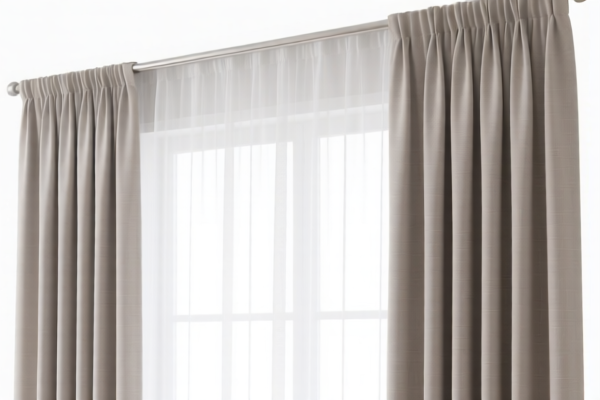
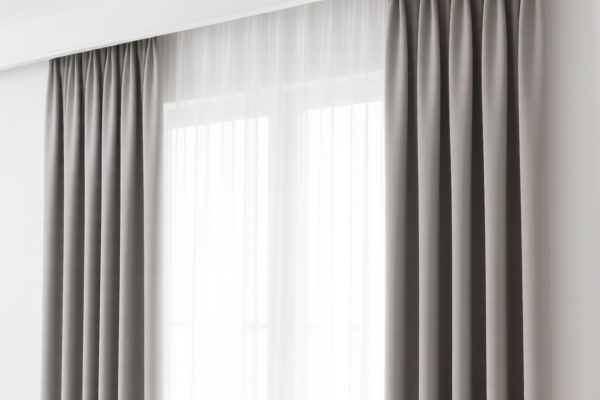
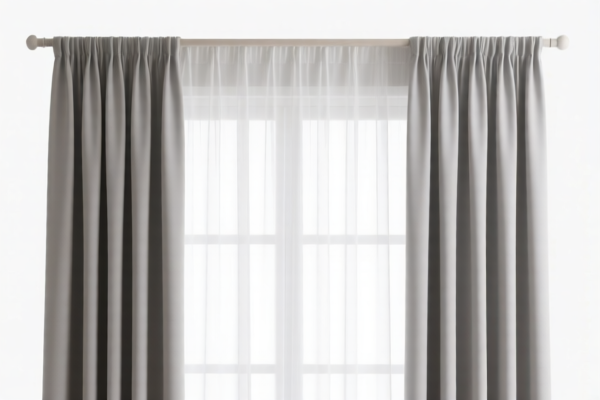
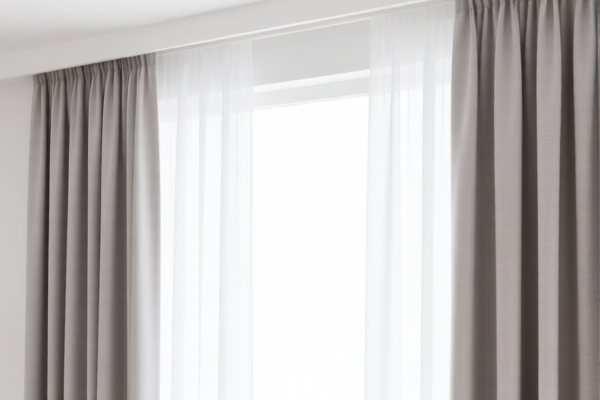
AI Analysis
🚪 Door & Bed Curtains: The Ultimate HS Code & Tax Guide for 2026
🌐 HS Code Reference & Customs Clearance Guide | 2026 Latest Tariff Analysis | Strategic Clearance Strategies
📌 I. Product Definition & Classification: Do You Really Know "Door Curtains"?
In international trade, Door Curtains (often including bed curtains/valances) are primarily classified under Chapter 63: Other Made Up Textile Articles. The correct HS Code depends heavily on the material composition (Cotton vs. Synthetic/Man-made Fibers) and the manufacturing process (Knitted/Hooked vs. Woven/Other).
⚠️ Key Classification Distinction:
- Cotton-Based: If made of cotton or cotton-blend → 6303.91
- Synthetic/Man-made Fiber (Knitted): If knitted or hooked → 6303.19
- Synthetic/Man-made Fiber (Woven/Other): If not knitted/hooked → 6303.92
📦 II. HS Code Classification Details (2026 Latest Tariff Authority对照)
Based on the provided data, here are the three possible HS Codes for Door Curtains:
| HS Code | Product Description | Key Characteristics | Material Inference |
|---|---|---|---|
| 6303.91.00.10 | Door curtains or bed curtains, classified as curtains/hanging drapes | Woven/Non-knitted textile article | Cotton or other natural fibers |
| 6303.19.21.10 | Curtains or bed curtains, knitted or hooked structure | Knitted or Hooked manufacturing process | Artificial Fiber or Cotton |
| 6303.92.20.10 | Curtains (General) | Woven/Other (Non-knitted) textile article | Synthetic Fiber or common textile fibers |
🔍 Critical Note:
- 6303.91.00.10 is for Cotton based curtains.
- 6303.19.21.10 is specifically for Knitted/Hooked curtains (regardless of whether it's synthetic or cotton, the structure dictates this code).
- 6303.92.20.10 is the catch-all for Synthetic curtains that are NOT knitted/hooked (e.g., woven polyester).
💰 III. 2026 Latest Tariff Rate Breakdown (Including Additional Duties & Policy Surcharges)
✅ Target Market: United States (US)
✅ Origin: China (CN)
✅ Effective Time: Current tariffs applicable for 2026 imports
🎯 1. 6303.91.00.10 — Cotton Door/Bed Curtains
| Item | Content |
|---|---|
| Basic Tariff | 10.3% |
| Section 301 (Add-on Tariff) | 7.5% |
| Section 122 Tariff (IEEPA) | 10% |
| Total Tariff Rate | 27.8% |
| Calculation Basis | CIF Value × 27.8% |
| De Minimis Exemption | ❌ Not Applicable (High value goods typically excluded or subject to strict scrutiny) |
| Legal Basis Path | USITC:6303.91.00.10 → Section 301: Footnote 9903.88.01 → IEEPA: Section 122 |
📌 Explanation:
- 10.3% is the standard MFN (Most Favored Nation) duty for cotton curtains.
- 7.5% is the Section 301 tariff imposed on Chinese textiles/apparel.
- 10% is the specific Section 122 tariff (part of recent US trade policy updates affecting Chinese imports).
- Total: 27.8%. This is a significant cost burden.
🎯 2. 6303.19.21.10 — Knitted/Hooked Curtains (Synthetic or Cotton)
| Item | Content |
|---|---|
| Basic Tariff | 6.4% |
| Section 301 (Add-on Tariff) | 0.0% |
| Section 122 Tariff (IEEPA) | 10% |
| Total Tariff Rate | 16.4% |
| Calculation Basis | CIF Value × 16.4% |
| De Minimis Exemption | ❌ Not Applicable |
| Legal Basis Path | USITC:6303.19.21.10 → IEEPA: Section 122 |
📌 Important:
- 6.4% is the basic duty for knitted curtains.
- 0.0% for Section 301 indicates this specific sub-code may be exempt or classified differently under Section 301 lists.
- 10% for Section 122 still applies.
- Total: 16.4%. This is the most tax-efficient option if the product is knitted/hooked.
🎯 3. 6303.92.20.10 — Synthetic Woven/Other Curtains
| Item | Content |
|---|---|
| Basic Tariff | 11.3% |
| Section 301 (Add-on Tariff) | 0.0% |
| Section 122 Tariff (IEEPA) | 10% |
| Total Tariff Rate | 21.3% |
| Calculation Basis | CIF Value × 21.3% |
| De Minimis Exemption | ❌ Not Applicable |
| Legal Basis Path | USITC:6303.92.20.10 → IEEPA: Section 122 |
📌 Note:
- 11.3% basic duty for synthetic non-knitted curtains.
- 0.0% Section 301 exemption (similar to 6303.19).
- 10% Section 122 tariff applies.
- Total: 21.3%.
🛠️ IV. Customs Clearance Practical Advice (Real-World Pitfall Guide)
✅ 1. Documentation Checklist (Non-Negotiable)
| Document | Required? | Details |
|---|---|---|
| ✅ Product Specification Sheet | ✔️ | Must state: Material (100% Cotton / 100% Polyester / Blend), Weight, Size. |
| ✅ Manufacturing Process Info | ✔️ | Crucial: Is it Knitted, Hooked, or Woven? This determines HS Code. |
| ✅ Product Photos | ✔️ | Clear images of texture (to prove knitting vs. weaving) and tags. |
| ✅ Commercial Invoice | ✔️ | Must clearly state "Door Curtain" or "Bed Curtain", HS Code, and Country of Origin (China). |
| ✅ Packing List | ✔️ | Weight and dimensions per package. |
| ✅ Third-Party Test Report | ✔️ | Fiber content test report (e.g., from SGS, BV, Intertek) to prove material composition. |
✅ 2. Declaration Strategy (Key Mantra)
🔥 "Material Matters, Process Defines, Code Dictates Tax!"
| Scenario | Correct HS Code | Wrong Action | Consequence |
|---|---|---|---|
| 100% Cotton Woven Curtain | 6303.91.00.10 |
Misdeclare as Synthetic | Tax jumps to 21.3%-27.8% + Penalties |
| Polyester Knitted Curtain | 6303.19.21.10 |
Misdeclare as Woven | Tax increases from 16.4% to 21.3% |
| Polyester Woven Curtain | 6303.92.20.10 |
Misdeclare as Knitted | Audit risk: If structure is woven, but declared as knitted, customs will reclassify and penalize. |
| Mixed Material (e.g., 60% Cotton, 40% Polyester) | Depends on Principal Character | Generic "Textile Curtain" | High Risk: Customs may assign highest applicable rate or deny entry for lack of specificity. |
✅ 3. Special Circumstances Handling
| Situation | Handling Advice |
|---|---|
| OEM Custom Designs | Provide design blueprints and material specs to prove specific classification. |
| Composite Materials (e.g., Curtain + Metal Rod) | If sold as a set, the curtain usually determines the classification (Heading 6303). Do not declare separately unless explicitly allowed. |
| Section 122 Tariff (10%) | This applies to all three codes. Ensure your supplier’s invoice clearly states "Made in China" to avoid disputes on origin. |
| De Minimis (Section 321) | High Risk: While small packages may qualify for de minimis, textile items from China are increasingly scrutinized. Do not rely on de minimis for bulk commercial imports. |
🌍 V. Global Market Comparison (2026 Latest)
| Market | Recommended HS Code | Est. Total Duty (CN Origin) | Key Requirement |
|---|---|---|---|
| 🇺🇸 USA | 6303.91.00.10 / .19.21.10 / .92.20.10 |
16.4% - 27.8% | Fiber content test, Section 122 declaration |
| 🇨🇳 China | 6303.91.00.10 / .19.21.10 / .92.20.10 |
5% - 10% (Import) | No additional Section 301/122 |
| 🇪🇺 EU | 6303.91.00 / .19.21 / .92.20 |
0% - 12% (Depends on material) | CE marking not required, but REACH compliance for chemicals |
| 🇦🇺 Australia | 6303.91.00 / .19.21 / .92.20 |
5% - 10% | Standard import declaration |
📌 Conclusion:
- The US market is the most expensive due to Section 301 (where applicable) and Section 122 (10%).
- Knitted curtains (6303.19.21.10) offer the lowest tax rate (16.4%) in the US.
- Cotton woven curtains (6303.91.00.10) are the most expensive (27.8%).
📌 VI. Common Errors & Pitfalls (Lessons Learned)
❌ Error 1: Declaring all curtains as "6303.99" (Other curtains)
👉 Consequence: Incorrect classification → Customs may impose highest penalty rate + audit.
❌ Error 2: Ignoring the "Knitted vs. Woven" distinction
👉 Consequence: Tax difference between 16.4% and 21.3% is significant for large volumes.
❌ Error 3: Failing to provide a fiber content test report
👉 Consequence: Customs cannot verify material → Goods held at port → Demurrage charges.
❌ Error 4: Assuming Section 122 (10%) does not apply
👉 Consequence: Underpayment of duty → Retroactive tax collection + interest.
✅ Correct Practice:
"100% Polyester Woven Door Curtain, 60x84 inch, for Home Decor, HS 6303.92.20.10, Made in China"
🎯 VII. Conclusion: Precision Classification Saves Money!
🎯 Remember the Mantra:
🔹 "Cotton Woven = 27.8% | Synthetic Knitted = 16.4% | Synthetic Woven = 21.3%"
🔹 "Section 122 (10%) is unavoidable for China. Minimize Section 301 impact by choosing Knitted (6303.19) or Synthetic (6303.92)."
📌 Pro Tip:
If you are exporting to the US, prioritize Knitted (6303.19) or Synthetic Woven (6303.92) products to save up to 11.4% in tariffs compared to Cotton Woven.
Consider pre-classification rulings from US CBP if your product line is complex.
📣 Take Action Now:
📞 Engage a licensed customs broker.
📋 Prepare Fiber Content Test Reports.
🚀 Accurate classification = Lower Taxes + Faster Clearance + No Penalties.
✨ Professional Clearance Starts with Accurate Classification!
💼 Every Percent Saved is Profit Earned!
Customer Reviews
About HS Code Classification
The Harmonized System (HS) is an internationally standardized nomenclature developed by the World Customs Organization (WCO) to classify traded products. Over 200 countries use the HS system as the basis for customs tariffs, trade statistics, and import/export regulations.
Each HS code follows a hierarchical structure:
- Chapter (2 digits) — Broad category of goods (e.g., Chapter 84: Machinery and Mechanical Appliances)
- Heading (4 digits) — More specific grouping within the chapter
- Subheading (6 digits) — Internationally standardized breakdown, used by all WCO member countries
- National subdivisions (8-10 digits) — Country-specific extensions for further classification, such as US HTSUS 10-digit codes
Correct HS code classification is essential for smooth customs clearance, accurate duty payment, and compliance with trade regulations. Misclassification can lead to customs delays, overpayment of duties, or penalties.
When importing from CN to US, the applicable tariff rates may include:
- Most-Favored-Nation (MFN) rate — The standard duty rate applied to WTO members
- General rate — Applied to countries without trade agreements
- Trade remedy duties — Additional tariffs such as Section 301 (anti-dumping), Section 232 (national security), or countervailing duties
The information provided on this page is for reference purposes only. For official classification, please consult with your local customs authority or a licensed customs broker.